
North Macedonia|You Wake Up to Find Yourself in 1980s Yugoslavia
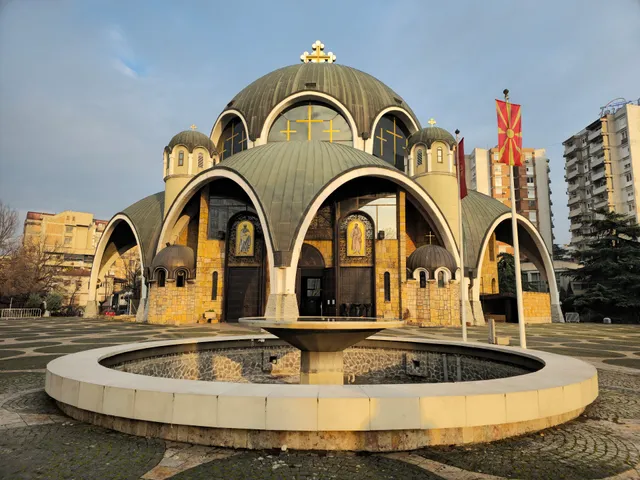
📍 In Skopje, a city once envisioned as a socialist utopia, what you see isn’t just a city—it’s layers of time frozen in concrete. 🌆 In 1963, a devastating earthquake destroyed 80% of the city, erasing traces of its Byzantine, Ottoman, and Roman past. To rebuild, Yugoslavia (then outside the Iron Curtain) and the UN launched the "Skopje 1963" masterplan, attracting world-renowned architects. For a brief moment, Skopje became the "City of International Solidarity," a modernist dream of the future. 🌃 Today, walking through the city feels like stepping into a time capsule of decay. Brutalist buildings stand like weather-beaten monuments, their concrete facades stained with decades of neglect. AC units cling like stubborn fungi, and the once-futuristic structures now weep with the grime of time. 🏙 After Yugoslavia’s collapse, maintenance faded. Then came "Skopje 2014"—a kitschy nationalist makeover that erased the city’s architectural legacy, replacing it with faux-historical statues and neoclassical pastiche. "Now, when we drink late at night, the clinking of glasses echoes with the sound of shattered dreams." Skopje’s Forgotten Modernism: A City Walk (5.1km, ~70 min) ➡ Ss. Cyril and Methodius University (Yugoslav-era academia) ➡ Transportation Center (Futuristic 1960s train station) ➡ Macedonian Telekom Center (Brutalist telecom relic) ➡ Post Office of Macedonia (Mid-century functionalism) ➡ Church of St. Clement of Ohrid (Contrast of old & new) ➡ Komercijalna Banka (Abandoned banking modernism) ➡ Cathedral of the Sacred Heart of Jesus (Post-war spiritualism) #NorthMacedonia #Skopje #Citywalk #EasternEurope #Travel2024 #PlacesThatLeaveYouSpeechless