

HTML SitemapExplore
logo
Find Things to DoFind The Best Restaurants

An Analysis of the Arc de Triomphe de l’Étoile in Paris

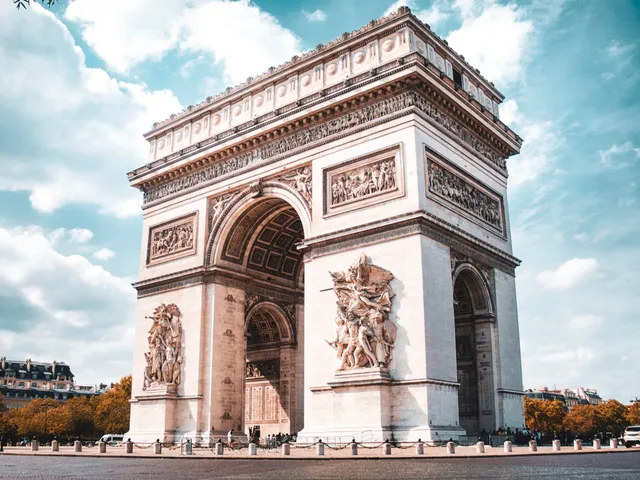
🔵 Arc de Triomphe de l’Étoile Standing at the center of Place Charles de Gaulle (originally Place de l’Étoile) in downtown Paris, the Arc de Triomphe de l’Étoile is the largest triumphal arch in the world 🏛️. In 1806, after Napoleon defeated the Austro-Russian coalition in the Battle of Austerlitz, he ordered the construction of an unprecedented monumental arch at the western end of Paris’ Champs-Élysées to commemorate this epic victory. This arch, embodying glory and ambition, was designed by French architect Jean Chalgrin (1739-1811). Drawing inspiration from ancient Roman triumphal arches and incorporating Neoclassical style, Chalgrin created a structure that blends historical gravity with artistic beauty ✨. 🔵 A Pivotal Masterpiece of Classical Revival Classical Revival (also known as Neoclassicism) was an architectural trend that emerged in the late 18th century and gained popularity across Europe and the Americas. It advocated drawing inspiration from ancient Greek and Roman architecture, reshaping the sense of order and solemnity in classical aesthetics through simplified decorations and an emphasis on symmetry and geometric structures 📜. During the social transition period after the French Revolution, Neoclassicism quickly became an architectural language for expressing political ideals and national pride—thanks to its classical elements symbolizing republican spirit and its grand scale that showcased imperial authority 🇫🇷. 🔵 Facade Composition Techniques The arch features a square-shaped facade, standing 50 meters tall, 45 meters wide, and 22.3 meters thick. There is one archway on each of its four sides, with the central archway reaching 36.6 meters in height and 14.6 meters in width. Vertically, the arch is divided into three proportional sections: the entablature, the wall body, and the base. This classic three-section facade composition exudes stability—supported by the sturdy ground floor. The middle section’s reliefs take center stage, especially the La Marseillaise relief, whose vividly sculpted figures hold an important position in the history of world sculpture 🎨. The top parapet is adorned with statues of Victory, guarding this monument to glory. 🔵 Interior Design Inside the arch, an elevator and a spiral staircase (with 273 stone steps) lead to the roof 🪜. The upper part of the arch houses a small historical museum, where exhibits include numerous images and historical documents about the arch’s construction history, photos introducing the life of Napoleon (a great figure in French history), and the names of 558 generals who fought alongside Napoleon 🖼️. #NeoclassicalArchitecture #WorldHeritageCities #Architecture #ArchitecturePostgraduateExam #ArtAndArchitecture #ArchitectureDesign #EuropeTravel #FranceTravel
Related posts
Paris Brunch Review: Benedict's Foie Gras Burger🗼 Eiffel Tower, Paris | When Dreams Meet RealityParis Two-Star Michelin | Guy Savoy in the Currency Museum🇫🇷 3-Day Paris ItineraryParis Brunch Diary | For Foie Gras Burgers, This Place is a MustParisian Elegance and Luxury at Restaurant ES
Quiet Harbor
Quiet Harbor
4 months ago
Quiet Harbor
Quiet Harbor
4 months ago
no-comment

No one has commented yet...

An Analysis of the Arc de Triomphe de l’Étoile in Paris

🔵 Arc de Triomphe de l’Étoile Standing at the center of Place Charles de Gaulle (originally Place de l’Étoile) in downtown Paris, the Arc de Triomphe de l’Étoile is the largest triumphal arch in the world 🏛️. In 1806, after Napoleon defeated the Austro-Russian coalition in the Battle of Austerlitz, he ordered the construction of an unprecedented monumental arch at the western end of Paris’ Champs-Élysées to commemorate this epic victory. This arch, embodying glory and ambition, was designed by French architect Jean Chalgrin (1739-1811). Drawing inspiration from ancient Roman triumphal arches and incorporating Neoclassical style, Chalgrin created a structure that blends historical gravity with artistic beauty ✨. 🔵 A Pivotal Masterpiece of Classical Revival Classical Revival (also known as Neoclassicism) was an architectural trend that emerged in the late 18th century and gained popularity across Europe and the Americas. It advocated drawing inspiration from ancient Greek and Roman architecture, reshaping the sense of order and solemnity in classical aesthetics through simplified decorations and an emphasis on symmetry and geometric structures 📜. During the social transition period after the French Revolution, Neoclassicism quickly became an architectural language for expressing political ideals and national pride—thanks to its classical elements symbolizing republican spirit and its grand scale that showcased imperial authority 🇫🇷. 🔵 Facade Composition Techniques The arch features a square-shaped facade, standing 50 meters tall, 45 meters wide, and 22.3 meters thick. There is one archway on each of its four sides, with the central archway reaching 36.6 meters in height and 14.6 meters in width. Vertically, the arch is divided into three proportional sections: the entablature, the wall body, and the base. This classic three-section facade composition exudes stability—supported by the sturdy ground floor. The middle section’s reliefs take center stage, especially the La Marseillaise relief, whose vividly sculpted figures hold an important position in the history of world sculpture 🎨. The top parapet is adorned with statues of Victory, guarding this monument to glory. 🔵 Interior Design Inside the arch, an elevator and a spiral staircase (with 273 stone steps) lead to the roof 🪜. The upper part of the arch houses a small historical museum, where exhibits include numerous images and historical documents about the arch’s construction history, photos introducing the life of Napoleon (a great figure in French history), and the names of 558 generals who fought alongside Napoleon 🖼️. #NeoclassicalArchitecture #WorldHeritageCities #Architecture #ArchitecturePostgraduateExam #ArtAndArchitecture #ArchitectureDesign #EuropeTravel #FranceTravel

Paris
Arc de Triomphe
Arc de TriompheArc de Triomphe