
🏰 Citadel of Besançon: A Fortress Steeped in History
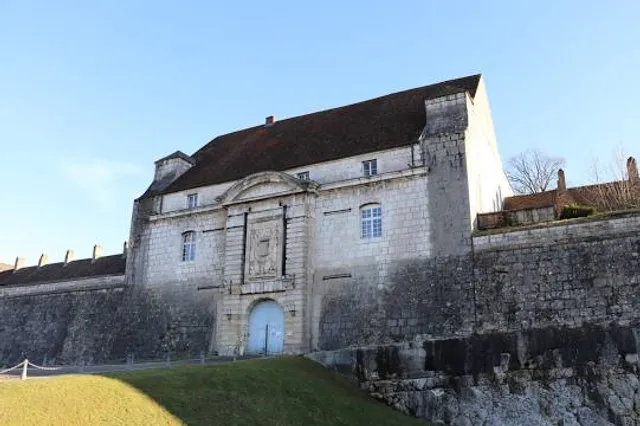
Once a jewel of the Holy Roman Empire 👑, Besançon fell under Spanish rule in 1654. But on February 7, 1668, Louis XIV’s army seized the city and began constructing a fortress at its northwestern edge (marked in red 🔴) to bolster defenses. Yet, just three months later, the Treaty of Aachen handed Besançon back to Spain 🇪🇸. The Spanish then completed the unfinished fortifications designed by Vauban—only for him to later exploit his own knowledge of the castle’s weaknesses and conquer the "impregnable" stronghold! ⚔️ A Natural Fortress Perched on a precipitous cliff 🏔️, the Citadel merges seamlessly with the jagged rock formations behind it. It looms over the strategic fork of the Doubs River, standing guard for centuries. Vauban’s Masterpiece After capturing the fortress, Vauban learned from Spain’s mistakes and reinforced its defenses: Strengthened flanks and frontal fortifications 🛡️ Converted a church into a watchtower ⛪👀 Built pentagonal bastion walls (1688-1691) connected to two-tiered underground bunkers Stone walls fused with natural rock 🪨 Cannon emplacements with side firing ports 💥 Barracks, storerooms, and secret passages 🚪 A City of Timeless Tiles The Citadel’s roofs—like much of Besançon—are covered in "Tuiles de Doubs" (Doubs tiles). These centuries-old tiles still retain their original warm hues, weathering time beautifully. 🏡🔶 From War to Peace Once a symbol of military might, the Citadel now radiates serenity. Vauban’s fortress gazes over the Doubs, offering breathtaking panoramic views 🌄—a perfect blend of history and natural beauty. #France #BesançonCitadel #Besançon #FortressHistory 🏰✨