

HTML SitemapExplore

💡 Must-See Exhibitions in Paris for the Second Half of the Year 👀

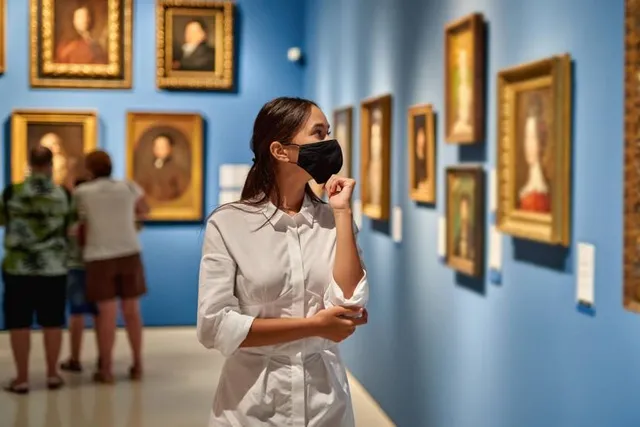
🪭 The Most Beautiful Private Museum in Paris 🪭 It was founded by banker Édouard André and his wife, the famous painter Nélie Jacquemart, who meticulously collected art and antique furniture. This palace-like building was commissioned by Édouard André and designed in the second half of the 19th century. As affluent art collectors, the André and Jacquemart couple spent a fortune traveling across Europe and the Middle East to acquire artistic treasures. Nélie Jacquemart, an artist herself, had a keen eye for selecting a vast array of Italian Renaissance art pieces as well as French 18th-century paintings and furniture. After Édouard's death in 1902, Nélie continued to expand their collection and donated their mansion and entire collection to France upon her death in 1913, opening it as a museum. The Most Worthwhile Exhibition in the Second Half of the Year in Paris Musée Jacquemart-André has been closed for the past two years for renovations, and the highlight of its return is a special exhibition borrowing over forty masterpieces from the famous Borghese Gallery in Rome. Although the Borghese's sensational Bernini sculptures did not make it to Paris, the works that have arrived include pieces by masters such as Caravaggio, Rubens, Botticelli, Raphael, Titian, Veronese, Antonello da Messina, and Bernini. 🍇 Caravaggio's "Boy with a Basket of Fruit" 🍇 This is an early work in Caravaggio's career, where his signature chiaroscuro style is already taking shape. The boy's slightly parted lips, the slipping garment on his shoulder, and the basket of fruit in his hand—all details are meticulously arranged. Although the painting appears to be a still life of a boy holding a basket of fruit, the symbolic meaning is not hard to decipher. The decaying fruit symbolizes the brevity and transience of life, and the contrast between the boy's youthful face and the vividness of the fruit may reflect the passage of time and the fragility of humanity. 🦄 Raphael's "Young Woman with a Unicorn" 🦄 The unicorn is an important symbolic element in the painting, often seen as a symbol of purity and chastity during the Middle Ages and the Renaissance. The unicorn nestles quietly in the woman's arms, suggesting her purity and noble character. Interestingly, the unicorn was not originally in the painting. Analysis suggests that the woman was initially holding a dog, symbolizing loyalty. The dog was later changed to a unicorn, possibly to imbue the painting with more religious symbolism. #Paris #ParisLife #FrenchLife #WorthSeeingExhibition #Exhibition #Art #Renaissance #ArtExhibition
Related posts
Paris Brunch Review: Benedict's Foie Gras Burger🗼 Eiffel Tower, Paris | When Dreams Meet RealityParis Two-Star Michelin | Guy Savoy in the Currency Museum🇫🇷 3-Day Paris ItineraryParis Brunch Diary | For Foie Gras Burgers, This Place is a MustParisian Elegance and Luxury at Restaurant ES
Irene
Irene
about 1 year ago
Irene
Irene
about 1 year ago
no-comment

No one has commented yet...

💡 Must-See Exhibitions in Paris for the Second Half of the Year 👀

🪭 The Most Beautiful Private Museum in Paris 🪭 It was founded by banker Édouard André and his wife, the famous painter Nélie Jacquemart, who meticulously collected art and antique furniture. This palace-like building was commissioned by Édouard André and designed in the second half of the 19th century. As affluent art collectors, the André and Jacquemart couple spent a fortune traveling across Europe and the Middle East to acquire artistic treasures. Nélie Jacquemart, an artist herself, had a keen eye for selecting a vast array of Italian Renaissance art pieces as well as French 18th-century paintings and furniture. After Édouard's death in 1902, Nélie continued to expand their collection and donated their mansion and entire collection to France upon her death in 1913, opening it as a museum. The Most Worthwhile Exhibition in the Second Half of the Year in Paris Musée Jacquemart-André has been closed for the past two years for renovations, and the highlight of its return is a special exhibition borrowing over forty masterpieces from the famous Borghese Gallery in Rome. Although the Borghese's sensational Bernini sculptures did not make it to Paris, the works that have arrived include pieces by masters such as Caravaggio, Rubens, Botticelli, Raphael, Titian, Veronese, Antonello da Messina, and Bernini. 🍇 Caravaggio's "Boy with a Basket of Fruit" 🍇 This is an early work in Caravaggio's career, where his signature chiaroscuro style is already taking shape. The boy's slightly parted lips, the slipping garment on his shoulder, and the basket of fruit in his hand—all details are meticulously arranged. Although the painting appears to be a still life of a boy holding a basket of fruit, the symbolic meaning is not hard to decipher. The decaying fruit symbolizes the brevity and transience of life, and the contrast between the boy's youthful face and the vividness of the fruit may reflect the passage of time and the fragility of humanity. 🦄 Raphael's "Young Woman with a Unicorn" 🦄 The unicorn is an important symbolic element in the painting, often seen as a symbol of purity and chastity during the Middle Ages and the Renaissance. The unicorn nestles quietly in the woman's arms, suggesting her purity and noble character. Interestingly, the unicorn was not originally in the painting. Analysis suggests that the woman was initially holding a dog, symbolizing loyalty. The dog was later changed to a unicorn, possibly to imbue the painting with more religious symbolism. #Paris #ParisLife #FrenchLife #WorthSeeingExhibition #Exhibition #Art #Renaissance #ArtExhibition

Paris
Musée Jacquemart-André
Musée Jacquemart-AndréMusée Jacquemart-André