

HTML SitemapExplore
logo
Find Things to DoFind The Best Restaurants

The Heart of the Kathmandu Valley | The Soul of Nepalese Culture

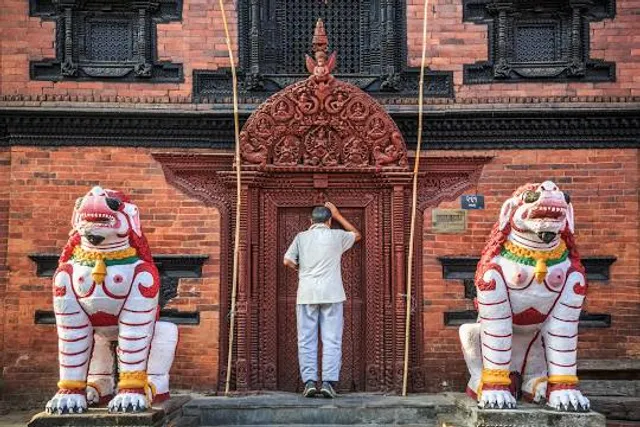
This is the core of Kathmandu, where the ancient soul of the Kathmandu Valley resides. ✨ Once the center of the Malla Dynasty, this land thrived for six centuries before the Gurkha rule. Countless Newari people, with their own hands, crafted a empire over the tides of time. The history of Durbar Square is too vast to be told in a single note. Even its buildings alone are rich enough to fill volumes—whether the mysterious Taleju Temple or the Kumari Goddess, each shimmers with the unique glow of an exotic culture, leaving one in endless wonder. 【🔥 What to See in Kathmandu Durbar Square?】 ✨ Kumari Ghar (House of the Living Goddess): Perhaps the most enigmatic spot in the entire square! It enshrines Nepal’s age-old tradition of the "Kumari"—a living goddess, typically a girl of around 7 or 8, who is revered by locals as the earthly incarnation of Taleju, the goddess of the Nepalese royal family. Every day at 4 PM, the Kumari emerges briefly at a window. To catch a glimpse, you’ll need to line up early to enter the inner courtyard. ✨ Kaal Bhairav Statue: One of Shiva’s fiercest incarnations, depicted with a wrathful visage. Adorned with a crown of gems and skulls, he has piercing white eyes, bared fangs, and multiple hands clutching a sword, axe, shield, and skull, standing atop a corpse. This fearsome figure is also embraced in Tibetan Buddhism as the Vajrabhairava (Wrathful Vajra). Legend has it that lying before the Bhairav statue brings misfortune~ ✨ Hanuman Dhoka Palace: The royal seat of Kathmandu Durbar, it became the heart of the Malla Dynasty after the 13th century—Nepal’s equivalent of the Forbidden City! Its vast interiors house a museum and the palace itself, guarded by a statue of Hanuman, the monkey god, at the entrance. Draped in a brocade canopy and a crimson veil covering its face, the statue exudes an air of stern mystery. ✨ Jagannath Temple: Dubbed Kathmandu’s "most provocative" temple~ Dedicated to the eighth incarnation of Shiva, it is far more famous for its explicit carvings adorning the walls and pillars. A closer look reveals fascinating details—elements rarely seen in China, which deserve a separate post. ✨ Taleju Temple: The grandest structure in Durbar Square, built to honor the Taleju Goddess, patron of the Malla Dynasty. It holds immense sacred significance and is strictly off-limits to the public. Only once a year, during a festival in October, is it symbolically opened for a single day—and I was unlucky enough to miss it. The Kumari of Kumari Ghar is regarded as one of the earthly vessels of Taleju, hence the need to enshrine her in mystery. Transportation: For solo travelers, a motorbike works well; for groups, a taxi is recommended. Durbar Square is just 3 kilometers from Thamel, so public transport isn’t necessary. Ticket Info: Technically, no ticket is required to roam the square—if someone asks to check tickets, simply walk away. Tickets are only needed to enter major temples and the museum. With a passport and a 1-inch photo, you can apply for a pass valid for the duration of your visa. #OffTheBeatenPath #KathmanduDurbarSquare #NepaleseCulture #HiddenGems
Related posts
Nepal Trekking GuideThose treasure spots I keep coming back to in PokharaNepal's Most Memorable Cafe: Sipping Coffee with Snow Peaks in PokharaNepal Hiking food ShareNepali Food: It’s an Acquired Taste 🤐Nepal trip guide
Zephyr Hopkins
Zephyr Hopkins
5 months ago
Zephyr Hopkins
Zephyr Hopkins
5 months ago
no-comment

No one has commented yet...

The Heart of the Kathmandu Valley | The Soul of Nepalese Culture

This is the core of Kathmandu, where the ancient soul of the Kathmandu Valley resides. ✨ Once the center of the Malla Dynasty, this land thrived for six centuries before the Gurkha rule. Countless Newari people, with their own hands, crafted a empire over the tides of time. The history of Durbar Square is too vast to be told in a single note. Even its buildings alone are rich enough to fill volumes—whether the mysterious Taleju Temple or the Kumari Goddess, each shimmers with the unique glow of an exotic culture, leaving one in endless wonder. 【🔥 What to See in Kathmandu Durbar Square?】 ✨ Kumari Ghar (House of the Living Goddess): Perhaps the most enigmatic spot in the entire square! It enshrines Nepal’s age-old tradition of the "Kumari"—a living goddess, typically a girl of around 7 or 8, who is revered by locals as the earthly incarnation of Taleju, the goddess of the Nepalese royal family. Every day at 4 PM, the Kumari emerges briefly at a window. To catch a glimpse, you’ll need to line up early to enter the inner courtyard. ✨ Kaal Bhairav Statue: One of Shiva’s fiercest incarnations, depicted with a wrathful visage. Adorned with a crown of gems and skulls, he has piercing white eyes, bared fangs, and multiple hands clutching a sword, axe, shield, and skull, standing atop a corpse. This fearsome figure is also embraced in Tibetan Buddhism as the Vajrabhairava (Wrathful Vajra). Legend has it that lying before the Bhairav statue brings misfortune~ ✨ Hanuman Dhoka Palace: The royal seat of Kathmandu Durbar, it became the heart of the Malla Dynasty after the 13th century—Nepal’s equivalent of the Forbidden City! Its vast interiors house a museum and the palace itself, guarded by a statue of Hanuman, the monkey god, at the entrance. Draped in a brocade canopy and a crimson veil covering its face, the statue exudes an air of stern mystery. ✨ Jagannath Temple: Dubbed Kathmandu’s "most provocative" temple~ Dedicated to the eighth incarnation of Shiva, it is far more famous for its explicit carvings adorning the walls and pillars. A closer look reveals fascinating details—elements rarely seen in China, which deserve a separate post. ✨ Taleju Temple: The grandest structure in Durbar Square, built to honor the Taleju Goddess, patron of the Malla Dynasty. It holds immense sacred significance and is strictly off-limits to the public. Only once a year, during a festival in October, is it symbolically opened for a single day—and I was unlucky enough to miss it. The Kumari of Kumari Ghar is regarded as one of the earthly vessels of Taleju, hence the need to enshrine her in mystery. Transportation: For solo travelers, a motorbike works well; for groups, a taxi is recommended. Durbar Square is just 3 kilometers from Thamel, so public transport isn’t necessary. Ticket Info: Technically, no ticket is required to roam the square—if someone asks to check tickets, simply walk away. Tickets are only needed to enter major temples and the museum. With a passport and a 1-inch photo, you can apply for a pass valid for the duration of your visa. #OffTheBeatenPath #KathmanduDurbarSquare #NepaleseCulture #HiddenGems

Pokhara
Kumari Ghar
Kumari GharKumari Ghar