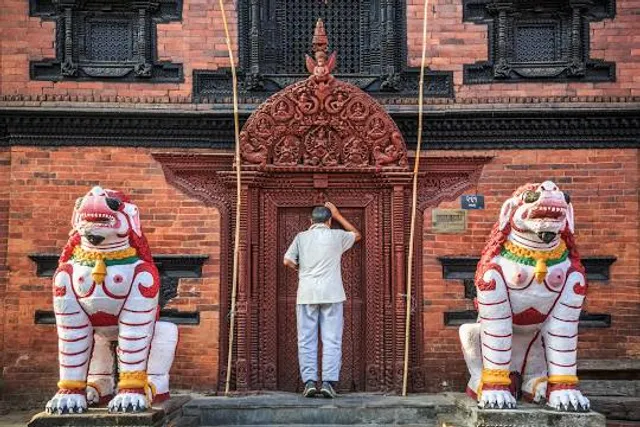
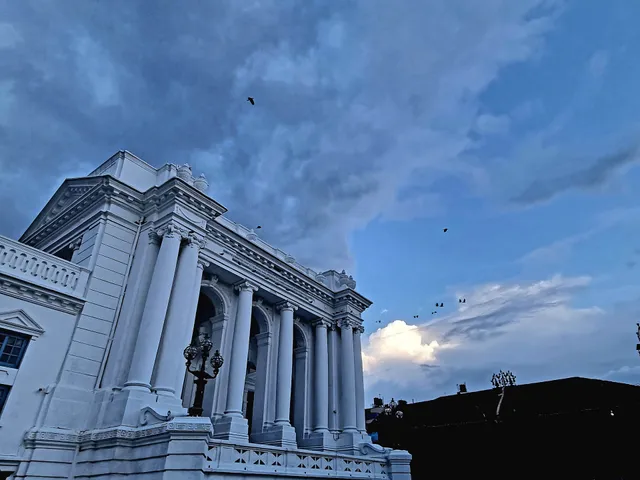
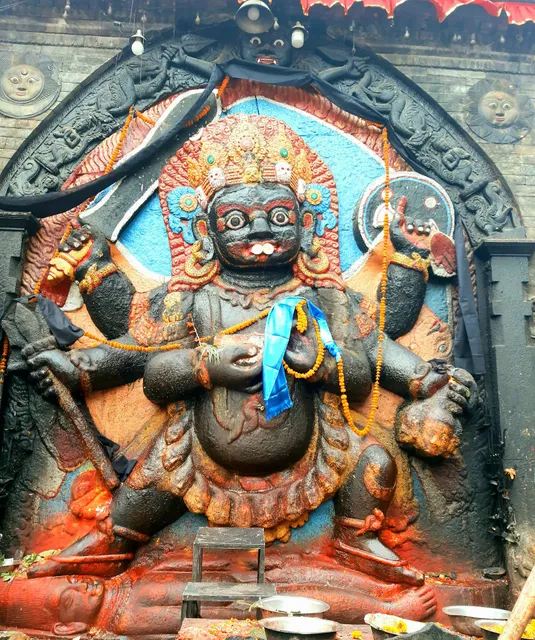
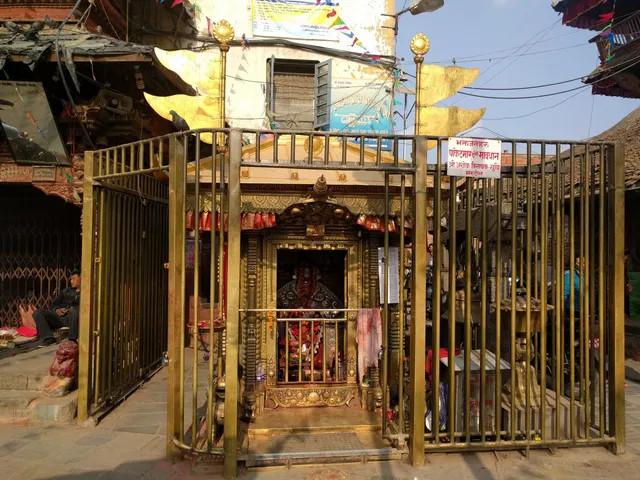
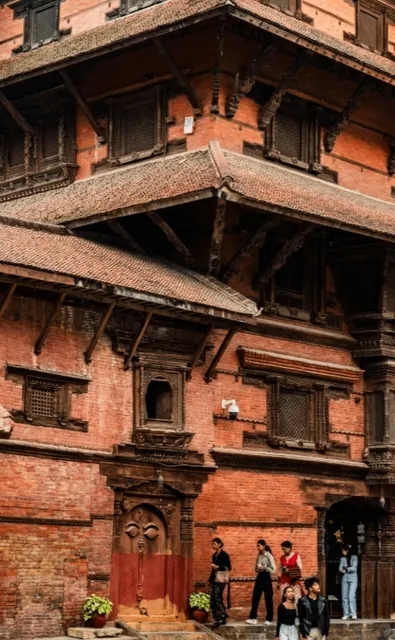
Kumari baha is a baha (Newari Buddhist monastery), a dyochen (a god house), a chowk and a cross between a newar townhouse and a baha. The shrine is a strange hybrid. The Kumari baha is distinctive within Nepal’s architectural tradition. The Kumari ghar is a traditional style 3 storey building. The architecture of the building showcases magnificent wooden work in the balconies and wooden screens. The temple and the holy quadrangular with a Buddhist stupa at the centre form the residential quarters of the chaste virgin Living Goddess called Kumari. It is a distinctive building because of its many intricately carved windows and terracotta art on the outer façade. The temple is tiered golden roof and silver door. In Kathmandu Durbar square, the main entrance to Kumari Baha and the Malla Palace are aligned perpendicular axes, with the baha facing north and the palace facing west. A triple gilt metal gajuras (bell- shaped finial) surmounted by three umbrellas and surrounded by a foliate motif are located at the top centre of Baha's north wall. As the sculpture display is more on the monuments north side, the visitors meant to enter through the north doorway. Its east façade has a simple wooden doorframe and small, largely unadorned windows.
Kumari Baha's exterior north façade contains a total of six doorways and fourteen windows which are arranged in symmetrical fashion. The façade's three levels are further divided into six vertical sections, defined by alternating recessed and protruding sections of brick. The second level has a single bay window that show Surya and Chandra superimposed on the wooden lattice screens that cover the window openings. Triple bay windows are located on the third level. The third and fifth vertical sections have carved windows in the form of two stunning peacocks, a trademark motif in Newar architecture. The third level of the third and fifth section has carved single bay windows with nagas.
A four armed mage of the goddess kumari seated on her peacock vahana, appears on the torana and a yantra is superimposed on the lattice screen. Visitors enter Kumar Baha's courtyard through the central door, which is decorated with skull, floral and geometrical motifs. The door surface includes a series of small teardrop-shaped motifs on the doors upper portion and a more angular crisscross pattern on the doors lower portion. These surface carvings give the door a textile appearance that is suggestive of the clothing worn by kumari.
As we moved through the main door, there is a lobby then the second door to the vestibule for view looking. After the structure's intimate courtyard and the main (south) shrine wall become visible. Like the exterior north façade, a total of nine doorways are located on the first level and 24windows adorn the second and third levels.
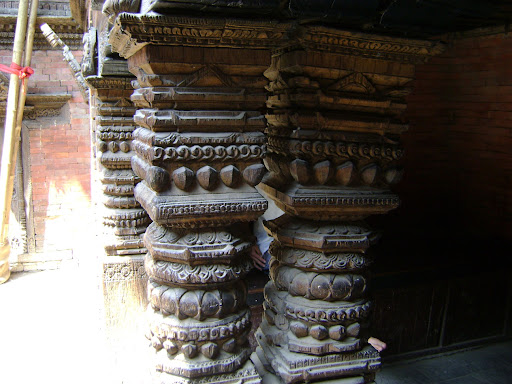
As Kumari Baha has three proper entrances, one each on the west, north and east sides, which each lead immediately in the vestibule. The vestibule has a wooden post and lintel frame and two carved wooden pillars. Toranas surmount the 12 single bay windows on the north, east, and west courtyard walls' second level. As seen on the exterior, each courtyard walls third level has a five bay window at the centre, which is flanked by two single bay windows. Kumari Baha main shrine is located on the courtyard's south. The kvahpah dyah is located on 1st level in the centre of the south. Kvahpah dyah at Kumari baha contains 5 stone sculptures of the Jina (victory) Buddhas as the central objects of worship. At Kumari baha, the agam is located on the south wall’s 2nd level, directly above the...
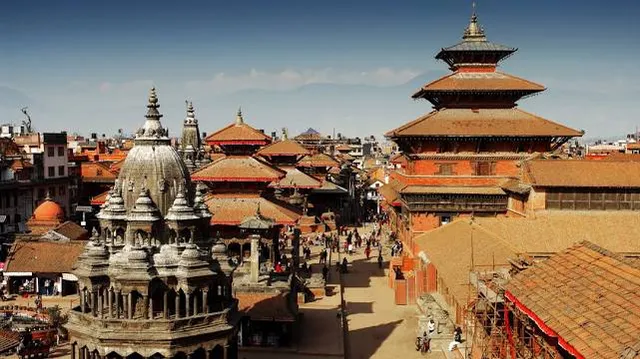
Read moreKumari Ghar, also known as the House of the Living Goddess, is a fascinating place to visit in Kathmandu Durbar Square. This three-story palace is the residence of the Kumari, a young girl who is believed to be the living embodiment of the Hindu goddess Taleju. The building itself is an incredible example of traditional Newari architecture, with intricately carved wooden windows and doors, and a beautifully decorated courtyard. The craftsmanship is absolutely stunning, and it's easy to spend time admiring the intricate details.
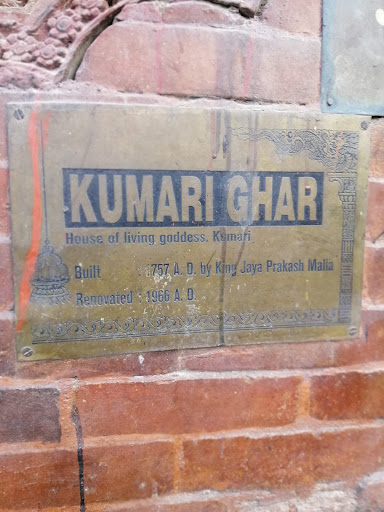
The building was constructed in 1757 by King Jaya Prakash Malla, and its historical significance is impressive. One of the main attractions is the famous window from which the Kumari occasionally appears to give blessings to visitors. It's a rare and sacred moment, and while most people won’t have the chance to witness it, the anticipation adds to the mystique of the place.
While you can't enter the interior of the Kumari Ghar, you can view the courtyard and the exterior. Honestly, this may leave some visitors wanting more, as the limited access makes it a bit difficult to get a full sense of the place's spiritual importance. But if you're there during a special festival, like Indra Jatra, you might get lucky enough to see the Kumari in a ceremonial procession through the streets — truly a once-in-a-lifetime experience.
One thing that could be improved is the pricing for foreign tourists. The ticket price felt a bit steep, which I’ve seen mentioned by others as well. Despite the cost, I still think it’s a must-see due to the deep cultural and religious significance of the Kumari tradition. The Kumari is revered by both Hindus and Buddhists, as she is believed to be the incarnation of the Hindu goddess Durga and the Buddhist goddess Vajradevi. This makes it a meaningful site for understanding the unique blend of religious practices in Nepal.
It’s also fascinating to learn about the life of the Kumari herself. She’s chosen from the Newar Shakya community through a rigorous selection process and leads a highly secluded life until she reaches puberty. It’s said that the deity leaves her body when she experiences menstruation, a serious illness, or injury. The current Royal Kumari of Kathmandu, as of 2023, is Trishna Shakya, selected at the young age of five in 2017.
For those interested in Nepalese culture, Kumari Ghar is a deeply symbolic place, though some visitors might find it less engaging due to its restricted access and the highly touristic atmosphere around Durbar Square. Nevertheless, it offers a glimpse into one of Nepal’s most intriguing and ancient traditions.
Visiting the Kumari Ghar won’t take a huge amount of time, but it’s definitely worth a stop while you're exploring Durbar Square. Just be prepared for crowds and make sure to spend a moment appreciating the beautiful architecture and the rich history that surrounds this living...
Read moreKumari Ghar, also known as the House of the Living Goddess, is an extraordinary and culturally significant residence located in the heart of Kathmandu's Durbar Square. This ornate three-story brick building, constructed in 1757 by King Jaya Prakash Malla, serves as the home of the Kumari, a prepubescent girl believed to be the living incarnation of the goddess Taleju.
The architectural beauty of Kumari Ghar is immediately striking. The building features intricate wood carvings, lavish windows, and stunningly detailed courtyards. The richness of the Newar craftsmanship is evident in every element, from the intricately carved wooden doors to the ornate balconies. The Kumari's residence is a quintessential example of traditional Nepalese architecture and artistry.
Visitors are often captivated by the mystique and spirituality surrounding Kumari Ghar. Although the inner sanctum where the Kumari resides is not accessible to the public, visitors can catch a glimpse of the Living Goddess during certain times of the day when she appears in the beautifully carved central courtyard. This brief appearance is a moment of great reverence and curiosity, as the Kumari is believed to bring blessings and protection.
Kumari Ghar is not just an architectural wonder but also a living cultural institution. The selection and care of the Kumari follow ancient traditions, and the young goddess undergoes a rigorous selection process to ensure she embodies the divine qualities required for her role. Her daily life, though secluded, is filled with rituals and ceremonies, contributing to the preservation of this unique aspect of Nepalese heritage.
The local community holds the Kumari and her residence in high esteem, ensuring the preservation of both the tradition and the building itself. Festivals like Indra Jatra bring the Kumari into the public eye, where she is paraded through the streets of Kathmandu, further deepening the cultural significance of her role.
In conclusion, Kumari Ghar is a must-visit for anyone interested in the rich cultural tapestry of Nepal. Its architectural splendor, coupled with the intriguing and sacred tradition of the Living Goddess, offers a deeply enriching experience that highlights the profound spiritual and historical heritage...
Read more