

HTML SitemapExplore
logo
Find Things to DoFind The Best Restaurants

The light from a church awakens the entire valley

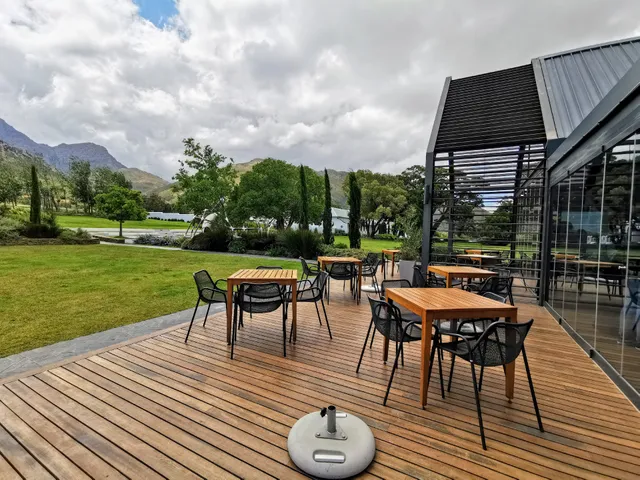
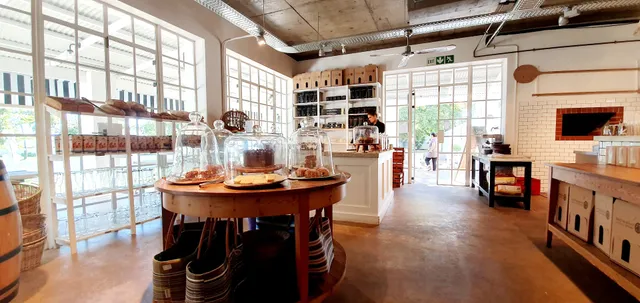
🚗 A Two-Hour Drive from Cape Town, in the Breedekloof Valley of the Western Cape, Lies the Surreal Estate of BOSJES. It is more than just a hotel; it is a dialogue between humans and nature, history and contemporary architecture. 🏛 I. The Spatial Narrative Begins with the “Chapel” The first thing that captured the public's attention is the BOSJES Chapel. Designed by Steyn Studio in London, this small chapel appears as a floating white pleat in the valley. The concrete roof, with its flowing curves, responds to the undulating mountains around it, evoking both the reverence of a religious space and the softness of a naturally formed structure. The curves of the architecture are not mere decoration but an extension of the landscape. It is as if the chapel materializes “holiness” into a vessel of light and shadow. The glass curtain wall design blurs the boundaries between inside and outside, creating a space so pure that it borders on abstraction. This is a “transparent faith,” a reinterpretation of the sacred realm through modern architectural language. 🏡 II. The Modern Translation of a Historical Estate The main hotel is located in an 18th-century Dutch colonial-style manor, renovated by local architect Hugo Hamity Architects. Instead of a brute “renovation,” the design respects the passage of time—preserving the Cape Dutch arches, white walls, and thatched roofs. Through the careful use of materials, proportions, and rhythm, the old and new coexist harmoniously. This harmony is not a compromise of form but a resonance of time. Each guest room has its own unique perspective, framing the landscape. The architecture does not merely “look at the mountains” but “borrows the mountains” as part of the painting. Here, the windows are not just for viewing the scenery; they are part of the scenery. 🌿 III. Beyond Architecture: Landscape Design The entire BOSJES Estate integrates architecture, pathways, water bodies, and plantings into a cohesive whole. The open-air restaurant floats like a pavilion, and the children's playground is embedded in the grassy slopes like a piece of sculpture. Paths are lines, tree arrays are planes, and ponds are mirrors—architectural language extends to the ground, and even nature is “designed” as part of the space. Here, architecture is not the protagonist, and nature is not just a backdrop; they are part of a delicate co-construction. #CulturalTravel #LostVillages #HiddenTravelDestinations #NatureAndArchitecture #UniqueTravelExperiences #ArchitecturalAesthetics #EndOfTheWorldAndColdMiracle #JustGoAndSee
Related posts
Going to South Africa in the summer is really a great ideaAbove the Clouds, My Heart Soars in the Rainbow NationCamps Bay, the movie-set-worthy affluent neighborhood of Cape TownA Journey to Italian Romance in Cape Town, South AfricaI'm at Table Mountain, and I just captured the best photos of my lifeHoliday resort
Seren Cooley
Seren Cooley
6 months ago
Seren Cooley
Seren Cooley
6 months ago
no-comment

No one has commented yet...

The light from a church awakens the entire valley

🚗 A Two-Hour Drive from Cape Town, in the Breedekloof Valley of the Western Cape, Lies the Surreal Estate of BOSJES. It is more than just a hotel; it is a dialogue between humans and nature, history and contemporary architecture. 🏛 I. The Spatial Narrative Begins with the “Chapel” The first thing that captured the public's attention is the BOSJES Chapel. Designed by Steyn Studio in London, this small chapel appears as a floating white pleat in the valley. The concrete roof, with its flowing curves, responds to the undulating mountains around it, evoking both the reverence of a religious space and the softness of a naturally formed structure. The curves of the architecture are not mere decoration but an extension of the landscape. It is as if the chapel materializes “holiness” into a vessel of light and shadow. The glass curtain wall design blurs the boundaries between inside and outside, creating a space so pure that it borders on abstraction. This is a “transparent faith,” a reinterpretation of the sacred realm through modern architectural language. 🏡 II. The Modern Translation of a Historical Estate The main hotel is located in an 18th-century Dutch colonial-style manor, renovated by local architect Hugo Hamity Architects. Instead of a brute “renovation,” the design respects the passage of time—preserving the Cape Dutch arches, white walls, and thatched roofs. Through the careful use of materials, proportions, and rhythm, the old and new coexist harmoniously. This harmony is not a compromise of form but a resonance of time. Each guest room has its own unique perspective, framing the landscape. The architecture does not merely “look at the mountains” but “borrows the mountains” as part of the painting. Here, the windows are not just for viewing the scenery; they are part of the scenery. 🌿 III. Beyond Architecture: Landscape Design The entire BOSJES Estate integrates architecture, pathways, water bodies, and plantings into a cohesive whole. The open-air restaurant floats like a pavilion, and the children's playground is embedded in the grassy slopes like a piece of sculpture. Paths are lines, tree arrays are planes, and ponds are mirrors—architectural language extends to the ground, and even nature is “designed” as part of the space. Here, architecture is not the protagonist, and nature is not just a backdrop; they are part of a delicate co-construction. #CulturalTravel #LostVillages #HiddenTravelDestinations #NatureAndArchitecture #UniqueTravelExperiences #ArchitecturalAesthetics #EndOfTheWorldAndColdMiracle #JustGoAndSee

Zondo
BOSJES
Breedekloof Wine & Tourism
BOSJESBOSJESBreedekloof Wine & TourismBreedekloof Wine & Tourism