
The light of a church
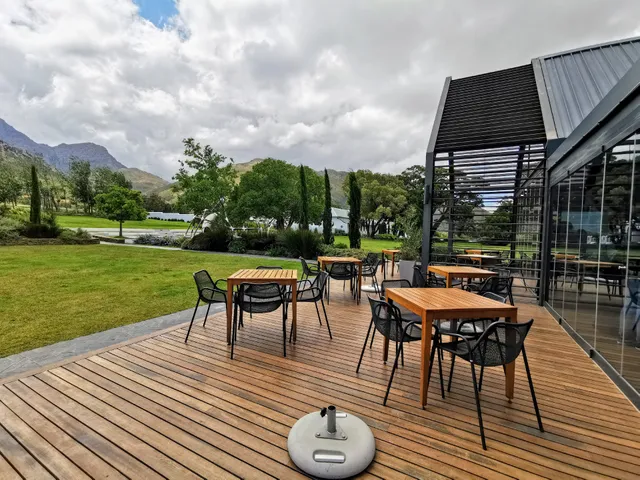
🚗 A two-hour drive from Cape Town, nestled in the Breedekloof Valley of the Western Cape, lies an otherworldly estate—BOSJES. It's not just a hotel; it's more like a dialogue between humans and nature, history and contemporary architecture. 🏛 I. Spatial Narrative Starting from the "Chapel" The first to capture the public's attention is the BOSJES Chapel. Designed by London's Steyn Studio, this small chapel appears as a floating white pleat in the valley. The concrete roof, with its fluid curves, responds to the surrounding mountains' undulations, evoking a sense of awe typical of religious spaces while being as gentle as if naturally formed. The building's curves are not mere decoration; they are an extension of the landscape. It's as if "holiness" is materialized into a vessel of light and shadow. The glass curtain wall design blurs the boundaries between inside and outside, creating a space so pure it's almost abstract—a "transparent faith" and a reinterpretation of the sacred realm through modern architectural language. 🏡 II. Modern Translation of a Historical Estate The hotel itself is located in an 18th-century Dutch colonial-style manor, renovated by local architect Hugo Hamity Architects. The design doesn't crudely "renew" but respects the passage of time—preserving the Cape Dutch arches, white walls, and thatched roofs; and through materials, proportions, and rhythm, allowing the old and new to coexist. Harmony doesn't mean formal compromise but a resonance of time. Each room has an independent view-framing perspective. The architecture doesn't just "look at the mountains" but "borrows the mountains" into the painting. You'll find that here, the windows aren't for viewing the scenery but for "becoming the scenery." 🌿 III. Architecture Beyond Architecture: Landscape Design The entire BOSJES estate integrates architecture, paths, water bodies, and plantings into one cohesive entity. The open-air restaurant floats like a pavilion, and the children's playground is embedded in the grassy slopes like a sculpture. Paths are lines, tree arrays are surfaces, and ponds are mirrors—the architectural language extends to the ground, and even nature is "designed" as part of the space. Here, architecture is not the protagonist, and nature is not the backdrop, but rather a delicate co-construction. #HumanisticTravelwithBlackEyes #LostVillages #OfftheBeatenPathTravelDestinations #TheRelationshipBetweenNatureandArchitecture #UniqueTravelExperiences #itectArchuralAesthetics #TheEndoftheWorldandtheColdHarshWonderland#JustSetOffandSee