

HTML SitemapExplore
logo
Find Things to DoFind The Best Restaurants

There's a Pantheon in Germany?! Time-Travel to Ancient Rome 🏛️

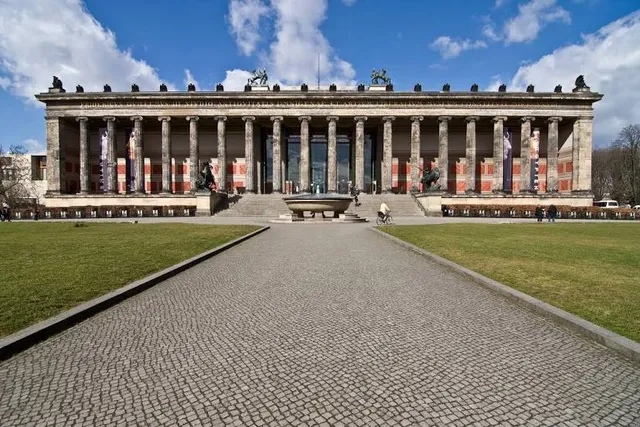
A museum worth visiting to trace the beauty of classical antiquity: Berlin's Altes Museum. 🏺 🔹 **Location**: Situated on Berlin's Museum Island, to the left of the cathedral, it's in a highly visible spot that you'll see as soon as you arrive on the island. 📍 🔹 **Architecture**: Built by Prussian architect Karl Friedrich Schinkel between 1823 and 1830, it is a classic example of Neoclassical architecture and the oldest museum on Museum Island. It was inscribed as part of the UNESCO World Heritage Site in 1999. 🏛️ 🔹 **Exhibition Halls and Artifacts**: 🔘 As you enter the museum, you'll find the rotunda, a replica of the Roman Pantheon, which also houses the museum's most precious collections. Spanning two floors and surrounded by 20 Corinthian columns, the space is filled with ancient Greek and Roman statues. The rotunda features a massive dome with an oculus at the top and a coffered ceiling, closely resembling the Pantheon and giving you a sense of stepping back into ancient Rome. This spot is also perfect for some amazing photoshoots! 📸 🔘 The first floor mainly displays Greek art, with 12 exhibition rooms. The exhibits cover nearly a thousand years, from the legendary Heroic Age to the Archaic, Classical, and Hellenistic periods. The collections include statues, reliefs, pottery, as well as weapons, coins, and gold and silver jewelry. The themes of the exhibition not only showcase the evolution and achievements of Greek art but also cover religion, urban life, and craftsmanship. 🏺 🔘 The second floor features Etruscan and Roman art, with 7 exhibition rooms. The displays range from early Etruscan artifacts to the Roman Imperial period. In addition to statues, there are bronzes, silverware, mosaics, funerary portraits, and numerous busts of famous figures from the Imperial era. The exhibition highlights not only the Roman inheritance of Greek art but also Roman daily life and Etruscan burial culture. There is also a special room dedicated to ancient ⏝️ culture. 🔹 **Two Major Treasures of the Museum**: 🌞 **Praying Boy**: An 8️⃣ 4th-century BC bronze statue of a praying boy. 🌞 **Berlin Goddess**: A world-famous marble statue from 9️⃣ 580-650 BC, known as the "Berlin Goddess" from ancient Greek Attica. In fact, she may not represent a deity at all. Instead, she is likely a funerary statue of a young woman from a wealthy family, depicted as the "bride of the god of the underworld, Hades." Her elaborate red clothing highlights her social status. This artifact is both surprising and relatable. As we all know, the Mediterranean civilization is the cradle of European civilization. Therefore, in any European museum, you can find Greek and Roman exhibition halls. In Berlin's Altes Museum, an entire large architectural pavilion is dedicated to detailed displays, which shows the German respect for history. 🙏Respect ✨ Stay tuned for more recommendations on another famous museum on Berlin's Museum Island! #CulturalSiteShare #Berlin #RomanPantheon #Germany
Related posts
✨ Berlin Food Map: Restaurant Recommendations 💖🇩🇪 Berlin Summer Vibes ✨Creative Istanbul Cuisine in Berlin 🕌🌟 Berlin Restaurant Exploration 🌍Restaurant Review in Berlin 🍽️3 Schwestern: Berlin's Three Sisters' Pork Schnitzel & Venison 🍽️🦌
Alexandra Gray
Alexandra Gray
7 months ago
Alexandra Gray
Alexandra Gray
7 months ago
no-comment

No one has commented yet...

There's a Pantheon in Germany?! Time-Travel to Ancient Rome 🏛️

A museum worth visiting to trace the beauty of classical antiquity: Berlin's Altes Museum. 🏺 🔹 Location : Situated on Berlin's Museum Island, to the left of the cathedral, it's in a highly visible spot that you'll see as soon as you arrive on the island. 📍 🔹 Architecture : Built by Prussian architect Karl Friedrich Schinkel between 1823 and 1830, it is a classic example of Neoclassical architecture and the oldest museum on Museum Island. It was inscribed as part of the UNESCO World Heritage Site in 1999. 🏛️ 🔹 Exhibition Halls and Artifacts : 🔘 As you enter the museum, you'll find the rotunda, a replica of the Roman Pantheon, which also houses the museum's most precious collections. Spanning two floors and surrounded by 20 Corinthian columns, the space is filled with ancient Greek and Roman statues. The rotunda features a massive dome with an oculus at the top and a coffered ceiling, closely resembling the Pantheon and giving you a sense of stepping back into ancient Rome. This spot is also perfect for some amazing photoshoots! 📸 🔘 The first floor mainly displays Greek art, with 12 exhibition rooms. The exhibits cover nearly a thousand years, from the legendary Heroic Age to the Archaic, Classical, and Hellenistic periods. The collections include statues, reliefs, pottery, as well as weapons, coins, and gold and silver jewelry. The themes of the exhibition not only showcase the evolution and achievements of Greek art but also cover religion, urban life, and craftsmanship. 🏺 🔘 The second floor features Etruscan and Roman art, with 7 exhibition rooms. The displays range from early Etruscan artifacts to the Roman Imperial period. In addition to statues, there are bronzes, silverware, mosaics, funerary portraits, and numerous busts of famous figures from the Imperial era. The exhibition highlights not only the Roman inheritance of Greek art but also Roman daily life and Etruscan burial culture. There is also a special room dedicated to ancient ⏝️ culture. 🔹 Two Major Treasures of the Museum : 🌞 Praying Boy : An 8️⃣ 4th-century BC bronze statue of a praying boy. 🌞 Berlin Goddess : A world-famous marble statue from 9️⃣ 580-650 BC, known as the "Berlin Goddess" from ancient Greek Attica. In fact, she may not represent a deity at all. Instead, she is likely a funerary statue of a young woman from a wealthy family, depicted as the "bride of the god of the underworld, Hades." Her elaborate red clothing highlights her social status. This artifact is both surprising and relatable. As we all know, the Mediterranean civilization is the cradle of European civilization. Therefore, in any European museum, you can find Greek and Roman exhibition halls. In Berlin's Altes Museum, an entire large architectural pavilion is dedicated to detailed displays, which shows the German respect for history. 🙏Respect ✨ Stay tuned for more recommendations on another famous museum on Berlin's Museum Island! #CulturalSiteShare #Berlin #RomanPantheon #Germany

Berlin
Altes Museum
Altes MuseumAltes Museum