
Tokyo National Museum | Toyokan 🎨
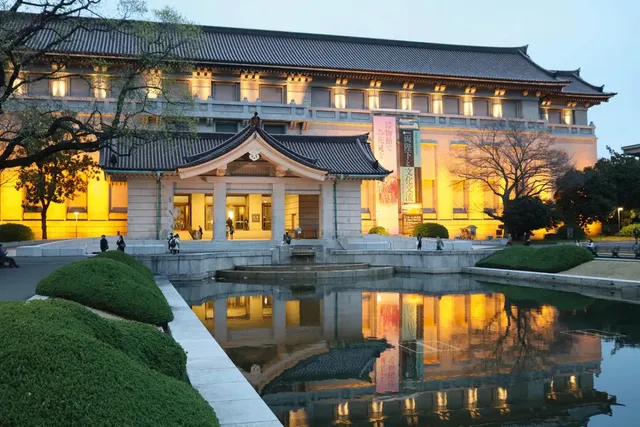
✅ The Toyokan opened in 1968 and has 10 exhibition rooms. It is divided into sections such as General Exhibits, Egyptian Art, West Asian Art, Southeast Asian Art, Chinese Art, Korean Art, and Central Asian Art. 🌇🌟 These sections display artworks and archaeological relics from various countries and regions in Asia, excluding Japan. 🌟 Among them, Chinese art occupies five exhibition rooms. The collection includes Neolithic stone tools and painted pottery, Shang and Zhou dynasty bronzes, Han dynasty pottery and pictorial stones, Buddhist statues from the Northern and Southern Dynasties, Tang dynasty gold and silverware and tri-colored pottery, and porcelain and calligraphy from the Song, Yuan, Ming, and Qing dynasties. 🌈 Some of these artifacts have been designated as "National Treasures" or "Important Cultural Properties." 🌿 With tens of thousands of Chinese cultural relics, the collection spans from the Neolithic Liangzhu culture's jade artifacts and Song, Yuan, and Tang dynasty porcelain to Qing dynasty porcelain and calligraphy. It truly covers everything. 🌈 🌇🌟 Among the highlights are four works that have been crowned as "Japanese National Treasures": "Xiaoxiang Woyo Tujuan" by Li Sheng of the Southern Song Dynasty, "Red and White Hibiscus" by Li Di of the Southern Song Dynasty, "Snowy Landscape" by Liang Kai of the Southern Song Dynasty, and "Zen Dialogue Fragment: Hanshan and Shide" by Indara of the Yuan Dynasty. 🎨 #Tokyo 🌇🌟