A Michelin-starred restaurant transforms the upcoming experience into a special one. Each dish is not just to satisfy your appetite, but a work of art for intellectual saturation.
In order to describe this extraordinary experience, I, as an artist, will use the values and my understanding of the work of art. But in the end, I will tailor my impressions using restaurant criteria.
Idea and Personality of Cuisine.
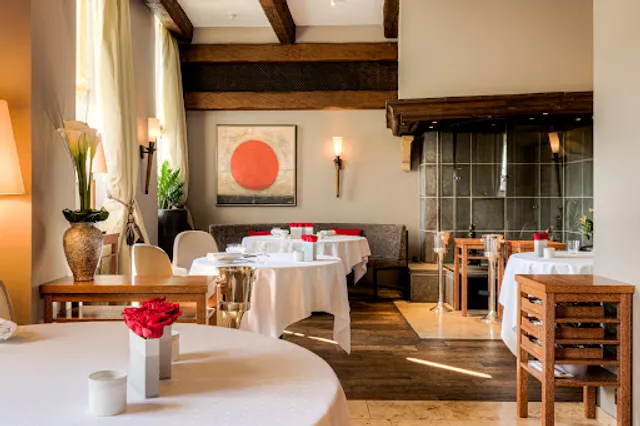
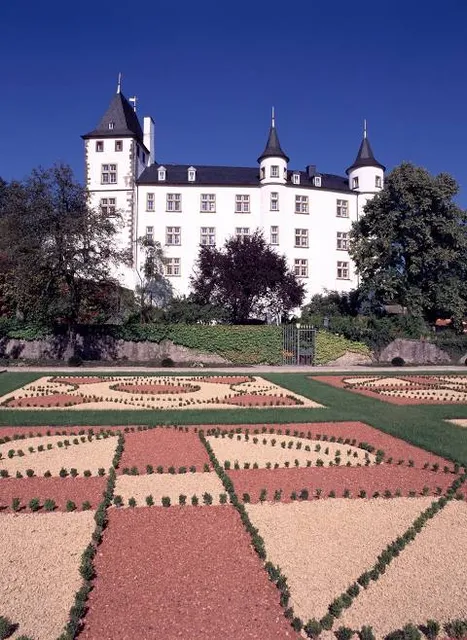
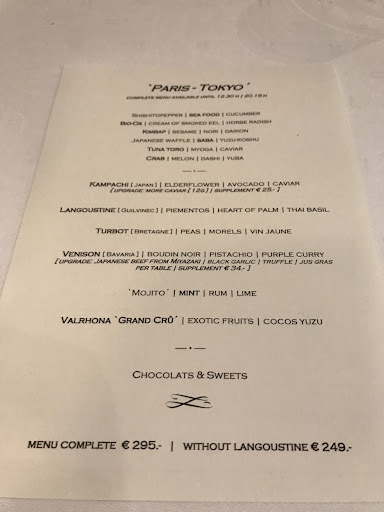
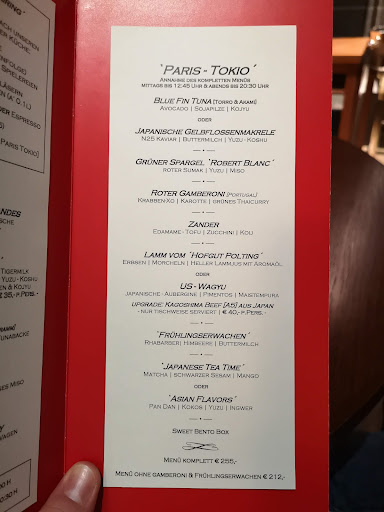
It was a 13-course Paris-Tokio menu. Restaurant Victor's Fine Dining is located in Germany on the border with France, not far from Luxembourg in the old castle Schloss Berg bei Perl-Nennig the first mention of which occurs in 1180. Getting into the pompous atmosphere of the past, you do not expect to see fresh tuna or kampachi fresh fish on the plate. Choosing such a menu brings freshness to this region of Germany since the traditional cuisine is rich in meat and is a bit heavy. At the same time, the very idea of combining the experience and techniques of French cuisine with the traditions of Japan makes it possible to learn something new, to combine the incompatible, to think about the general features of food culture, globalisation and inspiration.
Colour, contrasts, shape.
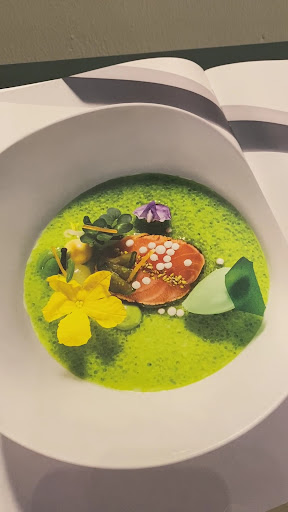
The gastronomic journey began with the dish "Karotte. Joghurt. Curry". Two dishes are connected by a green colorful spot. One green is light and crispy, while the other is oily and bubbly. "Joghurt" is a multi-layered experience consisting of different consistencies and temperatures, while "Curry" is one texture where the taste complements the first course and sets the tone for all subsequent action. This is a colourful beginning, where contrasts are cold and warm, crispy and soft, and moderately sweet and sour. Each subsequent dish is a carefully thought-out composition of taste and products. Chef Christian Bau's working principle - is "Do things with passion or not at all."
It seems to me that not only this passion but also exquisite taste, an exceptional understanding of colour and form, and enjoyment of nature and life are manifested in each of the dishes.
Rhythm, movement, time.
Seasonality is brought to the dishes with autumn leaves, emphasized by the first frost in the form of ice balls with taste, and the catch of the hunting season in the form of a wild rabbit.
The dishes are served according to the rhythm from light and cold to heavy and hot and back to light, cold and sweet. Sometimes the serving intervals between dishes are a little stretched, but perhaps this is the director's idea so that we stop to rush and run and our inner world comes into harmony.
Quality of Products.
One of the features of Japanese cuisine is the use of fresh products and the desire to preserve the natural colour and taste.
Knowing this, the role of simply serving pieces of fresh fish with a delicate sauce becomes clear. The quality of the products leaves no doubt about their perfection. This is how fresh fish or black caviar should sound.
Mastery of Flavour and Cooking Techniques.
My absolute favourite is Rouget Barbet. The scales of this fish become the main feature of this dish. Here it seems to me that the mastery of the cooking technique is especially obvious. As a viewer, I don’t have the slightest idea what needs to be done so that each of the scales is wrapped in a tube, remains crispy and does not come off the peel. And in the flavour, you can recognize all the shades that are in balance from sour to sweet.
Value for Money.
This is a sensitive and very personal question, I think. On the one hand, I won’t be able to come here for lunch once a week, but visit a restaurant whose menu was created by a person who contributed to the development of culinary business in Germany (Federal Cross of Merit 2018) since 2005 has consistently had three Michelin stars and in 2022 it is in the top 10 of the international restaurant ranking La Liste, is worth it. Since the age of fourteen, Christian Bau has been a passionate cook, so I believe that this person "can...
Read moreEverything is magnificent. Luxury and comfort combined is always a success. There are rooms at the « castle » and also in the modern building where the pools are. It’s spacious, and not too expensive considering the very high 5* quality of the hotel part.
It’s the same as the restaurant whose standing, service and food are all of outstanding quality. Great welcome (even though I initially could not properly sit on the chair they had provided but that was solved quite rapidly). The maître d’hôtel is very good and so is the sommelière Nina Mann.
The menu is very elaborate, between french and Japanese inspirations, with lots of exquisite dishes. We were amazed by the beef tartare in the mises en bouche, one of the tastiest I have ever had (and I’m Belgian, beef tartare aka « américain » we know something about that!!), transported by the Toro tuna with caviar and Soy, blow away by the tarbot, surprise but the truffle dessert etc etc. Every dish was 18 to 19/20 with remarquable precision and display.
The wine list is a 65 pages book with an impressive list of German wines, plus french and international but…. NO natural wines at all. I mentioned that to the sommelière and she said she would like to have some but the chef does not like natural wines and has made law « no natural wines in my restaurant ! ».
This is of course very sad when you’re a 3-stars restaurant as Michelin itself is awarding sommeliers who serve varied selections between wines, sake, beers, natural wines, pet nats etc. At the end of the meal I got to greet the chef and told him that. I could see his face closing like an alligator on a steak. “I don’t like it” is not a reason to deprive the public from a whole world of tastes and surprising creations by the “newest” winemakers of the world. And when you go to restaurants of the 50Best list you end up tasting naturals wines 95% of the times. (Well not at Geranium).
When you hit a 3-stars restaurant with a bill of 4 digits for two, you deserve to be surprised and amazed on the plate but also in the glass. Even though Nina serves very good wines, none of them was worth a “let me write this down, I must get it”. There is something to work on there.
But it was a great meal anyway. Just in the plate even though, again, Nina did the best job she could on the wines.
Attention, also don’t eat 5 hours before this meal. It’s quite a lot of...
Read moreFood is very good as one can expect. But for the value there are some issues.
1- The Japanese infusion part is exceptional. However, the French part starting from angelotti does not keep the same quality. The continuation from the Japanese part does not smoothly follow but more abrupt. Going from perfect dashi and tuna to very heavy sauce of angelotti not balanced.
2- Angelotti was way way too salty. I eat salty food but this was extreme. I raised the point and they said it is to enhance the truffle. However there was not much truffle on the plate so earthiness cannot be balanced well. I do not see the point in this dish. It also ruined the taste of the following two courses. I also read the same comment in a website but did not believe so. It is indeed true! 3- There is an issue with the communication. We start at 19:30 and by the time we get the menu it was around 20:20 all good with amuse-bouche. We were told we cannot order from the specials menu as it past 20:00. How on earth I would know when I get the menu in the restaurant although I saw it can be ordered before 20:00. It would be much easier to say if your reservation is later than 19:00, then you cannot get specials. Assuming the guests knows the time line is very rookie. 4- I find cheese selection rather basic, I am able to find much more variety in many places in Germany from a good cheese shop. I expected to see some special selection that would be very well selected rather than regular quality stuff.
Overall, the first part is excellent, the quality is top notch. However, I do not think it worth the price as the excellence does not seems to be there. I expected a...
Read more