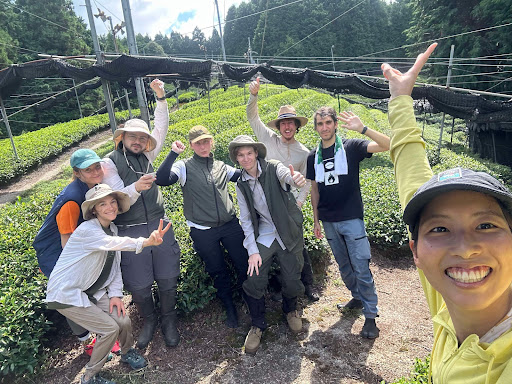
I have been an intern at Obubu and are soon finished, after a 3 month Internship. It has been a both educational, challenging, and a lovely experience.
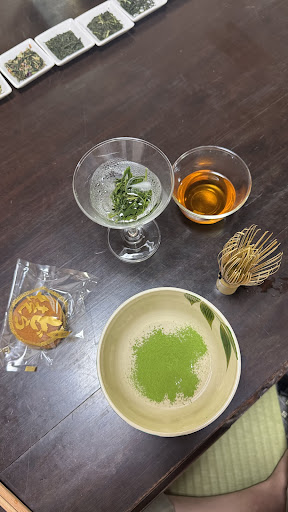
Educational: This is super valuable if you are interested in tea. Because we get a 360-degree angle on Japanese tea from farming/harvesting, getting tea lectures, brewing, conveying tea and of course drink a lot of teas. And I mean a lot.
Challenging: Because there are a lot of new things. Everything from being in another place, to live in another way (rural area, food etc.), wanting to do a lot in your free time in Japan (but because of transport difficulties, money, energy depletion etc. you can't do everthing you want), while at the same time do lot of variating (new) work. Some people have other projects and jobs they take care of, because they think they can be an intern and do other work/projects at the same time. Or they simply need some money to pay for this experience. It is possible to do other things, but thats usually quite stressful for the most people. All of this starts from day 1. E.g. From the start, you get thrown out into presenting about knowledge you don't quite yet don't understand. Although, you will learn it all. Later it becomes easier.
Lovely: Because the people, both staff and assistant managers of Obubu are superb. They are immensely helpful, loves to share tea knowledge, high energy, and are just incredibly fun to be around.
I have some cons: I think everyone agrees on this. There are too much dish washing. There are a lot of washing and drying by hand. And mainly all interns and assistant managers all have (high) educational background. Although, Obubu just got a dish washing machine in the cafe, (in the last part of this summer season, but many things cannot be washed in this anyway), machines are still missing in the tearooms and accommodation houses. It cost accommodation to be an intern. A place like this, that is this popular and make quite good money should make the accommodation cost 0. That is what other places (workaway etc.) does. Especially if they want to attract interns from other places than rich countries. And while they do pay for some condiments like rice and other things, you still have to pay for a lot of food here. So it is quite expensive to come and work for free (5 days a/40 hours a week). So yeah, Obubu has a good business model you can imagine.
With that said, I will recommend Obubu to people who likes (japanese) tea, wants to stay in Japan and wants to explore tea more intensively. Yes, you should work (9-18, 5 days a week), but there are also a lot of fun and interesting stuff cramped into these workhours. I say this, because for some countries, interns can mean "more relaxing" than a normal job. Also remember that each season will be quite different. E.g. Spring is quite tourist busy and harvest heavy (which mean you do a lot of tea tours and harvesting), and winter is more project related. The other part being the people - the co-intern/assistent managers you need to spend a lot of time together with. But in in all I do recommend it.
Arigatougozaimashita Obubu and all the...
Read moreFor anyone considering an internship at Obubu, this review is for you. I joined as intern #183 during the autumn season (September to November 2024), leaving behind the fast pace of New York City for the peaceful tea fields of Wazuka. Initially, I was concerned about adjusting to such a different environment, but if you enjoy shared living, lively community life, and the beauty of Japan’s countryside, this change can be refreshing. One of the most rewarding aspects of the Obubu internship is the way it combines work with genuine friendship. Living alongside fellow interns and managers, you’ll find yourself forming close connections both inside and outside of work. Obubu provides comprehensive training across the tea production process, from harvesting leaves to adjusting factory equipment and roasting houjicha, allowing you to learn every step firsthand. Despite its small community of staff and interns, Obubu’s global reach is remarkable; the network of former interns means you can connect with someone almost anywhere in the world. Weekend trips have been another highlight for me, leading to unforgettable adventures in places like Amanohasidate, Ibukiyama, Tokoname, and Ine—spots I’d never have thought to visit otherwise. The experience does come with some challenges. Wazuka is a true tea village, so its remote location limits access to larger cities, making it harder to venture far during the work week. The schedule can also be demanding, with work hours from 9 a.m. to 6 p.m. Monday to Friday and some Saturdays as well. This extended work week sometimes makes it difficult to plan trips outside of Wazuka. Additionally, Obubu’s focus leans more toward tea tourism and education than on traditional farming, so if you’re expecting consistent hands-on farm work, you may find the emphasis on tourism to be different from your expectations. Overall, if you’re seeking a deep dive into Japanese tea culture, hands-on learning, and a unique blend of work and community life, Obubu is an incredible place to grow both personally and...
Read moreIf you're a true tea lover and looking for a tea internship, Obubu Tea Farms is like stepping into a world where tea isn't just a drink—it's a lifestyle. As intern #182, I had the joy of diving into the world of Japanese tea-making, from field to cup, in the most hands-on, immersive way possible. Arriving just in time for the autumn harvest, I found myself thrown into a completely new experience. Imagine learning to work harvesting machines, lifting heavy tea bags, and balancing on the back of a K truck zooming along forest roads—hard work, but with an unbeatable thrill! One of the highlights was working with Akky-san, our tea guru. His passion for the tea fields taught us that tea-making is as much about heart as it is about skill. As an intern, you're also part tour guide, leading guests through tea tastings and sharing Obubu's story. While public speaking can be nerve-wracking, it was so fulfilling to share my tea knowledge and chat with visitors from around the world. The shorter tours, especially, felt like hanging out with new friends who were just as curious about Japanese tea as I was. Obubu’s tucked-away, rural location also gave us the chance to explore Japan’s countryside in a way most tourists never do. On weekends, we’d pile into a car and hit the road to places like Tokoname and Amanohashidate, or unwind at local izakayas, and even stargaze on secluded beaches. Those moments, shared with the friends I made at Obubu, felt like pure magic. All in all, my time at Obubu was challenging, joyful, and unforgettable. If you’re willing to roll up your sleeves, dive into the Japanese tea world, and embrace a bit of craziness, this experience is truly one of a kind. I can’t recommend it enough!...
Read more