A number of monasteries grew up during the Pāla period in ancient Bengal and Magadha. According to Tibetan sources, five great Mahaviharas stood out: Vikramashila, the premier university of the era; Nalanda, past its prime but still illustrious, Somapura, Odantapura, and Jagaddala.The five monasteries formed a network; "all of them were under state supervision" and there existed "a system of co-ordination among them. It seems from the evidence that the different seats of Buddhist learning that functioned in eastern India under the Pāla were regarded together as forming a network, an interlinked group of institutions," and it was common for great scholars to move easily from position to position among them.
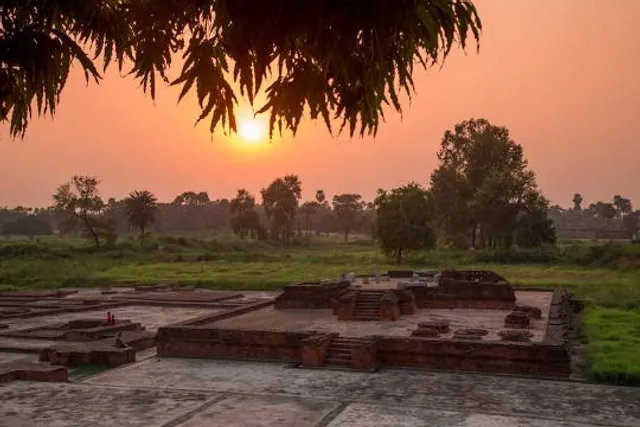
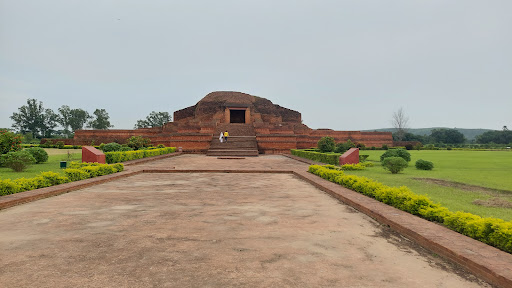
Vikramashila was founded by Pāla king Dharmapala in the late 8th or early 9th century. It prospered for about four centuries before it was destroyed by Bakhtiyar Khiljialong with the other major centres of Buddhism in India around 1193.
Vikramashila is known to us mainly through Tibetan sources, especially the writings of Tāranātha, the Tibetan monk historian of the 16th–17th centuries.
Vikramashila was one of the largest Buddhist universities, with more than one hundred teachers and about one thousand students. It produced eminent scholars who were often invited by foreign countries to spread Buddhist learning, culture and religion. The most distinguished and eminent among all was Atisha Dipankara, a founder of the Sarmatraditions of Tibetan Buddhism. Subjects like philosophy, grammar, metaphysics.Six gate protectors or gate scholars (Dvārapāla or Dvārapaṇḍita), one each for the Eastern, Western, First Central, Second Central, Northern, and Southern Gates
Great Scholars (Mahapaṇḍita)
Scholars (Paṇḍita), roughly 108 in number
Professors or Teachers (Upādhyāya or Āchārya), roughly 160 in number including paṇḍits
Resident monks (bhikṣu), roughly 1,000 in number
According to Tāranātha, at Vikramashila's peak during the reign of King Chanaka (955–83), the dvārapāla were as follows: Ratnākaraśānti (Eastern Gate), Vāgīsvarakīrti (Western Gate), Ratnavajra (First Central Gate), Jñanasrimitra (Second Central Gate), Naropa (Northern Gate), and Prajñākaramati (Southern Gate)If this is correct, it must have been toward the end of Chanaka's reign given the generally accepted dates for Naropa (956–1041).
Vikramaśīla was a centre for Vajrayana and employed Tantric preceptors. The first was Buddhajñānapāda, followed by Dīpaṁkarabhadra and Jayabhadr The first two were active during Dharmapāla's reign, the third in the early to mid portion of the 9th century. Jayabhadra, a monk from Sri Lanka, was the first prominent commentator on the Cakrasamvara tantraŚrīdhara was the next preceptor, followed by BhavabhaṭṭaThe latter, also a prominent commentator on Cakrasamvara, may have been the mahāsiddha BhadrapādaHe in turn was succeeded by three more prominent Cakrasamvara commentators, Bhavyakīrti, Durjayachandra, and Tathāgatarakṣita.Durjayachandra collaborated with the renowned Tibetan translator Rinchen Zangpoand his commentary became particularly important for the Sakya school, and Tathāgatarakṣita collaborated with...
Read more
 Learn more insights from Wanderboat AI.