HTML SitemapExplore
Find Things to DoFind The Best Restaurants

Herat Central Blue Mosque — Attraction in 2nd District

Name
Herat Central Blue Mosque
Description
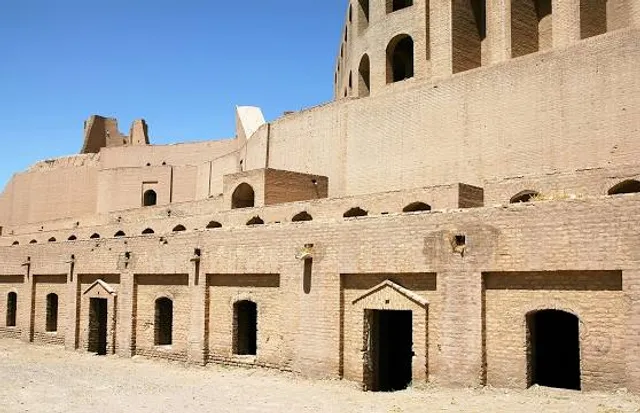
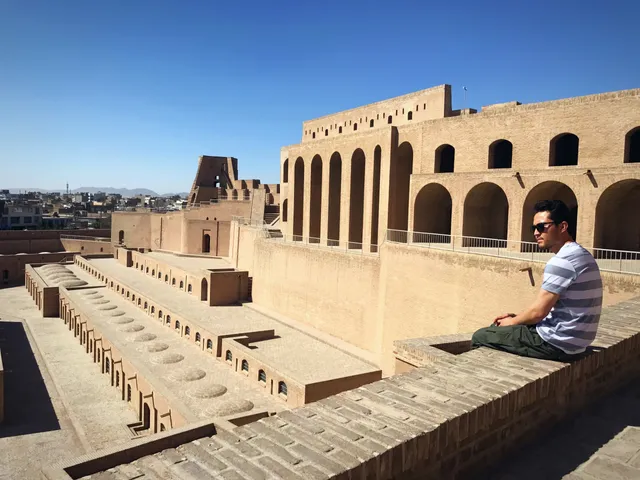
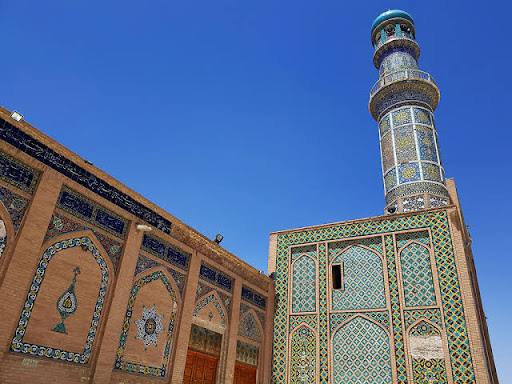
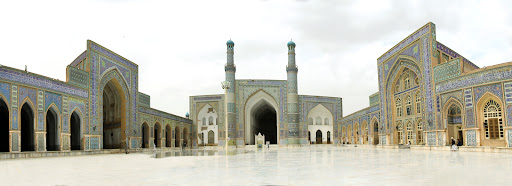
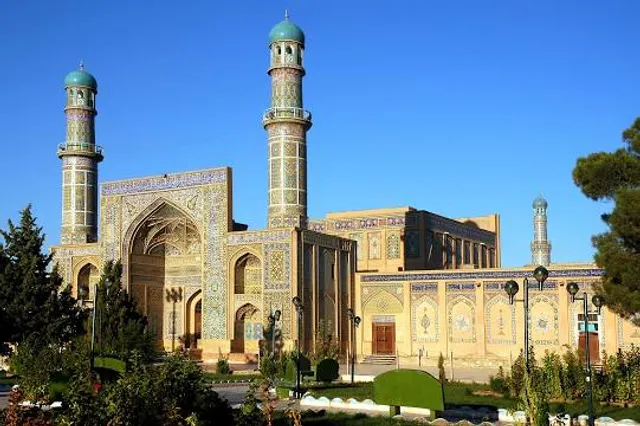
The Great Mosque of Herat or "Jami Masjid of Herat", is a mosque in the city of Herat, in the Herat Province of north-western Afghanistan. It was built by the Ghurids, under the rule of Sultan Ghiyath al-Din Muhammad Ghori, who laid its foundation in 1200 CE.
Nearby attractions
Herat Citadel
85WQ+753 قلعه اختیارالدین (ارگ تاریخی هرات)، جاده انصاری, Herat, Afghanistan
National Museum
قلعه اختیارالدین (ارگ تاریخی هرات)، جاده انصاری, Herat, Afghanistan
Nearby restaurants
Nearby hotels
Related posts
Keywords
Herat Central Blue Mosque tourism.Herat Central Blue Mosque hotels.Herat Central Blue Mosque bed and breakfast. flights to Herat Central Blue Mosque.Herat Central Blue Mosque attractions.Herat Central Blue Mosque restaurants.Herat Central Blue Mosque travel.Herat Central Blue Mosque travel guide.Herat Central Blue Mosque travel blog.Herat Central Blue Mosque pictures.Herat Central Blue Mosque photos.Herat Central Blue Mosque travel tips.Herat Central Blue Mosque maps.Herat Central Blue Mosque things to do.
Herat Central Blue Mosque things to do, attractions, restaurants, events info and trip planning
Herat Central Blue Mosque
AfghanistanHerat Province2nd DistrictHerat Central Blue Mosque

Basic Info

Herat Central Blue Mosque

Sherafat Rd, Herat, Afghanistan
4.6(566)
Open 24 hours
Save
spot

Ratings & Description

Info

The Great Mosque of Herat or "Jami Masjid of Herat", is a mosque in the city of Herat, in the Herat Province of north-western Afghanistan. It was built by the Ghurids, under the rule of Sultan Ghiyath al-Din Muhammad Ghori, who laid its foundation in 1200 CE.

Cultural
Scenic
Family friendly
Accessibility
attractions: Herat Citadel, National Museum, restaurants:
logoLearn more insights from Wanderboat AI.
Phone
+93 40 222 5743

Plan your stay

hotel
Pet-friendly Hotels in 2nd District
Find a cozy hotel nearby and make it a full experience.
hotel
Affordable Hotels in 2nd District
Find a cozy hotel nearby and make it a full experience.
hotel
The Coolest Hotels You Haven't Heard Of (Yet)
Find a cozy hotel nearby and make it a full experience.
hotel
Trending Stays Worth the Hype in 2nd District
Find a cozy hotel nearby and make it a full experience.

Reviews

Nearby attractions of Herat Central Blue Mosque

Herat Citadel

National Museum

Herat Citadel

Herat Citadel

4.5

(729)

Open 24 hours
Click for details
National Museum

National Museum

4.4

(83)

Open 24 hours
Click for details
Get the Appoverlay
Get the AppOne tap to find yournext favorite spots!
Wanderboat LogoWanderboat

Your everyday Al companion for getaway ideas

CompanyAbout Us
InformationAI Trip PlannerSitemap
SocialXInstagramTiktokLinkedin
LegalTerms of ServicePrivacy Policy

Get the app

© 2025 Wanderboat. All rights reserved.

Reviews of Herat Central Blue Mosque

4.6
(566)
avatar
5.0
6y

The Great Mosque of Herat  or "Jami Masjid of Herat", is a mosque in the city of Herat, in the Herat Province of north-western Afghanistan. It was built by the Ghurids, under the rule of the Sultan Ghiyath al-Din Muhammad Ghori, who laid its foundation in 1200 CE, and later extended by several rulers as Herat changed rulers down the centuries from the Timurids to the Safavids, Mughalsand then the Uzbeks, all of whom supported the mosque. Though many of the glazed tiles have been replaced during subsequent periods, the Friday Mosque in Herat was given its present form during the closing years of the fifteenth century. Apart from numerous small neighborhood mosques for daily prayer, most communities in the Islamic world have a larger mosque, a congregational mosque for Friday services with a sermon. The Jama Masjid was not always the largest mosque in Herat; a much larger complex the Mosque and Madressa of Gawharshad, also built by the Timurids, was located in the northern part of the city. However, those architectural monuments were dynamited by officers of the British Indian Army in 1885, to prevent its use as a fortress if a Russian army tried to invade India.

The Masjid-i Jami of Herat, the city's first congregational mosque, was built on the site of two smaller Zoroastrian fire temples that were destroyed by earthquake and fire. A mosque was begun by the Ghurid ruler Ghiyas ad-Din Ghori in 1200 (597 AH), and, after his death, the building was continued by his brother and successor Muhammad of Ghor. This is confirmed both by an inscription on the eastern Ghurid portal uncovered in 1964 during a restoration, and by the sixteenth century Timurid historian Khwandamir in his Khulasat al-Akhbar. In 1221, Genghis Khan conquered the province, and along with much of Herat, the small building fell into ruin. It wasn't until after 1245, under Shams al-Din Kart[2] that any rebuilding programs were undertaken, and construction on the mosque was not started until 1306.[1] However a devastating earthquake in 1364 left the building almost completely destroyed, although some attempt was made to rebuild it.[1] After 1397, the Timurid rulers redirected Herat's growth towards the northern part of the city. This suburbanization and the building of a new congregational mosque in Gawhar Shad's Musalla marked the end of the Masjid-i Jami's patronage by a monarchy. Replacement of the small ruined mosque was done by construction of an entirely new building with surrounding gardens, which was completed by Jalal al-Din Firuzshah, one of the most prominent emirs under Shah Rukh (1405–1444). The decorations alone took over five years to complete, as the emir brought in workers from all over the empire. The mosque was later given a final renovation under the Mughal Empire, when Prince Khurram (Shah Jahan) was fighting for control of the region against the Uzbek tribes. Modern Developments

Little of the medieval Mosque remains, after the Anglo-Afghan wars much of the mosque was left destroyed. A program launched in 1945 rebuilt walls and rooms, expanded the northeastern section of the mosque from a length of approximately 101 meters to 121 meters and replaced expensive materials from all over the medieval Timurid and Mughal Empires with locally available cheap materials. Overall, the mosque's multiple reconstructions and restoration programs have left little to authenticate as original. However the inscribed Ghorid portal remains, south of the existing main entrance to the mosque. In 2012, some fifty Afghan traders promised funds for the renovation...

   Read more

avatar
5.0
3y

The Great Mosque of Herat (Pashto: د هرات لوی جومات ; Dari: مسجد جامع هرات, romanized: Masjid-i Jāmi‘-i Herāt) or "Jami Masjid of Herat",[1] is a mosque in the city of Herat, in the Herat Province of north-western Afghanistan. It was built by the Ghurids, under the rule of Sultan Ghiyath al-Din Muhammad Ghori, who laid its foundation in 1200 CE. Later, it was extended several times as Herat changed rulers down the centuries from the Kartids, Timurids, Mughals and then the Uzbeks, all of whom supported the mosque. The fundamental structure of the mosque from the Ghurid period has been preserved, but parts have been added and modified. The Friday mosque in Herat was given its present appearance during the 20th century. Apart from numerous small neighborhood mosques for daily prayer, most communities in the Islamic world have a larger mosque, a congregational mosque for Friday services with a sermon. The Jami Masjid of Herat was not always the largest mosque in Herat; a much larger complex, the Mosque and Madressa of Gawhar Shad, also built by the Timurids, was located in the northern part of the city. However, those architectural monuments were dynamited by officers of the British Indian Army in 1885, to prevent its use as a fortress if a Russian army tried to...

   Read more
avatar
5.0
2y

بنام خداوند متعال عاشقتم ای مسجد جامع من ماشاءالله ماشاءالله ماشاءالله ماشاءالله ماشاءالله ماشاءالله ماشاءالله ماشاءالله ماشاءالله ماشاءالله ماشاءالله ماشاءالله ماشاءالله ماشاءالله ماشاءالله ماشاءالله ماشاءالله ماشاءالله ماشاءالله ماشاءالله ماشاءالله ماشاءالله ماشاءالله ماشاءالله ماشاءالله ماشاءالله ماشاءالله ماشاءالله ماشاءالله ماشاءالله ماشاءالله ماشاءالله ماشاءالله ماشاءالله ماشاءالله ماشاءالله ماشاءالله ماشاءالله ماشاءالله ماشاءالله ماشاءالله ماشاءالله ماشاءالله ماشاءالله ماشاءالله ماشاءالله ماشاءالله ماشاءالله ماشاءالله ماشاءالله ماشاءالله ماشاءالله ماشاءالله ماشاءالله ماشاءالله ماشاءالله ماشاءالله ماشاءالله ماشاءالله ماشاءالله ماشاءالله ماشاءالله ماشاءالله ماشاءالله ماشاءالله ماشاءالله ماشاءالله ماشاءالله ماشاءالله ماشاءالله ماشاءالله ماشاءالله ماشاءالله ماشاءالله ماشاءالله ماشاءالله ماشاءالله ماشاءالله ماشاءالله ماشاءالله ماشاءالله ماشاءالله ماشاءالله ماشاءالله ماشاءالله ماشاءالله ماشاءالله ماشاءالله ماشاءالله ماشاءالله ماشاءالله ماشاءالله ماشاءالله ماشاءالله ماشاءالله ماشاءالله ماشاءالله ماشاءالله ماشاءالله ماشاءالله ماشاءالله ماشاءالله ماشاءالله ماشاءالله ماشاءالله ماشاءالله ماشاءالله ماشاءالله ماشاءالله ماشاءالله ماشاءالله ماشاءالله ماشاءالله ماشاءالله ماشاءالله ماشاءالله ماشاءالله ماشاءالله ماشاءالله ماشاءالله ماشاءالله ماشاءالله ماشاءالله ماشاءالله ماشاءالله ماشاءالله ماشاءالله ماشاءالله ماشاءالله ماشاءالله ماشاءالله ماشاءالله ماشاءالله ماشاءالله ماشاءالله ماشاءالله ماشاءالله ماشاءالله ماشاءالله ماشاءالله ماشاءالله ماشاءالله ماشاءالله ماشاءالله ماشاءالله ماشاءالله ماشاءالله ماشاءالله ماشاءالله ماشاءالله ماشاءالله ماشاءالله ماشاءالله ماشاءالله ماشاءالله ماشاءالله ماشاءالله ماشاءالله ماشاءالله ماشاءالله ماشاءالله ماشاءالله ماشاءالله ماشاءالله ماشاءالله ماشاءالله ماشاءالله ماشاءالله ماشاءالله ماشاءالله ماشاءالله ماشاءالله ماشاءالله ماشاءالله ماشاءالله ماشاءالله ماشاءالله ماشاءالله ماشاءالله ماشاءالله ماشاءالله ماشاءالله ماشاءالله ماشاءالله ماشاءالله ماشاءالله ماشاءالله ماشاءالله ماشاءالله ماشاءالله ماشاءالله ماشاءالله ماشاءالله ماشاءالله ماشاءالله ماشاءالله ماشاءالله ماشاءالله ماشاءالله ماشاءالله ماشاءالله ماشاءالله ماشاءالله ماشاءالله ماشاءالله ماشاءالله ماشاءالله ماشاءالله ماشاءالله ماشاءالله ماشاءالله ماشاءالله ماشاءالله ماشاءالله ماشاءالله ماشاءالله ماشاءالله ماشاءالله ماشاءالله ماشاءالله ماشاءالله ماشاءالله ماشاءالله ماشاءالله ماشاءالله ماشاءالله ماشاءالله ماشاءالله ماشاءالله ماشاءالله ماشاءالله ماشاءالله ماشاءالله ماشاءالله ماشاءالله ماشاءالله ماشاءالله ماشاءالله ماشاءالله ماشاءالله ماشاءالله ماشاءالله ماشاءالله ماشاءالله ماشاءالله ماشاءالله ماشاءالله ماشاءالله ماشاءالله ماشاءالله ماشاءالله ماشاءالله ماشاءالله ماشاءالله ماشاءالله ماشاءالله ماشاءالله ماشاءالله ماشاءالله ماشاءالله ماشاءالله ماشاءالله ماشاءالله ماشاءالله ماشاءالله ماشاءالله ماشاءالله ماشاءالله ماشاءالله ماشاءالله ماشاءالله ماشاءالله ماشاءالله ماشاءالله ماشاءالله ماشاءالله ماشاءالله ماشاءالله ماشاءالله ماشاءالله ماشاءالله ماشاءالله ماشاءالله ماشاءالله ماشاءالله ماشاءالله ماشاءالله ماشاءالله ماشاءالله ماشاءالله ماشاءالله ماشاءالله ماشاءالله ماشاءالله ماشاءالله ماشاءالله ماشاءالله ماشاءالله ماشاءالله ماشاءالله ماشاءالله ماشاءالله ماشاءالله ماشاءالله ماشاءالله ماشاءالله ماشاءالله ماشاءالله ماشاءالله ماشاءالله ماشاءالله ماشاءالله ماشاءالله ماشاءالله ماشاءالله ماشاءالله ماشاءالله ماشاءالله ماشاءالله ماشاءالله ماشاءالله ماشاءالله ماشاءالله ماشاءالله ماشاءالله ماشاءالله ماشاءالله ماشاءالله ماشاءالله ماشاءالله ماشاءالله ماشاءالله ماشاءالله ماشاءالله ماشاءالله ماشاءالله ماشاءالله ماشاءالله ماشاءالله ماشاءالله ماشاءالله ماشاءالله ماشاءالله ماشاءالله ماشاءالله ماشاءالله ماشاءالله ماشاءالله ماشاءالله ماشاءالله ۳۳ماشاءالله ماشاءالله ماشاءالله ماشاءالله...

   Read more
Page 1 of 7
Previous
Next

Posts

Your browser does not support the video tag.
theglobetrottingdetectivetheglobetrottingdetective
GREAT MOSQUE OF HERAT, AFGHANISTAN This beautiful mosque was built in 1200 CE by the Ghurids Dynasty. It’s situated in the middle of the main historical bazaar of Herat. I just walked there from the Herat Citadel. It’s open every day from sunset to about 10 pm. But as a tourist, it’s better to avoid the Friday prayer as at that time the mosque is very busy with prayers. There is no entrance fee. I’m exploring this beautiful place with my local host from Couchsurfing, @somayamoniry. I’m wearing my traditional Afghan dress here. 🎥: @somayamoniry #afganistan #afghanistan🇦🇫 #afghanistan🇦🇫❤️❤️❤️✌🏻✌🏻✌🏻 #afghanculture #afghanstyle #afghanistantravel #afghanculture #beautifuldestinations #beautifulafghandress #herat #heratcitadel #heratravels #heratsights #herat_afghanistan #heratravel #heratafghanistan🇦🇫 #herat_afganistan #traveltheworldwithme #traveltheworldwithstyle #travelblogger #femaletravelbloggers #hungariantraveler #solofemaletraveler
Naqib NajeebNaqib Najeeb
The Great Mosque of Herat  or "Jami Masjid of Herat", is a mosque in the city of Herat, in the Herat Province of north-western Afghanistan. It was built by the Ghurids, under the rule of the Sultan Ghiyath al-Din Muhammad Ghori, who laid its foundation in 1200 CE, and later extended by several rulers as Herat changed rulers down the centuries from the Timurids to the Safavids, Mughalsand then the Uzbeks, all of whom supported the mosque. Though many of the glazed tiles have been replaced during subsequent periods, the Friday Mosque in Herat was given its present form during the closing years of the fifteenth century. Apart from numerous small neighborhood mosques for daily prayer, most communities in the Islamic world have a larger mosque, a congregational mosque for Friday services with a sermon. The Jama Masjid was not always the largest mosque in Herat; a much larger complex the Mosque and Madressa of Gawharshad, also built by the Timurids, was located in the northern part of the city. However, those architectural monuments were dynamited by officers of the British Indian Army in 1885, to prevent its use as a fortress if a Russian army tried to invade India. The Masjid-i Jami of Herat, the city's first congregational mosque, was built on the site of two smaller Zoroastrian fire temples that were destroyed by earthquake and fire. A mosque was begun by the Ghurid ruler Ghiyas ad-Din Ghori in 1200 (597 AH), and, after his death, the building was continued by his brother and successor Muhammad of Ghor. This is confirmed both by an inscription on the eastern Ghurid portal uncovered in 1964 during a restoration, and by the sixteenth century Timurid historian Khwandamir in his Khulasat al-Akhbar. In 1221, Genghis Khan conquered the province, and along with much of Herat, the small building fell into ruin. It wasn't until after 1245, under Shams al-Din Kart[2] that any rebuilding programs were undertaken, and construction on the mosque was not started until 1306.[1] However a devastating earthquake in 1364 left the building almost completely destroyed, although some attempt was made to rebuild it.[1] After 1397, the Timurid rulers redirected Herat's growth towards the northern part of the city. This suburbanization and the building of a new congregational mosque in Gawhar Shad's Musalla marked the end of the Masjid-i Jami's patronage by a monarchy. Replacement of the small ruined mosque was done by construction of an entirely new building with surrounding gardens, which was completed by Jalal al-Din Firuzshah, one of the most prominent emirs under Shah Rukh (1405–1444). The decorations alone took over five years to complete, as the emir brought in workers from all over the empire. The mosque was later given a final renovation under the Mughal Empire, when Prince Khurram (Shah Jahan) was fighting for control of the region against the Uzbek tribes. Modern Developments Little of the medieval Mosque remains, after the Anglo-Afghan wars much of the mosque was left destroyed. A program launched in 1945 rebuilt walls and rooms, expanded the northeastern section of the mosque from a length of approximately 101 meters to 121 meters and replaced expensive materials from all over the medieval Timurid and Mughal Empires with locally available cheap materials. Overall, the mosque's multiple reconstructions and restoration programs have left little to authenticate as original. However the inscribed Ghorid portal remains, south of the existing main entrance to the mosque. In 2012, some fifty Afghan traders promised funds for the renovation of the mosque.
mustafa wardakmustafa wardak
The Herat Central Blue Mosque is a magnificent testament to Islamic architecture, gracing the city with its grandeur. The intricate blue tilework that adorns the mosque is breathtaking, creating a visual spectacle that captures the essence of Persian and Central Asian design. The spacious courtyard and prayer halls exude a sense of tranquility, providing a serene space for worship and reflection. The historical significance of the Blue Mosque adds depth to the visit, making it a must-see for those interested in the cultural and religious heritage of Afghanistan. While the maintenance could be more meticulous in certain areas, the overall experience at the Herat Central Blue Mosque is one of reverence and admiration for its architectural splendor.
See more posts
See more posts
hotel
Find your stay

Pet-friendly Hotels in 2nd District

Find a cozy hotel nearby and make it a full experience.

GREAT MOSQUE OF HERAT, AFGHANISTAN This beautiful mosque was built in 1200 CE by the Ghurids Dynasty. It’s situated in the middle of the main historical bazaar of Herat. I just walked there from the Herat Citadel. It’s open every day from sunset to about 10 pm. But as a tourist, it’s better to avoid the Friday prayer as at that time the mosque is very busy with prayers. There is no entrance fee. I’m exploring this beautiful place with my local host from Couchsurfing, @somayamoniry. I’m wearing my traditional Afghan dress here. 🎥: @somayamoniry #afganistan #afghanistan🇦🇫 #afghanistan🇦🇫❤️❤️❤️✌🏻✌🏻✌🏻 #afghanculture #afghanstyle #afghanistantravel #afghanculture #beautifuldestinations #beautifulafghandress #herat #heratcitadel #heratravels #heratsights #herat_afghanistan #heratravel #heratafghanistan🇦🇫 #herat_afganistan #traveltheworldwithme #traveltheworldwithstyle #travelblogger #femaletravelbloggers #hungariantraveler #solofemaletraveler
theglobetrottingdetective

theglobetrottingdetective

hotel
Find your stay

Affordable Hotels in 2nd District

Find a cozy hotel nearby and make it a full experience.

Get the Appoverlay
Get the AppOne tap to find yournext favorite spots!
The Great Mosque of Herat  or "Jami Masjid of Herat", is a mosque in the city of Herat, in the Herat Province of north-western Afghanistan. It was built by the Ghurids, under the rule of the Sultan Ghiyath al-Din Muhammad Ghori, who laid its foundation in 1200 CE, and later extended by several rulers as Herat changed rulers down the centuries from the Timurids to the Safavids, Mughalsand then the Uzbeks, all of whom supported the mosque. Though many of the glazed tiles have been replaced during subsequent periods, the Friday Mosque in Herat was given its present form during the closing years of the fifteenth century. Apart from numerous small neighborhood mosques for daily prayer, most communities in the Islamic world have a larger mosque, a congregational mosque for Friday services with a sermon. The Jama Masjid was not always the largest mosque in Herat; a much larger complex the Mosque and Madressa of Gawharshad, also built by the Timurids, was located in the northern part of the city. However, those architectural monuments were dynamited by officers of the British Indian Army in 1885, to prevent its use as a fortress if a Russian army tried to invade India. The Masjid-i Jami of Herat, the city's first congregational mosque, was built on the site of two smaller Zoroastrian fire temples that were destroyed by earthquake and fire. A mosque was begun by the Ghurid ruler Ghiyas ad-Din Ghori in 1200 (597 AH), and, after his death, the building was continued by his brother and successor Muhammad of Ghor. This is confirmed both by an inscription on the eastern Ghurid portal uncovered in 1964 during a restoration, and by the sixteenth century Timurid historian Khwandamir in his Khulasat al-Akhbar. In 1221, Genghis Khan conquered the province, and along with much of Herat, the small building fell into ruin. It wasn't until after 1245, under Shams al-Din Kart[2] that any rebuilding programs were undertaken, and construction on the mosque was not started until 1306.[1] However a devastating earthquake in 1364 left the building almost completely destroyed, although some attempt was made to rebuild it.[1] After 1397, the Timurid rulers redirected Herat's growth towards the northern part of the city. This suburbanization and the building of a new congregational mosque in Gawhar Shad's Musalla marked the end of the Masjid-i Jami's patronage by a monarchy. Replacement of the small ruined mosque was done by construction of an entirely new building with surrounding gardens, which was completed by Jalal al-Din Firuzshah, one of the most prominent emirs under Shah Rukh (1405–1444). The decorations alone took over five years to complete, as the emir brought in workers from all over the empire. The mosque was later given a final renovation under the Mughal Empire, when Prince Khurram (Shah Jahan) was fighting for control of the region against the Uzbek tribes. Modern Developments Little of the medieval Mosque remains, after the Anglo-Afghan wars much of the mosque was left destroyed. A program launched in 1945 rebuilt walls and rooms, expanded the northeastern section of the mosque from a length of approximately 101 meters to 121 meters and replaced expensive materials from all over the medieval Timurid and Mughal Empires with locally available cheap materials. Overall, the mosque's multiple reconstructions and restoration programs have left little to authenticate as original. However the inscribed Ghorid portal remains, south of the existing main entrance to the mosque. In 2012, some fifty Afghan traders promised funds for the renovation of the mosque.
Naqib Najeeb

Naqib Najeeb

hotel
Find your stay

The Coolest Hotels You Haven't Heard Of (Yet)

Find a cozy hotel nearby and make it a full experience.

hotel
Find your stay

Trending Stays Worth the Hype in 2nd District

Find a cozy hotel nearby and make it a full experience.

The Herat Central Blue Mosque is a magnificent testament to Islamic architecture, gracing the city with its grandeur. The intricate blue tilework that adorns the mosque is breathtaking, creating a visual spectacle that captures the essence of Persian and Central Asian design. The spacious courtyard and prayer halls exude a sense of tranquility, providing a serene space for worship and reflection. The historical significance of the Blue Mosque adds depth to the visit, making it a must-see for those interested in the cultural and religious heritage of Afghanistan. While the maintenance could be more meticulous in certain areas, the overall experience at the Herat Central Blue Mosque is one of reverence and admiration for its architectural splendor.
mustafa wardak

mustafa wardak

See more posts
See more posts