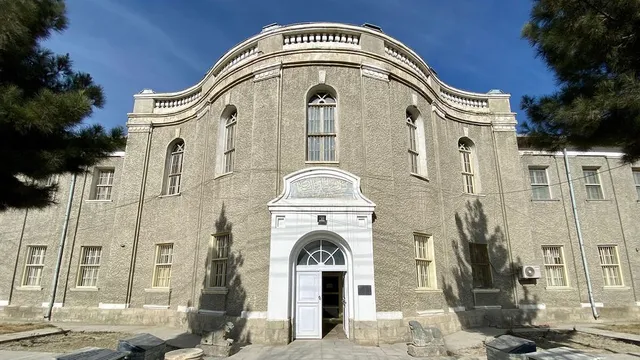
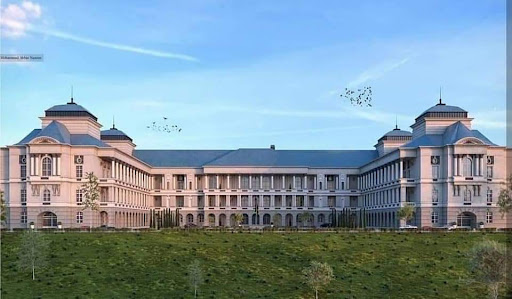
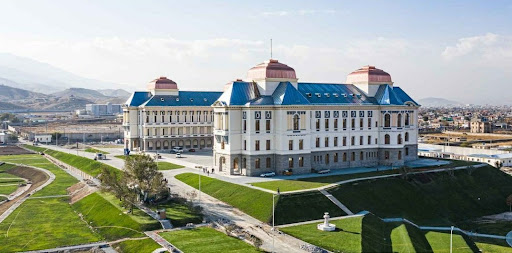
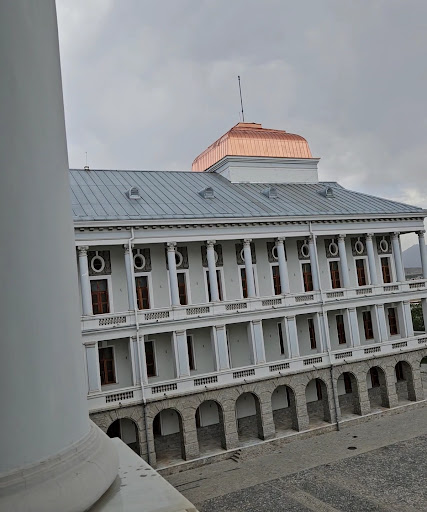
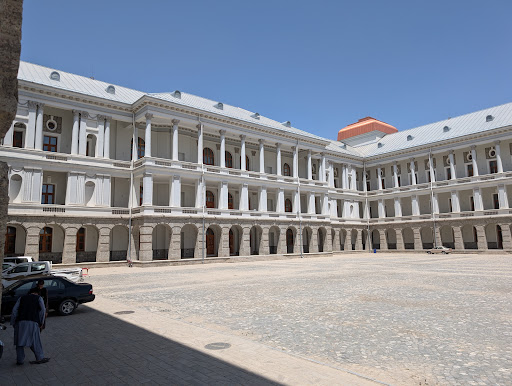
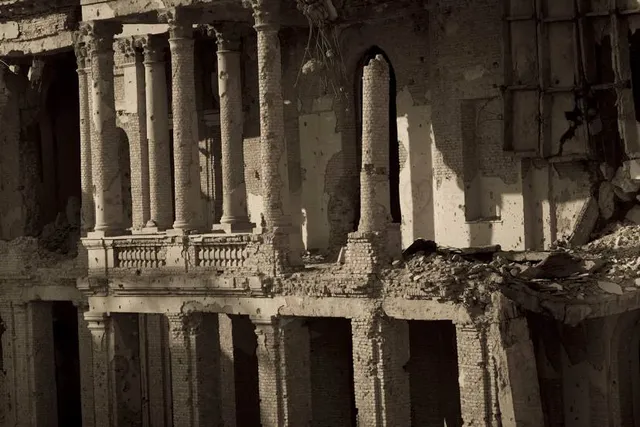
Darul Aman Palace (Persian: قصر دارالامان; Pashto: د دارالامان ماڼۍ; "abode of peace" or, in a double meaning "abode of Aman[ullah]")[1] is a palace located about 16 kilometres (9.9 mi) south-west outside of the center of Kabul, Afghanistan. It sits directly across from the Afghan Parliament, and is close to the National Museum of Afghanistan and the American University of Afghanistan. In 2019, the palace was fully renovated for the 100th year of Afghan Independence, which was on the 19th of August, 2019 Construction of the Darul Aman Palace began in the early 1920s as a part of the endeavours of King Amanullah Khan to modernize Afghanistan. It was to be part of the new capital city called Darulaman, connected to Kabul by a narrow gauge railway.[4] The palace is considered to be a testimony of the Afghan-German ties, as it was designed by German engineer Walter Harten and his team of engineers.[5] The palace is an imposing neoclassical building on a hilltop overlooking a flat, dusty valley in the western part of the Afghan capital. Designed by French and German architects, it was one of the first buildings in the country to get central heating and running water.[3] Intended as the seat of a future parliament, the building remained unused and partially complete for many years after religious conservatives under Habibullah Kalakani forced Amanullah from power in 1929, and halted his reforms. In later years it served as the medical school for Kabul University, as well a warehouse, and the seat of several smaller ministries.[3] The building was gutted by fire on December 14, 1968, and afterwards restored to house the Ministry of Defense during the 1970s and 1980s. In the Communist coup of 1978, the building was once more set on fire. Much of the building was damaged by tank fire during Shahnawaz Tanai's failed coup attempt on March 6, 1990.[6] It was once again damaged in the 1990s as rival Mujahideen factions fought for control of Kabul. Heavy shelling by the Mujahideen left the palace a gutted ruin, including the garage containing the vehicles of the former king which were removed and used as target practice, all ultimately being destroyed. It was mostly used as a refugee settlement and a nomad camp until the early 2000s, when it became a battalion headquarters for the Afghan National Army.[3] In 2005, a plan was unveiled to refurbish the palace for use as the seat of Afghanistan's future parliament.[7] It was to be funded primarily by private donations from foreigners and wealthy Afghans. The palace one of several targets in a series of attacks launched on April 15, 2012, for which the Taliban claimed responsibility.[8] Eventually it was decided to develop a new building opposite the palace to house the parliament under a grant, provided by India. Construction was completed in 2015. In early 2016 work began on a $20 million restoration project, intended to renovate the palace in time for the centenary of Afghanistan’s full independence in 1919. Nearly 600 tons of debris was initially removed from the 150-room building and by the spring of 2017, workers were taking down plaster and concrete from the inner walls.[3] Over 80 engineers and architects were involved in the project, of which 25 percent were female. It was announced in February 2018, that almost 50 percent of the renovation was complete and then was completed in full...
Read more: قصر دارالامان یکی از بناهای تاریخی و برجسته در کابل، پایتخت افغانستان است. این قصر دارای تاریخچهای غنی و معماری خاص است و به عنوان یک نماد فرهنگی و تاریخی در افغانستان شناخته میشود.
تاریخچه قصر دارالامان: قصر دارالامان در دوران امیر امانالله خان (که در اوایل قرن بیستم حکمرانی میکرد) ساخته شد. این قصر در سال ۱۹۲۰ میلادی آغاز به ساخت شد و هدف از ساخت آن، ایجاد یک اقامتگاه سلطنتی و همچنین مکانی برای برگزاری رویدادهای رسمی و حکومتی بود. امیر امانالله خان که خود فردی پیشرو و اصلاحطلب در تاریخ افغانستان بود، قصد داشت این قصر را به عنوان نمادی از مدرنیزاسیون و تحولات اجتماعی و سیاسی در افغانستان بسازد.
قصر دارالامان در ابتدا قرار بود به عنوان محل اقامت سلطنتی و مرکز حکومتی استفاده شود، اما در طول تاریخ دستخوش تغییرات زیادی شد و در دوران جنگهای داخلی و وضعیت بحرانی افغانستان آسیبهایی دید.
ویژگیهای معماری قصر دارالامان: معماری غربی و اسلامی: قصر دارالامان ترکیبی از معماری اسلامی و غربی است. طراحی آن تحت تاثیر معماری اروپایی و بهویژه معماری قصرهای سلطنتی در کشورهای اروپایی قرار داشت. نمای قصر به سبکهای کلاسیک و رنسانس اروپایی و همچنین ویژگیهای معماری اسلامی مانند ارسیها، گنبدها و تزئینات داخلی با نقاشیهای اسلامی و فرشهای ایرانی طراحی شده است.. ساختمان عظیم: قصر دارالامان یک ساختمان بزرگ و باشکوه است که در معماری آن از ستونها، سرستونها و تزئینات سنگی استفاده شده است. این قصر دارای چندین سالن بزرگ و اتاقهای مختلف است که برای مراسمهای رسمی و ملاقاتهای دیپلماتیک در نظر گرفته شده بودند.
محوطه وسیع: قصر دارالامان در محوطهای وسیع و سرسبز قرار دارد که به زیبایی آن افزوده است. در اطراف قصر باغها و فضاهای سبز وجود دارد که به عنوان مکانی برای استراحت و تفریح استفاده میشد.
وضعیت کنونی قصر دارالامان: در طول جنگهای داخلی افغانستان، قصر دارالامان آسیبهای زیادی دید و بسیاری از بخشهای آن تخریب شد. اما در سالهای اخیر، پروژههای مرمت و بازسازی قصر دارالامان آغاز شده است تا این اثر تاریخی دوباره به شکوه اولیه خود بازگردد. این پروژهها شامل بازسازی بخشهای تخریبشده، تعمیرات ساختمانی و بهبود زیرساختها است.
قصر دارالامان امروزه به عنوان یک جاذبه گردشگری مهم شناخته میشود و بسیاری از بازدیدکنندگان داخلی و خارجی از این مکان دیدن میکنند.
اهمیت فرهنگی و تاریخی: قصر دارالامان نه تنها یک مکان تاریخی است بلکه نمادی از دوران اصلاحات و مدرنیزاسیون افغانستان در زمان امیر امانالله خان محسوب میشود. این قصر همچنین نمایانگر تلاشهای امیر برای بهبود ساختار حکومتی و اجتماعی کشور است.
موقعیت جغرافیائی : قصر دارالامان در جنوب غربی کابل و در دامنه کوههای *دارالامان قرار دارد. این موقعیت کوهستانی به قصر منظرهای زیبا از اطراف میدهد و دسترسی به آن نیز از مرکز کابل آسان است.
قصر دارالامان یک اثر تاریخی و فرهنگی مهم در افغانستان است که با معماری باشکوه و تاریخ غنی خود به عنوان نمادی از دوران اصلاحات و تحولات اجتماعی در افغانستان شناخته میشود. با مرمتهای انجامشده و پروژههای بازسازی، این قصر در حال بازگشت به شکوه اولیه خود است و همچنان یکی از جاذبههای گردشگری برجسته کابل به...
Read moreThis palace one of most majestical building of Afganisthan. Over 40 year of conflict the 'wounded palace' had become a reminder of the country's darkest days. Now, the palace has been inaugrated after a 5 year long renovation. King Amanullah built in the early 1920 s after defeating the British to gainfull independence. Which translate to' ʜ𝖔𝖚𝖘𝖊 𝖔𝖋 𝖕𝖊𝖆𝖈𝖊'. Since then the palace has been witness to the country's turbulant history. It has been gutted in a fire restored damaged in the Civil war seized by militants targeted in Coordinated attacked home to a refugee settlement. But now, a team of 1000 afganis including 27 female Engineer's have Constructed and...
Read more