HTML SitemapExplore
logo
Find Things to DoFind The Best Restaurants

Buddha of Bamyan — Attraction in Bamyan Province

Name
Buddha of Bamyan
Description
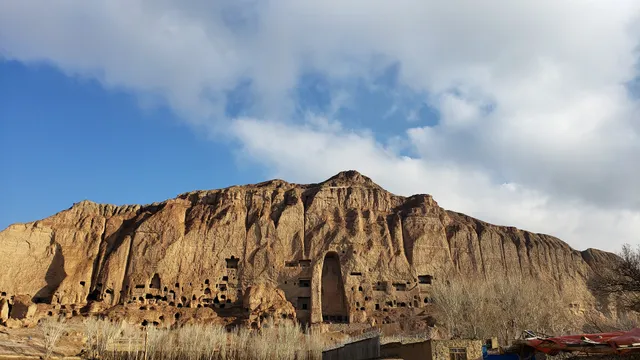
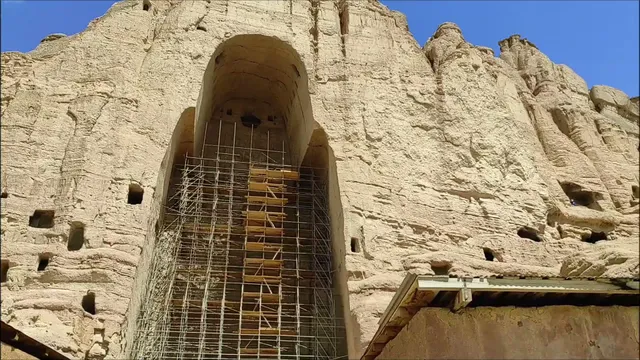
The Buddhas of Bamiyan were two 6th-century monumental statues carved into the side of a cliff in the Bamyan valley of central Afghanistan, 130 kilometres northwest of Kabul at an elevation of 2,500 metres.
Nearby attractions
Nearby restaurants
Ansaf Restaurant and Hotel
RRGJ+3C9, Bazar Rd, Bamyan, Afghanistan
Kabul Reatuarant
RRGM+92P, Bazar Rd, Bamyan, Afghanistan
Nearby hotels
Related posts
Keywords
Buddha of Bamyan tourism.Buddha of Bamyan hotels.Buddha of Bamyan bed and breakfast. flights to Buddha of Bamyan.Buddha of Bamyan attractions.Buddha of Bamyan restaurants.Buddha of Bamyan travel.Buddha of Bamyan travel guide.Buddha of Bamyan travel blog.Buddha of Bamyan pictures.Buddha of Bamyan photos.Buddha of Bamyan travel tips.Buddha of Bamyan maps.Buddha of Bamyan things to do.
Buddha of Bamyan things to do, attractions, restaurants, events info and trip planning
Buddha of Bamyan
AfghanistanBamyan ProvinceBuddha of Bamyan

Basic Info

Buddha of Bamyan

RRJG+RPC, Bamyan, Afghanistan
4.5(294)
Open 24 hours
Save
spot

Ratings & Description

Info

The Buddhas of Bamiyan were two 6th-century monumental statues carved into the side of a cliff in the Bamyan valley of central Afghanistan, 130 kilometres northwest of Kabul at an elevation of 2,500 metres.

Cultural
Scenic
attractions: , restaurants: Ansaf Restaurant and Hotel, Kabul Reatuarant
logoLearn more insights from Wanderboat AI.

Plan your stay

hotel
Pet-friendly Hotels in Bamyan Province
Find a cozy hotel nearby and make it a full experience.
hotel
Affordable Hotels in Bamyan Province
Find a cozy hotel nearby and make it a full experience.
hotel
The Coolest Hotels You Haven't Heard Of (Yet)
Find a cozy hotel nearby and make it a full experience.
hotel
Trending Stays Worth the Hype in Bamyan Province
Find a cozy hotel nearby and make it a full experience.

Reviews

Nearby restaurants of Buddha of Bamyan

Ansaf Restaurant and Hotel

Kabul Reatuarant

Ansaf Restaurant and Hotel

Ansaf Restaurant and Hotel

5.0

(2)

Click for details
Kabul Reatuarant

Kabul Reatuarant

3.5

(3)

Open until 12:00 AM
Click for details
Get the Appoverlay
Get the AppOne tap to find yournext favorite spots!
Wanderboat LogoWanderboat

Your everyday Al companion for getaway ideas

CompanyAbout Us
InformationAI Trip PlannerSitemap
SocialXInstagramTiktokLinkedin
LegalTerms of ServicePrivacy Policy

Get the app

© 2025 Wanderboat. All rights reserved.
logo

Posts

Kite Travel BoutiqueKite Travel Boutique
The Buddhas of Bamiyan, two colossal statues that once soared magnificently against the rugged cliffs of the Bamiyan Valley in Afghanistan, represented an unparalleled fusion of art, spirituality, and cultural significance. Carved into the sandstone cliffs over 1,500 years ago, these monumental figures stood as testament to the flourishing Buddhist civilization along the Silk Road. The larger Buddha, standing at 53 meters, and the slightly smaller one at 35 meters, were awe-inspiring not only in their sheer size but also in the intricate details that adorned their surfaces. These Buddhas were marvels of Gandharan art, showcasing a unique blend of Greco-Roman and Indian artistic styles. For centuries, they silently witnessed the passage of time, the rise and fall of empires, and the evolution of the region's cultural landscape. The Buddhas of Bamiyan became iconic symbols of Afghanistan's cultural heritage, drawing pilgrims, scholars, and tourists from around the world. The statues were not merely sculptures; they were living narratives carved in stone, reflectingthe harmonious coexistence of diverse cultures in Central Asia during the height of the Silk Road. Sadly, in 2001, the world witnessed a profound loss when the Taliban, in an act of cultural vandalism, deliberately destroyed the Buddhas, viewing them as symbols of idolatry. Despite their physical absence, the legacy of the Buddhas of Bamiyan endures in the collective memory of humanity. Efforts to preserve and reconstruct the site continue, fueled by a shared commitment to safeguarding the cultural heritage that transcends borders and time. The Buddhas of Bamiyan remain a poignant reminder of the impermanence of material existence and the enduring spirit of human creativity that persists even in the face of destruction.
mustafa wardakmustafa wardak
The Buddha of Bamiyan, Afghanistan, stands as an awe-inspiring testament to the confluence of art, spirituality, and resilience. These colossal statues, carved into the sandstone cliffs over 1,500 years ago, once soared majestically, each over 50 meters tall. The intricate details of the Buddhas' features and the surrounding cliffside murals showcased the exquisite craftsmanship of the Gandharan era. The profound impact of standing before these monumental figures is difficult to put into words. The Buddhas of Bamiyan were not merely statues; they were cultural symbols that bore witness to centuries of history, from the Silk Road's flourishing trade to the rise and fall of empires. The void left by their destruction in 2001 is a stark reminder of the vulnerability of cultural heritage in times of conflict. Visiting the site, now marked by empty niches against the Bamiyan Valley's rugged backdrop, evokes a sense of loss but also an appreciation for the resilience of the Afghan people. Efforts to preserve the site and the surrounding archaeological treasures offer a glimmer of hope for the future. The Buddha of Bamiyan remains an indelible part of Afghanistan's narrative, inviting contemplation on the impermanence of material existence and the enduring spirit of human creativity. It's a destination that transcends time, making a visit to Bamiyan a pilgrimage not just through space but through the annals of art, history, and cultural heritage.
YumikoYumiko
It is one of the places one needs to visit to appreciate the history, conflict and human behaviour. Place is magnificent and one almost feels like being travel back century into the ancient time. Reconstruction has been halted. Surrendered by tranquility its a place to dream about the past and think about the future. 10 minutes drive from the center of town. We visited almost sun set time. Lights are so soft and feel nostalgic. This was my second time to visit, the first time in 2002, but see the effort being made somehow preserve big monuments.
See more posts
See more posts
hotel
Find your stay

Pet-friendly Hotels in Bamyan Province

Find a cozy hotel nearby and make it a full experience.

The Buddhas of Bamiyan, two colossal statues that once soared magnificently against the rugged cliffs of the Bamiyan Valley in Afghanistan, represented an unparalleled fusion of art, spirituality, and cultural significance. Carved into the sandstone cliffs over 1,500 years ago, these monumental figures stood as testament to the flourishing Buddhist civilization along the Silk Road. The larger Buddha, standing at 53 meters, and the slightly smaller one at 35 meters, were awe-inspiring not only in their sheer size but also in the intricate details that adorned their surfaces. These Buddhas were marvels of Gandharan art, showcasing a unique blend of Greco-Roman and Indian artistic styles. For centuries, they silently witnessed the passage of time, the rise and fall of empires, and the evolution of the region's cultural landscape. The Buddhas of Bamiyan became iconic symbols of Afghanistan's cultural heritage, drawing pilgrims, scholars, and tourists from around the world. The statues were not merely sculptures; they were living narratives carved in stone, reflectingthe harmonious coexistence of diverse cultures in Central Asia during the height of the Silk Road. Sadly, in 2001, the world witnessed a profound loss when the Taliban, in an act of cultural vandalism, deliberately destroyed the Buddhas, viewing them as symbols of idolatry. Despite their physical absence, the legacy of the Buddhas of Bamiyan endures in the collective memory of humanity. Efforts to preserve and reconstruct the site continue, fueled by a shared commitment to safeguarding the cultural heritage that transcends borders and time. The Buddhas of Bamiyan remain a poignant reminder of the impermanence of material existence and the enduring spirit of human creativity that persists even in the face of destruction.
Kite Travel Boutique

Kite Travel Boutique

hotel
Find your stay

Affordable Hotels in Bamyan Province

Find a cozy hotel nearby and make it a full experience.

Get the Appoverlay
Get the AppOne tap to find yournext favorite spots!
The Buddha of Bamiyan, Afghanistan, stands as an awe-inspiring testament to the confluence of art, spirituality, and resilience. These colossal statues, carved into the sandstone cliffs over 1,500 years ago, once soared majestically, each over 50 meters tall. The intricate details of the Buddhas' features and the surrounding cliffside murals showcased the exquisite craftsmanship of the Gandharan era. The profound impact of standing before these monumental figures is difficult to put into words. The Buddhas of Bamiyan were not merely statues; they were cultural symbols that bore witness to centuries of history, from the Silk Road's flourishing trade to the rise and fall of empires. The void left by their destruction in 2001 is a stark reminder of the vulnerability of cultural heritage in times of conflict. Visiting the site, now marked by empty niches against the Bamiyan Valley's rugged backdrop, evokes a sense of loss but also an appreciation for the resilience of the Afghan people. Efforts to preserve the site and the surrounding archaeological treasures offer a glimmer of hope for the future. The Buddha of Bamiyan remains an indelible part of Afghanistan's narrative, inviting contemplation on the impermanence of material existence and the enduring spirit of human creativity. It's a destination that transcends time, making a visit to Bamiyan a pilgrimage not just through space but through the annals of art, history, and cultural heritage.
mustafa wardak

mustafa wardak

hotel
Find your stay

The Coolest Hotels You Haven't Heard Of (Yet)

Find a cozy hotel nearby and make it a full experience.

hotel
Find your stay

Trending Stays Worth the Hype in Bamyan Province

Find a cozy hotel nearby and make it a full experience.

It is one of the places one needs to visit to appreciate the history, conflict and human behaviour. Place is magnificent and one almost feels like being travel back century into the ancient time. Reconstruction has been halted. Surrendered by tranquility its a place to dream about the past and think about the future. 10 minutes drive from the center of town. We visited almost sun set time. Lights are so soft and feel nostalgic. This was my second time to visit, the first time in 2002, but see the effort being made somehow preserve big monuments.
Yumiko

Yumiko

See more posts
See more posts

Reviews of Buddha of Bamyan

4.5
(294)
avatar
5.0
1y

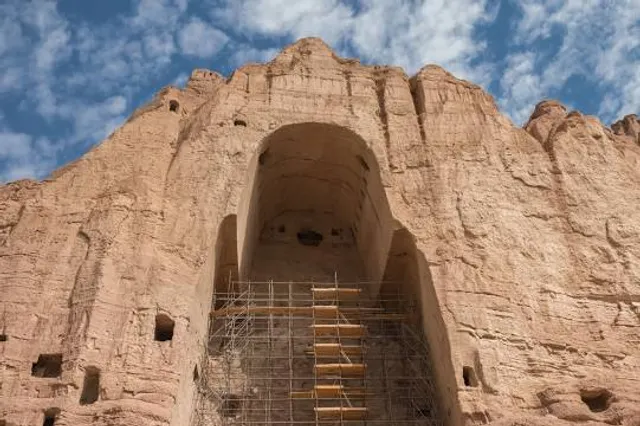
The Buddha of Bamyan, located in the Bamyan Valley in central Afghanistan, was once one of the most magnificent and revered archaeological sites in the world. These monumental statues, carved into the cliffs of the Hindu Kush mountains, were a symbol of Afghanistan’s rich cultural and religious history. The statues, dating back to the 6th century, depicted two colossal figures of the Buddha, standing at 55 meters and 37 meters tall, making them among the largest Buddha statues in the world. The Bamyan Buddhas represented the fusion of Gandhara and Buddhist art and were a testament to Afghanistan's role as a crossroads of trade, culture, and religion, where Buddhist influence thrived. These sculptures, along with the surrounding caves and frescoes, painted a vivid picture of a prosperous, peaceful society where Buddhism flourished long before the region's conversion to Islam.

Tragically, in 2001, the Taliban destroyed these priceless statues, sparking international outrage and leaving a permanent scar in the cultural heritage of the world. Despite this, the Buddha of Bamyan remains a symbol of resilience, representing the endurance of cultural identity and the importance of preserving global heritage for future generations.

For centuries, the Buddha of Bamyan attracted pilgrims, travelers, and scholars alike, serving as a crucial point along the ancient Silk Road. However, the arrival of Islam and the subsequent spread of Islamic influence in Afghanistan dramatically reshaped the region's religious and cultural landscape. As Islam gradually became the dominant religion in the region, Buddhism, along with other pre-Islamic practices, started to decline. By the 10th century, Buddhist influence had significantly waned, but the Bamyan Buddha statues remained as a silent reminder of the region's past. The statues endured until 2001 when the Taliban destroyed them, declaring them un-Islamic. The destruction of these iconic figures sparked global outrage and highlighted the tension between Afghanistan’s ancient religious history and the modern Islamic identity that had taken root in the region.

The decline of Buddhism in the region, followed by the eventual rise of Islam, marked a profound shift in Afghanistan’s spiritual identity. The destruction of the Bamyan Buddhas in 2001, during the rule of the Taliban, underscored the complex relationship between Afghanistan’s Islamic present and its pre-Islamic past. While the Buddha statues are no longer standing, they remain a poignant reminder of the region's rich cultural diversity and the destructive consequences of cultural erasure.

The Buddha of Bamyan, though destroyed, continues to hold deep cultural, historical, and symbolic significance. Its once towering presence in the Bamyan Valley was a testament to the region’s rich Buddhist heritage and its importance in the ancient Silk Road. The destruction of the statues in 2001 was a devastating loss not only for Afghanistan but for the global community, as it marked the erasure of a key piece of humanity’s shared history. However, the site remains a symbol of resilience, with ongoing efforts to preserve and protect the area and its history. Today, the remnants of the Buddha of Bamyan continue to draw attention to the importance of cultural preservation, and the site stands as a reminder of the enduring value of history, art, and heritage, despite the challenges faced by the region. It is a powerful reminder of the need to protect cultural sites, ensuring that future generations can witness the richness of our...

   Read more

avatar
3.0
4y

The Buddhas of Bamiyan were two 6th-century[3] monumental statues of Gautama Buddha carved into the side of a cliff in the Bamyan valley of central Afghanistan, 130 kilometres (81 mi) northwest of Kabul at an elevation of 2,500 metres (8,200 ft). Carbon dating of the structural components of the Buddhas has determined that the smaller 38 m (125 ft) "Eastern Buddha" was built around 570 AD, and the larger 55 m (180 ft) "Western Buddha" was built around 618 AD.[ The statues represented a later evolution of the classic blended style of Gandhara art.[5] The statues consisted of the male Salsal ("light shines through the universe") and the (smaller) female Shamama ("Queen Mother"), as they were called by the locals.[6] The main bodies were hewn directly from the sandstone cliffs, but details were modeled in mud mixed with straw, coated with stucco. This coating, practically all of which wore away long ago, was painted to enhance the expressions of the faces, hands, and folds of the robes; the larger one was painted carmine red and the smaller one was painted multiple colors.[7] The lower parts of the statues' arms were constructed from the same mud-straw mix supported on wooden armatures. It is believed that the upper parts of their faces were made from great wooden masks or casts. The rows of holes that can be seen in photographs held wooden pegs that stabilized the outer stucco.

The Buddhas are surrounded by numerous caves and surfaces decorated with paintings.[8] It is thought that the period of florescence was from the 6th to 8th century CE, until the onset of Islamic invasions.[8] These works of art are considered as an artistic synthesis of Buddhist art and Gupta art from India, with influences from the Sasanian Empire and the Byzantine Empire, as well as the country of Tokharistan.[8]

The Buddhas are surrounded by numerous caves and surfaces decorated with paintings.[8] It is thought that the period of florescence was from the 6th to 8th century CE, until the onset of Islamic invasions.[8] These works of art are considered as an artistic synthesis of Buddhist art and Gupta art from India, with influences from the Sasanian Empire and the Byzantine Empire, as well as the country of...

   Read more
avatar
5.0
2y

The Buddhas of Bamiyan, two colossal statues that once soared magnificently against the rugged cliffs of the Bamiyan Valley in Afghanistan, represented an unparalleled fusion of art, spirituality, and cultural significance. Carved into the sandstone cliffs over 1,500 years ago, these monumental figures stood as testament to the flourishing Buddhist civilization along the Silk Road. The larger Buddha, standing at 53 meters, and the slightly smaller one at 35 meters, were awe-inspiring not only in their sheer size but also in the intricate details that adorned their surfaces. These Buddhas were marvels of Gandharan art, showcasing a unique blend of Greco-Roman and Indian artistic styles. For centuries, they silently witnessed the passage of time, the rise and fall of empires, and the evolution of the region's cultural landscape.

The Buddhas of Bamiyan became iconic symbols of Afghanistan's cultural heritage, drawing pilgrims, scholars, and tourists from around the world. The statues were not merely sculptures; they were living narratives carved in stone, reflectingthe harmonious coexistence of diverse cultures in Central Asia during the height of the Silk Road. Sadly, in 2001, the world witnessed a profound loss when the Taliban, in an act of cultural vandalism, deliberately destroyed the Buddhas, viewing them as symbols of idolatry.

Despite their physical absence, the legacy of the Buddhas of Bamiyan endures in the collective memory of humanity. Efforts to preserve and reconstruct the site continue, fueled by a shared commitment to safeguarding the cultural heritage that transcends borders and time. The Buddhas of Bamiyan remain a poignant reminder of the impermanence of material existence and the enduring spirit of human creativity that persists even in the face of...

   Read more
Page 1 of 7
Previous
Next