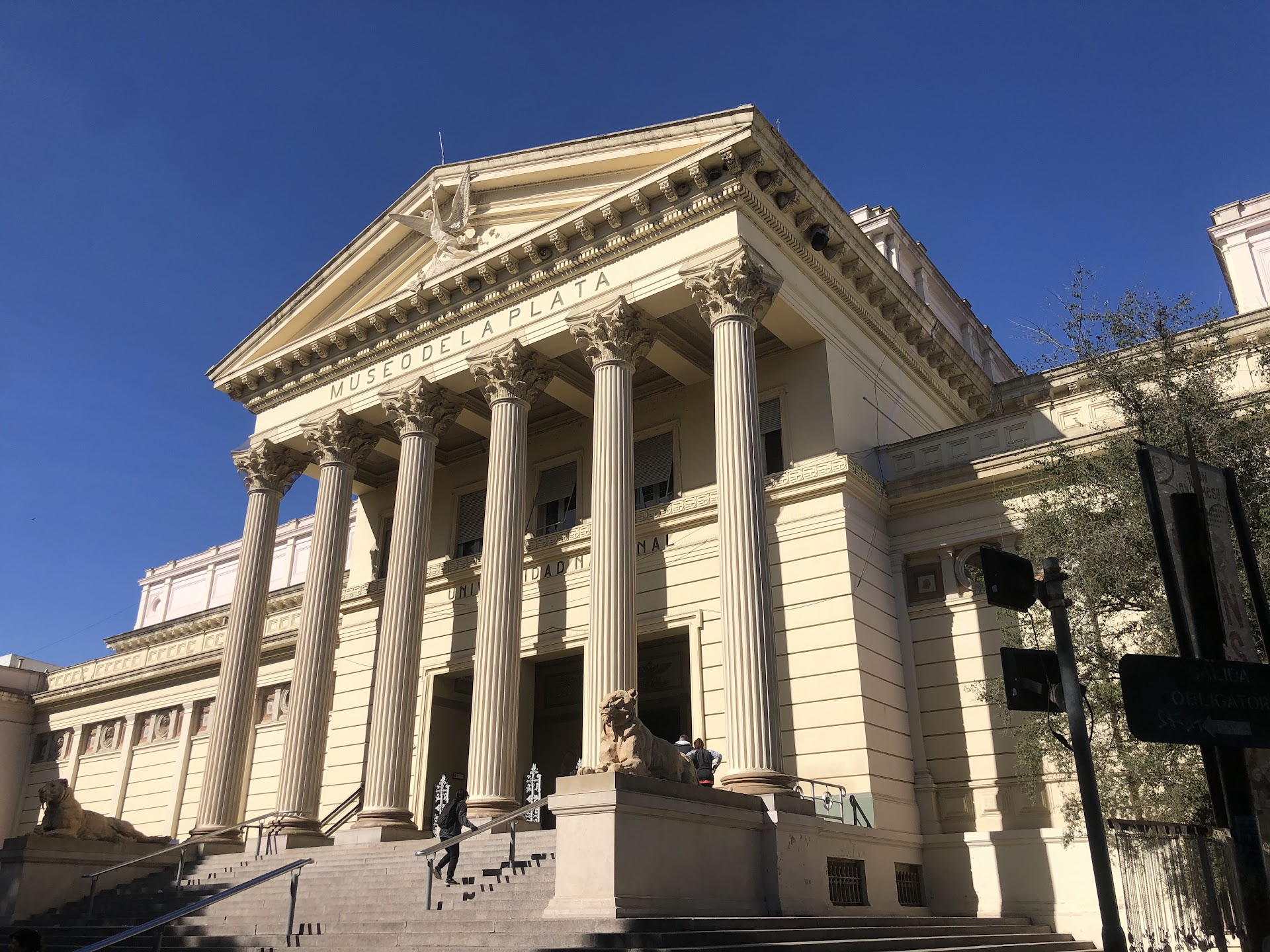
The "General Museum of La Plata" was created by a decree of the Government of the province of Buenos Aires on September 19, 1884 , based on a project of the collector Francisco Pascasio Moreno (1852-1919) who served as Director until 1906 The first collections came from the Anthropological Museum of Buenos Aires created in 1877, with heritage donated by Moreno himself.
Dependent of the Provincial Ministry of Public Works, it opened its doors to the public in 1888. In its first years, the objectives of the Institution were linked, on the one hand, to the assembly of exhibitions of natural history, anthropology, archeology and fine arts to contribute to the general education of the inhabitants of the province . On the other hand, to the development of expeditions in the interior of the country , with the double purpose of having study collections and identifying natural resources susceptible of economic exploitation by the State and individuals.
Towards the middle of the 1890s, with the financial support of the Ministry of Foreign Affairs, the Institution committed itself to the question of limits with Chile, making available to the National Government the human and material resources to carry out topographic expeditions along the Andes mountains.
At that time, the five main sections of the Museum were also created : Anthropology, Geology, Zoology, Paleontology and Botany. They were in charge of foreign scholars, and had the function of classifying the collections for exhibition and study, making expeditions and publishing scientific works in the Magazine and the Annals of the Museum of La Plata, created in 1890.
In 1906, the Museum, led by Samuel Lafone Quevedo (1835-1920), became administratively dependent on the National University of La Plata, adding to the original functions of public exhibition and research, academic training, under the general name of Institute of the Museum-Faculty of Natural Sciences .
Since then, the Museum and the Faculty functioned in an imbricated manner, sharing spaces within the building inaugurated in 1888, dedicated to research or teaching. There the School of Natural Sciences (1912) functioned, which included those ofGeological Sciences, Biological Sciences, Anthropological Sciences, Geographical Sciences, Chemistry and School of Drawing Annex . The last three were separated from the Institution at the beginning of the 1920s, under the management of Luis María Torres (1878-1937), the others remaining under the joint name of the Higher School of Natural Sciences (1932). It was established at the same time, the internal reorganization of the institution based on Scientific Departments.
In its beginnings, in 1906, university education adopted the general model of naturalist, through the development of study programs aimed at providing students with basic training in all fields of natural sciences. The curriculum was divided into 15 subjects, which eventually increased to 20, of four years, plus one year of specialization through the completion of the Doctoral Thesis in one of the four planned orientations - Anthropology, Botany, Geology and Zoology- , conferring a single title, that of Doctor in Natural Sciences.
During the first three decades, the enrollment of students was very low. Between the doctorates prevailed those of Biological Sciences, fundamentally Zoology and Botany, situation that was reverted in Geology, from beginnings of the decade of 1940, with the system of scholarships to students instituted by YPF. The career of Natural Sciences was divided from that moment into Geological Sciences and Biological Sciences, subsequently creating the title of Bachelor in the areas of Biology, Geology and Anthropology . On July 19, 1949, by a decree of the National Executive Power, the Institute of the Museum-Faculty of Natural Sciences with its structure of School, was finally transformed into the Faculty of Natural Sciences...
Read moreIt is one of the most emblematic institutions of the capital city of the province of Buenos Aires. It belongs to the Faculty of Natural Sciences and Museum of the National University of La Plata.
Its mission is to contribute to the knowledge of nature, human beings and their culture, and to disseminate that knowledge through scientific research and dissemination tasks, exhibitions, educational activities and visits, within a framework of respect for the natural and cultural heritage of all towns.
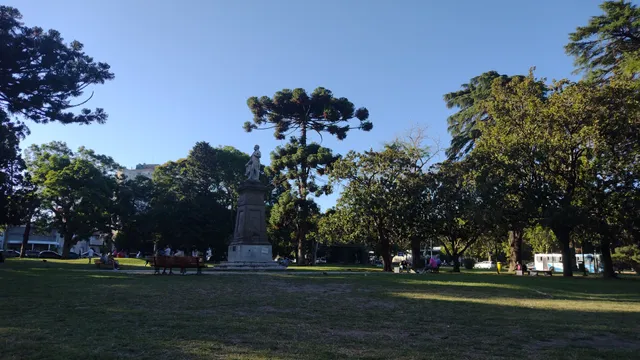
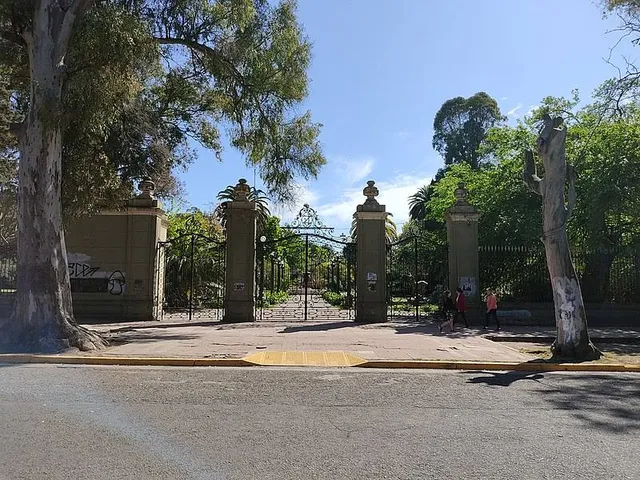
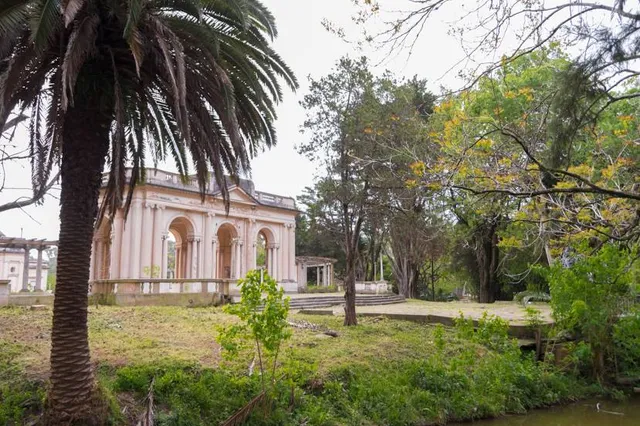
Its monumental building , located on Paseo del Bosque, is of neoclassical architectural style and is ornamented with motifs from Pre-Columbian America. The construction of the building began in 1884, two years after the founding of La Plata, and it was inaugurated on November 19, 1888. On October 24, 1997, it was declared a National...
Read moreSumergirse en la experiencia de visitar el Museo de Plata es como adentrarse en un mundo de maravillas históricas y científicas. Este magnífico museo, que se alza majestuosamente en el corazón de un exuberante parque, es una joya arquitectónica en sí mismo. Su fachada antigua y bellamente conservada evoca un sentido de asombro incluso antes de ingresar.
Una vez dentro, te encuentras rodeado por una asombrosa colección de animales prehistóricos que te transportan a épocas pasadas. Los imponentes esqueletos y reconstrucciones meticulosas ofrecen una visión vívida de la vida en la Tierra antes de la aparición del hombre. Es como viajar en el tiempo y encontrarse cara a cara con criaturas que solo habíamos imaginado.
Además de su enfoque en la vida prehistórica, el museo también alberga una fascinante colección geodésica. Desde minerales deslumbrantes hasta herramientas de cartografía histórica, esta sección aporta una perspectiva única sobre la historia de la Tierra y la exploración científica.
No solo las exposiciones son impresionantes, sino que también la hospitalidad del personal agrega un toque especial. Los guías son conocedores y amigables, dispuestos a responder preguntas y compartir detalles intrigantes sobre las exhibiciones. Su entusiasmo por el museo es contagioso y enriquece la experiencia de los visitantes.
El tamaño del edificio es simplemente impresionante, y explorarlo por completo requiere tiempo. Es recomendable planificar al menos tres horas para recorrer las galerías y absorber todo lo que el museo tiene para ofrecer. A medida que deambulas por los pasillos, te maravillarás con la diversidad de temas y la riqueza de información disponible.
Si estás buscando un lugar para disfrutar en familia, el Museo de Plata es una elección excepcional. Los niños se sentirán cautivados por las exhibiciones y aprenderán de manera interactiva, lo que hace que la visita sea tanto educativa como entretenida.
En resumen, el Museo de Plata es mucho más que una simple atracción turística. Es un destino que combina la historia, la ciencia y la belleza arquitectónica en un solo lugar. Ya sea que te consideres un entusiasta de la paleontología, un aficionado a la geología o simplemente alguien que busca una experiencia enriquecedora, este museo te brindará una aventura...
Read more