Heide Museum of Modern Art began life in 1934 as the home of John and Sunday Reed and has since evolved into one of Australia's most important cultural institutions.
Soon after purchasing the fifteen acre property on which Heide stands in 1934, founders John and Sunday Reed opened their home to like-minded individuals such as artists Sidney Nolan, Albert Tucker, Joy Hester, John Perceval and Danila Vassilieff. They nurtured a circle of artists, writers and intellectuals who contributed to Heide becoming a place for the discussion, creation and promotion of modern art and literature.
John and Sunday made a lasting contribution to Australian culture through their support of creative endeavours in the visual arts, literature and architecture. In the mid-1950s the Reeds established the Gallery of Contemporary Art and in 1958, with the assistance of friend and entrepreneur Georges Mora, they re-launched the gallery as the Museum of Modern Art of Australia. This eventually led to the formal establishment of the museum.
Amassing an outstanding collection of the contemporary art of their time, the Reeds outgrew their original farmhouse, now known as Heide I, and in 1964 commissioned the construction of a ‘gallery to be lived in’ from David McGlashan. This modernist architectural icon eventually opened as a public art museum in November 1981 following its purchase by the State Government on behalf of the people of Victoria. Although the Reeds lived to see their vision fulfilled of Heide as a public museum, they both died shortly afterwards in December 1981, ten days apart. They are remembered as champions of modern art and literature and remain two of Australia's most important art benefactors.
Having presented almost 300 solo, group and thematic exhibitions of modern and contemporary art since becoming a public art museum in 1981, Heide has a gained a national reputation for artistic excellence and established a unique position in the overall artistic and cultural history of Australia. The work of modernist artists of the ‘Heide circle’ has featured in the exhibition program since the inaugural exhibition Ned Kelly Paintings by Sidney Nolan in 1981, and continued with exhibitions of works by Sam Atyeo, Arthur Boyd, Charles Blackman, Joy Hester, Mirka Mora and Albert Tucker. In keeping with the Reeds’ support of the artists of their time, Heide is dedicated to promoting the work of living artists. Solo contemporary artist exhibitions have included Susan Norrie, Rick Amor, Kathy Temin, Fiona Hall, Stephen Benwell and Emily Floyd. Since 1996, Heide has also shown a series of small project exhibitions by emerging artists including Dylan Martorell, Charlie Sofo, Louise Saxton, Paul Yore, and Siri Hayes. Ground-breaking historical surveys have included Modern Times: The Untold Story of Modernism in Australia (2009), Cubism & Australian Art (2009–10), Less is More: Minimalism and Post Minimalism in Australia (2012) and most recently Call of the Avant-Garde: Constructivism and Australian Art (2017).
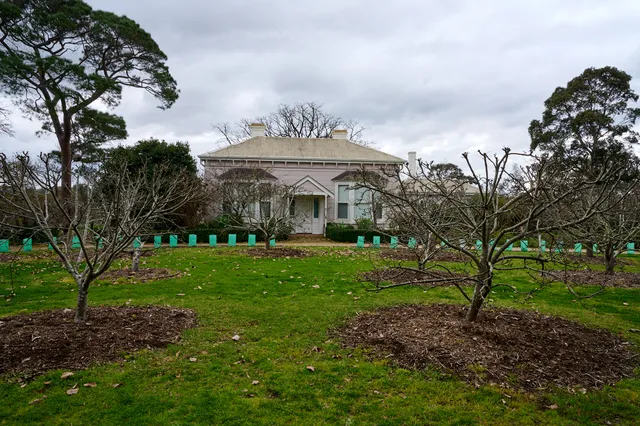
The architecture of Heide Museum of Modern Art is a stunning reflection of the site’s transformation from a rural homestead to the public art museum it is today. The first residence of John and Sunday Reed at Heide was a distinctive weatherboard farmhouse which they renovated in the French provincial style. Known as Heide I, this beautiful cottage was home to the Reeds for thirty-five years and is the place where Sidney Nolan’s Kelly series was painted; where the Angry Penguins Ern Malley poems were argued as being authentic or spurious; where Albert Tucker and Joy Hester lived for a time, and where many creatives enjoyed delicious afternoon teas.
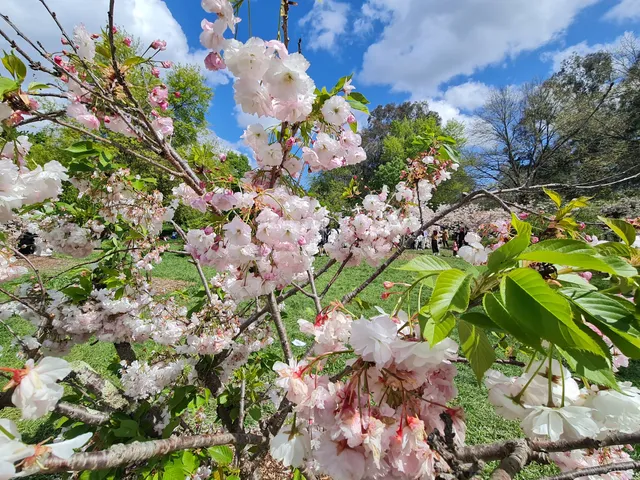
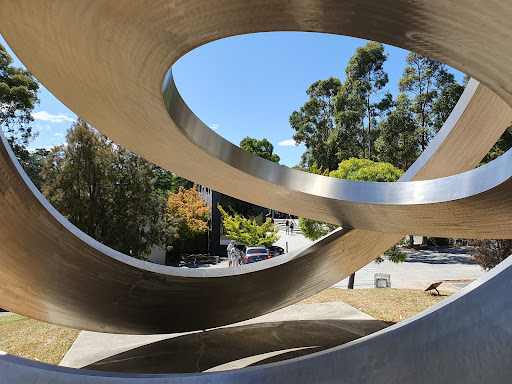
Open to the public all year round, the beautiful gardens at Heide offer a space for family enjoyment and individual reflection and incorporate a sculpture park and several of the original gardens, which are now...
Read moreMy 3rd visit - to view Barbara Hepworth's current exhibition. This is small & you'd be done in under 40 mins incl. viewing a grainy doco that gives an insight into the landscape of Cornwall & surrounds that inspired her sculptures. The exhibits in the Heide II was the kind that you walk in & out again. As they say - art appreciation, especially modern art is in the eye of the beholder....
You will be fitted with a wrist band once you get your tix or show your pre-purchased tix. Need to keep this on to gain entry into Heide II & Reed's cottage which has more artwork by the bohemian arty circle that Heide is reknowned for. It was just too hot on the recent Sun to walk up to Reed cottage after Heide I & II.
The vast surrounds which melds with adjacent Banksia park looked dull & uninspiring with the same old unchanging outdoor sculptures bar a few newer ones. Yes -it is the hottest & driest time of the year but surely with the kind of patronage & funding Heide receives, upkeep & maintenance should be constant...
What's with the unsealed, dusty & inadequate car parking area esp. for the crowds that turn up on a Sunday? You can drive round to the 2nd level park & if this small space is full - turn right - all the way down to Banksia Park parking areas & hike uphill to get to Heide's main entrance. With Heide, there's this smug complacency to do nothing much to increase patronage. Be like NGV, McClleland Sculpture Park, PT Leo Sculpture Park or the wineries that incorporate outdoor artwork & sculptures - evolve, upscale &...
Read moreI was extremely underwhelmed and disappointed with the content of this museum.
This museum is split into 3 buildings, which initially makes you think the $20 ticket will be worth it, but believe me IT IS NOT.
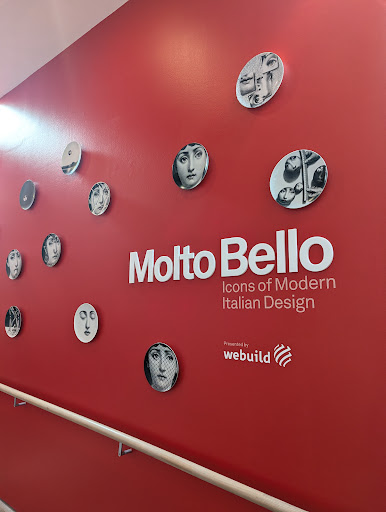
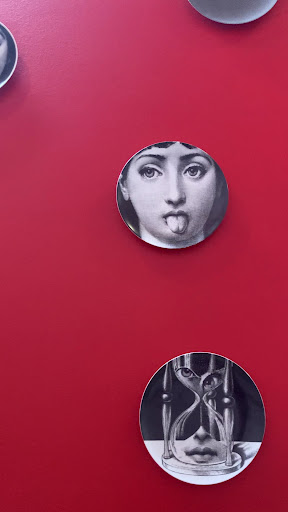
The first building is purely ceramics, with there being only so many bland variations of plates and bowls. The second building is a small room containing a handful of pictures of architecture drawings. The third building is filled with the original paintings of the founder of the museum, most of which must have been drawn by their 2 year old child or possibly drawn in the dark. Another theory was that the curators were high during their assessment as I feel like this is similar to the emporers new clothes, whereas noone wanted to tell them how plain and uninteresting they are.
I've visited numerous museums in numerous cities and this definitely ranks as the worst I've ever visited. The only redeeming thing about this place are the gardens surrounding it which are gorgeous (and free to wander through).
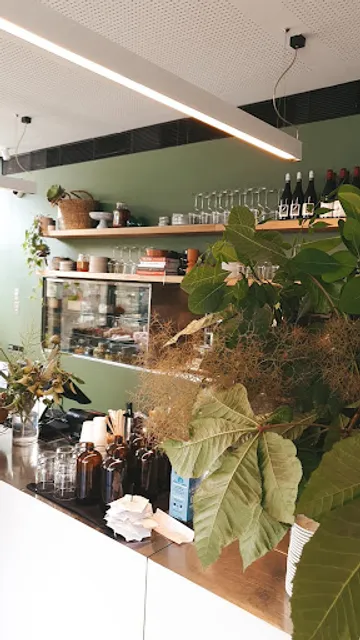
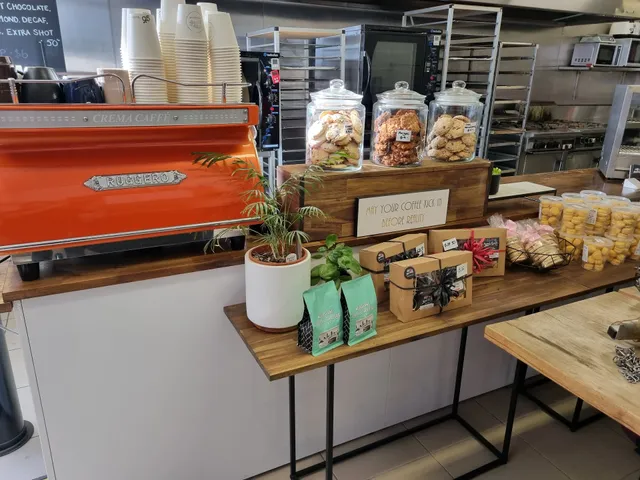
My advise would be to skip the museum all together, grab a coffee from the cafe and wander the gardens. But if you want to burn a $20 note and simultaneously give yourself a lobotomy, by all means...
Read more