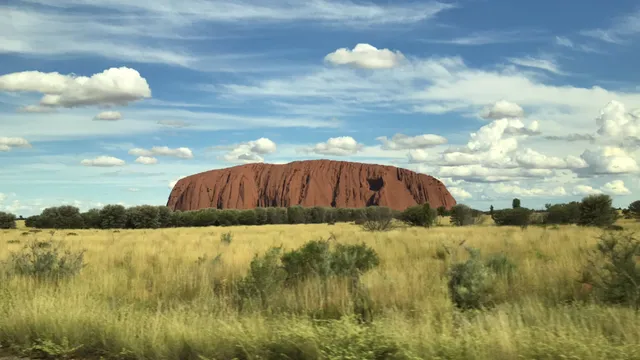
Uluru, also known as Ayers Rock, is an iconic and magnificent monolith in the heart of Australia. This geological feature, composed of a single massive rock, stands as a remarkable natural wonder and a symbol of the Australian landscape. While some monoliths, such as volcanic plugs, are formed from solidified lava, Uluru's unique formation and isolated position make it particularly striking.
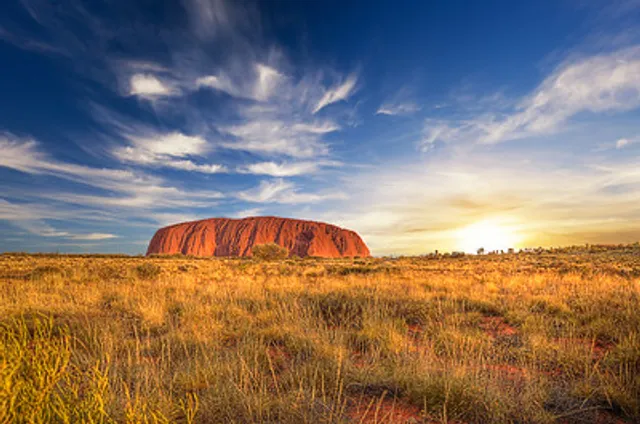
Despite its prominence, Uluru is not the largest monolith in Australia. That title belongs to Pine Mountain in Burrowa-Pine Mountain National Park, which is 1.5 times larger. However, Pine Mountain's dense covering of gum trees diminishes its visual impact compared to Uluru's bare, towering presence. Uluru’s surface exhibits a fascinating phenomenon as it changes color throughout the day, creating a mesmerizing spectacle that photos cannot fully capture.
Uluru holds profound cultural significance for the Anangu people, the traditional Aboriginal custodians of the land. As a sacred site, it is treated with respect, and climbing to the top was permanently closed several years ago to honor its cultural importance. Visitors have the opportunity to engage with Indigenous culture through guided tours and storytelling, offering insights into the ancient traditions associated with the site, which is part of one of the world's oldest living cultures.
Many visitors prefer to experience Uluru at sunrise or sunset when its vibrant hues are most captivating. For those up for the challenge, walking the 10-kilometer perimeter provides a 360-degree view of the rock under varying light conditions. Certain areas around the monolith are marked with signs requesting visitors not to take photos, emphasizing the cultural respect owed to the site.
Entry to Uluru-Kata Tjuta National Park costs AUD 38 per person, granting a five-day pass to explore the area. Despite the fees, most visitors agree that the experience is well worth it. However, it is recommended to bring a fly net to protect against the abundant flies, as well as sufficient water, as drinking stations and facilities are limited. The park closes at 8 p.m., and several viewpoints are designated for enjoying the sunrise and sunset.
Beyond its natural beauty, the surrounding arid landscape provides an excellent setting for stargazing, with clear views of the Milky Way at night. Uluru’s remoteness and serene environment invite visitors to disconnect from daily life, reflect, and connect with nature. Though accommodations near the park can be expensive and monopolized, travelers can also opt for a day trip from Alice Springs.
Uluru remains one of Australia’s most treasured destinations, offering a unique blend of natural splendor, cultural heritage, and opportunities for personal reflection. It is an essential stop for anyone seeking a deeper understanding of Australia’s history, landscape, and...
Read moreI have visited the rock a few times. I have climbed to nearly the top (but freaked out because I saw someone slip) and stayed there holding onto the chain for over an hour while my boyfriend completed the the top. Views were amazing however, the more magical part is the walk around the base. I even got asked by Dr Karl Kennedy (Alan Fletcher) from the tv show Neighbours if I wanted help getting down. 😂
Nuh Uh.
I slid down the rock from about 20 metres from the top (never realising that I was so close to end of chain) all the way down to the Base and ended up with a huge whole in my pants from sliding down..
The local indigenous community have an intense and magical history with the rock and I'm glad that you are not able to climb it anymore.
It lost its magic for me at the time because 000ppof the amount of tourists climbing and disrespecting the culture.
Personally I felt more energy from Kata Tjuta and from King's Canyon.
All the times I've been to the Rock it has felt that it's had its energy snatched from the tourists.
Saying that I still advise you to look at it from one of the viewing areas and see the colour changes. The changing of colours is such a beautiful sight.
It belongs to the First Nations of this country and needs more respect than it gets.
As Shane Howard said: Out here nothin' changes, not in a hurry anyway You feel the endlessness with the comin' of the light o' day We're talkin' about a chosen place You wouldn't sell it in a marketplace, well Well just a minute now Standing on solid rock Standing on sacred ground Living o-on borrowed ti-i-i-ime And the winds of change are blowin' down the line Right down the line Round about the dawn o' time, When dreamin' all began A crowd o' people came Well they were looking for their promised land Were running from the heart of darkness Searching for the heart o' light Well it was their paradise Standing on solid rock Standing on sacred ground Living o-on borrowed ti-i-i-ime And the winds of change are blowin' down the line They were standin' on the shore one day, Saw the white sails in the sun Wasn't long before they felt the sting, white man, white law, white gun Don't tell me that it's justified, 'cause somewhere, someone lied Yeah well someone lied, someone lied, genocide Well someone...
Read moreOur journey from Adelaide to Uluru spanned nearly four days, offering an unforgettable adventure through Australia’s diverse landscapes. We made several stops in small towns, with Coober Pedy being a standout highlight. Known as the “Opal Capital of the World,” Coober Pedy is famous for its underground dwellings, providing a unique respite from the desert heat. Interestingly, this town’s surreal, moon-like terrain served as a filming location for “Mad Max Beyond Thunderdome,” adding a cinematic touch to our visit. 
As we continued our drive through the vast Australian outback, the expansive steppes unfolded before us, presenting breathtaking vistas that seemed to stretch endlessly. The ever-changing hues of the landscape, from sunlit ochres to deepening twilight shadows, were mesmerizing. We couldn’t resist capturing numerous photographs to commemorate these moments.
Upon reaching Uluru, we were awestruck by its sheer magnitude. This monolithic sandstone formation rises 348 meters (1,142 feet) above the surrounding desert plain, making it taller than the Eiffel Tower. Its circumference measures approximately 9.4 kilometers (5.8 miles), and it’s believed that a significant portion of its mass lies beneath the ground. 
Uluru holds profound cultural significance for the Anangu people, the traditional custodians of the land. Recognized as a UNESCO World Heritage site, it attracts over 250,000 visitors annually. The rock’s surface features ancient petroglyphs, and its appearance transforms dramatically with the shifting light, especially at sunrise and sunset. 
Reflecting on our expedition, the journey itself was as enriching as the destination. Traversing the heart of Australia, immersing ourselves in the unique locales along the way, and culminating our trip at the majestic Uluru provided an experience we’ll...
Read more