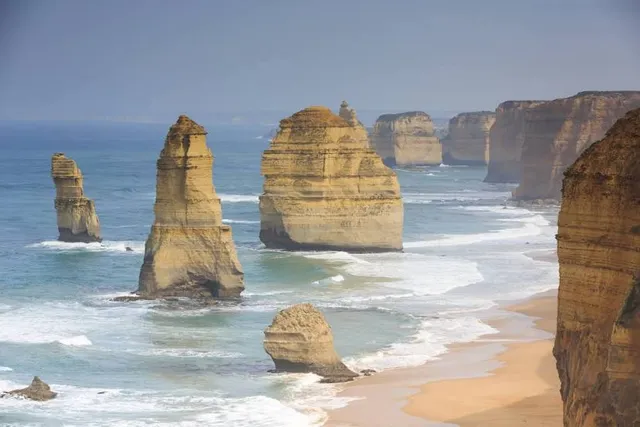
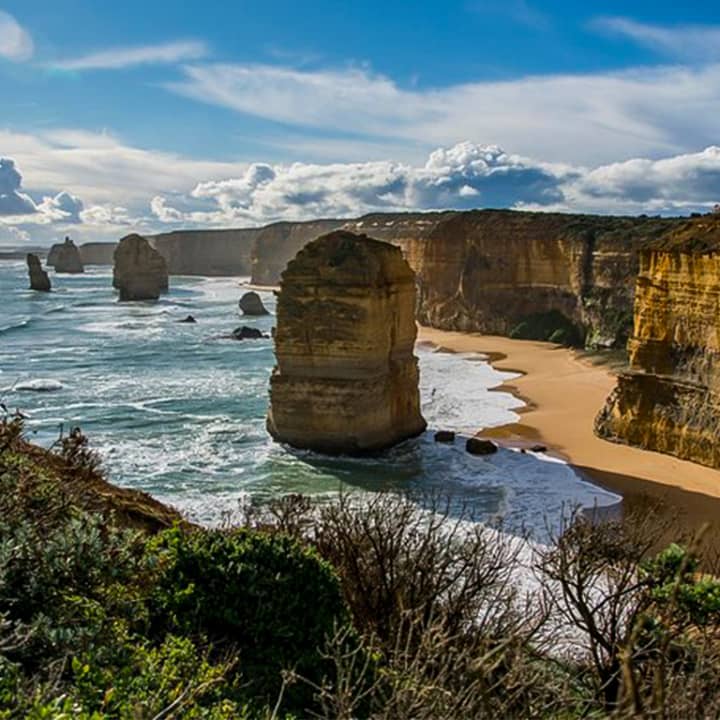
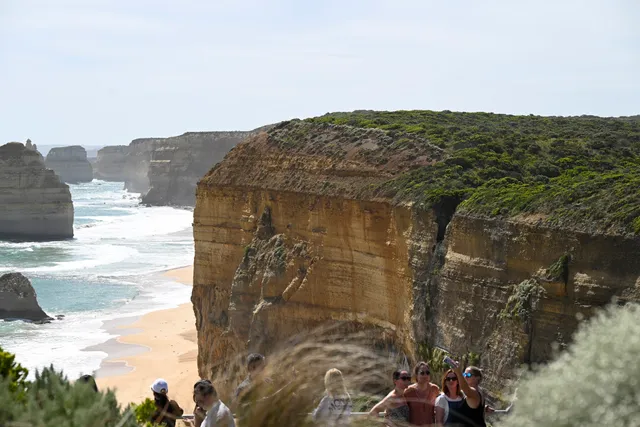
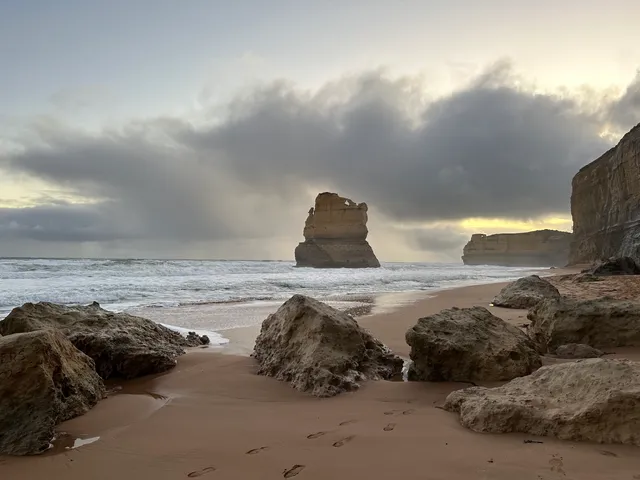
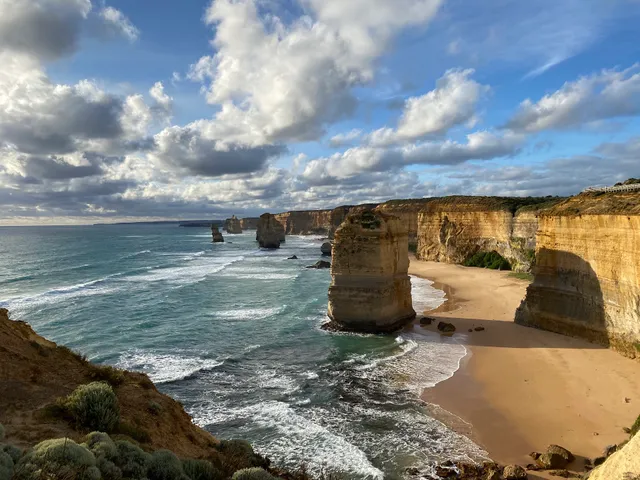
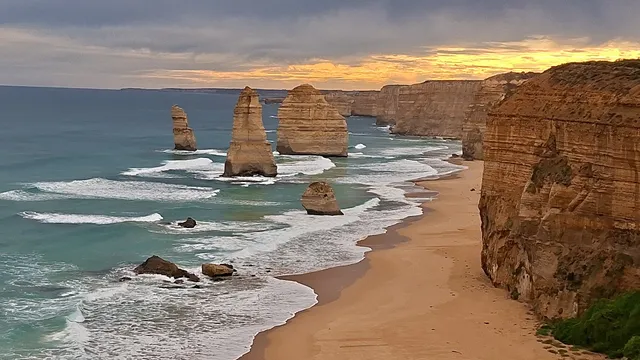
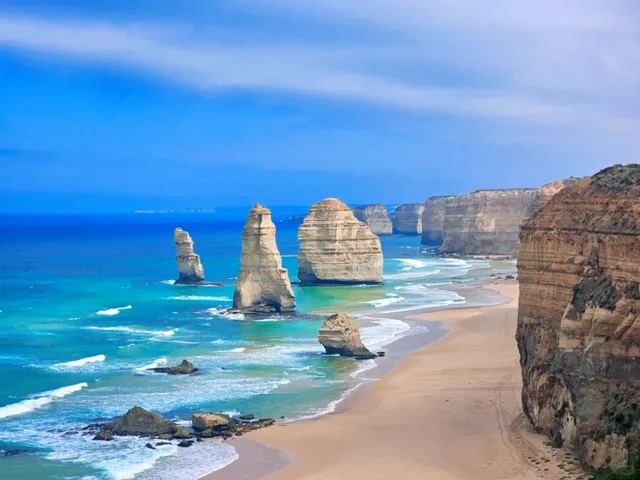
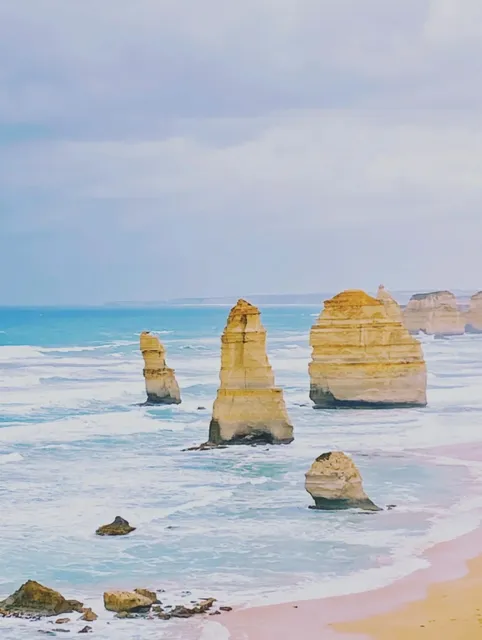
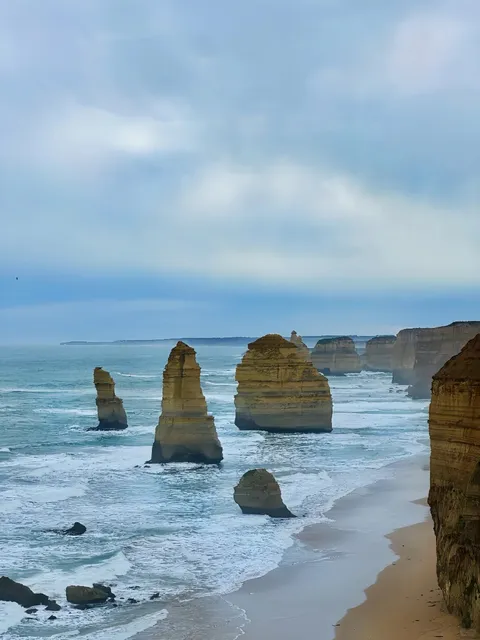
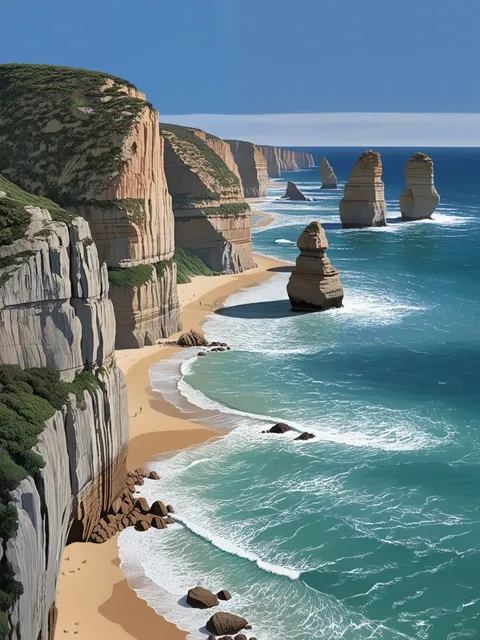
The Twelve Apostles, located along Victoria’s iconic Great Ocean Road, are a must-visit destination for nature enthusiasts and photographers alike. These towering limestone stacks rise majestically from the Southern Ocean, offering a breathtaking coastal panorama.  
⸻
🌊 Natural Beauty & Geological Significance
Formed over millions of years through the erosion of the Port Campbell Limestone, the Twelve Apostles are a testament to nature’s sculpting power. Despite the name, only seven stacks remain standing today, each offering a unique silhouette against the ocean backdrop .  
⸻
📸 Best Times to Visit
Sunrise and sunset are particularly magical times to witness the Apostles. The golden hues cast upon the limestone formations create a photographer’s dream . However, be prepared for crowds during these peak times.  
⸻
🚶♂️ Visitor Experience
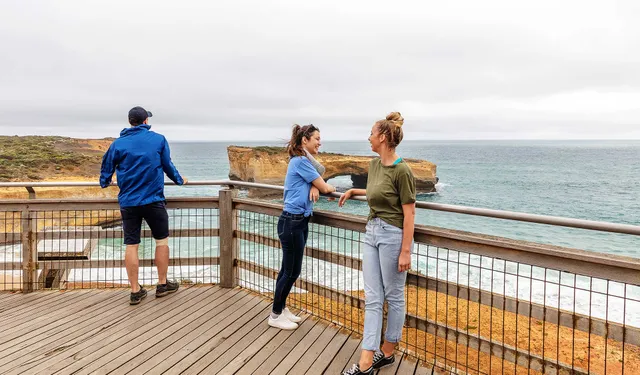
The site features well-maintained boardwalks and viewing platforms, allowing visitors to safely enjoy various perspectives of the formations. A notable addition is the $9.2 million viewing platform, opened in mid-2024, which extends over the cliff to provide panoramic views of the Apostles .  
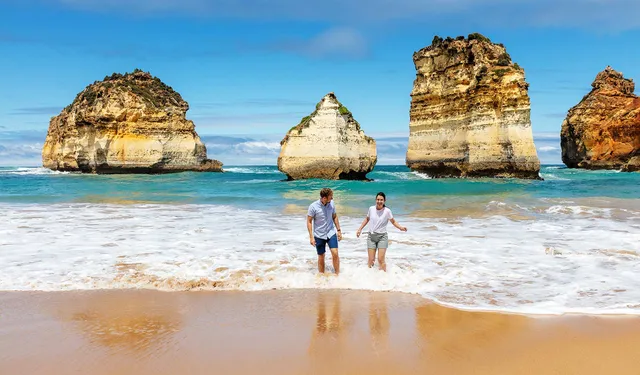
For a different vantage point, the Gibson Steps offer access to the beach, where you can view the stacks from sea level . 
⸻
🏛️ Visitor Facilities
The current visitor center provides basic amenities, including toilets and a small kiosk. However, some visitors have noted that the food options are limited and overpriced . A new visitor center is under construction and is expected to enhance the overall experience upon completion. 
⸻
🚗 Getting There
Situated approximately 275 km west of Melbourne, the Twelve Apostles are accessible via a 4.5-hour drive along the scenic Great Ocean Road. Alternatively, the inland route via Colac offers a quicker 3.5-hour drive but lacks the coastal views . 
⸻
🏨 Nearby Attractions
The surrounding Port Campbell National Park boasts several other natural wonders, including Loch Ard Gorge, The Grotto, and London Bridge. These sites offer additional opportunities to explore the region’s stunning coastal landscapes . 
⸻
✅ Final Verdict
The Twelve Apostles offer an awe-inspiring glimpse into Australia’s natural beauty. While the site can be crowded, especially during peak times, the views are undeniably worth the visit. Planning your trip during off-peak hours and being prepared for limited amenities can enhance your...
Read moreThere is nothing better than seeing the Twelve Apostles from the 12 Apostles Helicopters. The views say it all. The pilot and ground crew were professional, friendly, as well as courteous. The helicopter was clean and looked well-maintained, and the ride was smooth. Ticket - AU$ 195 / person. My family and I would love to take the ride again for a longer duration, someday soon.
About 12 Apostles:
The 12 Apostles are located 275 kilometres west of Melbourne – approximately a four-hour drive along the Great Ocean Road. They are part of Port Campbell National Park.
They are magnificent rock stacks that rise up majestically from the Southern Ocean on Southwestern Victoria's dramatic coastline. The stacks were officially named after the Apostles of Jesus in an effort to attract tourists. There are nine stacks in the formation today. Six of the seven remaining stacks are easily visible from the main viewing platform.
Each of the Twelve Apostles is a limestone sea stack, a type of coastal rock formation shaped by weathering and erosion. Some 10 to 20 million years ago the stacks formed part of the soft limestone cliffs of the mainland shoreline. Over time, ocean waves and wind eroded the cliffs and gouged out sea caves. Eventually, the persistent weathering and erosion wore away the caves and the cliff margins until sea arches formed. When the tops of the arches finally collapsed, only the most resistant rock remained, as isolated pillars—the Twelve Apostles sea stacks. The tallest of these extends some 45 metres (150 feet) above the surface of the water, and each contains millions of tiny marine fossils. Like the cliffs, caves, and arches that preceded them, the Twelve Apostles continue to be lashed by wave and wind action, and they too will ultimately be worn away.
In March 2023 the Federal Court of Australia formally recognized the Eastern Maar peoples as the traditional owners of more than 8,500 square km (more than 3,280 square miles) of land located in southwestern Victoria, including the Twelve Apostles. The decision formalized the rights of the Eastern Maar peoples to access, use, manage, and protect this public land and its natural resources in accordance with their traditional laws and customs.
Reproduced from Britannica.com and other...
Read moreThe Great Ocean Road tour was an unforgettable experience. We started at the Memorial Arch, a great spot for photos and getting excited for the day ahead. Our driver took us on a detour to Teddy's Lookout, which offered breathtaking views of the road winding around the mountains. This spot was a hidden gem, untouched by large tour buses, allowing us to truly absorb the natural beauty
Next, we visited the Twelve Apostles, which left me in awe. The sheer scale and majesty of these natural wonders made me feel small yet connected to nature. Our tour guide shared the story behind each location, adding depth and context to the experience.
We also stopped at Loch Ard Gorge, which was equally impressive, with its beautiful beach and historic significance. The tour concluded with a visit to London Bridge, another stunning rock formation.
Throughout the tour, our driver was knowledgeable, friendly, and ensured our safety. The tour was well-organized, with plenty of stops for photos, food, and relaxation.
If you're planning to visit the Great Ocean Road, I highly recommend this tour. It's a must-do experience that will leave you with lifelong memories.
Cautionary Notes for Driving Narrow and Winding Road: The Great Ocean Road is known for its narrow and winding stretches, which can be challenging to navigate, especially for larger vehicles.
Strong Winds and Coastal Erosion: The Great Ocean Road is exposed to strong winds and coastal erosion, which can cause road closures and hazards.
Wildlife and Pedestrians: Be cautious of wildlife, such as kangaroos and koalas, and pedestrians, especially in areas with high foot traffic.
Fatigue and Driver Distraction: The Great Ocean Road is a long and scenic drive, which can be fatiguing. Avoid driver distraction and take regular breaks to rest and stretch.
Weather Conditions: Check the weather forecast before embarking on your drive and be prepared for changing conditions, such as rain, fog, or heat.
Road Closures and Maintenance: Check for road closures and maintenance before embarking on your drive and plan your route accordingly.
By being aware of these cautionary notes and taking necessary precautions, you can ensure a safe and enjoyable drive along the...
Read more