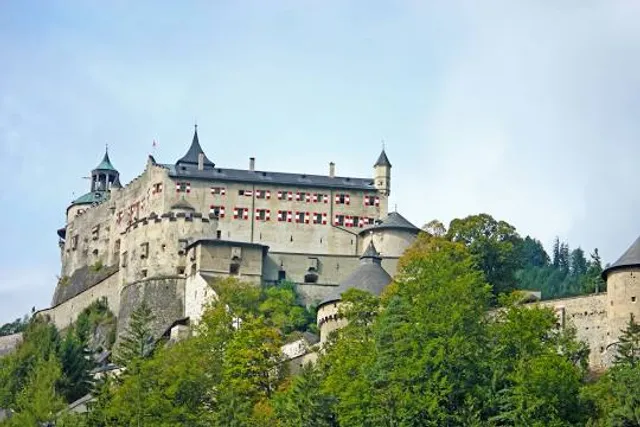
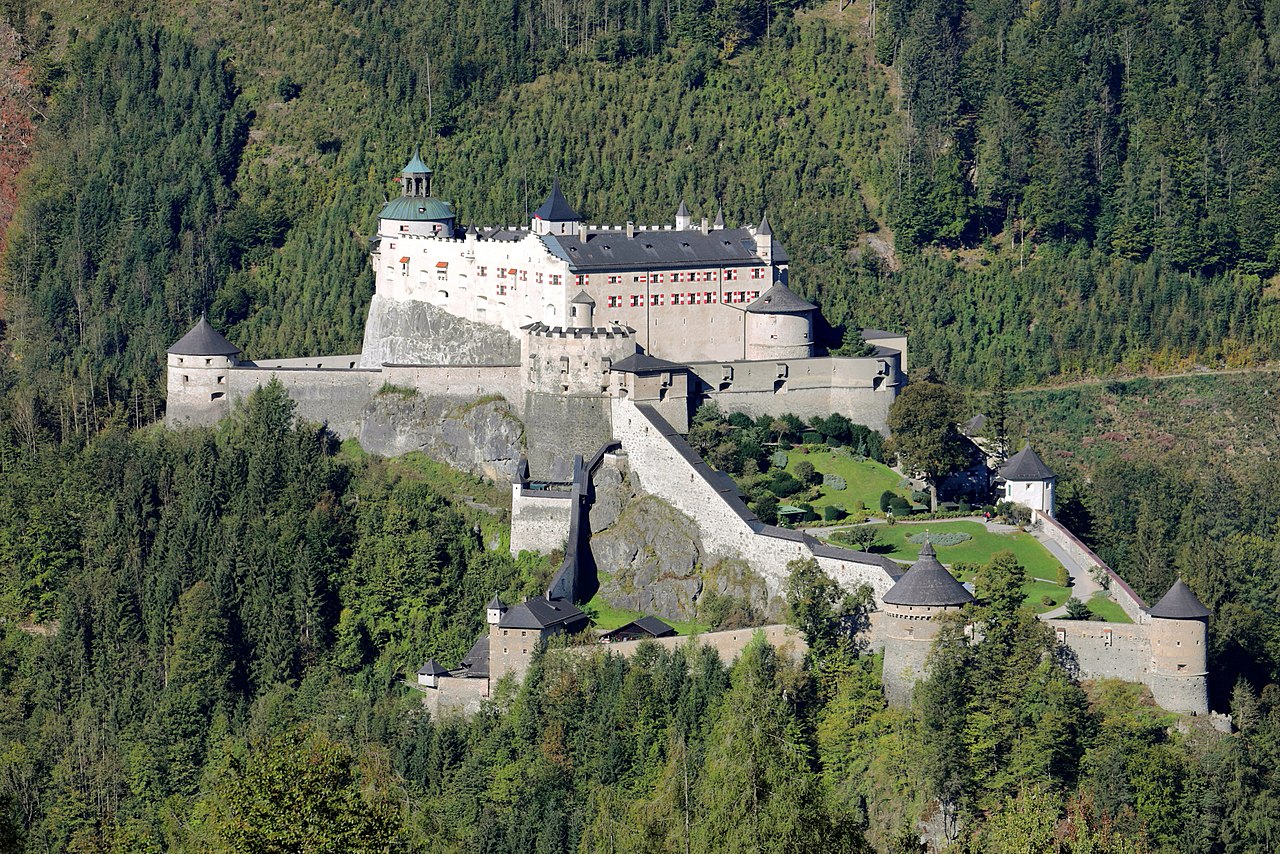
Hohenwerfen Castle is a medieval rock castle, situated on a 623 metres (2,044 ft) precipice overlooking the Austrian market town of Werfen in the Salzach valley, approximately 40 kilometres (25 mi) south of Salzburg. The fortress is surrounded by the Berchtesgaden Alps and the adjacent Tennen Mountains. Hohenwerfen is a "sister" of Hohensalzburg Fortress, both built by the Archbishops of Salzburg in the 11th century.
The fortification was built between 1075 and 1078 at the behest of Archbishop Gebhard of Salzburg during the Imperial Investiture Controversy, meant as a strategic bulwark atop a 155-metre (509 ft) high rock. Gebhard, an ally of Pope Gregory VII and the anti-king Rudolf of Rheinfelden, had three major castles extended to secure the route across the Eastern Alps along the Salzach river against the forces of King Henry IV of Germany: Hohenwerfen, Hohensalzburg and Petersberg Castle at Friesach in Carinthia. Nevertheless, King Henry had Gebhard expelled in 1077 and the archbishop could not return to Salzburg until 1086, only to die at Hohenwerfen two years later.
In the following centuries Hohenwerfen served Salzburg's rulers, the prince-archbishops, not only as a military base but also as a residence and hunting retreat. The fortress was extended in the 12th century and to a lesser extent again in the 16th century during the German Peasants' War, when in 1525 and 1526 riotous farmers and miners from the south of Salzburg moved towards the city, laying fire and severely damaging the castle.
Alternatively it was used as a state prison and therefore had a somewhat sinister reputation. Its prison walls have witnessed the tragic fate of many 'criminals' who spent their days there – maybe their last – under inhumane conditions, and, periodically, various highly ranked noblemen have also been imprisoned there including rulers such as Archbishop Adalbert III, arrested by his own ministeriales in 1198; Count Albert of Friesach (in 1253); the Styrian governor Siegmund von Dietrichstein, captured by insurgent peasants in 1525; and Prince-Archbishop Wolf Dietrich Raitenau, who died here in 1617 after six years of imprisonment.
In 1931 the fortress, owned by Archduke Eugen of Austria since 1898, was again damaged by a fire and, though largely restored, finally had to be sold to the Salzburg Reichsgau administration in 1938. After World War II it was used as a training camp by the Austrian Gendarmerie (rural police) until 1987.
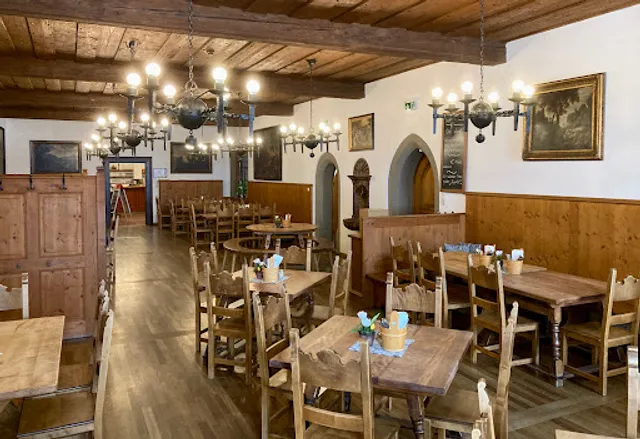
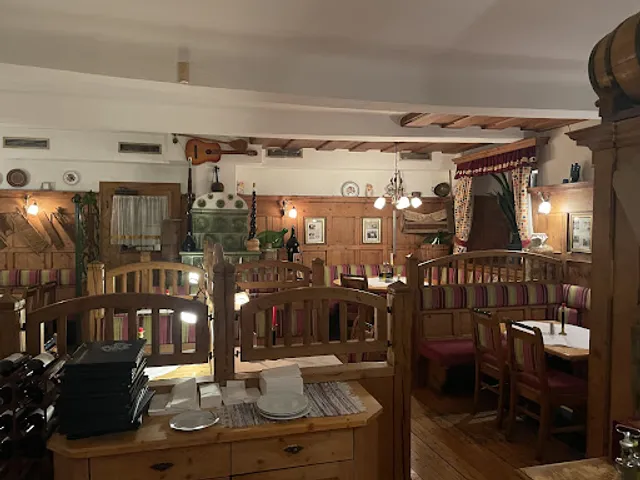
Currently, the bastion functions as a museum. Among the numerous attractions offered by the fortress are guided tours showing its extensive weapons collection, the historical Salzburg Falconry with the falconry museum as well as a fortress tavern. The historic Falconry Centre is a special attraction, offering daily flight demonstrations using various birds of prey, including eagles, falcons, hawks,...
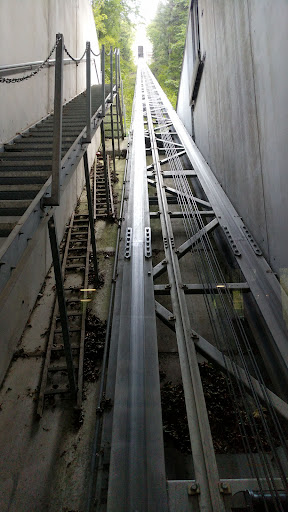
Read moreI won't lie, the only reason I visited this castle was because of Where Eagles Dare. It was definitely worth it. We arrived by train, and found our way to the castle from there following the sign posts. It was probably a half hour walk to the funicular / ticket office. The funicular ride up was brief, but fun.
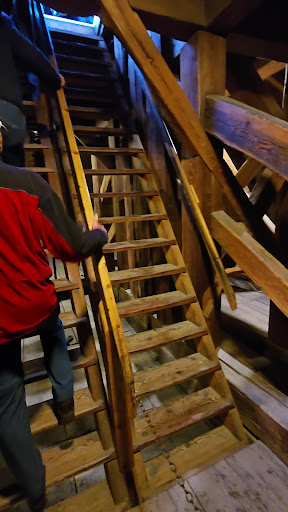
The actual tour round the castle was OK. There was a guide who took groups of about 30 round. The tour was in German, but there were audio guides available in other languages. This is good in theory, however sometimes the tour guide went on a lot longer than the audio guide did. So, maybe a bit more information for the audio guides would be nice. (That said, I'm a typical English speaker - why should I be accommodated everywhere?!) The tour took you through the chapel, a torture room / dungeon, some state rooms, the bell tower (don't go up there if you're not good with heights) and a few other rooms / galleries.
We also got a chance to see the birds of prey demonstration. This was, again, in German, so I'm not 100% sure what birds I saw! Definitely a falcon, possibly a buzzard, I'm sure I heard the lady say that...think there was an eagle. It was very enjoyable to watch, regardless. They swooped quite close to the onlookers at points, caught food launched into the air. We were all oohing and ahhing.
While we visited there was a Where Eagles Dare exhibition which comprised of a lot of posters and a film reel where people from Werfen recalled the filming of it. There was also a Da Vinci exhibition, showing a lot of his inventions.
Other than that, there was some workshop style things going on, all the staff were in period dress, and there were some activities aimed at children, sword fights etc.
All in all, it was an...
Read moreAs a foreigner, I suggest everyone to skip this attraction, and especially if you have kids then definitely skip this place. From Werfen train station to the castle there is a 30-35 mins walk, without any shade or proper footpath when you are on the highway. In summers, it can become scorching hot. Moreover, the castle guided tour doesn't offer to provide voice over in English, but the guide is very loud in saying things in German language and doesn't even allow you to skip the group. So, good luck trying to listen or understand anything. But the biggest reason of all should be that there isn't much to see or do in this castle. So, even if you ignore all those inconveniences, why are we even taking them? The only reason I didn't gave 1 star for this review is because the falconry show which lasts for about 20-25 mins is indeed good and the kids really enjoyed it. But there are steep walkways for about 10 mins and stairs that you need to climb and if you are with kids, then it is indeed something. There are no lifts or other options we noticed. Lastly, we were able to spot only one water outlet in such a heat and there wasn't any signatures on where you can get water...if a place is asking you to do a hike of 35 mins , the least they can do is put up clear signs of where is drinking water available. All in all, this was the worst time we spent in any attraction in and...
Read more