HTML SitemapExplore
logo
Find Things to DoFind The Best Restaurants

National Museum of Science and Technology — Attraction in Dhaka Metropolitan

Name
National Museum of Science and Technology
Description
Nearby attractions
Liberation War Museum
Civic Centre, Plot : F11/A & F11/B, Dhaka 1207, Bangladesh
DNCC Wonderland (Shishu Mela)
Mirpur Rd, Dhaka 1207, Bangladesh
Shyamoli Park
Khilji Rd, Dhaka 1207, Bangladesh
Bangladesh Air Force Museum
BAF Base Bashar, Dhaka 1207, Bangladesh
Nearby restaurants
Project Foodie
2/C, Taltola Bazar Road, Mollapara Rd, Dhaka 1207, Bangladesh
প্রিয় ক্যাফে - Priyo Cafe
Dhaka, Bangladesh
Dhaka XO
Level 6, Shyamoli Square Shopping Mall, Mirpur Rd, Dhaka 1207, Bangladesh
Thai Beans
Q9P9+JXM, Dhaka 1205, Bangladesh
Urban Fusion
Begum Rokeya Sharanee, Air Force Basecamp, Right Beside Bangladesh Air Force Museum, Agargaon, Dhaka 1215, Bangladesh
Nearby hotels
Related posts
Keywords
National Museum of Science and Technology tourism.National Museum of Science and Technology hotels.National Museum of Science and Technology bed and breakfast. flights to National Museum of Science and Technology.National Museum of Science and Technology attractions.National Museum of Science and Technology restaurants.National Museum of Science and Technology travel.National Museum of Science and Technology travel guide.National Museum of Science and Technology travel blog.National Museum of Science and Technology pictures.National Museum of Science and Technology photos.National Museum of Science and Technology travel tips.National Museum of Science and Technology maps.National Museum of Science and Technology things to do.
National Museum of Science and Technology things to do, attractions, restaurants, events info and trip planning

National Museum of Science and Technology
BangladeshDhaka DivisionDhaka MetropolitanNational Museum of Science and Technology

Basic Info

National Museum of Science and Technology

4 th Floor, Science and Technology Bhaban, Dhaka 1207, Bangladesh
4.4(1.9K)
Open 24 hours
Save
spot

Ratings & Description

Info

Cultural
Family friendly
Accessibility
attractions: Liberation War Museum, DNCC Wonderland (Shishu Mela), Shyamoli Park, Bangladesh Air Force Museum, restaurants: Project Foodie, প্রিয় ক্যাফে - Priyo Cafe, Dhaka XO, Thai Beans, Urban Fusion
logoLearn more insights from Wanderboat AI.
Phone
+880 2-58160609
Website
nmst.gov.bd

Plan your stay

hotel
Pet-friendly Hotels in Dhaka Metropolitan
Find a cozy hotel nearby and make it a full experience.

hotel
Affordable Hotels in Dhaka Metropolitan
Find a cozy hotel nearby and make it a full experience.

hotel
The Coolest Hotels You Haven't Heard Of (Yet)
Find a cozy hotel nearby and make it a full experience.

hotel
Trending Stays Worth the Hype in Dhaka Metropolitan
Find a cozy hotel nearby and make it a full experience.

Reviews

Nearby attractions of National Museum of Science and Technology

Liberation War Museum

DNCC Wonderland (Shishu Mela)

Shyamoli Park

Bangladesh Air Force Museum
Liberation War Museum

Liberation War Museum

4.6

(2.1K)

Closed
Click for details
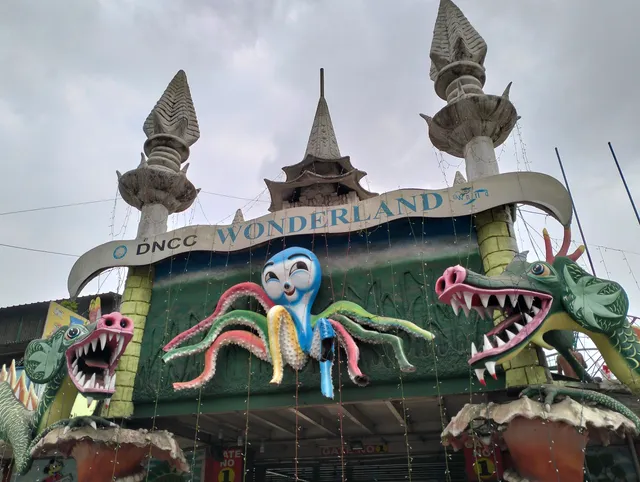
DNCC Wonderland (Shishu Mela)

DNCC Wonderland (Shishu Mela)

4.1

(3.8K)

Open until 8:30 PM
Click for details
Shyamoli Park

Shyamoli Park

4.2

(5.7K)

Open 24 hours
Click for details
Bangladesh Air Force Museum

Bangladesh Air Force Museum

4.4

(5.7K)

Open until 8:00 PM
Click for details

Nearby restaurants of National Museum of Science and Technology

Project Foodie

প্রিয় ক্যাফে - Priyo Cafe

Dhaka XO

Thai Beans

Urban Fusion

Project Foodie

Project Foodie

4.3

(45)

Click for details
প্রিয় ক্যাফে - Priyo Cafe

প্রিয় ক্যাফে - Priyo Cafe

4.3

(22)

Open until 11:00 PM
Click for details
Dhaka XO

Dhaka XO

3.5

(258)

Click for details
Thai Beans

Thai Beans

4.7

(2)

Click for details
Get the Appoverlay
Get the AppOne tap to find yournext favorite spots!
Wanderboat LogoWanderboat

Your everyday Al companion for getaway ideas

CompanyAbout Us
InformationAI Trip PlannerSitemap
SocialXInstagramTiktokLinkedin
LegalTerms of ServicePrivacy Policy

Get the app

© 2025 Wanderboat. All rights reserved.
logo

Posts

sheakh shakilsheakh shakil
National Museum of Science and Technology in Dhaka, Bangladesh was founded on April 26, 1965 by the Pakistani government and became a part of Bangladesh's Ministry of Science and Technologyfollowing the Bangladesh Liberation War. It was first based in the Dhaka Public Library, and moved a number of times before its permanent home was completed in 1981. The NMST serves as Bangladesh's only science museum and organizes science education activities at a national level. The museum preserves natural exhibits and the innovative work of the local scientists and encourages the young scientists to carry out innovative work, displays exhibits showing the history of scientific and technological advancement of human society, and creates a scientifically educated citizenry. The activities of the museum are organised on the basis of needs, interests and levels of the target group people, which include students, out-of-school children, youth and adults, illiterate people, working people, media men, amateur scientists, and persons who want to broaden their horizon of knowledge. The museum provides science education to visitors through galleries with static and working exhibits, models, charts, diagrams, animated posters etc. It has three divisions, one each for technology, physical science and biological science. The exhibits provide information about experiments and inventions in the fields of electricity, heat, light, magnetism, sound, communication, and motion, force and energy. They also include different kinds of rocks and minerals, pictorial records of man's journey to space, a diorama of dinosaurs and a pictorial representation of various animals living in different depths of sea. The museum has special arrangements for exhibiting locally manufactured products from jute, wood, wool, water hyacinth and different herbs and shrubs. Demonstration lectures are delivered to students and teachers of different schools and colleges on suitable topics covered by the secondary or higher secondary science syllabi. The museum regularly organises lectures and film shows on popular science topics, projects of science clubs and the scientists. One of the main functions of the museum is to encourage the science club activities in the country. It provides expert guidance and workshop facilities to about 500 science clubs spread all over the country. There are regular programmes for observing celestial bodies, lunar eclipse, solar spots and eclipse through reflecting telescope. A mini-planetarium installed at the museum can accommodate 20 visitors at a time. The museum has a library with books and journals on different subjects for the amateur scientists. It regularly publishes scientific booklets and magazines. A popular publication is the quarterly juvenile science magazine Nabin Biggani. The museum also organises various national and international workshops and seminars on science at different occasions. It plays a vital role in arranging National Science Week sponsored by the Ministry of Science and Technology. During the week, innovators, both individuals and groups of them, from different schools, colleges and science clubs display selected exhibits of models and projects. The activities of the science week are organised in two stages - first at the district level and then at the central level. Only the first prize winners of the competitions at the district level activities participate in the central level. Some exhibits and projects displayed in the science week are wood made cyclostyle machine, indigenously prepared grease, wind mill, amphibian cycle, spray machine, economic cooker, bio-gas, solar heater, solar cell, solar pump, paper condenser, hand driven irrigation pump, bamboo made thermoflask, reflecting telescope, microscope, stuffed and mounted birds, skeletons and embryos, and models of boats, airplanes, oil refineries, steel mills, paper mills, and projectors.
Golam Imtiaz (Manik)Golam Imtiaz (Manik)
The National Museum of Science and Technology in Dhaka, Bangladesh, was established in 1966 by the government of Pakistan. It was first based in the Dhaka Public Library building, after which the museum moved a number of times before it was established in its permanent home in 1981. The museum aims to preserve the innovative work of local scientists while encouraging the younger generation of scientists to explore the endless possibilities that their scientific knowledge opens up to them. Displays are arranged to show the rapid advancement of science and technology throughout humankind’s existence. Regardless of their background, age or education level, citizens of Bangladesh are encouraged to visit the National Museum of Science and Technology to increase their knowledge and broaden their outlook, with the focus on the beneficial effect that the advancement of science and technology has on the world. The National Museum of Science and Technology in Bangladesh is divided into three categories: Technology, Biological Science and Physical Science. With the emphasis on education, the museum has galleries with static and working exhibits, as well as models, diagrams, charts and animated posters. The exhibits provide detailed information concerning experiments and inventions in a number of fields including electricity, light, heat, magnetism, communication, sound, as well as motion, force and energy. Displays of the various rocks and minerals highlight some of the countless wonders of planet Earth. A pictorial record of the history and advances made in space travel, leading up to the first moon landing and beyond, gives visitors the opportunity to reflect on how extraordinarily vast the universe is and how much more there is still to discover. A fascinating diorama of dinosaurs brings to mind the unanswered question of what caused these prehistoric creatures to become extinct. A pictorial representation of the various sea creatures that live at different depths of the ocean gives visitors insight into the incredible diversity of life beneath the waves. The National Museum of Science & Technology plays an essential role in organizing National Science Week which is sponsored by the Ministry of Science and Technology. This offers individuals and groups from different schools, colleges and science clubs the opportunity to display models and projects with the possibility of receiving a prize. National Science Week has proven to be very successful in fueling the imaginations of science enthusiasts, resulting in some innovative projects. The library at the museum is filled with books and journals on a variety of subjects that are of interest to scientifically-minded individuals. It is also publishes “Nabin Biggani”, a popular quarterly science magazine specifically designed to encourage young people to enjoy the marvels of science. Tourists who travel to Bangladesh should make a point of visiting Dhaka and join the many locals who enjoy exploring the National Museum of Science and Technology
Shahid HossainShahid Hossain
The National Museum of Science and Technology in Bangladesh is a prominent institution that showcases the country's scientific achievements and technological advancements. Established in 1965, the museum aims to promote scientific education and encourage innovation among the people of Bangladesh. Located in the capital city of Dhaka, the National Museum of Science and Technology is a multi-story building that houses a wide range of exhibits related to science, technology, and innovation. The museum is divided into several galleries, each dedicated to a specific field of science or technology. These galleries include the Physical Science Gallery, the Biological Science Gallery, the Agricultural Science Gallery, the Computer and Information Technology Gallery, and the Space Science Gallery. The museum's exhibits feature a variety of interactive displays, models, and dioramas that engage visitors and provide a hands-on learning experience. In addition to the galleries, the museum also has a planetarium that offers shows on astronomy and space exploration. One of the most popular exhibits in the National Museum of Science and Technology is the 3D virtual reality theater, which allows visitors to experience a range of virtual reality simulations related to science and technology. Another popular attraction is the science park, which features outdoor exhibits and interactive activities that explore concepts like energy, force, and motion. In addition to its exhibits and activities, the National Museum of Science and Technology also hosts a variety of educational programs, workshops, and seminars for students, teachers, and researchers. These programs aim to foster a love of science and technology among young people and inspire them to pursue careers in these fields. Overall, the National Museum of Science and Technology in Bangladesh is a valuable resource for promoting scientific education and innovation in the country. Its interactive exhibits and educational programs provide a fun and engaging way for visitors to learn about science and technology, and its commitment to advancing these fields will undoubtedly continue to inspire future generations of scientists and innovators.
See more posts
See more posts
hotel
Find your stay

Pet-friendly Hotels in Dhaka Metropolitan

Find a cozy hotel nearby and make it a full experience.

National Museum of Science and Technology in Dhaka, Bangladesh was founded on April 26, 1965 by the Pakistani government and became a part of Bangladesh's Ministry of Science and Technologyfollowing the Bangladesh Liberation War. It was first based in the Dhaka Public Library, and moved a number of times before its permanent home was completed in 1981. The NMST serves as Bangladesh's only science museum and organizes science education activities at a national level. The museum preserves natural exhibits and the innovative work of the local scientists and encourages the young scientists to carry out innovative work, displays exhibits showing the history of scientific and technological advancement of human society, and creates a scientifically educated citizenry. The activities of the museum are organised on the basis of needs, interests and levels of the target group people, which include students, out-of-school children, youth and adults, illiterate people, working people, media men, amateur scientists, and persons who want to broaden their horizon of knowledge. The museum provides science education to visitors through galleries with static and working exhibits, models, charts, diagrams, animated posters etc. It has three divisions, one each for technology, physical science and biological science. The exhibits provide information about experiments and inventions in the fields of electricity, heat, light, magnetism, sound, communication, and motion, force and energy. They also include different kinds of rocks and minerals, pictorial records of man's journey to space, a diorama of dinosaurs and a pictorial representation of various animals living in different depths of sea. The museum has special arrangements for exhibiting locally manufactured products from jute, wood, wool, water hyacinth and different herbs and shrubs. Demonstration lectures are delivered to students and teachers of different schools and colleges on suitable topics covered by the secondary or higher secondary science syllabi. The museum regularly organises lectures and film shows on popular science topics, projects of science clubs and the scientists. One of the main functions of the museum is to encourage the science club activities in the country. It provides expert guidance and workshop facilities to about 500 science clubs spread all over the country. There are regular programmes for observing celestial bodies, lunar eclipse, solar spots and eclipse through reflecting telescope. A mini-planetarium installed at the museum can accommodate 20 visitors at a time. The museum has a library with books and journals on different subjects for the amateur scientists. It regularly publishes scientific booklets and magazines. A popular publication is the quarterly juvenile science magazine Nabin Biggani. The museum also organises various national and international workshops and seminars on science at different occasions. It plays a vital role in arranging National Science Week sponsored by the Ministry of Science and Technology. During the week, innovators, both individuals and groups of them, from different schools, colleges and science clubs display selected exhibits of models and projects. The activities of the science week are organised in two stages - first at the district level and then at the central level. Only the first prize winners of the competitions at the district level activities participate in the central level. Some exhibits and projects displayed in the science week are wood made cyclostyle machine, indigenously prepared grease, wind mill, amphibian cycle, spray machine, economic cooker, bio-gas, solar heater, solar cell, solar pump, paper condenser, hand driven irrigation pump, bamboo made thermoflask, reflecting telescope, microscope, stuffed and mounted birds, skeletons and embryos, and models of boats, airplanes, oil refineries, steel mills, paper mills, and projectors.
sheakh shakil

sheakh shakil

hotel
Find your stay

Affordable Hotels in Dhaka Metropolitan

Find a cozy hotel nearby and make it a full experience.

Get the Appoverlay
Get the AppOne tap to find yournext favorite spots!
The National Museum of Science and Technology in Dhaka, Bangladesh, was established in 1966 by the government of Pakistan. It was first based in the Dhaka Public Library building, after which the museum moved a number of times before it was established in its permanent home in 1981. The museum aims to preserve the innovative work of local scientists while encouraging the younger generation of scientists to explore the endless possibilities that their scientific knowledge opens up to them. Displays are arranged to show the rapid advancement of science and technology throughout humankind’s existence. Regardless of their background, age or education level, citizens of Bangladesh are encouraged to visit the National Museum of Science and Technology to increase their knowledge and broaden their outlook, with the focus on the beneficial effect that the advancement of science and technology has on the world. The National Museum of Science and Technology in Bangladesh is divided into three categories: Technology, Biological Science and Physical Science. With the emphasis on education, the museum has galleries with static and working exhibits, as well as models, diagrams, charts and animated posters. The exhibits provide detailed information concerning experiments and inventions in a number of fields including electricity, light, heat, magnetism, communication, sound, as well as motion, force and energy. Displays of the various rocks and minerals highlight some of the countless wonders of planet Earth. A pictorial record of the history and advances made in space travel, leading up to the first moon landing and beyond, gives visitors the opportunity to reflect on how extraordinarily vast the universe is and how much more there is still to discover. A fascinating diorama of dinosaurs brings to mind the unanswered question of what caused these prehistoric creatures to become extinct. A pictorial representation of the various sea creatures that live at different depths of the ocean gives visitors insight into the incredible diversity of life beneath the waves. The National Museum of Science & Technology plays an essential role in organizing National Science Week which is sponsored by the Ministry of Science and Technology. This offers individuals and groups from different schools, colleges and science clubs the opportunity to display models and projects with the possibility of receiving a prize. National Science Week has proven to be very successful in fueling the imaginations of science enthusiasts, resulting in some innovative projects. The library at the museum is filled with books and journals on a variety of subjects that are of interest to scientifically-minded individuals. It is also publishes “Nabin Biggani”, a popular quarterly science magazine specifically designed to encourage young people to enjoy the marvels of science. Tourists who travel to Bangladesh should make a point of visiting Dhaka and join the many locals who enjoy exploring the National Museum of Science and Technology
Golam Imtiaz (Manik)

Golam Imtiaz (Manik)

hotel
Find your stay

The Coolest Hotels You Haven't Heard Of (Yet)

Find a cozy hotel nearby and make it a full experience.

hotel
Find your stay

Trending Stays Worth the Hype in Dhaka Metropolitan

Find a cozy hotel nearby and make it a full experience.

The National Museum of Science and Technology in Bangladesh is a prominent institution that showcases the country's scientific achievements and technological advancements. Established in 1965, the museum aims to promote scientific education and encourage innovation among the people of Bangladesh. Located in the capital city of Dhaka, the National Museum of Science and Technology is a multi-story building that houses a wide range of exhibits related to science, technology, and innovation. The museum is divided into several galleries, each dedicated to a specific field of science or technology. These galleries include the Physical Science Gallery, the Biological Science Gallery, the Agricultural Science Gallery, the Computer and Information Technology Gallery, and the Space Science Gallery. The museum's exhibits feature a variety of interactive displays, models, and dioramas that engage visitors and provide a hands-on learning experience. In addition to the galleries, the museum also has a planetarium that offers shows on astronomy and space exploration. One of the most popular exhibits in the National Museum of Science and Technology is the 3D virtual reality theater, which allows visitors to experience a range of virtual reality simulations related to science and technology. Another popular attraction is the science park, which features outdoor exhibits and interactive activities that explore concepts like energy, force, and motion. In addition to its exhibits and activities, the National Museum of Science and Technology also hosts a variety of educational programs, workshops, and seminars for students, teachers, and researchers. These programs aim to foster a love of science and technology among young people and inspire them to pursue careers in these fields. Overall, the National Museum of Science and Technology in Bangladesh is a valuable resource for promoting scientific education and innovation in the country. Its interactive exhibits and educational programs provide a fun and engaging way for visitors to learn about science and technology, and its commitment to advancing these fields will undoubtedly continue to inspire future generations of scientists and innovators.
Shahid Hossain

Shahid Hossain

See more posts
See more posts

Reviews of National Museum of Science and Technology

4.4
(1,857)
avatar
4.0
7y

National Museum of Science and Technology in Dhaka, Bangladesh was founded on April 26, 1965 by the Pakistani government and became a part of Bangladesh's Ministry of Science and Technologyfollowing the Bangladesh Liberation War. It was first based in the Dhaka Public Library, and moved a number of times before its permanent home was completed in 1981. The NMST serves as Bangladesh's only science museum and organizes science education activities at a national level.

The museum preserves natural exhibits and the innovative work of the local scientists and encourages the young scientists to carry out innovative work, displays exhibits showing the history of scientific and technological advancement of human society, and creates a scientifically educated citizenry. The activities of the museum are organised on the basis of needs, interests and levels of the target group people, which include students, out-of-school children, youth and adults, illiterate people, working people, media men, amateur scientists, and persons who want to broaden their horizon of knowledge. The museum provides science education to visitors through galleries with static and working exhibits, models, charts, diagrams, animated posters etc. It has three divisions, one each for technology, physical science and biological science. The exhibits provide information about experiments and inventions in the fields of electricity, heat, light, magnetism, sound, communication, and motion, force and energy. They also include different kinds of rocks and minerals, pictorial records of man's journey to space, a diorama of dinosaurs and a pictorial representation of various animals living in different depths of sea.

The museum has special arrangements for exhibiting locally manufactured products from jute, wood, wool, water hyacinth and different herbs and shrubs. Demonstration lectures are delivered to students and teachers of different schools and colleges on suitable topics covered by the secondary or higher secondary science syllabi. The museum regularly organises lectures and film shows on popular science topics, projects of science clubs and the scientists. One of the main functions of the museum is to encourage the science club activities in the country. It provides expert guidance and workshop facilities to about 500 science clubs spread all over the country. There are regular programmes for observing celestial bodies, lunar eclipse, solar spots and eclipse through reflecting telescope. A mini-planetarium installed at the museum can accommodate 20 visitors at a time.

The museum has a library with books and journals on different subjects for the amateur scientists. It regularly publishes scientific booklets and magazines. A popular publication is the quarterly juvenile science magazine Nabin Biggani. The museum also organises various national and international workshops and seminars on science at different occasions. It plays a vital role in arranging National Science Week sponsored by the Ministry of Science and Technology. During the week, innovators, both individuals and groups of them, from different schools, colleges and science clubs display selected exhibits of models and projects. The activities of the science week are organised in two stages - first at the district level and then at the central level. Only the first prize winners of the competitions at the district level activities participate in the central level. Some exhibits and projects displayed in the science week are wood made cyclostyle machine, indigenously prepared grease, wind mill, amphibian cycle, spray machine, economic cooker, bio-gas, solar heater, solar cell, solar pump, paper condenser, hand driven irrigation pump, bamboo made thermoflask, reflecting telescope, microscope, stuffed and mounted birds, skeletons and embryos, and models of boats, airplanes, oil refineries, steel mills, paper mills,...

   Read more
avatar
5.0
42w

The National Museum of Science and Technology in Dhaka offers a delightful blend of education, interactivity, and inspiration for visitors of all ages. Located at Sher‑E‑Bangla Nagar (Dhaka 1207), this museum is dedicated to showcasing the evolution of scientific thought and technological innovation in Bangladesh and beyond.

A Hub of Interactive Learning

The museum’s design emphasizes hands‑on engagement. Multiple galleries—such as the IT gallery, space science gallery, and young scientist’s gallery—invite visitors to interact directly with exhibits. Whether you’re marveling at innovative models, experimenting with interactive displays, or enjoying a scientific film show in the museum’s mini‑theater, every section is designed to spark curiosity and encourage learning. For families and school groups, the museum’s approach transforms learning into an enjoyable adventure that goes far beyond passive observation [ ].

A Journey Through Science and History

Originally established in 1965, the museum has evolved through decades of scientific advancement and historical change. It not only highlights cutting‑edge technology and scientific principles but also offers insight into the nation’s journey—illustrating pivotal moments from the Bangladesh Liberation War to modern-day technological achievements. Visitors gain a deep appreciation of how science has shaped both local and global progress, making the experience both educational and culturally enriching [ ].

Architectural Appeal and Visitor Comfort

Beyond its exhibits, the museum itself is a modern architectural landmark in Dhaka. With spacious galleries, a well‑curated science library, and even a sky observatory, the facility is designed to accommodate a steady flow of curious minds. Its thoughtful layout ensures that visitors can navigate from one exhibit to another with ease. Additional amenities—like an on‑site café and organized educational programs such as science festivals and lectures—enhance the overall experience, providing both comfort and additional learning opportunities.

Practical Visitor Information

The museum’s convenient location in the heart of Dhaka makes it accessible by car, taxi, or public transport. With moderate entry fees (around ৳10 for the main museum and a similar charge for special exhibits like the Navo Telescope), it offers an affordable day‑out for families, students, and anyone with a keen interest in science. Open Monday, Tuesday, Wednesday, Saturday, and Sunday—with a slightly adjusted schedule on Friday and closed on Thursdays—it’s best to plan your visit during weekdays or early on the weekend to avoid the larger crowds and fully immerse yourself in the exhibits [ ].

Final Thoughts

Overall, the National Museum of Science and Technology in Dhaka stands as a testament to the power of interactive education. Its wide-ranging exhibits, commitment to preserving both scientific and national heritage, and user‑friendly layout make it a must‑visit destination for science enthusiasts and casual visitors alike. Whether you’re exploring with family, school groups, or on your own, the museum promises an engaging journey through the fascinating realms of science and technology.

This enriching experience not only broadens your knowledge but also inspires a sense of wonder about the scientific world—a quality that remains at the heart of the museum’s...

   Read more
avatar
5.0
2y

The National Museum of Science and Technology in Dhaka, Bangladesh, was established in 1966 by the government of Pakistan. It was first based in the Dhaka Public Library building, after which the museum moved a number of times before it was established in its permanent home in 1981.

The museum aims to preserve the innovative work of local scientists while encouraging the younger generation of scientists to explore the endless possibilities that their scientific knowledge opens up to them. Displays are arranged to show the rapid advancement of science and technology throughout humankind’s existence. Regardless of their background, age or education level, citizens of Bangladesh are encouraged to visit the National Museum of Science and Technology to increase their knowledge and broaden their outlook, with the focus on the beneficial effect that the advancement of science and technology has on the world.

The National Museum of Science and Technology in Bangladesh is divided into three categories: Technology, Biological Science and Physical Science. With the emphasis on education, the museum has galleries with static and working exhibits, as well as models, diagrams, charts and animated posters. The exhibits provide detailed information concerning experiments and inventions in a number of fields including electricity, light, heat, magnetism, communication, sound, as well as motion, force and energy.

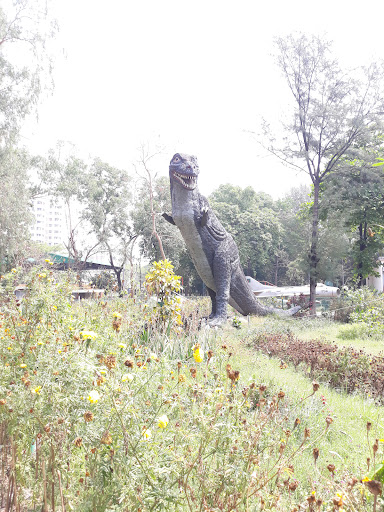
Displays of the various rocks and minerals highlight some of the countless wonders of planet Earth. A pictorial record of the history and advances made in space travel, leading up to the first moon landing and beyond, gives visitors the opportunity to reflect on how extraordinarily vast the universe is and how much more there is still to discover. A fascinating diorama of dinosaurs brings to mind the unanswered question of what caused these prehistoric creatures to become extinct. A pictorial representation of the various sea creatures that live at different depths of the ocean gives visitors insight into the incredible diversity of life beneath the waves.

The National Museum of Science & Technology plays an essential role in organizing National Science Week which is sponsored by the Ministry of Science and Technology. This offers individuals and groups from different schools, colleges and science clubs the opportunity to display models and projects with the possibility of receiving a prize. National Science Week has proven to be very successful in fueling the imaginations of science enthusiasts, resulting in some innovative projects.

The library at the museum is filled with books and journals on a variety of subjects that are of interest to scientifically-minded individuals. It is also publishes “Nabin Biggani”, a popular quarterly science magazine specifically designed to encourage young people to enjoy the marvels of science.

Tourists who travel to Bangladesh should make a point of visiting Dhaka and join the many locals who enjoy exploring the National Museum of Science...

   Read more
Page 1 of 7
Previous
Next