HTML SitemapExplore
logo
Find Things to DoFind The Best Restaurants

Ruplal House — Attraction in Dhaka Metropolitan

Name
Ruplal House
Description
Ruplal House is a 19th-century mansion in Farashganj area in Dhaka, Bangladesh. It was built on the northern bank of the Buriganga River, beside the Buckland Dam. The house was built in 1825 by an Armenian businessman Stephen Aratoon.
Nearby attractions
Bahadur Shah Park
Johnson Rd, Dhaka, Bangladesh
Ahsan Manzil Museum
āĻŦāĻŋāĻ•ā§āϰāĻŽāĻĒ⧁āϰ āĻ—āĻžāĻ°ā§āĻĄā§‡āύ āϏāĻŋāϟāĻŋ, Simson Rd, Dhaka 1000, Bangladesh
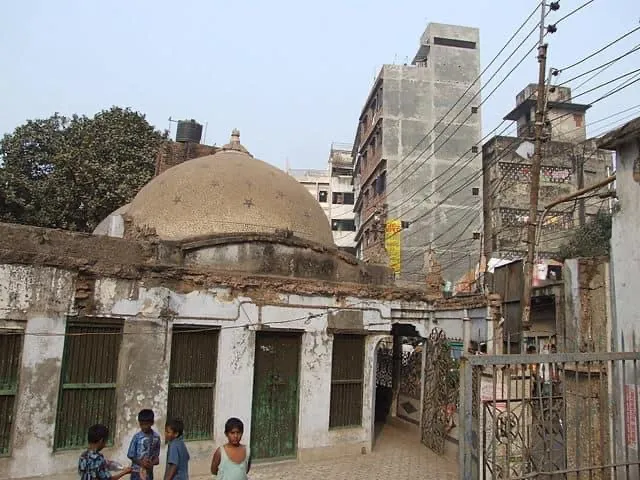
Binat Bibi Masjid
Narinda Rd, Dhaka, Bangladesh
Nearby restaurants
Buriganga Riverview Restaurant
BIWTA complex, Dhaka 1100, Bangladesh
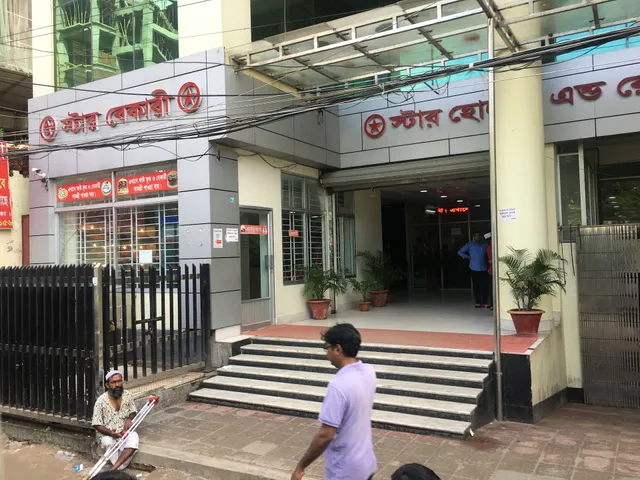
Star Hotel & Restaurant - Johnson Road
49 Johnson Rd, Dhaka 1100, Bangladesh
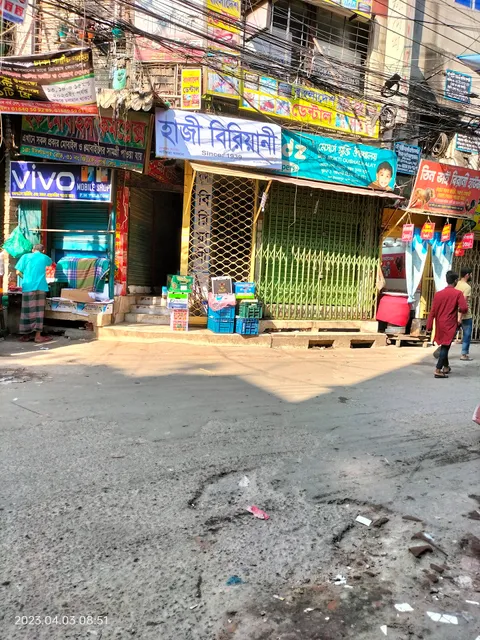
Haji Biriyani - Islampur
3 Islampur Rd, Dhaka, Bangladesh
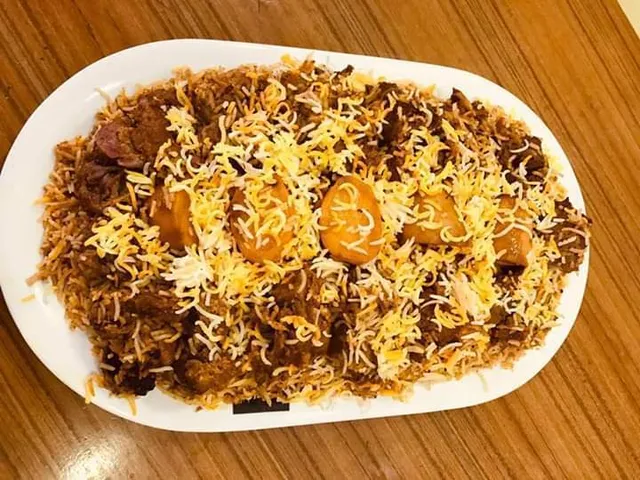
Bolram Mistanno Vandar & Kacchi
Keraniganj 1310, Bangladesh
Nearby hotels
Related posts
Keywords
Ruplal House tourism.Ruplal House hotels.Ruplal House bed and breakfast. flights to Ruplal House.Ruplal House attractions.Ruplal House restaurants.Ruplal House travel.Ruplal House travel guide.Ruplal House travel blog.Ruplal House pictures.Ruplal House photos.Ruplal House travel tips.Ruplal House maps.Ruplal House things to do.
Ruplal House things to do, attractions, restaurants, events info and trip planning
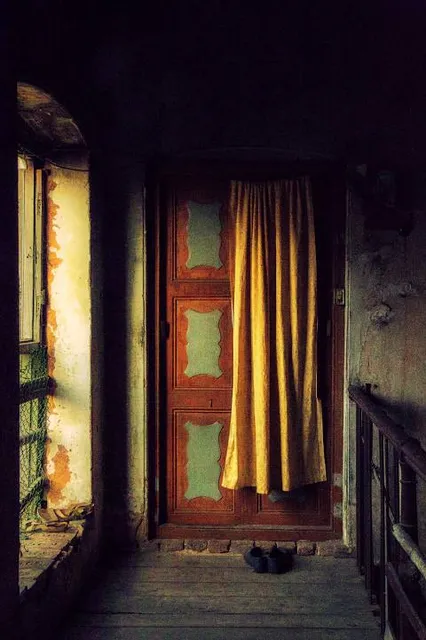
Ruplal House
BangladeshDhaka DivisionDhaka MetropolitanRuplal House

Basic Info

Ruplal House

PC37+F99, Ahsanullah Rd, Dhaka, Bangladesh
4.3(367)
Open until 12:00 AM
Save
spot

Ratings & Description

Info

Ruplal House is a 19th-century mansion in Farashganj area in Dhaka, Bangladesh. It was built on the northern bank of the Buriganga River, beside the Buckland Dam. The house was built in 1825 by an Armenian businessman Stephen Aratoon.

Cultural
Scenic
Off the beaten path
attractions: Bahadur Shah Park, Ahsan Manzil Museum, Binat Bibi Masjid, restaurants: Buriganga Riverview Restaurant, Star Hotel & Restaurant - Johnson Road, Haji Biriyani - Islampur, Bolram Mistanno Vandar & Kacchi
logoLearn more insights from Wanderboat AI.
Website
sadekahmed.com
Open hoursSee all hours
TueOpen 24 hoursOpen

Plan your stay

hotel
Pet-friendly Hotels in Dhaka Metropolitan
Find a cozy hotel nearby and make it a full experience.

hotel
Affordable Hotels in Dhaka Metropolitan
Find a cozy hotel nearby and make it a full experience.

hotel
The Coolest Hotels You Haven't Heard Of (Yet)
Find a cozy hotel nearby and make it a full experience.

hotel
Trending Stays Worth the Hype in Dhaka Metropolitan
Find a cozy hotel nearby and make it a full experience.

Reviews

Nearby attractions of Ruplal House

Bahadur Shah Park

Ahsan Manzil Museum

Binat Bibi Masjid
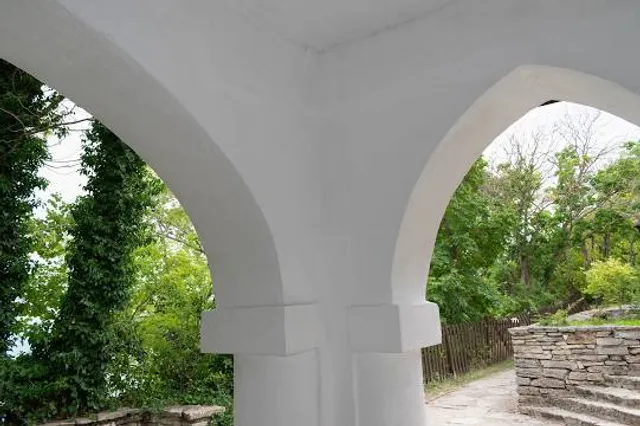
Bahadur Shah Park

Bahadur Shah Park

4.2

(4.8K)

Open until 12:00 AM
Click for details
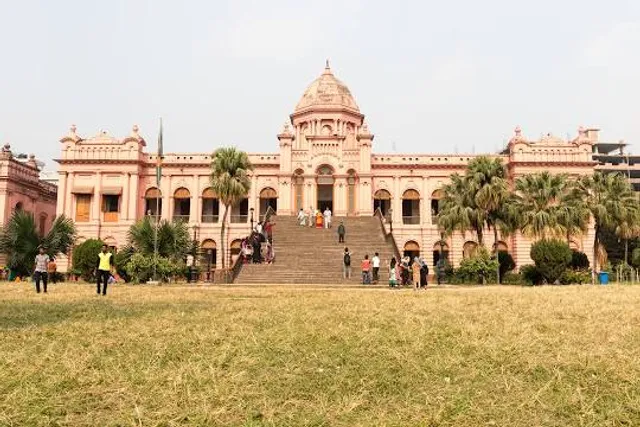
Ahsan Manzil Museum

Ahsan Manzil Museum

4.4

(7.2K)

Open 24 hours
Click for details
Binat Bibi Masjid

Binat Bibi Masjid

4.6

(226)

Open 24 hours
Click for details

Nearby restaurants of Ruplal House

Buriganga Riverview Restaurant

Star Hotel & Restaurant - Johnson Road

Haji Biriyani - Islampur

Bolram Mistanno Vandar & Kacchi
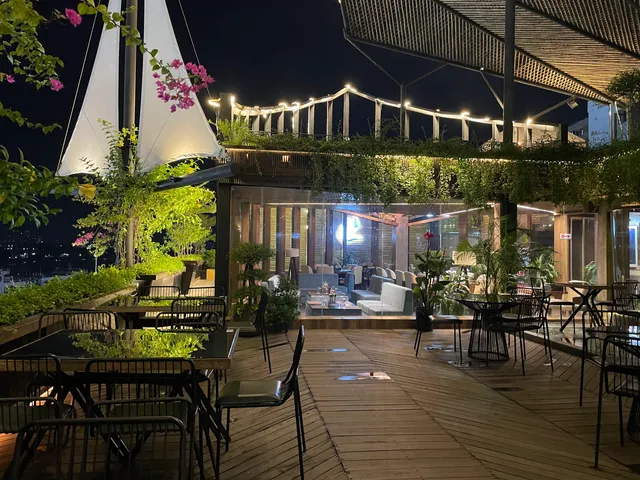
Buriganga Riverview Restaurant

Buriganga Riverview Restaurant

4.0

(503)

$$

Click for details
Star Hotel & Restaurant - Johnson Road

Star Hotel & Restaurant - Johnson Road

4.2

(2.6K)

Click for details
Haji Biriyani - Islampur

Haji Biriyani - Islampur

3.8

(201)

Click for details
Bolram Mistanno Vandar & Kacchi

Bolram Mistanno Vandar & Kacchi

3.5

(41)

Click for details
Get the Appoverlay
Get the AppOne tap to find yournext favorite spots!
Wanderboat LogoWanderboat

Your everyday Al companion for getaway ideas

CompanyAbout Us
InformationAI Trip PlannerSitemap
SocialXInstagramTiktokLinkedin
LegalTerms of ServicePrivacy Policy

Get the app

Š 2025 Wanderboat. All rights reserved.
logo

Posts

Rafiquzzaman MunnaRafiquzzaman Munna
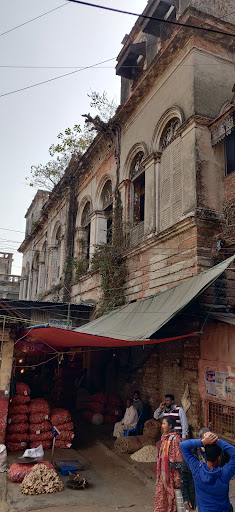
More than 150 years old historical building. Built as "Jomidar Bari" Back then used as his business centre also. "Rooplal Das was a Jamindar and a merchant. He was the first educated member of his family. In the Probeshika Exam he stood first and got a scholarship of tk 10 and he was a great fan of music. He did not spend much on social causes but he spent a lot for the musicians. Rooplal house is well known to have hosted a lot of cultural activity of the time. Gurus of Indian classical music like Ostad Alauddin Khan, Ostad Wall Ullah Khan and Lakshmi Devi regularly hosted shows. In 1888 when Lord Dafrin was invited to visit Dhaka by the Elites of that time, a competition was held between Ahsan Manzil and Rooplal house and Rooplal house won by the vote of the elites; this added political importance to Rooplal house at that time. For showing off their social status they spent tk 45000 to decorate it. After the earthquake of 1897 the watchtower of the house broke down and the family shifted their home to another place. The great house was abandoned for 50 years. The story of Shyam Bazaar starts from after the Dash family left the house. There was a garden on the eastern side of Rooplal House named 'Roghubabur Bagaan' and there was a pool named 'Shayambabur Pool'. After the family left the house the garden lost its beauty because of no maintenance. The market then started here and was known as Shyam Bazar. The bund area was developed as a rich residential area which was occupied mainly by the high class European officers and merchants. But by 1930 the riverfront lost its residential quality and was developed as a highly commercial area. The Das family left Dhaka after the partition in 1947. In 1958 the Jamall family purchased Ruplal House and some other houses in Dhaka in exchange with their house in the posh locality of Aukland Square in Kolikota. Mr. Mohammed Siddique Jamall and his younger brother Mr. Ibrahim Siddique Jamall became co-owners of Ruplal House and renamed it "Jamall House". Mr.Mohammed Siddique Jamall and his son Mr. Hussain Siddique Jamall lived on the 1st floor. Another son Mr. Habib Siddique Jamall lived on the top floor. The ground floor was used as a police camp and revenue office. Mr Mohammed Siddique Jamall and family left for India and West in 1976. Most of his and his brother Mr. Ibrahim Siddique Jamall's grandshildren migrated to USA, UK, Canada, Australia, and the Gulf and may claim ownership. A portion of the 1st Floor of Jamall House block was used as Prince Karim Ago Khan Preparatory school from 1958. In 1973 the house was converted to a college but only lasted for 16 days. Later it was used as the residential accommodation of the family of staff of JCO and NCO army officers. The Roghunath block is under private ownership since 1948 AD. At present the building functions both as a residential and commercial complex. It is heavily encroached by the spice and vegetable vendors and by a colony of un-authorized squatters who have erected shanty hovels against the building. The east block is owned and used by a private owner as residence at first floor and warehouse at the ground floor. "
Mirza Syeedul Islam BegMirza Syeedul Islam Beg
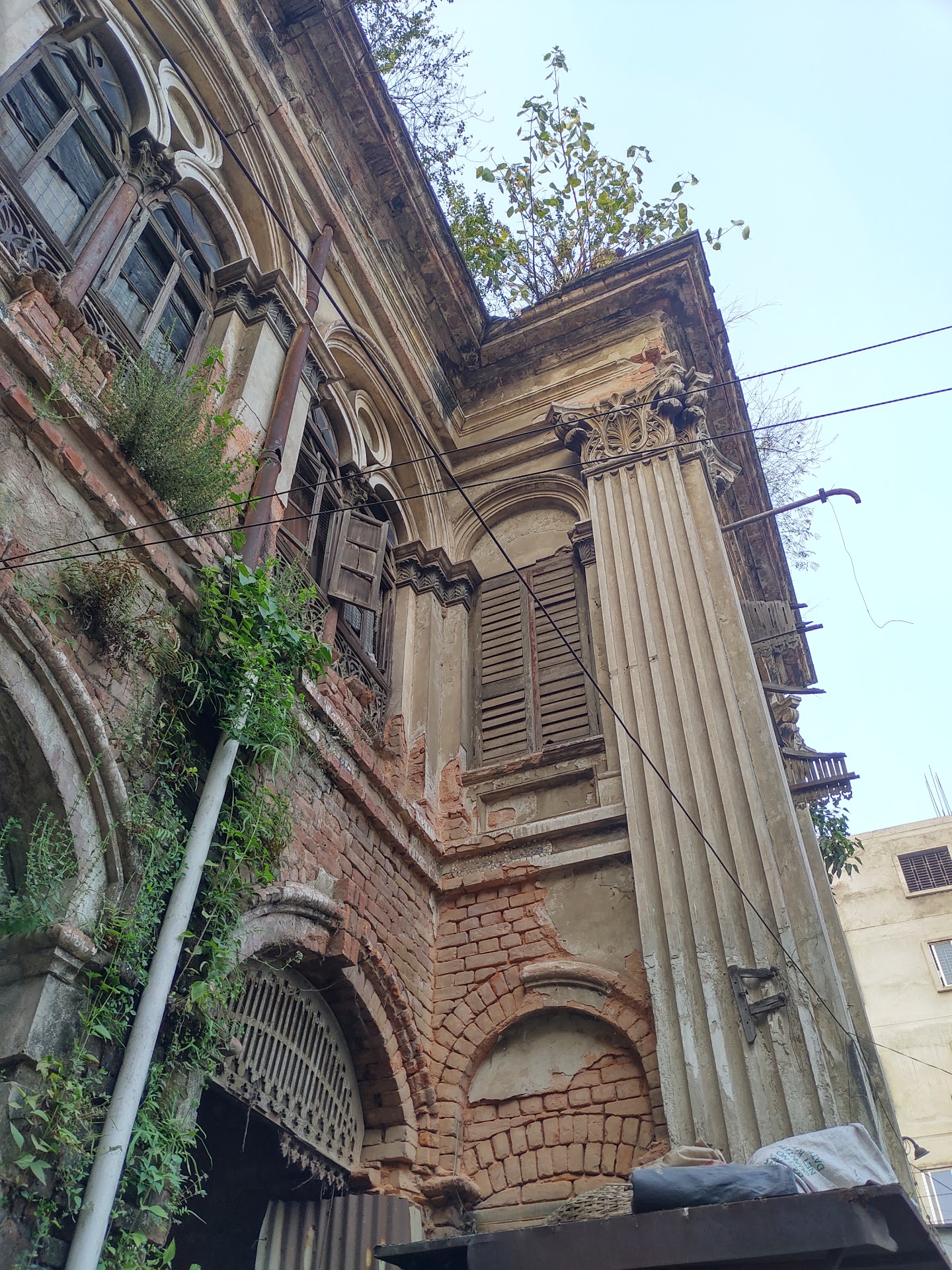
One of the iconic landmarks near river Buriganga - Ruplal house is the long lost reminiscent glory of old Dhaka under British empire. Ruplal House / Rooplal House is located at Farashganj, just beside the bank of the Buriganga River. It was built by two prominent merchant brothers from 18th century Dhaka - Ruplal and Raghunath Das. According to the locals, this palace may be around 150-200 years old. The building has large cylindrical columns in line with the architectural styles of Ancient Greek buildings. Also top of the building, especially the ledges are also decorated with intricate designs reminiscent of Greek Architure as well as the Victorian Castles of England. Tragically, this once magnificent building is now using as storage facilities for nearby businesses. Both the archeological department and local people have failed to preserve its magnificent architecture for future generations.
Yead Rahman NirzharYead Rahman Nirzhar
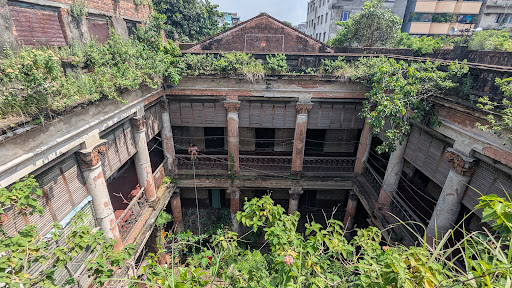
​A true architectural marvel from the 19th century, Ruplal House stands as a testament to Old Dhaka's rich history. I particularly enjoyed the inner courtyard and the stunning view of the Buriganga River from the rooftop. ​However, it's disheartening to see this historical gem in a state of disrepair, with squatters occupying parts of the structure. I sincerely hope the Archaeological Department of Bangladesh takes action to remove these encroachments and begins the necessary conservation work. Despite its current struggles, this building is a must-see for anyone interested in the heritage of Old Dhaka.
See more posts
See more posts
hotel
Find your stay

Pet-friendly Hotels in Dhaka Metropolitan

Find a cozy hotel nearby and make it a full experience.

More than 150 years old historical building. Built as "Jomidar Bari" Back then used as his business centre also. "Rooplal Das was a Jamindar and a merchant. He was the first educated member of his family. In the Probeshika Exam he stood first and got a scholarship of tk 10 and he was a great fan of music. He did not spend much on social causes but he spent a lot for the musicians. Rooplal house is well known to have hosted a lot of cultural activity of the time. Gurus of Indian classical music like Ostad Alauddin Khan, Ostad Wall Ullah Khan and Lakshmi Devi regularly hosted shows. In 1888 when Lord Dafrin was invited to visit Dhaka by the Elites of that time, a competition was held between Ahsan Manzil and Rooplal house and Rooplal house won by the vote of the elites; this added political importance to Rooplal house at that time. For showing off their social status they spent tk 45000 to decorate it. After the earthquake of 1897 the watchtower of the house broke down and the family shifted their home to another place. The great house was abandoned for 50 years. The story of Shyam Bazaar starts from after the Dash family left the house. There was a garden on the eastern side of Rooplal House named 'Roghubabur Bagaan' and there was a pool named 'Shayambabur Pool'. After the family left the house the garden lost its beauty because of no maintenance. The market then started here and was known as Shyam Bazar. The bund area was developed as a rich residential area which was occupied mainly by the high class European officers and merchants. But by 1930 the riverfront lost its residential quality and was developed as a highly commercial area. The Das family left Dhaka after the partition in 1947. In 1958 the Jamall family purchased Ruplal House and some other houses in Dhaka in exchange with their house in the posh locality of Aukland Square in Kolikota. Mr. Mohammed Siddique Jamall and his younger brother Mr. Ibrahim Siddique Jamall became co-owners of Ruplal House and renamed it "Jamall House". Mr.Mohammed Siddique Jamall and his son Mr. Hussain Siddique Jamall lived on the 1st floor. Another son Mr. Habib Siddique Jamall lived on the top floor. The ground floor was used as a police camp and revenue office. Mr Mohammed Siddique Jamall and family left for India and West in 1976. Most of his and his brother Mr. Ibrahim Siddique Jamall's grandshildren migrated to USA, UK, Canada, Australia, and the Gulf and may claim ownership. A portion of the 1st Floor of Jamall House block was used as Prince Karim Ago Khan Preparatory school from 1958. In 1973 the house was converted to a college but only lasted for 16 days. Later it was used as the residential accommodation of the family of staff of JCO and NCO army officers. The Roghunath block is under private ownership since 1948 AD. At present the building functions both as a residential and commercial complex. It is heavily encroached by the spice and vegetable vendors and by a colony of un-authorized squatters who have erected shanty hovels against the building. The east block is owned and used by a private owner as residence at first floor and warehouse at the ground floor. "
Rafiquzzaman Munna

Rafiquzzaman Munna

hotel
Find your stay

Affordable Hotels in Dhaka Metropolitan

Find a cozy hotel nearby and make it a full experience.

Get the Appoverlay
Get the AppOne tap to find yournext favorite spots!
One of the iconic landmarks near river Buriganga - Ruplal house is the long lost reminiscent glory of old Dhaka under British empire. Ruplal House / Rooplal House is located at Farashganj, just beside the bank of the Buriganga River. It was built by two prominent merchant brothers from 18th century Dhaka - Ruplal and Raghunath Das. According to the locals, this palace may be around 150-200 years old. The building has large cylindrical columns in line with the architectural styles of Ancient Greek buildings. Also top of the building, especially the ledges are also decorated with intricate designs reminiscent of Greek Architure as well as the Victorian Castles of England. Tragically, this once magnificent building is now using as storage facilities for nearby businesses. Both the archeological department and local people have failed to preserve its magnificent architecture for future generations.
Mirza Syeedul Islam Beg

Mirza Syeedul Islam Beg

hotel
Find your stay

The Coolest Hotels You Haven't Heard Of (Yet)

Find a cozy hotel nearby and make it a full experience.

hotel
Find your stay

Trending Stays Worth the Hype in Dhaka Metropolitan

Find a cozy hotel nearby and make it a full experience.

​A true architectural marvel from the 19th century, Ruplal House stands as a testament to Old Dhaka's rich history. I particularly enjoyed the inner courtyard and the stunning view of the Buriganga River from the rooftop. ​However, it's disheartening to see this historical gem in a state of disrepair, with squatters occupying parts of the structure. I sincerely hope the Archaeological Department of Bangladesh takes action to remove these encroachments and begins the necessary conservation work. Despite its current struggles, this building is a must-see for anyone interested in the heritage of Old Dhaka.
Yead Rahman Nirzhar

Yead Rahman Nirzhar

See more posts
See more posts

Reviews of Ruplal House

4.3
(367)
avatar
5.0
5y

Ruplal House (formerly known as Aratoon House) is a 19th-century mansion in Farashganj area in Dhaka, Bangladesh. It was built on the northern bank of the Buriganga River, beside the Buckland Dam. The house was built in 1825 by an Armenian businessman Stephen Aratoon. It was later bought by two merchants, Ruplal Das and his brother Raghunath Das, in 1840. Later, an architect firm of Calcutta, Martin Company, re-constructed this building. Ruplal House first came into limelight in 1886 when Ruplal Das threw a ball dance party in the honor of the Viceroy of India Lord Dufferin.[2] After the partition of India in 1947, the family of Ruplal Das left for Kolkata.[2] In 1962, through a formal deed of exchange, Siddick Jamall bought the house. Divided into two unequal blocks in slightly different styles, it is a two-storeyed edifice. It presents a Grand River front, about 9144 m long. It replicated Greek Doric column and there used to be a huge clock at the top of the building. In the earthquake of 1897.[3] Its ground plan follows the shape of the letter 'E', with three arms extending towards the north or the city side, of which the middle arm projects about 1830 m. It accommodates a grand portico carried on a series of lofty semi-Corinthian fluted columns, and surmounted by a triangular pediment, characteristic of Renaissance architecture.

The two blocks include, in two floors, over fifty rooms of various sizes and of them the central hall on the upper floor of the more impressive western wing was an elegantly decorated dance hall with a wooden floor. On the north and south two broad verandas run the entire length of the block and are supported on either round semi-Corinthian columns or rectangular brick pillars with segmented or trefoil arches above. Ruplal house has three distinct blocks of different architectural style; these blocks were separated in the ground floor, but related at the upper floor by arch way. Those three blocks were:[4]

Ruplal block [western wing- around twenty five thousand square ft.] Raghunath block [eastern wing- around twelve thousand square ft.] Central block [approximately nine thousand square ft.] Architectural Features: Ruplal Block Ruplal block was designed in the Neo-classical style. This grand wing was square in plan with a square central courtyard. The lighter plain columns give the court sense of light and proportions. The rooms were arranged around this central courtyard in order to give privacy. Its main entry is from the northern portico with a triangular pediment over fluted columns with Corinthian capitals, which emphasizes the entry and its secondary entry from the front court through the series of archways which is also inviting. Service block lowering height is slightly detached from the main block.

Structural Features: Ruplal Block Foundation: load bearing brick masonry foundation is used as the superstructure without using any reinforcement. There is no crack or sag seen in the foundation. Plinth is 2’ high from the ground level.

Walls: Load bearing 25” thick. Brick masonry is layered in walls. Lime concrete is used as the mortar and plastering materials. Columns: Three types of columns; Neo-Corinthian, circular, squares columns. Arch: Serve as lintels made of bricks over the doors, windows, and also on the circulation passages. Beams: Steel I beam. For wide span double steel beams are used. Steel I beam of Size- 3”x6”, 4”x8” and 6”x12. Wooden beams: Size 3”x3” Floor: 11” thick layered floor of Red oxide, Brick masonry Tiles, Lime Concrete. Stair –case: Wooden staircases. One stair is partly reinforced. Wooden stairs are used with iron joists. Material: Bricks are used as the main building material. They are varied in size and shape. Brick tiles are used in the cornice. Plaster: Lime concrete. No blister is seen in the walls and columns because of using glue. Finish materials: Marble tiles, Terrazzo, Red oxide, colored tinted glass.

Architectural Features: Raghunath Block This block has different architectural style which lies in the eastern part of...

   Read more
avatar
5.0
4y

More than 150 years old historical building. Built as "Jomidar Bari" Back then used as his business centre also.

"Rooplal Das was a Jamindar and a merchant. He was the first educated member of his family. In the Probeshika Exam he stood first and got a scholarship of tk 10 and he was a great fan of music. He did not spend much on social causes but he spent a lot for the musicians. Rooplal house is well known to have hosted a lot of cultural activity of the time. Gurus of Indian classical music like Ostad Alauddin Khan, Ostad Wall Ullah Khan and Lakshmi Devi regularly hosted shows. In 1888 when Lord Dafrin was invited to visit Dhaka by the Elites of that time, a competition was held between Ahsan Manzil and Rooplal house and Rooplal house won by the vote of the elites; this added political importance to Rooplal house at that time. For showing off their social status they spent tk 45000 to decorate it.

After the earthquake of 1897 the watchtower of the house broke down and the family shifted their home to another place. The great house was abandoned for 50 years. The story of Shyam Bazaar starts from after the Dash family left the house. There was a garden on the eastern side of Rooplal House named 'Roghubabur Bagaan' and there was a pool named 'Shayambabur Pool'. After the family left the house the garden lost its beauty because of no maintenance. The market then started here and was known as Shyam Bazar. The bund area was developed as a rich residential area which was occupied mainly by the high class European officers and merchants. But by 1930 the riverfront lost its residential quality and was developed as a highly commercial area.

The Das family left Dhaka after the partition in 1947. In 1958 the Jamall family purchased Ruplal House and some other houses in Dhaka in exchange with their house in the posh locality of Aukland Square in Kolikota. Mr. Mohammed Siddique Jamall and his younger brother Mr. Ibrahim Siddique Jamall became co-owners of Ruplal House and renamed it "Jamall House". Mr.Mohammed Siddique Jamall and his son Mr. Hussain Siddique Jamall lived on the 1st floor. Another son Mr. Habib Siddique Jamall lived on the top floor. The ground floor was used as a police camp and revenue office. Mr Mohammed Siddique Jamall and family left for India and West in 1976. Most of his and his brother Mr. Ibrahim Siddique Jamall's grandshildren migrated to USA, UK, Canada, Australia, and the Gulf and may claim ownership. A portion of the 1st Floor of Jamall House block was used as Prince Karim Ago Khan Preparatory school from 1958. In 1973 the house was converted to a college but only lasted for 16 days. Later it was used as the residential accommodation of the family of staff of JCO and NCO army officers. The Roghunath block is under private ownership since 1948 AD. At present the building functions both as a residential and commercial complex. It is heavily encroached by the spice and vegetable vendors and by a colony of un-authorized squatters who have erected shanty hovels against the building. The east block is owned and used by a private owner as residence at first floor and warehouse at the...

   Read more
avatar
5.0
4y

The year was 1888. Viceroy Lord Dufferin of India was scheduled to visit these parts on an official tour during the then British Raj. A grand Ballroom Dancing program was organized by the English in honor of the Viceroy. And thus began a search for a suitable venue which was not only beautiful enough to be fitting of such an occasion but was also equipped with all appropriate amenities and facilities. In line with this requirement, three houses were short listed: Ahsan Manzil, the current Banga Bhaban (President’s Residence) & the Ruplal House. Finally, due to modernity of all the facilities available, its incomparable beauty and it’s grand architectural style the Ruplal House was chosen as the site for this grand program.

Ruplal House (Rooplal House) is located at Farashganj, just beside the bank of the Buriganga River. It was built by two prominent merchant brothers from Dhaka, Ruplal and Raghunath Das. It cannot exactly be determined how old the building actually is, but according to the locals there it may be around 150-200 years old.

Apart from Ruplal House, there is another adjoining buildings both of which have almost similar architectural styles, but the Ruplal House is the most beautiful one among the others. Nowadays Ruplal House is known as Zakir House, and the other one is known as Noorjahan House. However, nowadays inside both the buildings you’ll find a vibrant spice and vegetable market.

The house has more than 50 rooms including a Hall Room, all of which are large and spacious consistent with the architecture of those time. The building has large cylindrical columns in line with the architectural styles of Ancient Greek buildings. Also top of the building, especially the ledges are also decorated with intricate designs reminiscent of Greek Architure as well as the Victorian Castles of England. But now a days, mostly due to the lack of maintenance, trees and unbridled weeds have grown up the wall of the building.

No one is available there to clean the premises &/or maintain it and also inside the building you’ll find unauthorized people living. Recently Bangladesh government has announced this as archaeological property, but as of yet no action taken to preserve it.

How to go

How To Reach: Dhaka City

Most popular transport system in Dhaka city is Rickshaw. You can find available buses (Local or direct service) in coming inside or move outside Dhaka city. There are other transport systems like Trains,...

   Read more
Page 1 of 7
Previous
Next