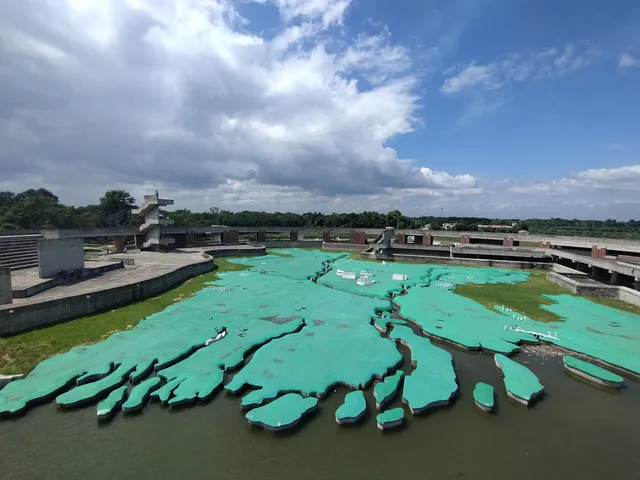
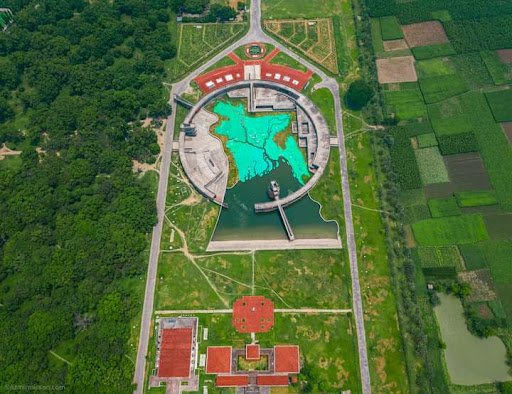
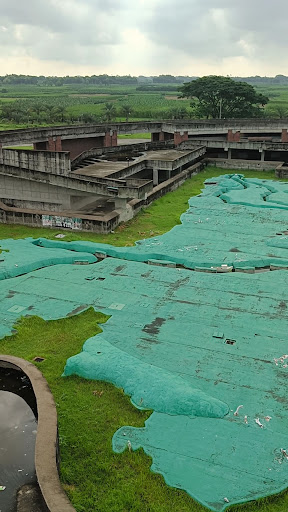
During the liberation war, the leaders of the Mujibnagar government would give guidance to the people of the country. The provisional president and the Prime Minister would keep the whole country motivated through their speeches over the radio. Simultaneously, they took many diplomatic initiatives to mobilize public opinion in favor of the Mujibnagar government
The first official government of the People's Republic of Bangladesh, popularly known as the Mujibnagar Government, was formed on April 10, 1971. The newly formed government took oath on 17th April, 1971 in the then Meherpur district. The venue of the oath was a mango forest in Baidyantala which was renamed by the provisional government.
Earlier, several provisional governments were formed in different countries around the world to fight for independence. For example, during the Second World War, an independent French government was formed that was led by Charles the Gaulle. The headquarters of the independent Cambodian government, led by Prince Norodom Sihanouk was in Beijing. The headquarters of Afghanistan's Mojahideen government was in Peshawar, Pakistan. But the "Mujibnagar Government" was quite different from these governments.
In the 1970's election, Awami league received the majority mandate, but instead of handing over the power to the newly elected members, West Pakistani government cracked down on the innocent Bengalis. On the night of 25th March, 1971, Pakistani military conducted a cowardly attack on the innocent sleeping people. They executed mass killing operations at different places in Dhaka including Pilkhana, Rajarbag Police Line, EPR, and Dhaka University campus. Early on March 26, Pakistani Military arrested Bangabandhu Sheikh Mujibur Rahman and took him to West Pakistan. But before being arrested, he sent a message over wireless declaring the independence of Bangladesh. Thus, the arrest of Bangabndhu accelerated our libration war.
A review of the history shows that, from 26th March to 16th December, the dynamic role played by Tajuddin Ahmed, a co-fighter of Bangabandhu Sheikh Mujibur Rahman was really commendable. The greatest achievement of Tajuddin Ahmed's life was to lead the liberation war in the absence of Bangabandhu Sheikh Mujibur Rahman. Especially, in the formation of "Mujibnagar Government", Tajuddin Ahmed played a significant role.
On 1st April, 1971, he and Barrister Amirul Islam went to India and on 3rd April, he met the then Indian Prime Minister Indira Gandhi. He explained the overall situation that was prevailing in Bangladesh. He also informed her that in Bangladesh, the freedom struggle had already started and the people of Bangladesh were very much determined to continue their struggle until final victory was achieved. He sought all sorts of support from her government. Indira Gandhi expressed her commitment to stand beside the people of Bangladesh.
Bangabandhu Sheikh Mujibur Rahman was declared the president of the new government. Syed Nazrul Islam was given the charge of Vice-President and Tajuddin Ahmed was made the Prime Minister of that government. Syed Nazrul islam, the Vice President hoisted the National flag in absence of Bangabandhu Sheikh Mujibur Rahman. Professor Md. Yusuf Ali read out the announcement of independent Bangladesh at the oath taking ceremony.
Some local singers sang the National Anthem "Amar sonar Bangla, ami tomay valobashi". The oath taking program was witnessed by a 10,000 strong crowd which included contingents of the EPR, Ansar and Freedom fighters. A press statement was issued after the inauguration of the government, where Tajuddin Ahmed said, "Bangladesh is at war. It has been given no choice but to secure its rights of self-determination through a national liberation struggle against the colonial oppression of West Pakistan. In the face of positive attempts by the government to distort the facts in a desperate attempt to cover up their war of genocide in Bangladesh, the world must be told the circumstances under which the peace-loving people of Bangladesh were...
Read moreIn the annals of Bangladesh's history, Mujibnagar stands as a sacred ground where the flames of independence were kindled and nurtured into a blazing fire of liberation. Located in Meherpur district, Bangladesh, Mujibnagar holds profound significance as the birthplace of Bangladesh's provisional government during the tumultuous days of 1971. It was here that the leaders of the Bangladeshi independence movement took their first steps towards sovereign nationhood, paving the way for the country's liberation from Pakistani rule.
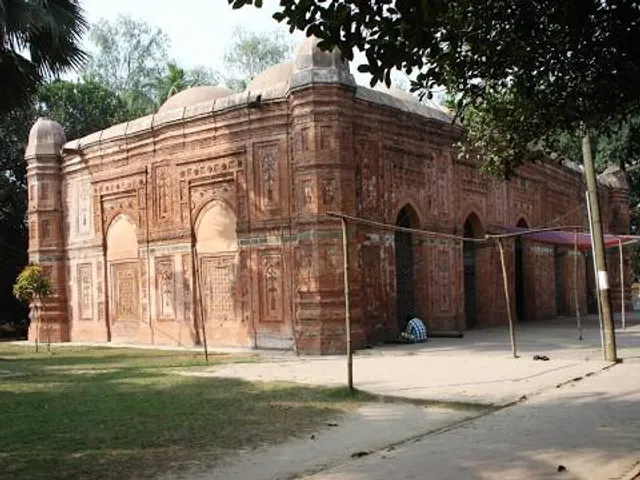
The journey to Mujibnagar was one fraught with struggle and sacrifice. Following decades of political, economic, and cultural oppression under Pakistani rule, the people of East Pakistan, now Bangladesh, were at a breaking point. The discriminatory policies of the West Pakistani government had sparked widespread discontent and unrest among the Bengali population, culminating in the 1970 general elections where the Awami League, led by Sheikh Mujibur Rahman, won a decisive mandate for autonomy.
The declaration of independence at Mujibnagar galvanized the nation, uniting people from all walks of life in a singular quest for freedom. The spirit of Mujibnagar became a rallying cry, inspiring acts of bravery and solidarity across Bangladesh. Despite facing overwhelming odds, the people of Bangladesh, with unwavering determination and international support, achieved victory on December 16, 1971, when the Pakistani military surrendered to the joint forces of Bangladesh and India.
Today, Mujibnagar stands as a testament to the indomitable spirit of the Bangladeshi people and their quest for justice and self-determination. The Mujibnagar Memorial Complex, established in honor of the historic events of 1971, serves as a pilgrimage site for those seeking to pay homage to the heroes of Bangladesh's liberation struggle. It houses the Mujibnagar Memorial Monument, the Mass Graveyard, and the Bangladesh Liberation War Museum, preserving artifacts and memories that remind future generations of the sacrifices made for the country's independence.
In conclusion, Mujibnagar holds a special place in the heart of every Bangladeshi as the birthplace of their nation's independence. It is a reminder of the power of unity, courage, and resilience in the face of oppression. The legacy of Mujibnagar continues to inspire and guide Bangladesh as it strives towards progress, development, and upholding the values of democracy and freedom that were so dearly...
Read moreApril 17, Mujibnagar Day. On this day in 1971, the Mujibnagar government was formed by the elected leaders of Bangladesh as the rightful constitutional, logical, and realistic step forward towards the full realization of our dream of an independent country of our own.
The observance of Mujibnagar Day in a befitting manner now warrants a special significance, specially in the backdrop of a sinister and ominous move by a certain quarter to distort our history of the war of independence. On this day the country and the people of Bangladesh should always gratefully cherish the memories of the freedom fighters and those political leaders who led them with deep affection and profound regard as well as with their firm determination and conviction.
The formation of the Mujibnagar government and its pronouncement to the world at large on April 17, 1971 is really a red-letter event in our national history, specially after the thumping victory of the Awami League in the elections of 1970 under the leadership of Bangabandhu Sheikh Mujibur Rahman.
The 167 MNAs and 293 MPs who composed the Constituent Assembly fulfilling their constitutional obligation to the electors, gave a true shape and constitutional perspective on this day, making the dream of an independent Bangladesh a reality. From this point of view, Mujibnagar day (April 17) is a landmark in our struggle for independence as well as in our national history.
The Mujibnagar government was formed at the Baidyanathtala mango grove of Meherpur, a former Subdivision of Kustia district following the April 10 proclamation of independence order of Bangladesh. The oath taking was witnessed by hundreds of foreign journalists who had assembled there to hail the birth of a new nation.
The president of the new nation was Bangabandhu Sheikh Mujibur Rahman; Syed Nazrul Islam became the acting president in the absence of Bangabandhu; Tajuddin Ahmed, the Prime Minister; M. Mansur Ali, the Finance Minister; M. Quamruz Zaman, the Home, Relief and Rehabilitation Minister; and Khandakar Mustaque Ahmed, Foreign Affairs and Law Minister. General M. A. G. Osmani who was then a retired colonel and MNA elected from Awami League was made the C-in-C of the Bangladesh...
Read more