HTML SitemapExplore
logo
Find Things to DoFind The Best Restaurants

Shilpacharya Zainul Abedin Sangrahashala — Attraction in Mymensingh Division

Name
Shilpacharya Zainul Abedin Sangrahashala
Description
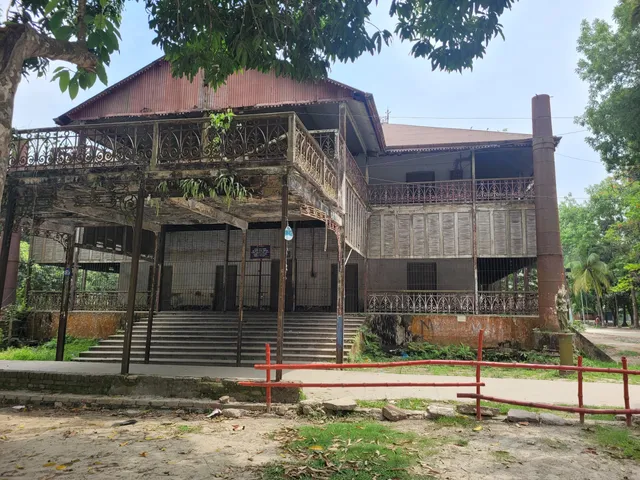
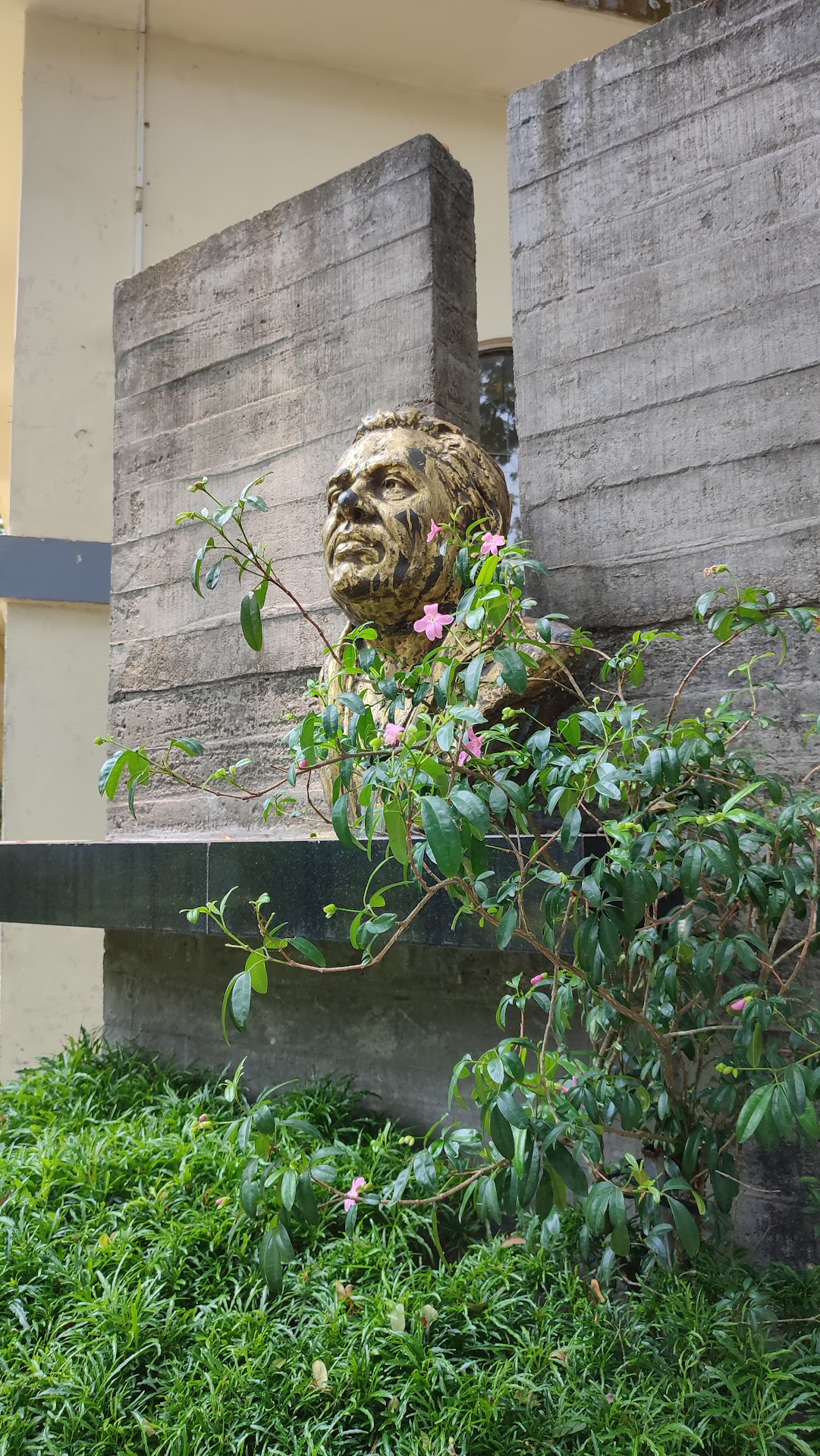
Zainul Abedin Sangrahashala is an art museum in Mymensingh, Bangladesh. Established in 1975, it contains the collections of the artist Shilpacharya Zainul Abedin. The art gallery was established in Mymensingh as this is where the artist spent his early days.
Nearby attractions
Shilpacharya Zainul Uddyan
10a Gulapjan Rd, Mymensingh, Bangladesh
Alexander Castle
QC82+7RR, Mymensingh, Bangladesh
Nearby restaurants
Nearby hotels
Related posts
Keywords
Shilpacharya Zainul Abedin Sangrahashala tourism.Shilpacharya Zainul Abedin Sangrahashala hotels.Shilpacharya Zainul Abedin Sangrahashala bed and breakfast. flights to Shilpacharya Zainul Abedin Sangrahashala.Shilpacharya Zainul Abedin Sangrahashala attractions.Shilpacharya Zainul Abedin Sangrahashala restaurants.Shilpacharya Zainul Abedin Sangrahashala travel.Shilpacharya Zainul Abedin Sangrahashala travel guide.Shilpacharya Zainul Abedin Sangrahashala travel blog.Shilpacharya Zainul Abedin Sangrahashala pictures.Shilpacharya Zainul Abedin Sangrahashala photos.Shilpacharya Zainul Abedin Sangrahashala travel tips.Shilpacharya Zainul Abedin Sangrahashala maps.Shilpacharya Zainul Abedin Sangrahashala things to do.
Shilpacharya Zainul Abedin Sangrahashala things to do, attractions, restaurants, events info and trip planning
Shilpacharya Zainul Abedin Sangrahashala
BangladeshMymensingh DivisionShilpacharya Zainul Abedin Sangrahashala

Basic Info

Shilpacharya Zainul Abedin Sangrahashala

Park Rd, Mymensingh, Bangladesh
4.5(537)
Closed
Save
spot

Ratings & Description

Info

Zainul Abedin Sangrahashala is an art museum in Mymensingh, Bangladesh. Established in 1975, it contains the collections of the artist Shilpacharya Zainul Abedin. The art gallery was established in Mymensingh as this is where the artist spent his early days.

Cultural
Family friendly
Accessibility
attractions: Shilpacharya Zainul Uddyan, Alexander Castle, restaurants:
logoLearn more insights from Wanderboat AI.
Phone
+880 91-66960
Website
zainulsangrahashala.org.bd
Open hoursSee all hours
Sat10:30 AM - 4:30 PMClosed

Plan your stay

hotel
Pet-friendly Hotels in Mymensingh Division
Find a cozy hotel nearby and make it a full experience.

hotel
Affordable Hotels in Mymensingh Division
Find a cozy hotel nearby and make it a full experience.

hotel
The Coolest Hotels You Haven't Heard Of (Yet)
Find a cozy hotel nearby and make it a full experience.

hotel
Trending Stays Worth the Hype in Mymensingh Division
Find a cozy hotel nearby and make it a full experience.

Reviews

Nearby attractions of Shilpacharya Zainul Abedin Sangrahashala

Shilpacharya Zainul Uddyan

Alexander Castle
Shilpacharya Zainul Uddyan

Shilpacharya Zainul Uddyan

4.5

(2.5K)

Closed
Click for details
Alexander Castle

Alexander Castle

4.3

(309)

Closed
Click for details
Get the Appoverlay
Get the AppOne tap to find yournext favorite spots!
Wanderboat LogoWanderboat

Your everyday Al companion for getaway ideas

CompanyAbout Us
InformationAI Trip PlannerSitemap
SocialXInstagramTiktokLinkedin
LegalTerms of ServicePrivacy Policy

Get the app

© 2025 Wanderboat. All rights reserved.
logo

Reviews of Shilpacharya Zainul Abedin Sangrahashala

4.5
(537)
avatar
5.0
4y

Zainul Abedin (29 December 1914 – 28 May 1976) was a Bangladeshi painter born in Kishoregonj,East Bengal, British India (now Bangladesh).He became well known in 1944 through his series of paintings depicting some of the great famines in Bengal during its British colonial period. After the Partition of Indian subcontinent he moved to East Pakistan (now Bangladesh). In 1948, he helped to establish the Institute of Arts and Crafts (now Faculty of Fine Arts) at University of Dhaka.1] The Indian Express has described him as a legendary Bangladeshi painter.[2] Like many of his contemporaries, his paintings on the Bengal famine of 1943 are viewed as his most characteristic works. His homeland honored him with given the title “Shilpacharya” (Bengali: শিল্পাচার্য) “Great teacher of the arts" for his artistic and visionary attributes.[35] He was the pioneer of the modern art movement that took place in Bangladesh and was rightly considered by Syed Manzoorul Islam as the founding father of Bangladeshi modern arts, soon after Bangladesh earned the status of an independent republic.[6]

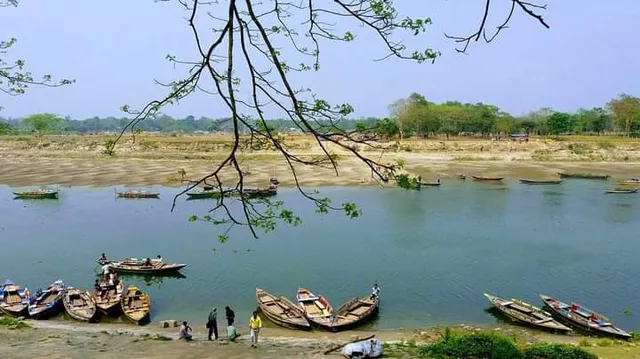
Abedin was born in Kishoreganj on 29 December 1914.[7] Much of his childhood was spent near the scenic banks of the Brahmaputra River. The Brahmaputra would later appear in many of his paintings and be a source of inspiration all throughout his career. Many of his works framed Brahmaputra and a series of watercolors that Abedin did as his tribute to the river earned him the Governor's gold medal in an all-India exhibition in 1938. This was the first time when he came under spotlight and this award gave Abedin the confidence to create his own visual style.[8]

In 1933, Abedin was admitted to the Government School of Art in Calcutta (now Government College of Art & Craft, Kolkata, India). Here for five years he learned British/ European academic style and later he joined the faculty of the same school after his graduation. He was the first Muslim student to obtain first class distinction from the school.[9] He was dissatisfied with the oriental style and the limitations of European academic style and this led him towards realism. In 1948, with help from a few colleagues, he founded an art institute in Dhaka. Back then, there were no art institutes in the city. Soon after, it went on to be considered the best art institute in Pakistan during its early years. He worked in the Pakistani government for a while.[10] He taught at the institute and among his students was Pakistani artist Mansur Rahi.[11] He also taught Bangladeshi artists such as Monirul Islam[12] and Mohammad Kibria.[13]

After completing his two years of training from Slade School of Fine Art in London, he began a new style, the 'Bengali style', where the main features were: folk forms with their geometric shapes, sometimes semi-abstract representation, and the use of primary colors. But he lacked the sense of perspective. Later he realized the limitations of folk art, so he went back to the nature, rural life and the daily struggles of man to make art that would be realistic but modern in appearance.[14

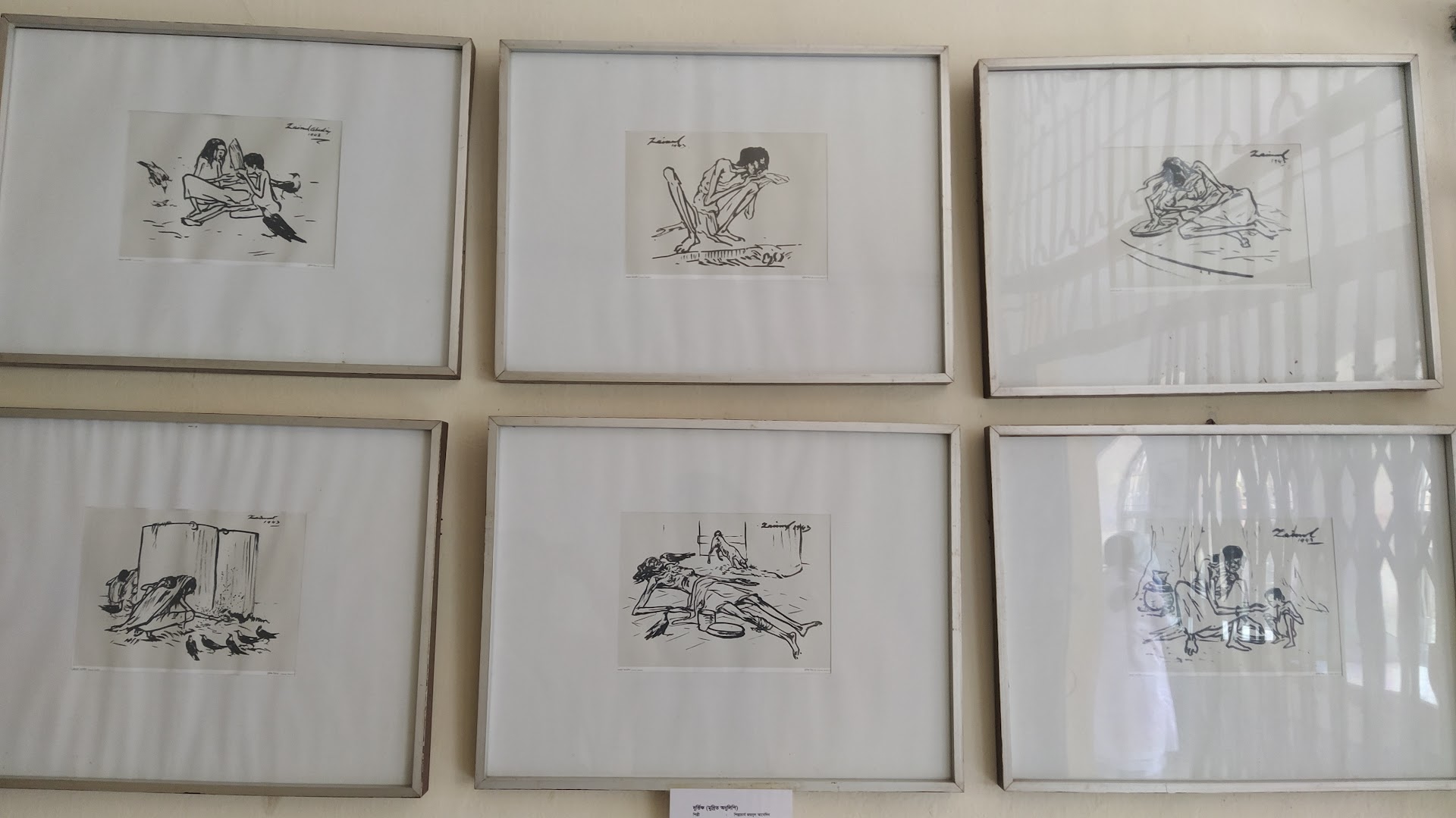
Among all the contemporary works of Abedin, his famine sketches of the 1940s are his most remarkable works. His famine painting set which, exhibited in 1944, brought him even more critical acclaim. The miserable situation of the starving people during the Great Famine of Bengal in 1943 touched his heart. He made his own ink by burning charcoal and used it on cheap, ordinary packing paper. He depicted those starving people who were dying by the road-side.[1] Abedin not only documented the famine, he also revealed the famine's sinister face through the skeletal figures of people fated to die of starvation. [16]

Abedin depicted this inhuman story with very human emotions. These drawings became iconic images of human suffering. These sketches helped him find his way in a realistic approach that focused on the human suffering, struggle and protest. He was more socially aware focusing on the working class and their struggles.[17] The Rebel Cow marks a high point...

   Read more
avatar
4.0
3y

Shilpacharya Zainul Abedin Sangrahashala, named after the renowned artist Zainul Abedin, is a treasure trove of art and culture located in Mymensingh. As an art lover, visiting this museum was an unforgettable experience that left me in awe of Bangladesh’s rich artistic heritage.

The museum houses an extensive collection of artworks spanning various mediums, styles, and periods. From Zainul Abedin’s iconic paintings depicting the struggles of the common people to contemporary works by emerging artists, the exhibits offer a comprehensive overview of Bangladeshi artistry.

Walking through the galleries, I was struck by the depth and diversity of the collection. Each artwork tells a unique story, reflecting the cultural, social, and political realities of Bangladesh. The museum provides valuable insights into the country’s history and identity, making it a must-visit for anyone interested in understanding Bangladeshi culture.

The museum’s layout is well-designed, with exhibits thoughtfully curated to guide visitors through different themes and artistic movements. The ambiance is conducive to contemplation and reflection, allowing visitors to immerse themselves fully in the beauty and significance of the artworks on display.

Moreover, the staff at Shilpacharya Zainul Abedin Sangrahashala are knowledgeable and passionate about the museum’s collection. They are eager to share information and engage visitors in meaningful conversations about art and culture, enhancing the overall experience.

In addition to its permanent collection, the museum also hosts temporary exhibitions, workshops, and cultural events that contribute to the vibrant artistic scene in Mymensingh. These events provide opportunities for artists and art enthusiasts to connect, collaborate, and celebrate creativity.

Overall, Shilpacharya Zainul Abedin Sangrahashala is a cultural gem that deserves recognition and appreciation. Its commitment to preserving and promoting Bangladeshi art and heritage is commendable, and I look forward to revisiting this inspiring museum...

   Read more
avatar
4.0
7y

It is a small museum. Only 62 ppictures here.Among all the contemporary works of Abedin, his famine sketches of the 1940s are his most remarkable works. He created his famine painting set, which, when exhibited in 1944, brought him even more critical acclaim. The miserable situation of the starving people during the Great Famine of Bengal in 1943 touched his heart. He made his own ink by burning charcoal and used it on cheap, ordinary packing paper. He depicted those starving people who were dying by the road-side. Abedin not only documented the famine, he also revealed the famine's sinister face through the skeletal figures of people fated to die of starvation. Abedin depicted this inhuman story with very human emotions. These drawings became iconic images of human suffering. These sketches helped him find his way in a realistic approach that focused on the human suffering, struggle and protest. He was more socially aware focusing on the working class and their struggles.The Rebel Cow marks a high point of that style. This particular brand of realism combines social inquiry and the protest with higher aesthetics. He was an influential member of the Calcutta Group of progressive artists and was friends with Shahid Suhrawardy and Ahmed Ali of the Progressive Writers' Movement.He made modernist paintings of Santhal people. Notable among them is "Two Santhal Women". He visited Palestinian camps in Syria and Jordan in 1970 and made 60-70 paintings of the refugees there. He also painted the 1970 Bhola cyclone that devastated the then...

   Read more
Page 1 of 7
Previous
Next

Posts

Nabila KhanamNabila Khanam
It's art museum in Mymensingh, Bangladesh. Established in 1975, it contains the collections of the artist Shilpacharya Zainul Abedin (1914–1976). The museum is located in the area of Shaheeb Quarter Park on the bank of the Old Bramaputra River. There are currently 53 oil paintings in the archive. The collection includes various themes and subjects, though most depict scenes of rural Bengal.Besides the original paintings, there are 16 replicas, and 75 photographs on Zainul's life and works. There are also 69 mementos on display such as brushes, brush holder, bottles of turpentine and linseed oil, carbon box, charcoal, wax, colour palette, colour tube, easel, ink pot, leather portrait holder, metal clip, reed pen, scraper, spatula, and his spectacles. The mementos are situated in glass boxes in the midst of the gallery You have to buy a ticket before entry for 20tk only. The collections and the preservation was really satisfactory. You are prohibited to capture any picture once you are inside the gallery room. Please continue to do so
Syed AL RahatSyed AL Rahat
It is a museum run by the National Museum of Bangladesh, which preserves the remarkable paintings of the famous painter Shilpacharya Zainul Abedin. It is located on the banks of the old Brahmaputra river at the northern end of the city. After the inauguration, the official activities of the museum started on July 7. The museum was renovated in 2006. There are management rooms downstairs and air-conditioned photo galleries on the second floor. At the back of the main building, along with the managers' quarters, 3 cottages have been set up which are used for temporary accommodation of the artisans. The land on which it is located is a two-storey building with a total area of ​​3.69 acres. The entire courtyard is surrounded by vegetation. The Deputy Commissioner of Mymensingh was in charge of the management of the museum from 1985 to 1999. In 1999, it was declared as a branch of the National Museum of Bangladesh. Since then, it has been operating under the auspices of the National Museum. A total of 16 officers are working full time here
Tawhid KhanTawhid Khan
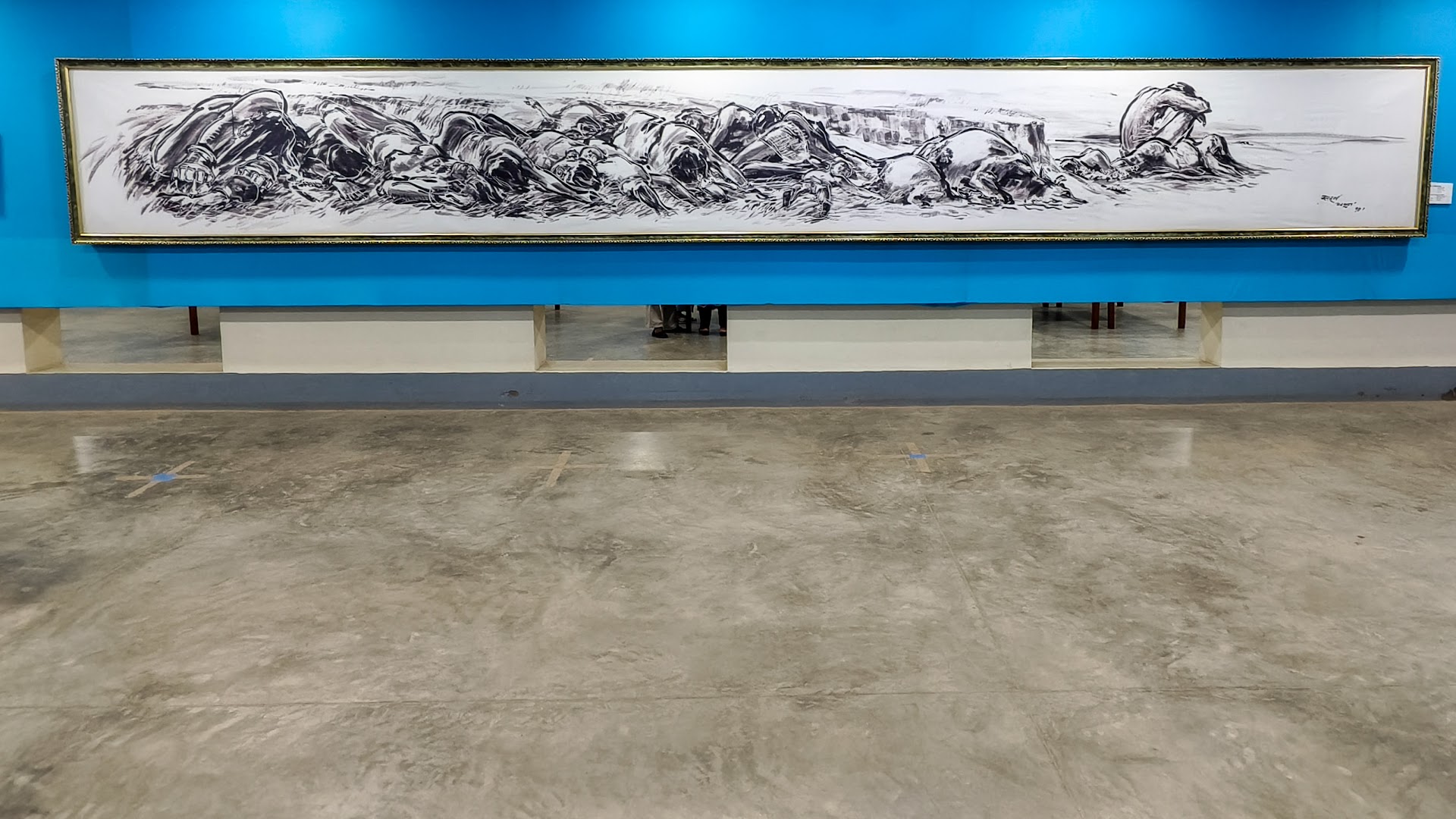
The place is newly renovated as of May 2025. Now it has air conditioned rooms on the second floor art galleries. And the paintings are at their full glory with proper lighting. I am no art enthusiast, but even someone like me was spellbound and I will fondly remember this portion of my Mymensingh trip. The art gallery is right on the edge of Brahmaputra river and tucked away in greeneries. There is a beautiful big park attached to it with across the river.The building itself is old and kind of historical itself. The sorrounding environment contributes to the vibe that this place has compared to art galleries in Dhaka I suppose. Now to see each painting in it's actual size and in it's full glory is something else. Monpura 70 is a famous painting that I have been familiar since childhood, having seen it text books or digital screen. But to be able stand next it physically and experience it in the big canvas which is several meters long was something else. If you visit Mymensingh don't miss this place!
See more posts
See more posts
hotel
Find your stay

Pet-friendly Hotels in Mymensingh Division

Find a cozy hotel nearby and make it a full experience.

It's art museum in Mymensingh, Bangladesh. Established in 1975, it contains the collections of the artist Shilpacharya Zainul Abedin (1914–1976). The museum is located in the area of Shaheeb Quarter Park on the bank of the Old Bramaputra River. There are currently 53 oil paintings in the archive. The collection includes various themes and subjects, though most depict scenes of rural Bengal.Besides the original paintings, there are 16 replicas, and 75 photographs on Zainul's life and works. There are also 69 mementos on display such as brushes, brush holder, bottles of turpentine and linseed oil, carbon box, charcoal, wax, colour palette, colour tube, easel, ink pot, leather portrait holder, metal clip, reed pen, scraper, spatula, and his spectacles. The mementos are situated in glass boxes in the midst of the gallery You have to buy a ticket before entry for 20tk only. The collections and the preservation was really satisfactory. You are prohibited to capture any picture once you are inside the gallery room. Please continue to do so
Nabila Khanam

Nabila Khanam

hotel
Find your stay

Affordable Hotels in Mymensingh Division

Find a cozy hotel nearby and make it a full experience.

Get the Appoverlay
Get the AppOne tap to find yournext favorite spots!
It is a museum run by the National Museum of Bangladesh, which preserves the remarkable paintings of the famous painter Shilpacharya Zainul Abedin. It is located on the banks of the old Brahmaputra river at the northern end of the city. After the inauguration, the official activities of the museum started on July 7. The museum was renovated in 2006. There are management rooms downstairs and air-conditioned photo galleries on the second floor. At the back of the main building, along with the managers' quarters, 3 cottages have been set up which are used for temporary accommodation of the artisans. The land on which it is located is a two-storey building with a total area of ​​3.69 acres. The entire courtyard is surrounded by vegetation. The Deputy Commissioner of Mymensingh was in charge of the management of the museum from 1985 to 1999. In 1999, it was declared as a branch of the National Museum of Bangladesh. Since then, it has been operating under the auspices of the National Museum. A total of 16 officers are working full time here
Syed AL Rahat

Syed AL Rahat

hotel
Find your stay

The Coolest Hotels You Haven't Heard Of (Yet)

Find a cozy hotel nearby and make it a full experience.

hotel
Find your stay

Trending Stays Worth the Hype in Mymensingh Division

Find a cozy hotel nearby and make it a full experience.

The place is newly renovated as of May 2025. Now it has air conditioned rooms on the second floor art galleries. And the paintings are at their full glory with proper lighting. I am no art enthusiast, but even someone like me was spellbound and I will fondly remember this portion of my Mymensingh trip. The art gallery is right on the edge of Brahmaputra river and tucked away in greeneries. There is a beautiful big park attached to it with across the river.The building itself is old and kind of historical itself. The sorrounding environment contributes to the vibe that this place has compared to art galleries in Dhaka I suppose. Now to see each painting in it's actual size and in it's full glory is something else. Monpura 70 is a famous painting that I have been familiar since childhood, having seen it text books or digital screen. But to be able stand next it physically and experience it in the big canvas which is several meters long was something else. If you visit Mymensingh don't miss this place!
Tawhid Khan

Tawhid Khan

See more posts
See more posts