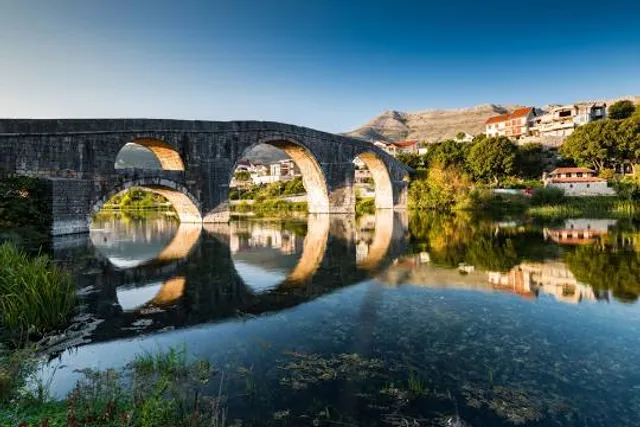
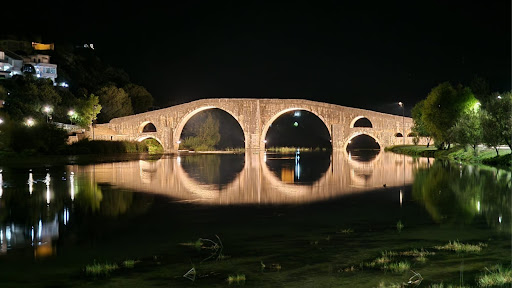
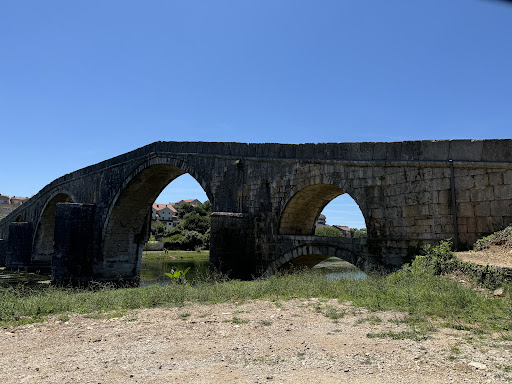
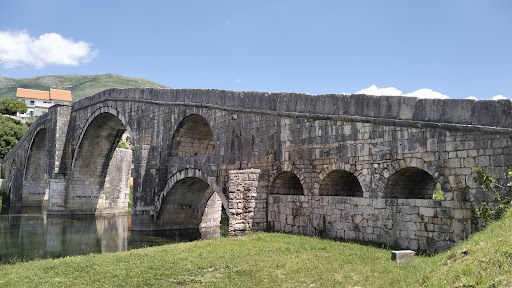
The incredible story of a bridge, almost like a phoenix. First of all, wonderful Ottoman architecture. The bridge is perfectly illuminated, which makes it a special pleasure to see it at night. Mystical, fairytale and incredibly beautiful. It is difficult to say where the bridge begins or ends, and where Trebišnjica begins or ends. A perfect couple that caresses, complements, loves and respects each other for centuries. But their story was not always so beautiful. The bridge was taken away from the river, and the river was turned against the bridge. In 2024, they continue to magically complement each other and flow ... on and on.
The construction of the bridge began in 1568 and lasted until 1574, when it was opened. The bridge is the endowment of Mehmed Paša Sokolović, who dedicated this bridge to his fallen son. It connected Bosnia and today's Herceg Novi and was a key trading point. It was named after Arslan-aga, who received a concession from the Ottoman authorities to collect bridge tolls (the name was mostar). He built a house next to the bridge, and soon a whole village named Arslanagići developed. At that time, there was a 5-meter-high guardhouse above the middle pillar of the bridge, where tolls for crossing the bridge were made. At the end of World War II, the left side of the bridge was destroyed, but soon that part was rebuilt.
In 1965, the bridge was submerged due to the construction of a hydroelectric power plant and a storage lake. The bridge spent the whole year under water. Next year the water level was lowered so the bridge could be dismantled and moved stone by stone to a new place. For several years it lay disassembled in a nearby field. From 1970 to 1972, the bridge was reassembled - 10 km downstream almost in the center of Trebinje.
The bridge spent the next twenty years in peace, until the war in Bosnia and Herzegovina, when its name was changed to Perovića bridge.
Because it was dismantled and moved, it cannot be under the protection of UNESCO, but was declared a national monument of Bosnia and Herzegovina.
The incredible story of the...
Read moreArslanagić Bridge - Trebinje, Bosnia and Herzegovina
The Arslanagić Bridge is an architectural gem in Trebinje, Bosnia and Herzegovina. This historic Ottoman-era bridge, originally built in the 16th century, was carefully relocated to its current picturesque setting along the Trebišnjica River in the 1970s.
The bridge's elegant stone arches beautifully complement the serene river and the surrounding lush greenery. It's a perfect spot for history enthusiasts, photographers, and anyone looking to enjoy a peaceful stroll with stunning views.
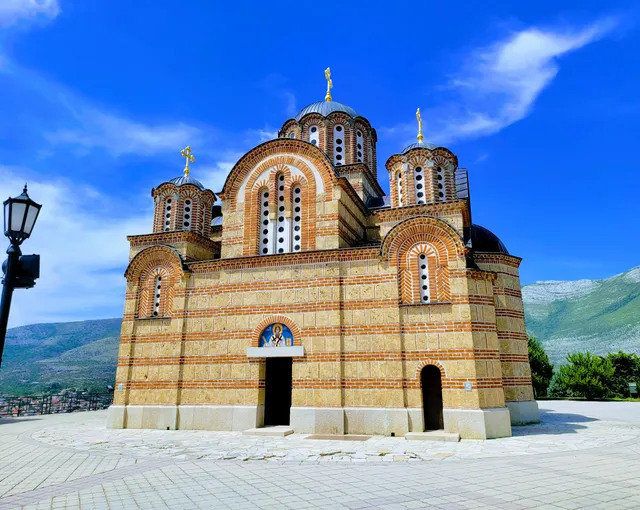
The nearby town, with its charming red-tiled roofs and scenic backdrop of rolling hills, adds to the bridge’s picturesque allure. Don’t miss the chance to capture the bridge from different angles, especially with the backdrop of the hilltop church and forested area. Also on the back you can appreciate the old Hercegovacka Gracanica Temple.
Whether you're a local or a visitor, the Arslanagić Bridge is a must-see landmark together with the Gracanica temple that beautifully showcases Trebinje’s rich history and natural beauty.
Also if you want to escape the crows and quite expensive food in Dubrovnik. This is a great day trip...
Read morePerović (Arslanagić) bridge is the most famous monument from the Ottoman period in Trebinje and has a very important place in Balkan architecture of 16th century. Mehmed-Pasha Sokolović built the bridge 1574 in honor to his son who was killed in the battle with Venice. When Turks got pushed away from Herceg Novi in 1687, many Turkish families moved from this town to Trebinje. A certain individual named Arslan-aga was among them. He was given land east of Trebinje: Zupci, Necvijeće and Jasen, and was also put in charge of collecting fee people had to pay to cross this bridge. Since that, this bridge was named after him – Arslanagić (Arslan-aga) bridge. With the construction of hydropower system on Trebišnjica in 1965 the bridge got submerged under the newly created reservoir lake. However, in 1966 the Institute for Protection of Cultural Monuments requested the bridge to be moved upstream to the new location – between Gradina (right river bank) and...
Read more