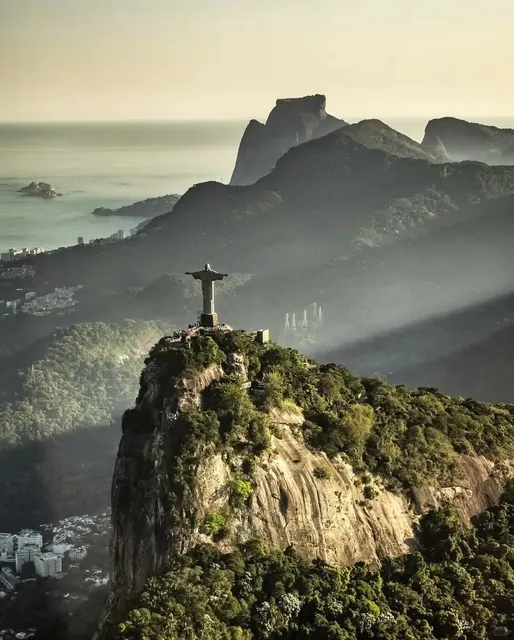
Christ the Redeemer, standing majestically atop the Corcovado Mountain in Rio de Janeiro, is not just a statue—it’s a symbol of hope, faith, and the unity of mankind. As a Google Local Guide, I can confidently say that this monument is an absolute must-visit, offering not only a spiritual experience but also an unparalleled view of one of the most breathtaking cities in the world.
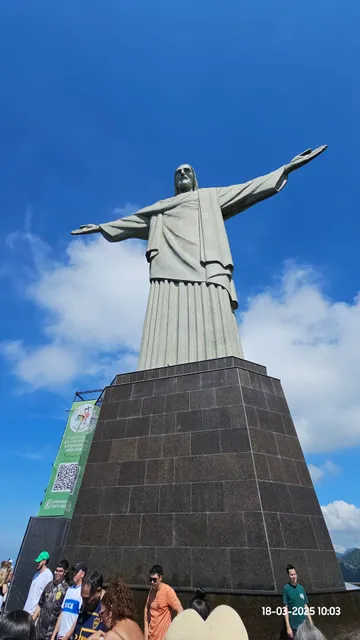
This awe-inspiring statue of Christ, with outstretched arms, spans 28 meters wide and stands 30 meters tall, making it one of the largest Art Deco statues globally. Constructed between 1922 and 1931, the statue is a masterpiece of engineering and artistry, designed by the French sculptor Paul Landowski and engineered by Heitor da Silva Costa. The delicate work of the mosaic tiles that cover the statue, meticulously laid by hand, gives the monument its distinctive, smooth appearance.
For many, visiting Christ the Redeemer is a pilgrimage, and the moment you set eyes on the statue, you feel a deep sense of peace and spirituality. The serene expression on Christ’s face, coupled with the statue’s commanding presence, creates an atmosphere of reverence and contemplation. Whether you are religious or not, the statue evokes a sense of awe and a connection to something greater than oneself.
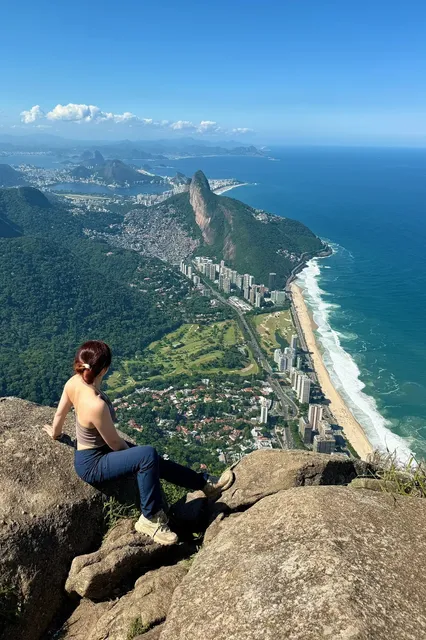
The journey to Christ the Redeemer is as rewarding as the destination itself. Perched 700 meters above sea level, the summit of Corcovado Mountain offers a 360-degree view of Rio de Janeiro. The sight of the city’s iconic landmarks—the Sugarloaf Mountain, Copacabana Beach, and the Maracanã Stadium—from this vantage point is simply breathtaking. The contrast between the vibrant cityscape and the lush greenery of the surrounding Tijuca Forest National Park is nothing short of spectacular.
Christ the Redeemer is more than just a religious symbol; it is a cultural icon that represents the spirit of Brazil. It stands as a beacon of peace, welcoming people of all backgrounds and beliefs. The monument has been recognized as one of the New Seven Wonders of the World, further cementing its status as a global symbol of humanity and compassion.
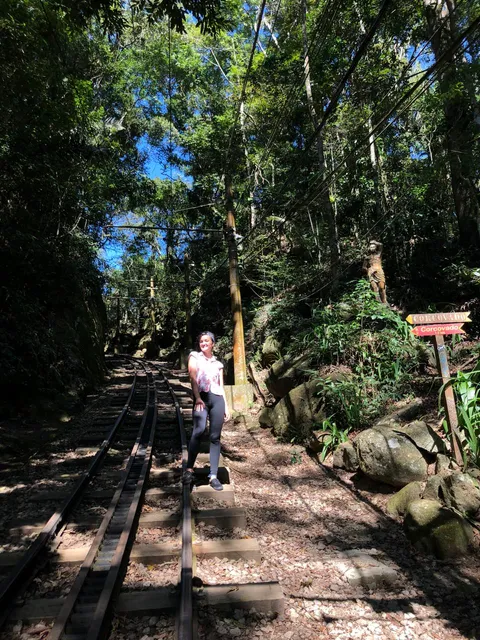
The journey to the statue can be undertaken via a scenic train ride through the Tijuca Forest, or by shuttle services, each offering unique perspectives of the natural beauty that surrounds the monument. Upon reaching the summit, the atmosphere is often lively, with visitors from around the globe sharing in the collective experience of gazing up at this magnificent statue. The viewing platforms are well-maintained, offering ample space to take in the views and capture stunning photographs.
Christ the Redeemer is not just a monument; it’s a testament to the enduring power of faith and the unity of humanity. It stands as a reminder of the beauty of our shared world and the peace that we all seek. Visiting this iconic statue is a profoundly moving experience, one that stays with you long after you’ve left. Whether you’re exploring Brazil or traveling the world, Christ the Redeemer is a destination that should be at the top of your list. Highly recommended for anyone who wishes to experience the spiritual and cultural heart of...
Read moreAfter a little research, we thought the best way for us to visit Cristo Redentor would be to get an Uber to the Trem do Corcovado and then get the train up to the top of the mountain.
I purchased tickets directly on the Trem do Corcovado website. The tickets cost approx £30 for two people and covered the cost of train and entrance to Christ The Redeemer. When booking online, I had to create an account for the site. I also had to provide my passport number. It’s possible to book on the day you want to visit but you do have to provide a scheduled time for your visit. These are every 20 minutes from the hour.
It was only once I had booked the ticket, that I was made aware that you have to check in 30 minutes prior to the scheduled time you have selected.
At the train station we joined the queue to get our physical tickets. This was at just after ten on a Thursday morning. There were only a few people ahead of us. For collecting the tickets, I had to show the online receipt plus photo ID.
After collecting the tickets, we then joined another queue for the train. Whilst in this queue, the staff at the train station were trying to get people to have a photo in front a photo of Christ the Redeemer. We had to refuse multiple times before we were allowed to continue on to the train.
It didn’t matter that we were booked on the 10:40 AM train. We were permitted to jump on the 10:20 AM with no challenge. The train itself was busy but we managed to get some fold down seats by the door. This meant we could get off easily at the other end.
As we took the steady 20 minute train journey up to the top of the mountain the clouds began to gather. By the time we reached the top, there was little visibility of the city below.
Thankfully we could still see the enormous statue of Cristo Rendentor so the trip up was worth.
As it didn't seem that the clouds would disperse ant time soon, we decided to head back down.
The return journey was not an enjoyable one. In the waiting area, everyone was crammed in like sardines. As we queued to board the train, the people who worked there were trying to get the visitors to buy the photograph taken earlier (the one with photo of Christ the Redeemer). To do this, they pushed through the crowd trying to match faces to the images and then hustled with people. They seemed to have little regard for whether they were pushing everyone else of their way.
Within the crowd, a lot of people had started drinking even though it was not long after 11 AM. It was also a boisterous gathering.
When we finally boarded the train it was rammed, with people stood in the aisles. It was really hot and humid and the ride down took over 30 minutes as we had to let two train pass us on their way up. At this point the hike seemed like it would have been a...
Read moreOn a cloudless morning in Rio de Janeiro, where the Atlantic meets ambition, Cristo Redentor stands in Art Deco splendor, arms stretched wide as if to embrace both the city's glamorous beachfront and its favela-dotted hills. The 1931 masterpiece, rising 130 feet into the Brazilian sky, has become less a religious monument and more a runway for Rio's most Instagram-worthy moments.
Today's pilgrims ascend Corcovado Mountain clutching smartphones instead of rosaries. They arrive in a parade of summer whites and resort wear that would make Copacabana proud – flowing shear dresses catching mountain breezes, designer athleisure suggesting post-statue Sugarloaf cocktails. The scene is part spiritual journey, part street-style showcase, with tourists posing against a backdrop that no filter could improve.
The engineering marvel, crafted from reinforced concrete and soapstone during the roaring twenties, has weathered both lightning strikes and selfie sticks with equal grace. Yet like any celebrity destination, Cristo faces the challenges of its own popularity. The crowds arrive in waves, creating a peculiar choreography of photo-taking and elbow-dodging that has become as much a part of the experience as the panoramic views.
For the fashion-conscious traveler, timing is everything. Early mornings offer not just the best light for photographs but also the space to appreciate both the statue's commanding presence and your carefully curated travel ensemble. The mountaintop microclimate demands layers; think airy fabrics that photograph well against Rio's signature blue skies.
While the ticket prices might rival a São Paulo boutique spree, the views justify the splurge. From this divine perch, Rio unfolds like a living postcard, where jungle meets urban jungle in a uniquely Brazilian embrace. Yes, the environmental impact of mass tourism raises concerns, but it's hard to dwell on sustainability when you're literally touching the clouds.
Cristo Redentor remains, perhaps, the world's most successful fusion of sacred space and social media hotspot. It's where devotion meets digital influence, and where the city's past and present converge in a perfect storm of spirituality, style, and spectacular selfie opportunities. Just mind the lightning strikes – they're not great for the hair.
Time recommended: Two hours, or however long it takes to get that perfect shot. Style note: White remains the power move, but please, skip the heels. Even Jesus appreciates practical footwear at...
Read more