Lolei: A Royal Island of Sacred Memory
Rising from the tranquil waters of the Indratataka Baray, the temple of Lolei stands as a poignant testament to the dawn of the Angkorian era. Though modest in size, this small island sanctuary carries a history of profound significance, one that intertwines royal grief, spiritual devotion, and a vision of a new Khmer empire.
A Son's Tribute to His Father
Lolei was not built as a monument to a god, but as a deeply personal and sacred memorial. It was commissioned in 893 CE by King Yasovarman I, a powerful monarch who would later establish the great city of Angkor Thom. Yasovarman I's reign was a time of great architectural and spiritual ambition, but his first major project was a tribute to his parents: his father, King Indravarman I, and his mother, Queen Indradevi.
The temple's location is a key part of its story. It was constructed on a small island in the middle of a vast reservoir, the Indratataka Baray. This man-made lake, measuring an astonishing 3.8 by 8 kilometers, was a masterpiece of hydraulic engineering for its time. Yasovarman I built the temple at the heart of this "ocean," a symbolic gesture that honored his parents by placing their spirits in a divine, cosmic landscape. The very name of the baray, Indratataka, or "Indra's pond," was a direct homage to his father.
The Temple of Four Towers
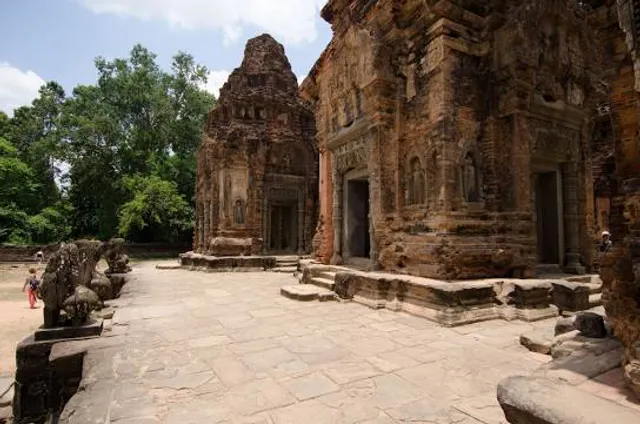
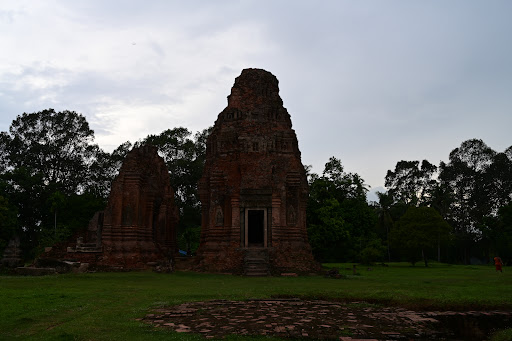
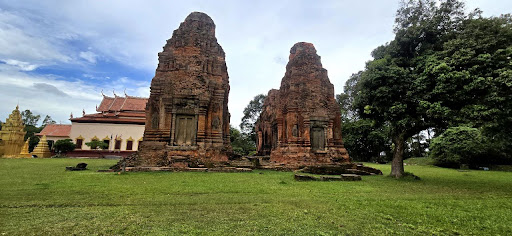
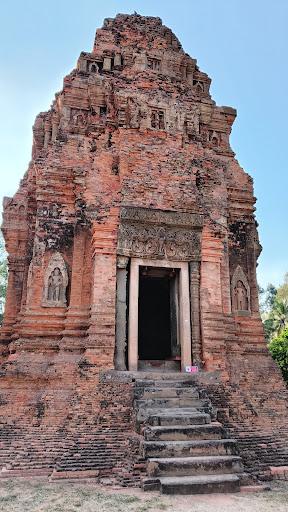
Originally, Lolei consisted of a group of four brick towers, arranged on a square platform. Each tower was dedicated to a deified ancestor: the two larger front towers for Yasovarman's father and mother, and the two smaller rear towers for his maternal grandparents. This four-tower arrangement was a common feature of early Khmer temples, and it speaks to a deep-rooted tradition of ancestor worship.
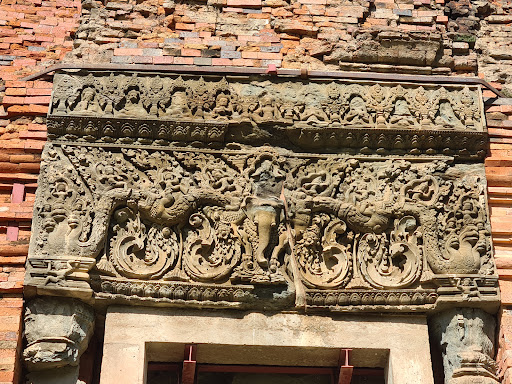
Today, the towers are weathered, their stucco carvings and intricate lintels slowly surrendering to time and the elements. However, visitors can still marvel at the delicate artistry that once covered their surfaces. The surviving carvings depict celestial beings, mythical creatures, and scenes from Hindu mythology, particularly the story of the Churning of the Ocean of Milk. These details are not just decorative; they were meant to transform the temple into a sacred microcosm of the heavens, where the royal ancestors could reside in eternal peace.
The End of a City, the Beginning of an Empire
Lolei was the central temple of Yasovarman I's capital city, Hariharalaya, which was situated on the mainland surrounding the Indratataka Baray. The city was a thriving hub of political and religious life, and Lolei was its spiritual heart. However, the king's ambition was not limited to this one city. Shortly after building Lolei, he moved his capital to the site of what would become Angkor, and his visionary plans for a new city—Angkor Thom—began to take shape.
This move marked a pivotal moment in Khmer history. Hariharalaya eventually faded, but the temple of Lolei remained. Its existence on the artificial island ensured its survival even as the baray itself eventually dried up over the centuries. Today, the water is gone, but the island platform remains, a lonely and beautiful reminder of the once-vast reservoir that encircled it.
Lolei Today: A Whisper of the Past
Visiting Lolei today is a journey back to the very origins of the great Angkorian kingdom. It is a place of quiet contemplation, far from the bustling crowds of Angkor Wat. The temple's worn bricks and crumbling foundations tell a story of filial piety, royal ambition, and the deep-seated spiritual beliefs that shaped an entire civilization. Lolei may be a small temple, but its history is a colossal one, a foundation stone upon which the magnificent empire of Angkor was built. It is a place where one can truly feel the echoes of a thousand years of history and appreciate the intimate, human story behind...
Read more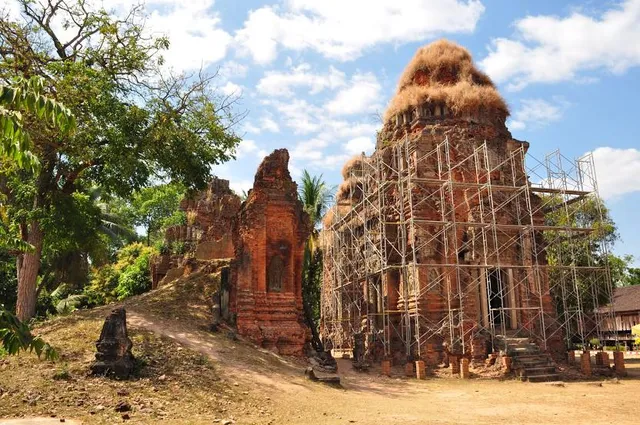
 Learn more insights from Wanderboat AI.