My Long and Honest Review of Angkor Wat
When I first heard about Angkor Wat, I knew it was one of those βbucket listβ places people talked about, but I donβt think anything couldβve prepared me for what it actually felt like to be there in person. Visiting Angkor Wat wasnβt just a touristy day outβit was like stepping into another world, another time. I donβt usually write long reviews, but this place deserves every word.
Letβs start with the basics. Angkor Wat is in Siem Reap, Cambodia, and it's this absolutely massive temple complex that dates back to the 12th century. It was originally built as a Hindu temple for the Khmer Empire, dedicated to Vishnu, but later turned into a Buddhist temple. Itβs the largest religious monument in the world, which sounds like a fun fact until you're actually there, looking up at those towers and realizing just how huge and intricate everything is.
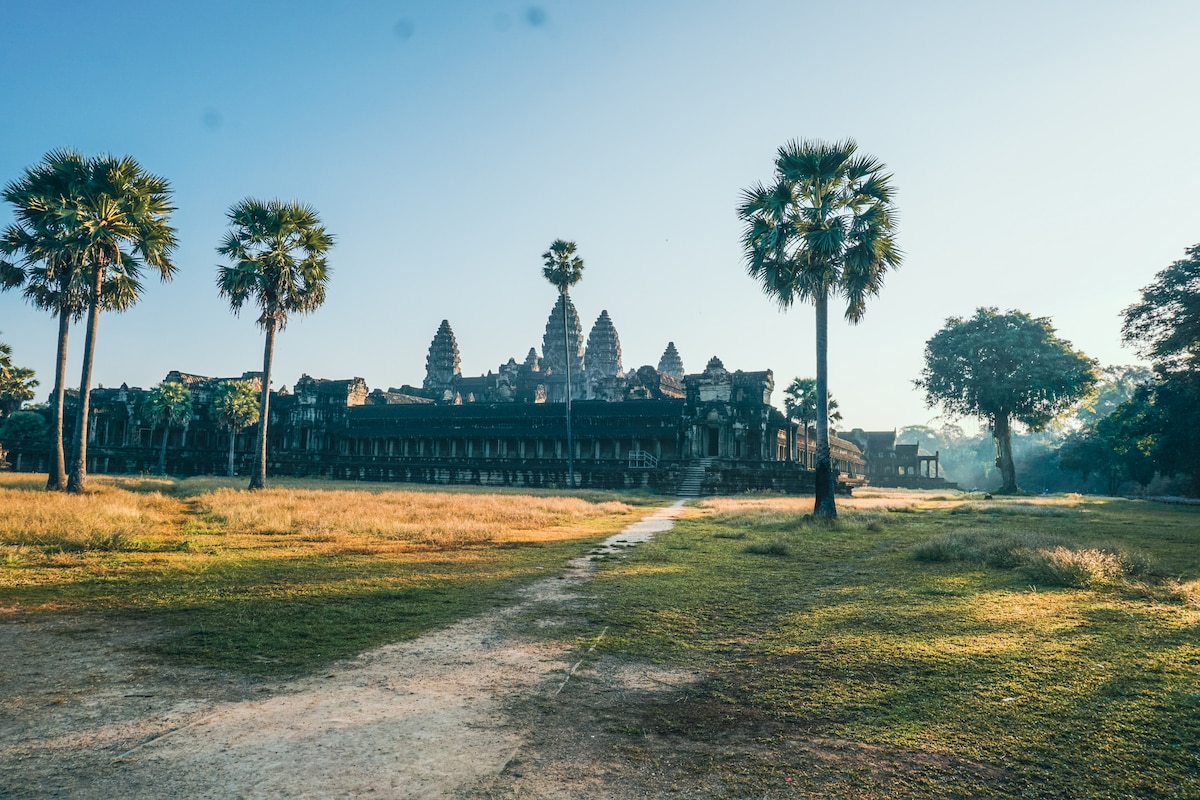
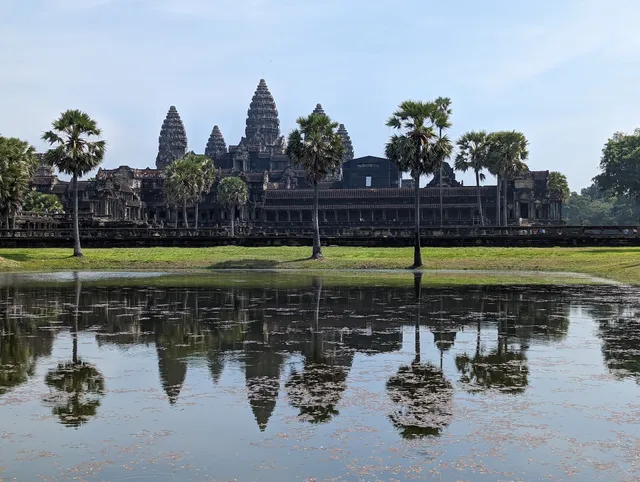
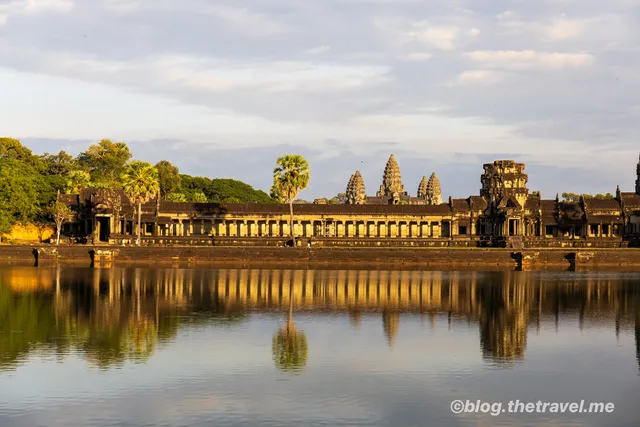
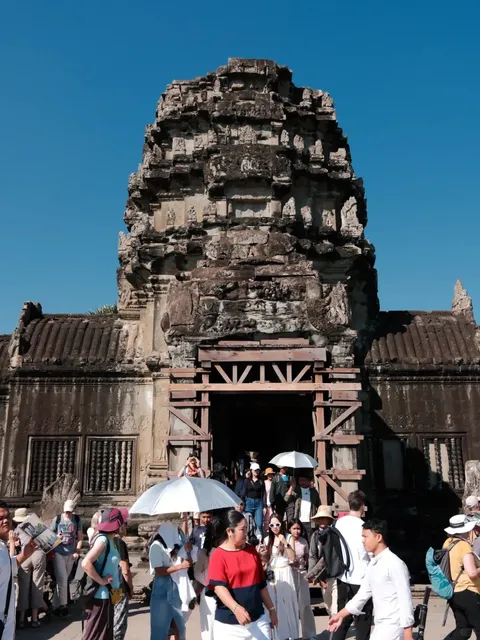
I got up really early to catch the sunrise at Angkor Wat, and honestly? Waking up before 5 AM has never been so worth it. Thereβs something completely magical about watching the sky shift from pitch black to soft orange and pinks while standing in front of the templeβs reflection in the moat. Yeah, it was a little crowded (everyone else had the same idea, obviously), but somehow, the atmosphere still felt peaceful. Itβs one of those rare moments that sticks with you long after the trip ends.
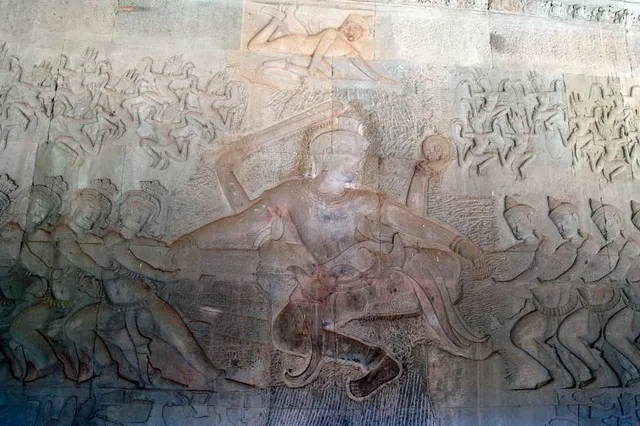
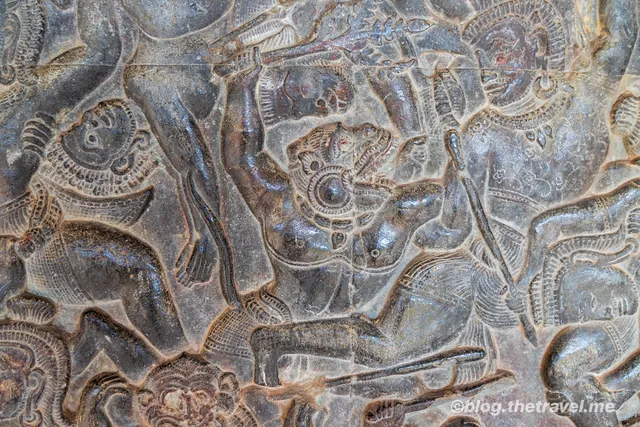
Walking through the temple itself was surreal. The carvings on the walls are so detailedβitβs like reading a story thatβs been frozen in stone for almost 1,000 years. There are entire walls covered with scenes from Hindu epics like the Ramayana and Mahabharata, and you just canβt believe how well theyβve been preserved. I kept stopping to take it all in, and even though I had a guide who was explaining things, I probably only absorbed half of what he said because I was too busy staring at everything.
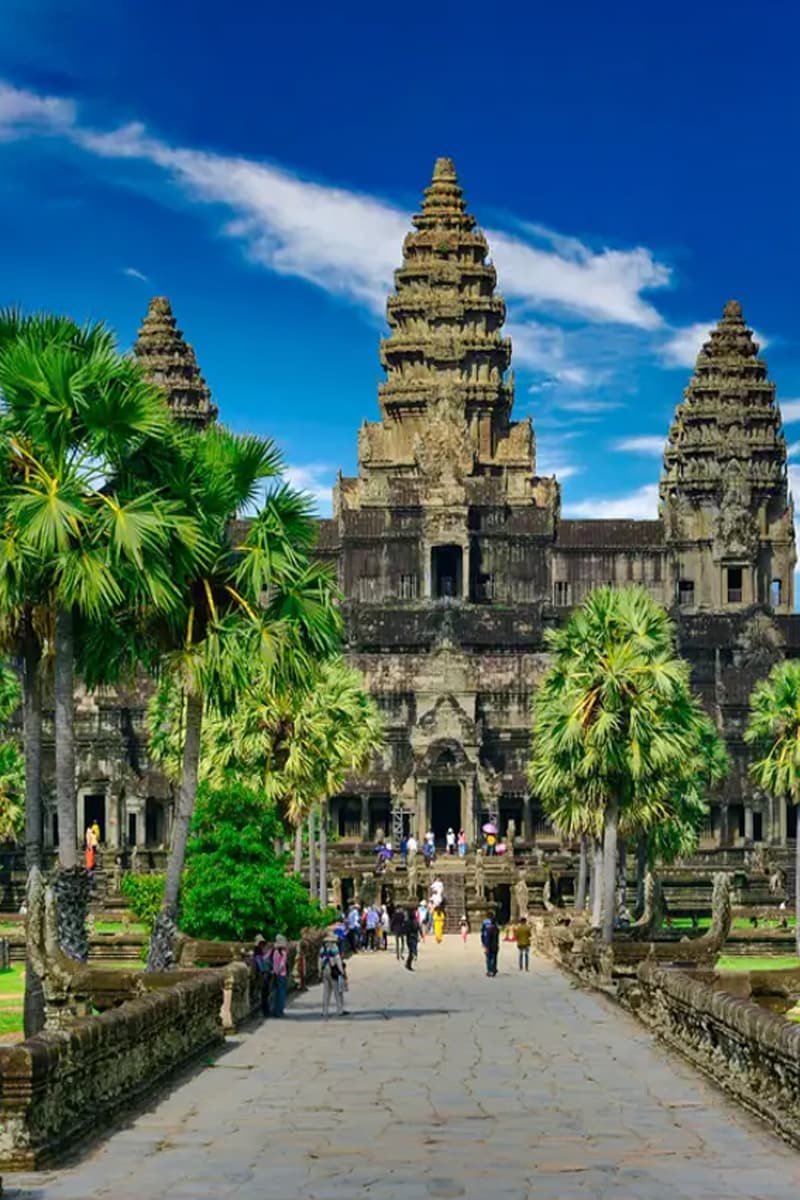
Another thing that blew me away was how the whole temple is laid out in this perfect balanceβevery detail has meaning. The five towers represent Mount Meru, which is like the center of the universe in Hindu mythology. The moat around the temple represents the ocean. Even the way the sun hits the stones throughout the day seems intentional. Itβs like they werenβt just building a place to worship, they were building a cosmic map.
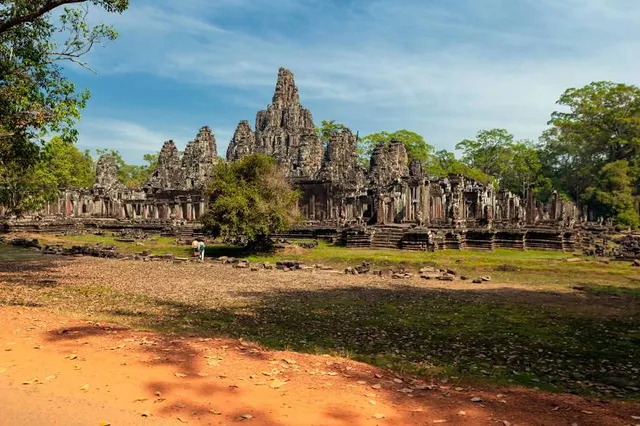
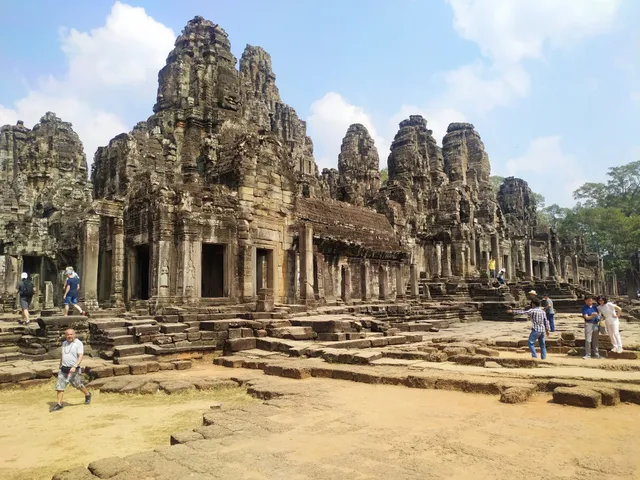
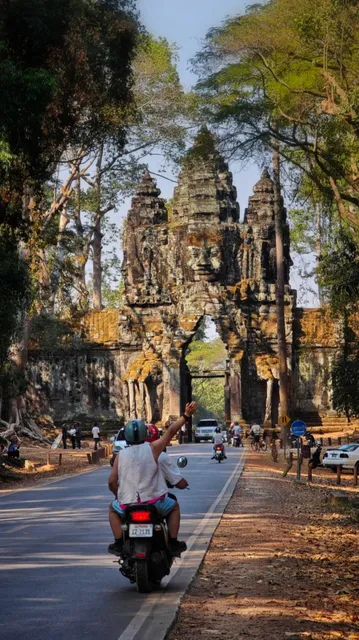
But itβs not just the main temple thatβs impressive. The whole Angkor Archaeological Park is full of other incredible temples like Bayon, with all the smiling stone faces, and Ta Prohm, where the jungle is literally taking the temple back with tree roots wrapping around the stone. If Angkor Wat is the heart of the empire, then all the other temples are its lifeblood. Each one has a different vibe. Ta Prohm, for example, felt like something straight out of an adventure movieβitβs the one from Tomb Raider, by the wayβand it has this wild, overgrown beauty that makes it feel alive in a different way.
One of the things I didnβt expect was how emotional the experience would be. I know that sounds dramatic, but I found myself feeling really humbled walking through those ancient corridors. Just thinking about the people who built itβall without modern machinesβand how much history these walls have seenβ¦ itβs overwhelming in the best possible way. Thereβs a quiet power in Angkor Wat, something that speaks beyond language and culture. It reminds you how small you are, but also how connected we all are to something bigger.
Now, not everything is perfect, obviously. It gets hot. Like, unbelievably hot, especially around midday. Bring water, sunscreen, and maybe a hat because the sun is intense. Also, wear something respectful but comfortableβyouβll be climbing up steep steps, crouching through narrow doorways, and walking a lot. If you're not used to the heat, itβll drain you fast. But honestly, even if I was melting, I didnβt really care. The place is that...
Β Β Β Read moreAs a local guide here in Siem Reap, I've had the privilege of walking the hallowed grounds of Angkor Wat countless times, and each visit reveals a new layer of its profound beauty and historical significance. It's more than just a temple; it's the beating heart of Khmer civilization, a testament to the ingenuity and spiritual devotion of our ancestors.
A Journey Through Time: History and Significance
Built in the early 12th century by King Suryavarman II, Angkor Wat was originally dedicated to the Hindu deity Vishnu. Its sheer scale and intricate carvings tell stories of ancient myths, epic battles, and the daily life of the Khmer Empire. Later, it transitioned into a Buddhist temple, reflecting the evolving spiritual landscape of Cambodia. For us, it's not just a ruin; it's a living monument that connects us directly to our rich heritage. When you stand before its grandeur, you're not just seeing stones; you're feeling the echoes of a thousand years of history.
Architectural Grandeur and Artistic Mastery
The architecture of Angkor Wat is simply breathtaking. The five iconic lotus-bud towers, representing Mount Meru (the mythical home of the gods), rise majestically from the surrounding moats. The precision of its layout, the perfect symmetry, and the sheer volume of sandstone used are engineering marvels that continue to astound.
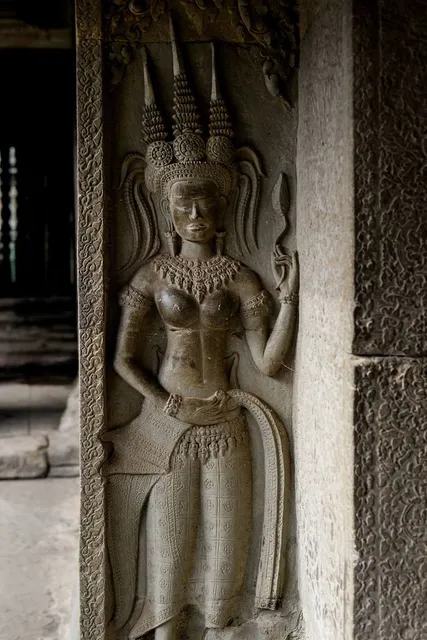
But it's the bas-reliefs that truly captivate. Stretching for hundreds of meters along the gallery walls, these detailed carvings depict scenes from Hindu epics like the Ramayana and Mahabharata, as well as historical events and celestial dancers (Apsaras). As a guide, I love pointing out the subtle details, the expressions on the faces, and the dynamic movement captured in stone β it's a masterclass in ancient Khmer art.
The Experience: More Than Just a Sightseeing Stop
Visiting Angkor Wat is an immersive experience. While sunrise is undoubtedly popular for its magical light and reflection, I often encourage visitors to explore at different times of the day to appreciate its changing moods. The quiet contemplation within its courtyards, the cool shade of its ancient stone, and the gentle breeze carrying whispers of the past create an atmosphere unlike any other.
I always advise taking your time. Don't rush through. Allow yourself to absorb the intricate details, to feel the history under your feet, and to connect with the spiritual essence of the place. It's a journey, not just a destination.
My Personal Recommendation
For those seeking a deeper understanding, hiring a local guide is invaluable. We can share not just the facts and figures, but also the stories, the cultural context, and the personal anecdotes that bring Angkor Wat to life. We can help you navigate the vast complex, find the best vantage points, and ensure you leave with a profound appreciation for this UNESCO World Heritage site.
Angkor Wat is a treasure, a symbol of Cambodian pride, and an unforgettable experience for anyone who steps foot within its ancient walls. Come, let us share its...
Β Β Β Read moreHistory Noted for its architectural and artistic perfection, not to mention its sheer size, Angkor Wat is the most famous and no doubt the most remarkable of all of Cambodiaβs ancient temples. Combining great technical mastery on an unprecedented scale with extraordinary architectural and artistic innovations, Angkor Wat has a unique place in the long ancient Khmer tradition of the royal βTemple-Mountain.β. Built in the 12th century in the reign of King Suryavarman II, this was the residence of Vishnu, the divine palace in which the King himself was to reside after death. The construction is thought to have taken some thirty years of intensive labor.
In the βMiddle Periodβ, notably in the 16th century, Angkor Wat, then known as Preah Pisnulok (the posthumous name of its royal founder), became a site of Buddhist pilgrimage not only for the Khmer people but for much of Southeast Asia, and indeed for other more distant Asian peoples. Today, the Khmer people see in βLittle Angkorβ (the familiar name of Angkor Wat), the symbol of their nation.
Angkor Wat, forming a rectangle of about 1,500 by 1,300 metres, covers an area including its 190 metre wide moats β of nearly 200 hectares. The external enclosure wall defines an expanse of 1,025 metres by 800, or 82 hectares. It is the largest monument of the Angkor group.
Site Constructed to the south of the capital (Angkor Thom), Angkor Wat is sited in the southeast corner of the ancient city of Yashodhara built by Yashovarman I and centred on Phnom Bakheng.
The westward orientation of Angkor Wat is opposite to the orientation of sanctuaries dedicated to divinities. In Brahmanic funerary rituals, the rites are performed in reverse of the normal order β the ritual procession does not follow βpradakshinaβ (keeping the monument to oneβs right), but rather in the opposite direction, the βprasavya?β. Hence, the bas-reliefs are to be viewed in an anti-clockwise direction.
Exterior The moats surrounding the external enclosure of the monument are bordered by steps with a moulded sandstone perimeter, and are five and a half kilometres in overall length.
They are crossed only at two places β to the east by a simple bank of earth, and to the west by a 200 metre-long and 12 metre-wide sandstone-paved causeway, lined with columns along its sides. A cruciform terrace decorated with lions, precedes this causeway and is bordered by naga balustrades.
The temple enclosure, formed by a high laterite wall incorporates a colonnade of 235 metres composed of a three-part gopura β the towers of which are cruciform in plan and galleries that link with two pavilions at either extremity which served as passageways...
Β Β Β Read more