HTML SitemapExplore
logo
Find Things to DoFind The Best Restaurants

Baphuon Temple β€” Attraction in Siem Reap

Name
Baphuon Temple
Description
Nearby attractions
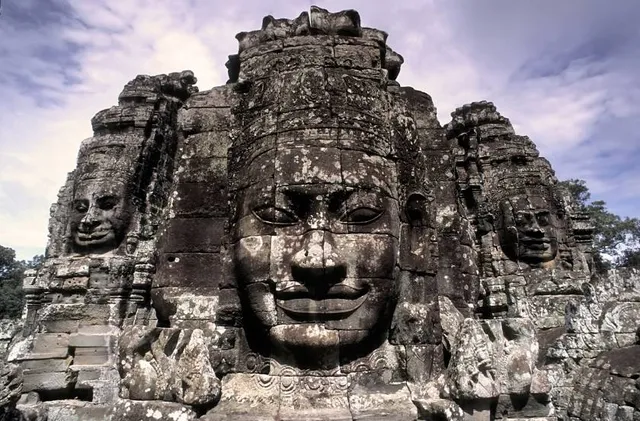
Bayon Temple
Krong Siem Reap, Cambodia
Phimeanakas Temple
CVW4+8F7, Angkor, Cambodia
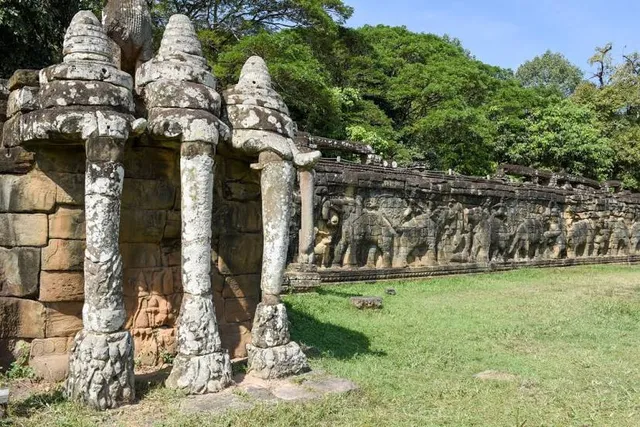
Terrace of the Elephants
CVW5+9G3, Krong Siem Reap, Cambodia
Wat Preah Ngok
CVV5+29F, Angkor, Cambodia
Preah Ponlea Sdach Komlong (Terrace Of The Leper King)
CVX5+2HG, Krong Siem Reap, Cambodia
Suor Proat Temple
CVV6+V74, Krong Siem Reap, Cambodia
Palilay Temple
CVX4+H3X, Angkor, Cambodia
Tep Pranam Temple
CVX5+93Q, Angkor, Cambodia
Prasat Preah Pithu Group
Angkor Archaeological Park, Krong Siem Reap 17000, Cambodia
Nearby restaurants
Nearby hotels
Related posts
Keywords
Baphuon Temple tourism.Baphuon Temple hotels.Baphuon Temple bed and breakfast. flights to Baphuon Temple.Baphuon Temple attractions.Baphuon Temple restaurants.Baphuon Temple travel.Baphuon Temple travel guide.Baphuon Temple travel blog.Baphuon Temple pictures.Baphuon Temple photos.Baphuon Temple travel tips.Baphuon Temple maps.Baphuon Temple things to do.
Baphuon Temple things to do, attractions, restaurants, events info and trip planning
Baphuon Temple
CambodiaSiem ReapBaphuon Temple

Basic Info

Baphuon Temple

Angkor Archaelogical Park, Krong Siem Reap, Cambodia
4.7(1.0K)
Open 24 hours
Save
spot

Ratings & Description

Info

Cultural
Outdoor
Scenic
Adventure
Off the beaten path
attractions: Bayon Temple, Phimeanakas Temple, Terrace of the Elephants, Wat Preah Ngok, Preah Ponlea Sdach Komlong (Terrace Of The Leper King), Suor Proat Temple, Palilay Temple, Tep Pranam Temple, Prasat Preah Pithu Group, restaurants:
logoLearn more insights from Wanderboat AI.
Phone
+855 63 765 577

Plan your stay

hotel
Pet-friendly Hotels in Siem Reap
Find a cozy hotel nearby and make it a full experience.
hotel
Affordable Hotels in Siem Reap
Find a cozy hotel nearby and make it a full experience.
hotel
The Coolest Hotels You Haven't Heard Of (Yet)
Find a cozy hotel nearby and make it a full experience.
hotel
Trending Stays Worth the Hype in Siem Reap
Find a cozy hotel nearby and make it a full experience.

Reviews

Nearby attractions of Baphuon Temple

Bayon Temple

Phimeanakas Temple

Terrace of the Elephants

Wat Preah Ngok

Preah Ponlea Sdach Komlong (Terrace Of The Leper King)

Suor Proat Temple

Palilay Temple

Tep Pranam Temple

Prasat Preah Pithu Group

Bayon Temple

Bayon Temple

4.8

(5.4K)

Open 24 hours
Click for details
Phimeanakas Temple

Phimeanakas Temple

4.4

(254)

Open 24 hours
Click for details
Terrace of the Elephants

Terrace of the Elephants

4.6

(1.1K)

Open 24 hours
Click for details
Wat Preah Ngok

Wat Preah Ngok

4.3

(34)

Open 24 hours
Click for details

Things to do nearby

Admire Angkor Wat sunrise
Mon, Dec 8 β€’ 4:30 AM
Krong Siem Reap, Siem Reap Province 00000, Cambodia
View details
Angkor Wat: Full-Day Guided Sunset Tour
Mon, Dec 8 β€’ 9:00 AM
Krong Siem Reap, Siem Reap Province 171204, Cambodia
View details
Study Khmer cooking with a local in Siem Reap
Mon, Dec 8 β€’ 9:30 AM
Krong Siem Reap, Siem Reap Province 17254, Cambodia
View details
Get the Appoverlay
Get the AppOne tap to find yournext favorite spots!
Wanderboat LogoWanderboat

Your everyday Al companion for getaway ideas

CompanyAbout Us
InformationAI Trip PlannerSitemap
SocialXInstagramTiktokLinkedin
LegalTerms of ServicePrivacy Policy

Get the app

Β© 2025 Wanderboat. All rights reserved.
logo

Posts

Shankar RajasekharanShankar Rajasekharan
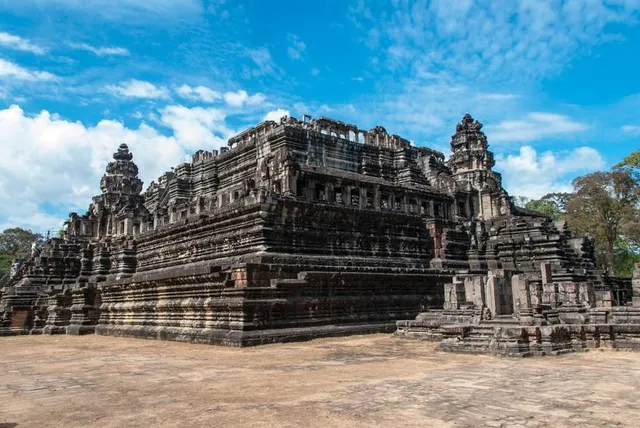
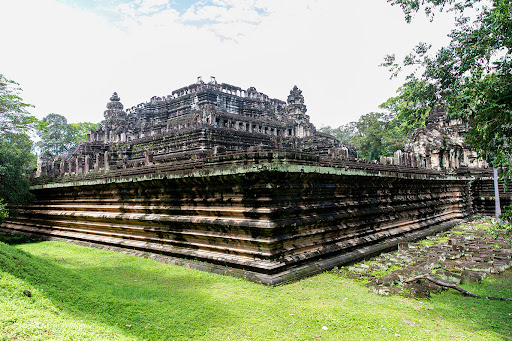
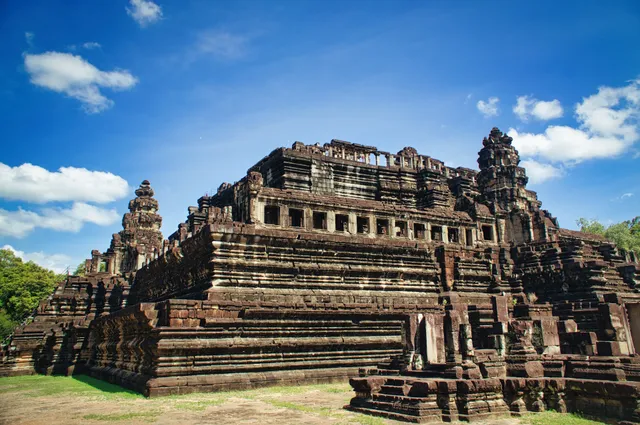
North of the Golden Tower [Bayon], rises the Tower of Branze [Baphuon] higher even than the Golden Tower : a truly astonishing spectacle, with more than ten chambers at its base. The grandeur of Baphuon as described above by Zhou Daguan is unrecognizable today because of the poor condition of the temple. The French were in the process of restoring this temple when they were forced leave Angkor in 1972 because of war. Baphuon is situated inside the royal city of Angkor Thom but dates from the eleventh century and was built before the city was established. An interesting feature of Baphuon are the bas-reliefs which are scenes carved in small squares. Unfortunately few of these are visible because of the poor state of the temple. The narrative themes are realistic depictions of daily life and forest scenes. LAYOUT Baphuon is a single sanctuary temple-mountain situated on a high base. It is a symbolical representation of Mount Meru. A rectangular sandstone wall measuring 425 by 125 metres (1394 by 410 feet) encloses the temple. A long sandstone elevated approach (200 metres, 656 feet) at the east entrance forms a bridge to the main temple. It is supported by three rows of short columns. The temple stands on a rectangular sandstone base with five levels that are approximately the same size, rather than the more common form of successively smaller levels. The first, second and third levels are surrounded by sandstone galleries. Baphuon is the first structure in which stone galleries with a central tower appear. Two libraries (6) in the shape of a cross with four porches stand in the courtyard. They were originally connected by an elevated walkway supported by columns. The gallery of the enclosure collapsed and, at a later date , the stones from it were modeled into the shape of a reclining Buddha that spans the length of the west wall ( the head is on the left, facing the temple) . It is an abstract form and the outline of this Buddha is difficult to distinguish. A stairway leading to the summit begins in the middle of the Buddha. The top level is in poor condition due to several collapses. Originally there was a Central Sanctuary with two wings. Each side of the entrance to the Central Sanctuary is carved with fine animated figures. If you look carefully you can see these from the ground on the west side.
Megaworld AsiaMegaworld Asia
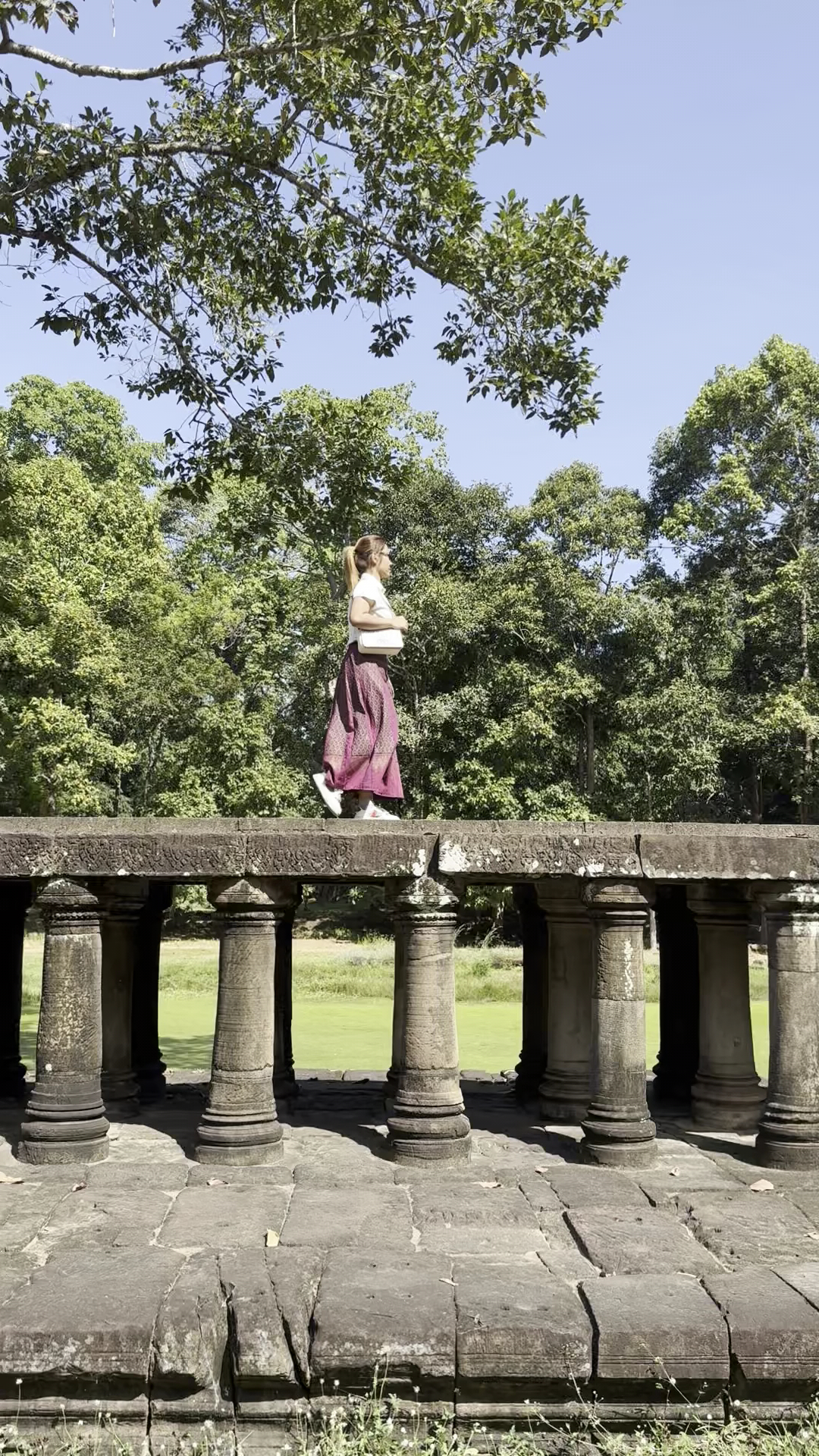
Eastern Gate: The approach to the eastern gate of the Baphuon has a long, elevated walkway, through a picturesque surrounding landscape, with a small Baray (pond) on the left side. During the rainy season there will be plenty of water about on ground, and the surrounding landscape will be green and vibrant. The walk to the eastern gate is like a stroll through a very scenic park. As you get closer to the outer wall of the Baphuon, the size of the structure becomes very impressive. The Second Level: Entry at the eastern gate takes you up a steep stairway to the second level of the structure. Once up there, you get an appreciation of the sheer size of the temple. The primary feature of the second level is a large structure in the center of the flat open expanse. There is a walkway around the outer edge of the second level. The walkway does a complete circuit. However, to ascend to the third level you will need to go to the southern side of the walkway. As with all Khmer structures, all sides (walls) are aligned to the points of the compass and gates, or entry points, are always at the center of each wall. The Third Level: As mentioned, to get up to the third level you’ll need to take the stairway on the southern side of the structure. The stairway is quite steep so it’s advisable to hold the handrails as you climb up. The stairway takes you up to the top of the second level structure and provides excellent views back along the eastern approach. There’s also a walkway around the outer edge of the third level which goes through tunnels formed by the stonework. Note: there’s also a stairway on the western side but it’s designated as the exit stairway. There’s also a third level structure but access to the top is blocked, due to the unstable stonework. Safe travels, Mega
Steven PhichSteven Phich
Unveiling the Majestic Baphuon Temple The Baphuon Temple, located in Cambodia, is a stunning architectural masterpiece that dates back to the 11th century. This ancient temple, dedicated to the Hindu god Shiva, stands as a testament to the rich history and cultural heritage of the Khmer Empire. Historical Significance The Baphuon Temple was built during the reign of King Udayadityavarman II and served as the state temple of the capital city of Angkor Thom. The temple's intricate carvings and towering pyramid shape are a reflection of the Khmer architectural style that was prevalent during this period. Restoration Efforts In recent years, the Baphuon Temple has undergone extensive restoration efforts to preserve its historical significance and architectural beauty. The restoration project, funded by the French government, was a massive undertaking that involved dismantling and rebuilding the temple stone by stone. Visiting the Baphuon Temple Visitors to Cambodia should not miss the opportunity to explore the Baphuon Temple and marvel at its grandeur. As one of the largest temples in Angkor Thom, the Baphuon offers a glimpse into Cambodia's rich past and architectural prowess. In conclusion, the Baphuon Temple stands as a symbol of Cambodia's cultural heritage and historical significance. Its intricate carvings, towering pyramid shape, and rich history make it a must-see destination for travelers interested in exploring the wonders of the ancient world.
See more posts
See more posts
hotel
Find your stay

Pet-friendly Hotels in Siem Reap

Find a cozy hotel nearby and make it a full experience.

North of the Golden Tower [Bayon], rises the Tower of Branze [Baphuon] higher even than the Golden Tower : a truly astonishing spectacle, with more than ten chambers at its base. The grandeur of Baphuon as described above by Zhou Daguan is unrecognizable today because of the poor condition of the temple. The French were in the process of restoring this temple when they were forced leave Angkor in 1972 because of war. Baphuon is situated inside the royal city of Angkor Thom but dates from the eleventh century and was built before the city was established. An interesting feature of Baphuon are the bas-reliefs which are scenes carved in small squares. Unfortunately few of these are visible because of the poor state of the temple. The narrative themes are realistic depictions of daily life and forest scenes. LAYOUT Baphuon is a single sanctuary temple-mountain situated on a high base. It is a symbolical representation of Mount Meru. A rectangular sandstone wall measuring 425 by 125 metres (1394 by 410 feet) encloses the temple. A long sandstone elevated approach (200 metres, 656 feet) at the east entrance forms a bridge to the main temple. It is supported by three rows of short columns. The temple stands on a rectangular sandstone base with five levels that are approximately the same size, rather than the more common form of successively smaller levels. The first, second and third levels are surrounded by sandstone galleries. Baphuon is the first structure in which stone galleries with a central tower appear. Two libraries (6) in the shape of a cross with four porches stand in the courtyard. They were originally connected by an elevated walkway supported by columns. The gallery of the enclosure collapsed and, at a later date , the stones from it were modeled into the shape of a reclining Buddha that spans the length of the west wall ( the head is on the left, facing the temple) . It is an abstract form and the outline of this Buddha is difficult to distinguish. A stairway leading to the summit begins in the middle of the Buddha. The top level is in poor condition due to several collapses. Originally there was a Central Sanctuary with two wings. Each side of the entrance to the Central Sanctuary is carved with fine animated figures. If you look carefully you can see these from the ground on the west side.
Shankar Rajasekharan

Shankar Rajasekharan

hotel
Find your stay

Affordable Hotels in Siem Reap

Find a cozy hotel nearby and make it a full experience.

Get the Appoverlay
Get the AppOne tap to find yournext favorite spots!
Eastern Gate: The approach to the eastern gate of the Baphuon has a long, elevated walkway, through a picturesque surrounding landscape, with a small Baray (pond) on the left side. During the rainy season there will be plenty of water about on ground, and the surrounding landscape will be green and vibrant. The walk to the eastern gate is like a stroll through a very scenic park. As you get closer to the outer wall of the Baphuon, the size of the structure becomes very impressive. The Second Level: Entry at the eastern gate takes you up a steep stairway to the second level of the structure. Once up there, you get an appreciation of the sheer size of the temple. The primary feature of the second level is a large structure in the center of the flat open expanse. There is a walkway around the outer edge of the second level. The walkway does a complete circuit. However, to ascend to the third level you will need to go to the southern side of the walkway. As with all Khmer structures, all sides (walls) are aligned to the points of the compass and gates, or entry points, are always at the center of each wall. The Third Level: As mentioned, to get up to the third level you’ll need to take the stairway on the southern side of the structure. The stairway is quite steep so it’s advisable to hold the handrails as you climb up. The stairway takes you up to the top of the second level structure and provides excellent views back along the eastern approach. There’s also a walkway around the outer edge of the third level which goes through tunnels formed by the stonework. Note: there’s also a stairway on the western side but it’s designated as the exit stairway. There’s also a third level structure but access to the top is blocked, due to the unstable stonework. Safe travels, Mega
Megaworld Asia

Megaworld Asia

hotel
Find your stay

The Coolest Hotels You Haven't Heard Of (Yet)

Find a cozy hotel nearby and make it a full experience.

hotel
Find your stay

Trending Stays Worth the Hype in Siem Reap

Find a cozy hotel nearby and make it a full experience.

Unveiling the Majestic Baphuon Temple The Baphuon Temple, located in Cambodia, is a stunning architectural masterpiece that dates back to the 11th century. This ancient temple, dedicated to the Hindu god Shiva, stands as a testament to the rich history and cultural heritage of the Khmer Empire. Historical Significance The Baphuon Temple was built during the reign of King Udayadityavarman II and served as the state temple of the capital city of Angkor Thom. The temple's intricate carvings and towering pyramid shape are a reflection of the Khmer architectural style that was prevalent during this period. Restoration Efforts In recent years, the Baphuon Temple has undergone extensive restoration efforts to preserve its historical significance and architectural beauty. The restoration project, funded by the French government, was a massive undertaking that involved dismantling and rebuilding the temple stone by stone. Visiting the Baphuon Temple Visitors to Cambodia should not miss the opportunity to explore the Baphuon Temple and marvel at its grandeur. As one of the largest temples in Angkor Thom, the Baphuon offers a glimpse into Cambodia's rich past and architectural prowess. In conclusion, the Baphuon Temple stands as a symbol of Cambodia's cultural heritage and historical significance. Its intricate carvings, towering pyramid shape, and rich history make it a must-see destination for travelers interested in exploring the wonders of the ancient world.
Steven Phich

Steven Phich

See more posts
See more posts

Reviews of Baphuon Temple

4.7
(1,018)
avatar
5.0
2y

TheΒ BaphuonΒ (Khmer:Β αž”αŸ’αžšαžΆαžŸαžΆαž‘αž”αžΆαž–αž½αž“) is a temple atΒ Angkor,Β Cambodia. It is located inΒ Angkor Thom, northwest of theΒ Bayon. Also called "golden mountain" (svarnādrΔ«), the Baphuon is built on an artificial hill. The temple was originally dedicated toΒ ShivaΒ and late converted to aΒ Theravada BuddhistΒ temple.Β The dating of the temple has been fractious; recent work has shown that it was not built during the reign of Udayādityavarman II, as is popularly reported. In 2015 a French team directly dates four iron crampons integrated into the structure using the AMS Carbon-14 method, revealed the construction was much earlier than thought and can now be considered as the major temple associated with Suryavarman I (1010–1050CE), a ruler which had no temple previously associated with his reign. History: Built in the mid-11th century, it is a three-tieredΒ temple mountain[3]:β€Š103β€ŠΒ built as the state temple of Suryavarman I dedicated to the Hindu god Shiva. It is the archetype of the Baphuon style with intricate carvings covering every available surface.[4]Β The temple adjoins the southern enclosure of the royal palace and measures 120 metres east-west by 100 metres north-south at its base and stands 34 meters tall without its tower, which would have made it roughly 50 meters tall. Its appearance apparently impressedΒ TemΓΌr Khan's late 13th century envoyΒ Zhou DaguanΒ during his visit from 1296 to 1297, who said it was 'the Tower of Bronze...a truly astonishing spectacle, with more than ten chambers at its base.'

The Baphuon was later converted via Theravada Buddhist modifications that French scientists using AMS Carbon 14 have directly dated as a hundred years prior to the conventional 16th century estimation. This confirms that the adding of the reclining Buddha was related to the Ayutthayan occupation of Angkor circa 1430-1440CE, during a major period of political and religious instability.[2]

A 9-meter tall by 70 meter long statue of aΒ reclining BuddhaΒ was built on the west side's second level, which probably required the demolition of the 8-meter tower above to supply stones for the statue, thus explaining its current absence. The temple was built on land filled with sand, and due to its immense size the site was unstable throughout its history. Large portions had probably already collapsed by the time the Buddha was added.

Surrounded by a wall 125 by 425 m the central tower was probably gilded wood, which has not survived.[5]:β€Š376

By the 20th century, much of the temple had largely collapsed, and restoration efforts took on an epic quality. A large-scale project to dismantle the temple so that its core could be re-enforced before the whole is re-constructed againβ€”a process known asΒ anastylosisβ€”was abandoned after civil war broke out in 1970. The workers and archaeologists were forced to leave 300,000 carefully labelled and numbered blocks organized across 10 hectares surrounding the temple. However, the plans identifying the pieces were lost during the decade of conflict and theΒ Khmer RougeΒ that followed.

A second project to restore the temple was launched in 1996 under the guidance of architect Pascal Royère from the EFEO.[6] It took the team another 16 years to complete what had become known as the "largest 3D jigsaw puzzle in the world".[7] In April 2011, after 51 years of work, the restoration was completed and the temple formally re-opened. King Norodom Sihamoni of Cambodia and Prime Minister François Fillon of France were among those who first toured the renovated temple during the inauguration ceremony on July 3,...

Β Β Β Read more
avatar
5.0
7y

North of the Golden Tower [Bayon], rises the Tower of Branze [Baphuon] higher even than the Golden Tower : a truly astonishing spectacle, with more than ten chambers at its base. The grandeur of Baphuon as described above by Zhou Daguan is unrecognizable today because of the poor condition of the temple. The French were in the process of restoring this temple when they were forced leave Angkor in 1972 because of war. Baphuon is situated inside the royal city of Angkor Thom but dates from the eleventh century and was built before the city was established. An interesting feature of Baphuon are the bas-reliefs which are scenes carved in small squares. Unfortunately few of these are visible because of the poor state of the temple. The narrative themes are realistic depictions of daily life and forest scenes. LAYOUT Baphuon is a single sanctuary temple-mountain situated on a high base. It is a symbolical representation of Mount Meru. A rectangular sandstone wall measuring 425 by 125 metres (1394 by 410 feet) encloses the temple. A long sandstone elevated approach (200 metres, 656 feet) at the east entrance forms a bridge to the main temple. It is supported by three rows of short columns. The temple stands on a rectangular sandstone base with five levels that are approximately the same size, rather than the more common form of successively smaller levels. The first, second and third levels are surrounded by sandstone galleries. Baphuon is the first structure in which stone galleries with a central tower appear. Two libraries (6) in the shape of a cross with four porches stand in the courtyard. They were originally connected by an elevated walkway supported by columns. The gallery of the enclosure collapsed and, at a later date , the stones from it were modeled into the shape of a reclining Buddha that spans the length of the west wall ( the head is on the left, facing the temple) . It is an abstract form and the outline of this Buddha is difficult to distinguish. A stairway leading to the summit begins in the middle of the Buddha. The top level is in poor condition due to several collapses. Originally there was a Central Sanctuary with two wings. Each side of the entrance to the Central Sanctuary is carved with fine animated figures. If you look carefully you can see these from the ground on...

Β Β Β Read more
avatar
5.0
17w

This magnificent temple was built by King Udayadityavarman II in the middle of the 11th century, before the city of Angkor Thom was established. Originally a Hindu temple dedicated to Shiva, it was converted into a Buddhist temple in the late 15th Century, and a huge reclining Buddha (nine meters tall by 70 meters long) was added to the west side of the temple’s second level around this time.

Like the Leaning Tower of Pisa, Baphuon was built on a too-soft foundation of sandy soil which proved to be inadequate for such an immense structure. This shaky foundation caused the temple to be unstable for most of its history, and it is very likely that large portions had already collapsed by the time it was converted to a Buddhist temple. The stones from the collapsed portion of the structure were utilized in the creation of the reclining Buddha, which is one of the largest in Southeast Asia.

By the early 20th century, Baphuon was on the verge of complete collapse. A massive restoration project began in the 1960s, which involved dismantling the temple stone by stone, reinforcing the foundation, and then re-assembling the structure. 300,000 blocks of stone were labelled and numbered, and carefully arranged in the 10 hectares surrounding the temple site, waiting to be put back together. Unfortunately, the project was abandoned when civil war broke out in 1970, and the plans identifying the stones’ intended location were destroyed by the Khmer Rouge.

A second restoration project, which came to be known as the largest three dimensional jigsaw puzzle in the world, was launched in 1996 under the guidance of the architect Pascal Royère. Modern technology greatly aided in the process, but it still took 16 years to complete the puzzle. The lighter colored stones are the restored pieces. We are truly fortunate to be able to visit this remarkable site, and owe a debt of gratitude to the hundreds of workers responsible for reconstructing this...

Β Β Β Read more
Page 1 of 7
Previous
Next