Visiting the Grand Pre historic site just outside of Wolfville, Nova Scotia, was a truly impactful and inspiring experience for my partner and me. Learning about the deportation of the Acadians and delving into our Nova Scotian history was a journey of cultural and historical significance.
The site's preservation was remarkable, allowing us to witness history come alive. The dedication of the staff to preserving and sharing this important part of our heritage was unparalleled, adding to the depth of our exploration.
As we explored the grounds, we were immersed in the past, walking through a blacksmith's shop, a church, and beautifully adorned gardens. The welcome center provided an opportunity to dive deeper into the Acadian story, with an exhibit, gift shop, gallery, and theater.
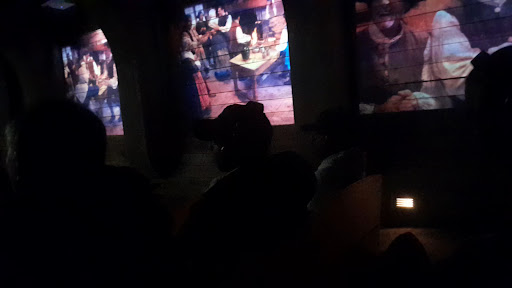
The short film in the theater was a powerful and emotional experience, shedding light on the tragedies and atrocities faced by the Acadians during their deportation. As an adult, I now understand the historical impact of this event, and it has given me a profound sense of empathy for my ancestors' struggles in L' Acadie centuries ago.
Being in this sacred place connected me deeply to my ancestral roots and the land's significance. The experience left me with a stronger connection to my heritage, allowing me to appreciate the strength and resilience of my Acadian ancestors.
I highly recommend a visit to the Grand Pre historic site for anyone interested in exploring our rich history and understanding the cultural significance of the Acadian deportation. This meaningful journey will leave you with a greater appreciation for our shared past and a sense of connection to the land that holds...
Read moreThe one sided portrayal of the Acadian expulsion in the National Historic introductory movie is surprising. Two brief examples have to suffice. According to the Oxford Dictionary the use of “Hear, hear” started in the British Parliament in the late 1700s and expanded later. The movie scenes of British officers in 1755 enthusing “Hear, hear” about the expulsion are suspect – probably inaccurate. These scenes convey an enthusiasm for expulsion, when the reaction to the orders might have been sobering comments about the magnitude of the effort. If original source diaries confirm the officers’ “Hear hear” comments, they should be cited in the movie’s credits. Conversely, the movie has scenes in which French settlers insist that they are neutral. However, it is a fact that some Acadians fought the British government in Nova Scotia. The movie does not describe how Acadian church and civil leaders decided on and communicated the neutrality stance, nor does it describe any leadership effort to enforce neutrality among Acadians. When Switzerland's leaders decided to be neutral in World War 2, they used their military to enforce that stance, internally and externally. Did Acadians try to enforce neutrality? The movie gives no facts. If there was no robust neutrality enforcement effort, British expulsion takes on a different light. The Acadian refusal to swear loyalty could be seen as a refusal to obey local law. Did Acadian leaders reconsider their stance during the 10 year expulsion? Neither of these issues are mentioned. Bottom line – the movie is a polemic,...
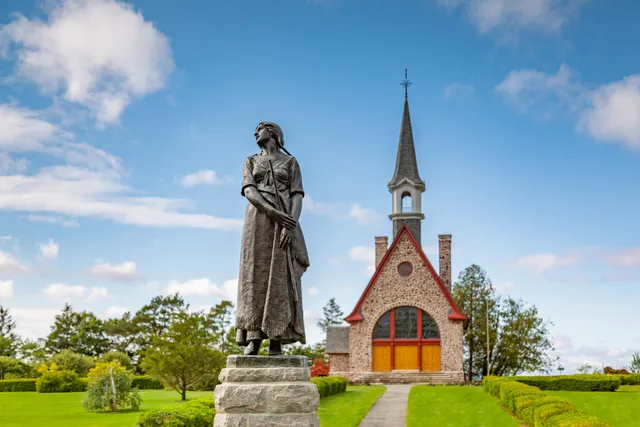
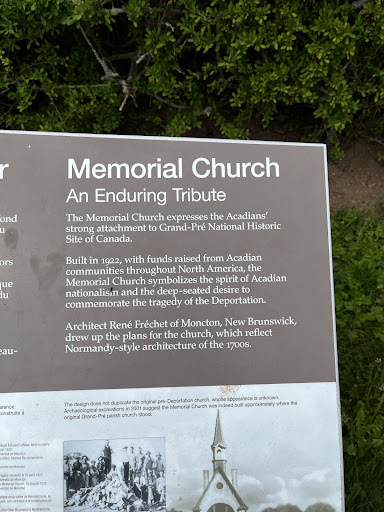
Read moreMy 7th Great Grandfather (and other relatives) is buried in what had been the St. Charles-Des-Mines Roman Catholic Church in the historic site. When the Acadians used the church the cemetery was maintained with wooden cross grave markers. So, anyone looking to visit a grave could do so. In 1755, when the British took over Nova Scotia from the French, the Catholic Church fell to disrepair and was eventually destroyed. The grave markers were also destroyed, leaving the entire cemetery as a mass grave. With a majority of the French Acadians deported to the American colonies there was very little concern for knowing who was buried in the old churchyard. All church records were hand carried to Baton Rouge, Louisiana where they remain today in the Diocese offices. The Memorial Church is very near the museum and office of the Historic Site. The statue of Evangeline is impressive and a walk around the grounds is due to cause some sympathy for the way the French were treated by the Brits, considering that several generations of Acadians had lived there. This is a great historic site and worth the time to...
Read more