L'Anse aux Meadows is a truly remarkable place, offering a tangible connection to a pivotal moment in human history. This UNESCO World Heritage Site is the only confirmed Norse settlement in North America, providing irrefutable evidence of Viking exploration in the Western Hemisphere centuries before Columbus.
We highly recommend the interpretive tour with a Canda Parks. It is free and very informative. Check the board for times when you arrive. They offered in English and another in French when we were there.
The site’s discovery is a fascinating story in itself. It was a local farmer, George Decker, who first noticed unusual sod structures while clearing land in the 1960s. His curiosity sparked a series of archaeological excavations that would rewrite history.
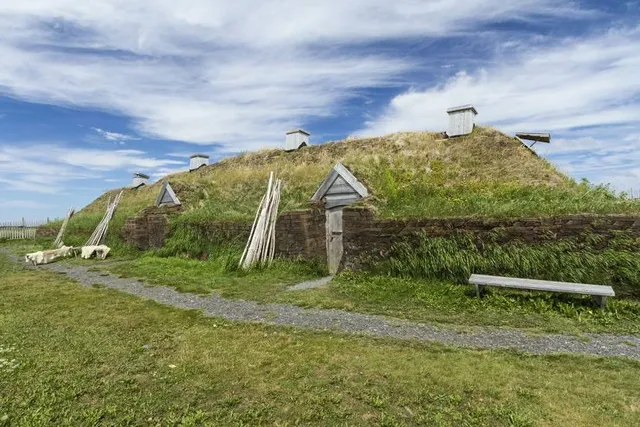
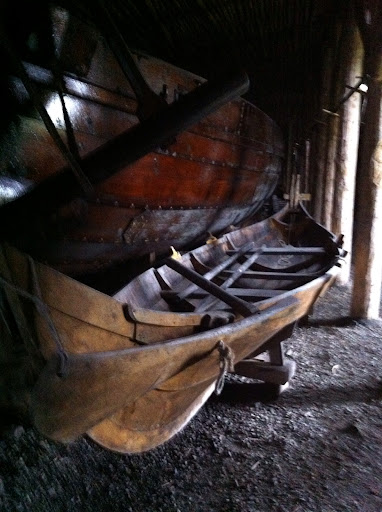
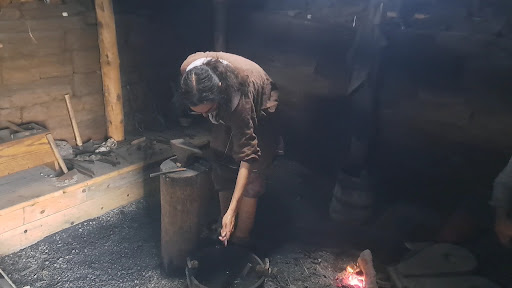
The reconstructed Viking village is an immersive experience. Visitors are encouraged to touch and explore the replica buildings, gaining a firsthand understanding of Viking life. The attention to detail is impressive, from the sod roofs to the interior layout. Costumed interpreters bring the site to life with their knowledge and enthusiasm.
The visitor center is a treasure trove of information. Artifacts recovered from the site are on display, providing tangible evidence of Viking presence. The center also offers interactive exhibits and informative films, making the site accessible to visitors of all ages.
While dogs are generally welcome in most parts of Newfoundland, they are discouraged from entering the visitor center at L'Anse aux Meadows to protect the delicate artifacts. BUT they can pass through the visitors center to go out to the historical site.
Purchasing a Parks Canada annual pass at L'Anse aux Meadows offers a unique perk. Any day pass receipts from other national parks or historic sites can be applied towards the annual pass, making it a cost-effective option for frequent visitors.
L'Anse aux Meadows is more than just a historical site; it's a place where the past comes alive. It's a reminder of human ingenuity, courage, and the enduring spirit of...
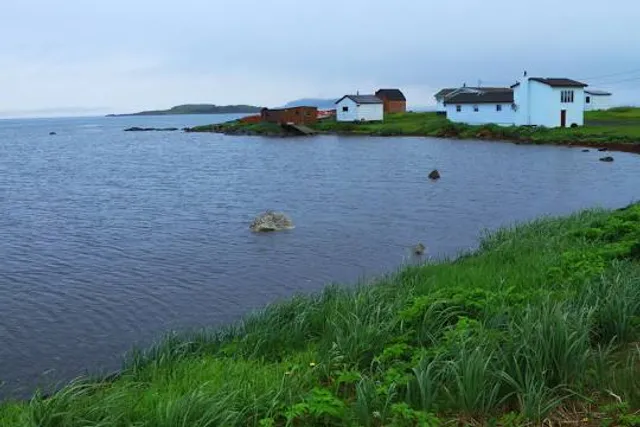
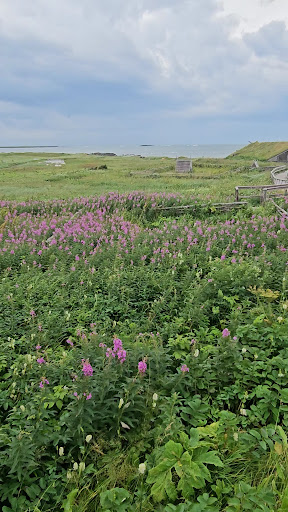
Read moreWithout the historical perspective, this isolated spot devoid of current human settlements (most towns/villages are further south) at the northern tip of Newfoundland would look like an unimpressive and rather barren meadow. However, we know as an established fact that Vikings landed and colonized this spot hundreds of years before Columbus arrived in the Caribbean, let alone the French and British colonials hundreds of years after that. I suppose that the Vikings left little evidence of their stay for the natives did not adopt Viking technology and because the Vikings returned back to Greenland and Iceland as the chronicles mention. Moreover, many of the Viking settlers were rather poor and came to labor whereas the Spanish came to conquer. If you pause to take in the imagery of the windswept grass, the (recreated) Viking houses, and the frigid water surrounding the promontory, you can easily imagine the Norse pulling a net full of herring or mackerel up to their settlement.
If you are a Viking descendant, I will describe it in comparison with Scandinavia for your benefit. L'Anse aux Meadows does not sit amidst a majestic Norwegian fjord. It does not have the Swedish mix of deciduous and coniferous trees. Instead, it looks like the relatively flat coastline of Northern Denmark... although with less floral color and less arborial diversity. The drive up to L'Anse aux Meadow passes through a low-level forest of short pine trees... whereas the northern point of Jutland has a mix of birch trees, pine, and various deciduous trees along with floral ground cover amidst the tall...
Read moreWhen I was a high school history teacher (before I got sick of summers off and went corporate... I know...) I would always ensure that my students truly got to see historical sites, museums,etc. I brought them to the War museum and Holocaust museum so they'd never forget. Plains of Abraham, ditto, as well as dozens more that informed them of who we were and why that makes us who we are. I am always, frankly, so impressed with these historical sites. I am not one for acting bits, but that is not because it had no value or is done badly, it's probably just my age. Tour guides are great. You don't get bored as there is so much to see and learn that takes more than one visit. This is one of the key 'European / White people' entry points for Canadian history, along with the First Nation's storied inhabitance of the land prior. (After all, our country's name is believed to have come from the Huron-Iroquois word “kanata", meaning village or settlement). Well, we're a bit bigger than either now, but this gem allows all of us to see where, and how, the next stage of our country unfolded. Can't say enough about this site. Recommend you tell the kids to pack and head out there, although I highly recommend purchasing tickets in advance. Well worth the trip if ever in that area. I won't post photos as there are so many good ones you can find with searches. Hope you all enjoy it as...
Read more