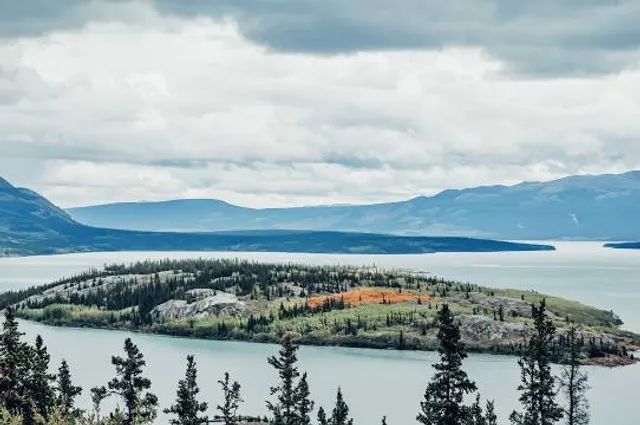
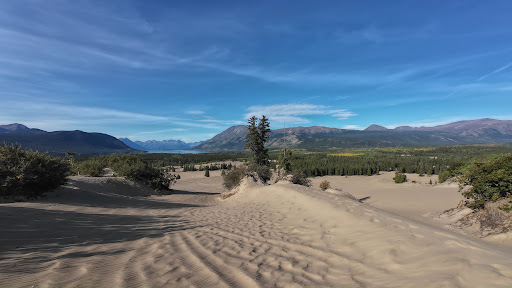
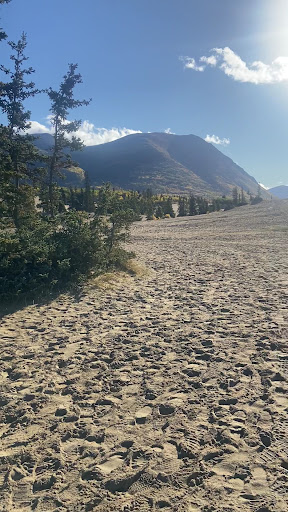
The Carcross Desert, situated just outside Carcross in Yukon, Canada, is renowned as the world's smallest desert, encompassing approximately 2.6 square kilometers (1 square mile) of undulating sand dunes that create a striking contrast against the surrounding boreal forest and mountainous landscape. Formed during the Pleistocene epoch, the dunes originated from glacial lake sediments deposited when vast bodies of water filled the southern Yukon valleys, with winds subsequently shaping the exposed sands into their current configuration following the lakes' recession. Although often classified as a desert due to its arid appearance and low precipitation in the immediate area, it technically does not meet strict desert criteria owing to the region's higher humidity levels and vegetation, making it more accurately a unique sand dune ecosystem. The site's origins trace back to ancient glacial activity, where retreating ice left behind fine silt and sand that strong prevailing winds sculpted over millennia.
Historically, the area around Carcross was known as Caribou Crossing, named for the large herds of woodland caribou that once migrated through the region, a designation that influenced the community's original name before it was shortened to Carcross in the early 20th century to avoid postal confusion. The desert itself has become a point of interest for its anomalous presence in a subarctic environment, supporting specialized plant species adapted to sandy soils, such as lodgepole pine and rare Yukon lupine, while also serving as a habitat for various wildlife. Its formation is linked to the post-glacial period, where the combination of glacial outwash and aeolian processes created this miniature desert-like feature amid Yukon's typically lush terrain.
Visiting the Carcross Desert provides an intriguing opportunity to explore this geological curiosity, offering activities such as hiking across the dunes, sandboarding, or simply appreciating the surreal juxtaposition of desert sands with nearby lakes and mountains. Accessible year-round via a short drive from Carcross, the site is free to enter and features interpretive signage that educates on its natural history and ecological significance. It is particularly appealing for nature enthusiasts and photographers seeking a quick, low-effort adventure, though visitors should wear appropriate footwear for sandy conditions and adhere to leave-no-trace principles to preserve this delicate environment. The location's proximity to other Yukon attractions enhances its value as a stopover in broader regional...
Read more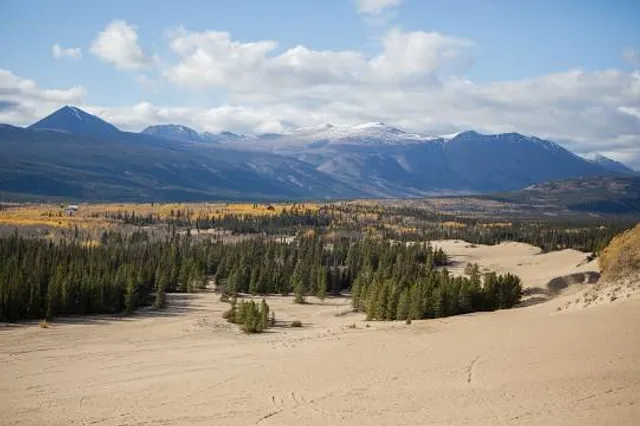
 Learn more insights from Wanderboat AI.