HTML SitemapExplore
logo
Find Things to DoFind The Best Restaurants

Atacama Desert — Attraction in Antofagasta

Name
Atacama Desert
Description
Nearby attractions
Nearby restaurants
Nearby hotels
Related posts
Chile’s Hidden Treasures: Save This Bucket List! 🌟Chile Stargazing Guide | Top 4 Celestial Wonderlands 🌌I’m in the Atacama Desert 🏜️Chile|A Hidden Treasure Where Earth Meets CosmosChile | Atacama Desert 🏜️ Your Ultimate Guide!Atacama Desert, Chile: Earth’s Driest Wonderland 🏜️
Keywords
Atacama Desert tourism.Atacama Desert hotels.Atacama Desert bed and breakfast. flights to Atacama Desert.Atacama Desert attractions.Atacama Desert restaurants.Atacama Desert travel.Atacama Desert travel guide.Atacama Desert travel blog.Atacama Desert pictures.Atacama Desert photos.Atacama Desert travel tips.Atacama Desert maps.Atacama Desert things to do.
Atacama Desert things to do, attractions, restaurants, events info and trip planning
Atacama Desert
ChileAntofagasta RegionAntofagastaAtacama Desert

Basic Info

Atacama Desert

Antofagasta, Chile
4.5(678)
Open 24 hours
Save
spot

Ratings & Description

Info

Outdoor
Adventure
Scenic
Off the beaten path
attractions: , restaurants:
logoLearn more insights from Wanderboat AI.

Plan your stay

hotel
Pet-friendly Hotels in Antofagasta
Find a cozy hotel nearby and make it a full experience.
hotel
Affordable Hotels in Antofagasta
Find a cozy hotel nearby and make it a full experience.
hotel
The Coolest Hotels You Haven't Heard Of (Yet)
Find a cozy hotel nearby and make it a full experience.
hotel
Trending Stays Worth the Hype in Antofagasta
Find a cozy hotel nearby and make it a full experience.

Reviews

Get the Appoverlay
Get the AppOne tap to find yournext favorite spots!
Wanderboat LogoWanderboat

Your everyday Al companion for getaway ideas

CompanyAbout Us
InformationAI Trip PlannerSitemap
SocialXInstagramTiktokLinkedin
LegalTerms of ServicePrivacy Policy

Get the app

© 2025 Wanderboat. All rights reserved.
logo

Posts

Chile’s Hidden Treasures: Save This Bucket List! 🌟
Mema KecoMema Keco
Chile’s Hidden Treasures: Save This Bucket List! 🌟
Chile Stargazing Guide | Top 4 Celestial Wonderlands 🌌
Mema KecoMema Keco
Chile Stargazing Guide | Top 4 Celestial Wonderlands 🌌
I’m in the Atacama Desert 🏜️
Mema KecoMema Keco
I’m in the Atacama Desert 🏜️
See more posts
See more posts
hotel
Find your stay

Pet-friendly Hotels in Antofagasta

Find a cozy hotel nearby and make it a full experience.

Chile’s Hidden Treasures: Save This Bucket List! 🌟
Mema Keco

Mema Keco

hotel
Find your stay

Affordable Hotels in Antofagasta

Find a cozy hotel nearby and make it a full experience.

Get the Appoverlay
Get the AppOne tap to find yournext favorite spots!
Chile Stargazing Guide | Top 4 Celestial Wonderlands 🌌
Mema Keco

Mema Keco

hotel
Find your stay

The Coolest Hotels You Haven't Heard Of (Yet)

Find a cozy hotel nearby and make it a full experience.

hotel
Find your stay

Trending Stays Worth the Hype in Antofagasta

Find a cozy hotel nearby and make it a full experience.

I’m in the Atacama Desert 🏜️
Mema Keco

Mema Keco

See more posts
See more posts

Reviews of Atacama Desert

4.5
(678)
avatar
5.0
5y

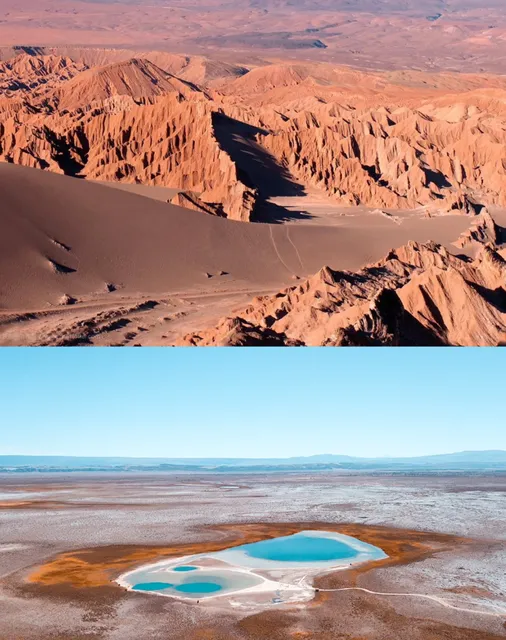
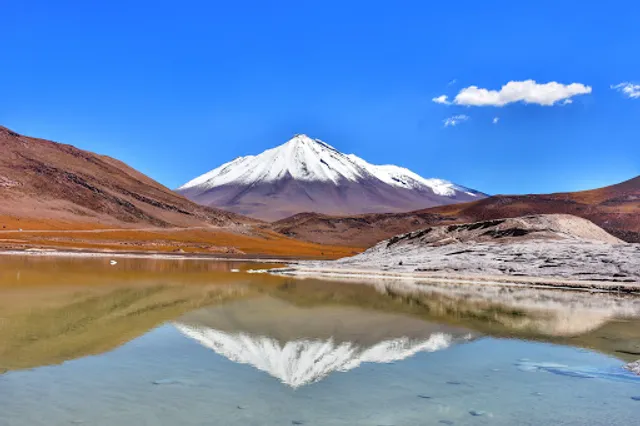
Atacama is a beautiful place very specially designed by Earth to know about survival strategies developed by different flora and fauna in such a unique arid climate. Atacama desert is one of the driest places in the world. No doubt life is tough for humans. But humans have technologically advanced to live in harsh conditions. They know to harness power from Sun, wind, tidal waves etc. They know to control temperatures suitable for their sustainability. Above all, they can desalinate sea water to get drinking water. Most of the desert is composed of stony terrain, salt lakes (salares), sand, and felsic lava that flows towards the Andes. Due to Andes mountain chain on the east and the Chilean Coast Range on the west, the most arid region lies between these two mountains which prevent moisture advection from either the Pacific or the Atlantic Oceans, a two-sided rain shadow. Atacama is rich in minerals. There was flood, there was snowfall. Desert flowers bloom here. Species of flora and fauna adapted to such hard conditions live here. The Chinchorro culture developed in the Atacama Desert area from 7,000 to 1,500 BCE. These peoples were sedentary fishermen inhabiting mostly coastal areas. Atacama desert is one of the best places in the world to conduct astronomical observations due to its high altitude, nearly nonexistent cloud cover, dry air, and lack of light pollution and radio interference from widely populated cities and towns. The Atacama Desert is popular with all-terrain sports enthusiasts. Most people who go to tour the sites in the desert stay in the town of San Pedro de Atacama.The Atacama Desert is in the top three tourist locations in Chile. There are Geysers closer to the town of Chiu Chiu. The Atacama Desert may be the oldest desert on earth, and has experienced extreme hyperaridity for at least 3 million years, making it the oldest continuously arid region on earth. But with human technological advance at least some parts of this wonderful beautiful land may be converted to green. In a region about 100 km south of Antofagasta having an averages 3,000 m elevation, the soil has been compared to that of Martian soil. The Atacama has been used as a location for filming Mars scenes. Visit Atacama to feel sweetness of harsh climate and the associated whole desert topography, ecosystem, flora and fauna, the Martian feel at places, and the coastal stretches of fishing, blue ocean waters, and beautiful...

   Read more
avatar
5.0
4y

The world’s highest desert and one of the driest places on Earth, a sterile, stony plateau full of salt flats, sand, and active volcanoes.

Lying to the west of the Andes and parallel to the Pacific coastline, the Atacama forms a narrow strip of arid desert in northern Chile, averaging less than 100 miles (160 km) in width but extending about 620 miles (1,000 km) south from the border with Peru. With an average elevation of about 13,000 ft (4,000 m), this high plateau is, according to NASA studies, the driest place in the world. Some weather stations have never recorded a single drop of rain; even at lower levels, a dry spell of four years is common. The average rainfall in the desert’s estimated 40,600 square miles (105,200 square km) range is just 1⁄16 in (1 mm) a year.

In mountain shadows. The Atacama is a double rain-shadow desert, because two high mountain ranges, the Chilean Coast Range and the Andes, block incoming moisture from both Pacific and Atlantic Oceans. In this hyper-arid climate, nothing decays; Earth’s oldest mummies, dating from around 7020 BCE, were found here, still beautifully preserved. However, on the eastern side, where the foothills of the Andes rise up, there is a small amount of rainfall in winter. Although parts of the Atacama are considered “absolute desert,” other areas are more hospitable. Fog zones called lomas, created at lower levels when clouds are trapped by mountains or coastal slopes, bring in enough moisture to sustain lichens, algae, and hardy cacti and shrubs. Birds, which are able to fly in and out as conditions dictate, are the most abundant wildlife: three species of flamingoes are found in the Atacama, feeding on algae growing in salt lakes, while hummingbirds and Peruvian song sparrows are seasonal visitors. However, due to the high content of sulfur, copper, and mineral salts such as sodium nitrate in its soils, the desert is hostile to most animals apart from lizards, insects, and rodents—and the South American gray fox, which feeds on them. In fact, the Atacama’s soil composition is so similar to samples taken from Mars that NASA uses it for testing...

   Read more

avatar
5.0
6y

Puščava Atacama (špansko Desierto de Atacama) je planota v Južni Ameriki (predvsem v Čilu), ki pokriva 1000 km dolg pas zemlje ob pacifiški obali, zahodno od Andov. To je najbolj suha puščava na svetu, pa tudi edina prava puščava, ki dobi manj padavin kot polarne puščave. Po ocenah puščava Atacama zaseda med 105.000 km² ali 128.000 km², če so vključena neplodna nižja pobočja Andov. Večina puščave je sestavljena iz kamnitega terena, slanih jezer (salares), peska in felzične lave, ki teče proti Andom. Geografsko se suhost Atacame razlaga tako, da se ta nahaja med dvema gorskima verigama (Andi in čilska obalna kordiljera), ki sta dovolj visoki, da preprečujeta vlagi prehod iz pacifiškega ali atlantskega oceana in je zato obojestransko v padavinski senci. Kljub negostoljubnim življenjskim razmeram nam arheološke najdbe dokazujejo, da so bile redke oaze naseljene že v prazgodovini z Atakamci, Ajmari, Činčori in Diaguiti. V hribih okoli San Pedra de Atacama so bili odkriti ostanki paleolitske utrdbe, Činčori pa so mumificirali že pred več kot 7000 leti in mumije iz okolice Arice veljajo za najstarejše znane ohranjene mumije na svetu. Zatem so Atacamo osvojili Inki, po uničenju njihovega imperija pa Španci, izmed katerih jo je leta 1536 prvi prečkal Diego de Almagro. Alonso de Ercilla jo je leta 1569 v svojem epu La Araucana opisal kot »Proti Atacami, ob zapuščeni obali, vidiš deželo brez ljudi, kjer ni niti ptic, niti zveri, niti dreves, niti rastlin«. Ob osamosvojitvi južnoameriških držav si je večino Atacame priključila Bolivija, dejansko pa so z njo upravljale čilenske rudarske družbe. Leta 1879 je zaradi sporov glede koncesnin in davkov izbruhnila solitrna vojna, po kateri si je Čile priključil dele Bolivije in Peruja in so bile začrtane še danes veljavne meje med temi državami. Kultura Činčoro (Chinchorro) se je razvila na območju puščave Atacama od 7000 do 1500 pr. n. št.. Ti ljudje so bili stalno naseljeni ribiči, ki so živeli večinoma na obalnih območjih. Njihovo prisotnost najdemo iz današnjih mestih od Ilo v južnem Peruju do Antofagaste v severnem Čilu. Prisotnost sveže vode v sušni regiji na obali je olajšala človeško nastanitev na teh območjih. Činčori so bili znani po podrobni mumifikaciji in pogrebnih praksah. Pozneje so oaze Atacame doživele majhno rast prebivalstva in urbani razvoj. V 20. stoletju so imeli konflikte glede vodnih virov z obalnimi mesti in rudarsko industrijo. San Pedro de Atacama, na približno 2400 m višine, je podobno številnim mestom. Pred inkovskim imperijem in pred prihodom Špancev je bila ekstremno sušna notranjost predvsem naseljena s plemenom Atacameño. Znani so po gradnji utrjenih mest, imenovanih pukarás, od katerih je eno oddaljeno le nekaj kilometrov od San Pedro de Atacama. Mestno cerkev so zgradili Španci leta 1577. Obalna mesta so nastala v 16., 17. in 18. stoletju v času španskega imperija, ko so se pojavila kot ladijska pristanišča za srebro, proizvedeno v Potosiju in drugih rudarskih centrih. V 19. stoletju je bila puščava pod nadzorom Bolivije, Čila in Peruja. Ob odkritju zalog natrijevega nitrata in zaradi nejasnih meja je območje kmalu postalo konfliktno in povzročilo solitrno vojno. Čile je pridobile večino puščave, mesta ob obali pa so se razvila v mednarodna pristanišča, ki so gostili številne čilske delavce, ki so tja migrirali. Zaradi gvana in soli se je prebivalstvo v 19. stoletju izjemno povečalo, predvsem zaradi priseljevanja iz osrednjega Čila. V 20. stoletju se je nitratna industrija zmanjšala, hkrati pa je večinoma moško prebivalstvo v puščavi postalo vse bolj problematično za čilsko državo. Rudarji in rudarska podjetja so prišla v konflikt in protesti so se razširili po vsej regiji. Puščava ima bogate zaloge bakra in drugih mineralov ter največjo naravno zalogo natrijevega nitrata na svetu, ki je bila v veliki meri izkoriščana do začetka 1940-ih. Mejni spor v zvezi s temi viri med Čilom in Bolivijo se je začel v...

   Read more
Page 1 of 7
Previous
Next