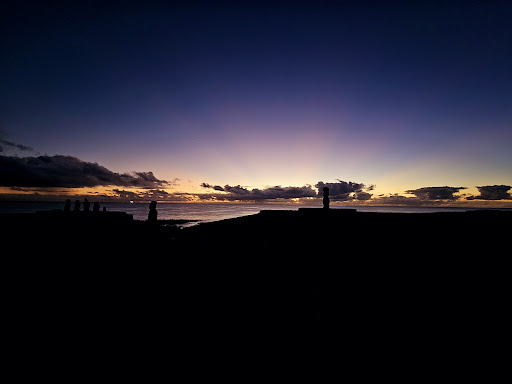
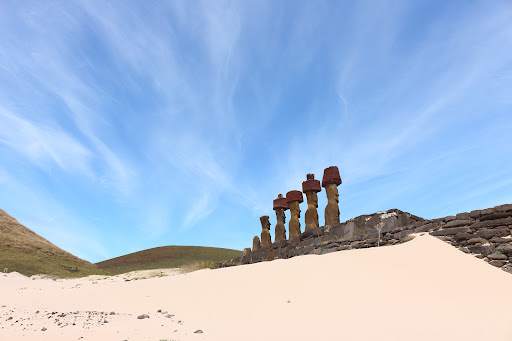
Rapa Nui National Park which, on 22 March 1996, UNESCO designated a World Heritage Site under cultural criteria. e moai in the park are of varying height from 2 to 20 metres . The volcanic rock formations quarried for sculpting are a distinctive yellow-brown volcanic tuff found only at the Ranu Raraku on the southeast side of the island. Some of the moai were also carved from red scoria. The ceremonial shrines where they are erected for offering worship are known as "ahu". Of impressive size and form, they are normally built close to the coast and parallel to it. Many moai are also seen in the quarries in an unfinished state. The production and transportation of the 887 statues are considered remarkable creative and physical feats. The moai have been under restoration since 1950. The period between 1837 and 1864 was a critical time when, for reasons that remain unknown, all the standing statues were toppled (probably during the tribal wars), although with little damage. Subsequently they were retrieved and returned to their original positions during the period of restoration with international assistance. The moai represented a clan's "most revered forebears who were believed to bestow ‘mana’ on living leaders". The park also has a few petroglyphs and paintings. The Birdman cult which replaced the moai cult worship was concentrated in Orongo at a ceremonial site called Mata Ngarau. The location is at an elevation of 250 metres , on a narrow ridge between the ocean, and the deep crater of Rano Kau volcano, which last erupted about 150,000 to 210,000 years ago. The earliest inhabitants of the island called it "Te Pito o TeHenua". The island was discovered by the Dutch explorer Jacob Roggeveen on Easter day, 1722. As a result, he named it "Easter Island". He observed that the inhabitants were of three groups: "dark skinned, red skinned, and very pale skinned people with red hair". A Tahitian visitor, gave it the Polynesian name "Rapa Nui". In Chile, the island is called "Isla De Pascua" Spanish for...
Read more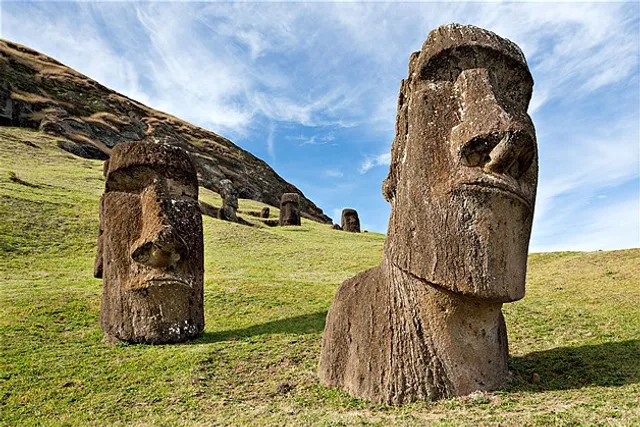
 Learn more insights from Wanderboat AI.