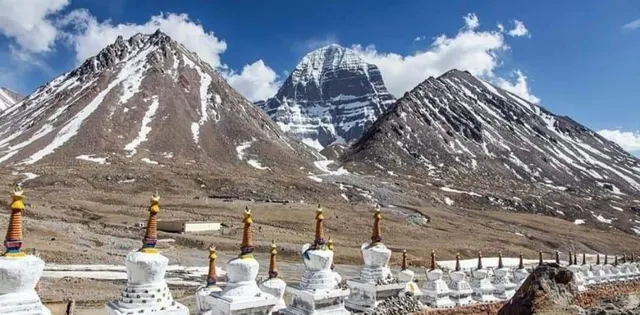
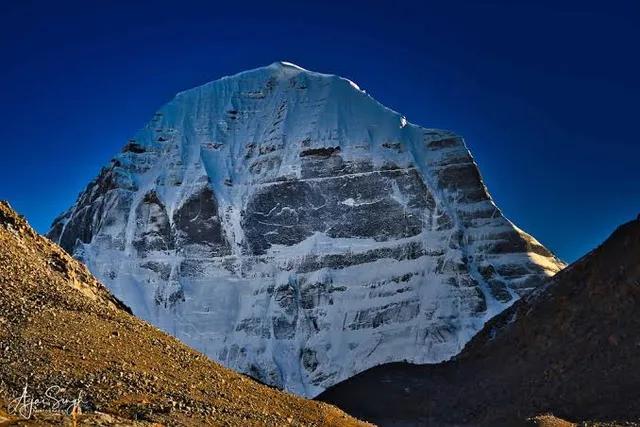
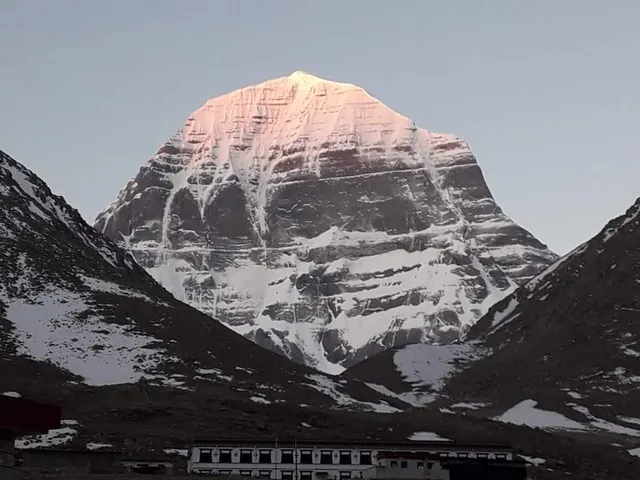
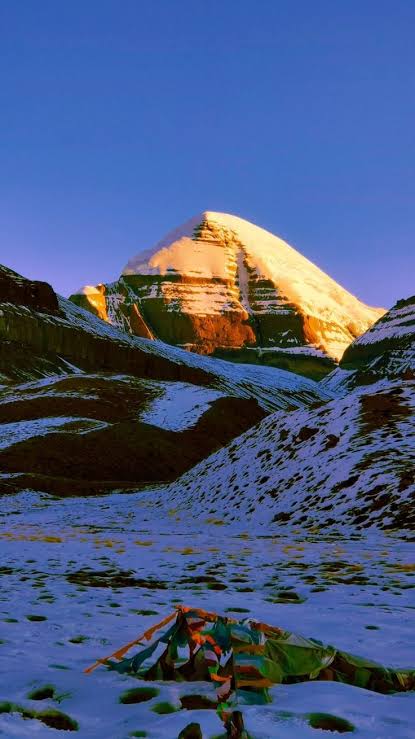
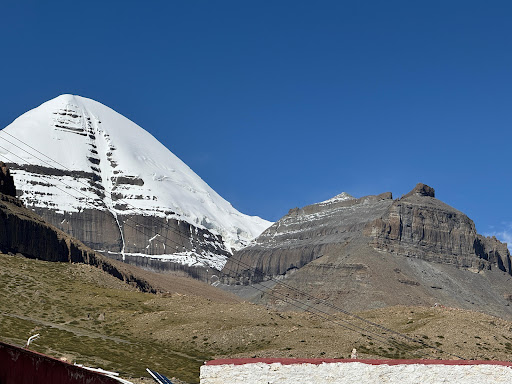
Mount Kailash is located close to Lake Manasarovar and Lake Rakshastal. The sources of four major Asian rivers lie close to this mountain and the two lakes. These rivers are the Indus, the Sutlej, the Brahmaputra, and the Karnali (a tributary of the Ganges, fed by Mabja Zangbo). Mount Kailash is considered sacred in four religions: Hinduism, Buddhism, Jainism and Bon.
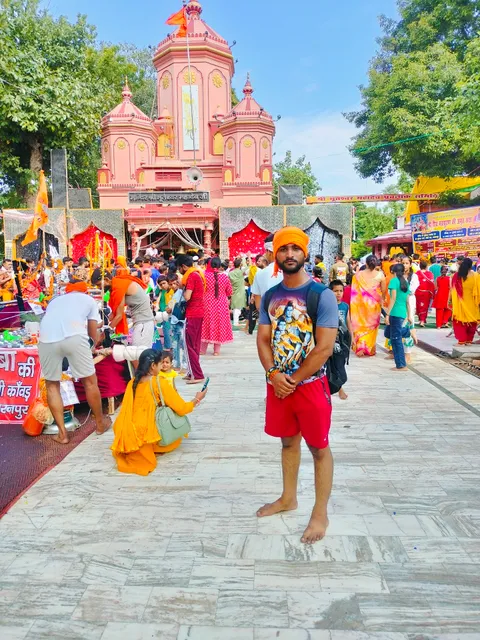
A consistent influx of pilgrims hailing from India, Tibet, Nepal, and various other nations embark on a journey to venerate the mountain.
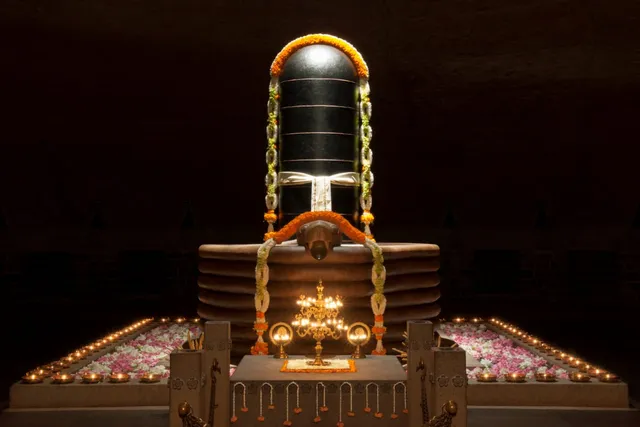
In Hinduism, it is traditionally recognized as the abode of Shiva, who resided there along with his consort goddess Parvati and their children, Ganesha and Kartikeya.
In the Uttara Kanda section of the epic Ramayana, it is said that Ravana attempted to uproot the Mount Kailash as retaliation to lord Shiva, who in turn, pressed his right big toe upon the mountain, trapping Ravana in between. This version of lord Shiva is also referred to as Ravananugraha, or favour form to Ravana while seated in mount Kailash.
According to the epic Mahabharata, it is said that the Pandava brothers, along with their wife Draupadi, trekked to the summit of mount Kailash on their path to liberation, as it is considered to be a gateway to Heaven, also known as Swarga Loka.[citation needed]
One description in the Vishnu Purana of the mountain states that its four faces are made of crystal, ruby, gold, and lapis lazuli. It is a pillar of the world and is located at the heart of six mountain ranges symbolizing a lotus. The Vishnu Purana talks about Lord Shiva sitting in lotus position, engaged in deep meditation within the confines of a mountain, and fully immersed in a state of perpetual bliss.
According to Jain scriptures, Ashtapada is the site where the first Jain Tirthankara, Rishabhadeva attained moksha (liberation).In Jain tradition, it is believed that after Rishabhdeva attained nirvana, his son emperor Bharata Chakravartin had constructed three stupas and twenty four shrines of the 24 tirthankaras over there with their idols studded with precious stones and named it Sinhnishdha.
In 1926, Hugh Ruttledge studied the north face, which he estimated was 6,000 feet (1,800 m) high and "utterly unclimbable" and thought about an ascent of the northeast ridge, but he ran out of time. Ruttledge had been exploring the area with Colonel R. C. Wilson, who was on the other side of the mountain with his Sherpa named Tseten. Wilson said that Tseten told him: "'Sahib, we can climb that!' ... as he too saw that this [the SE ridge] represented a feasible route to the summit." Wilson went on to explain that although he was serious about climbing Kailash, he ran into unexpected difficulties: "Just when I discovered an easy walk to the summit of the mountain, heavy snow began to fall, making the ascent impossible."
Indian pilgrims have the option of going either through the annual Kailash pilgrimages organised by the Government of India's Ministry of External Affairs (MEA),or through private groups organised by various travel companies. For the pilgrimages organised by the Government of India, a person has to be an Indian citizen with a passport valid for at least six months as on September 1 of the current year, besides certain other conditions.The selection of candidates by the government is done through a "fair computer-generated, random, gender-balanced selection process", through which the selected candidates are also assigned either of the two routes to Kailash currently open through India
The Lipu Lekh route involves briefing and medical checks in Delhi, from there travel to the Lipu Lekh pass, and beyond that travel in Tibet for the Kailash-Manasarovar pilgrimage. Till recently, the Lipu Lekh route required 5-7 days of trekking along the Indian side of the Mahakali valley, from Narayan Ashram till the...
Read moreMount Kailash (also Kailasa; Kangrinboqê or Gang Rinpoche; Standard Tibetan: གངས་རིན་པོ་ཆེ; simplified Chinese: 冈仁波齐峰; traditional Chinese: 岡仁波齊峰; pinyin: Gāngrénbōqí Fēng; Sanskrit: कैलास, IAST: Kailāsa) is a mountain in Ngari Prefecture, Tibet Autonomous Region of China. It lies in the Kailash Range (Gangdisê Mountains) of the Transhimalaya, in the western part of the Tibetan Plateau. The peak of Mount Kailash is located at an elevation of 6,638 m (21,778 ft), near the trijunction between China, India and Nepal.Mount Kailash is located close to Manasarovar and Rakshastal lakes. The sources of four rivers: Indus, Sutlej, Brahmaputra, and Karnali lie in the vicinity of the region. Mount Kailash is sacred in Hinduism, Buddhism, Jainism and Bon religion. People from India, China, Nepal and other countries in the region undertake a pilgrimage to the mountain. The pilgrimage generally involves trekking towards Lake Mansarovar and a circumambulation of Mount Kailash. While the mountain has been surveyed by climbers in the past, there has been no recorded successful ascent of the mountain. The climbing of the mountain is prohibited by the Chinese government due to its religious significance.The mountain is known as "Kailāsa" (कैलास; var. Kailāśa कैलाश) in Sanskrit. The name could have been derived from the word "kelāsa" (केलास), which means "crystal". In his Tibetan-English dictionary, Sarat Chandra Das states that 'kai la ca' (Wylie: kai la ca) from Sanskrit Kailāsa is used to denote the mountain. The mountain is also called as Gang Rinpoche (Tibetan: གངས་རིན་པོ་ཆེ་; simplified Chinese: 冈仁波齐峰; traditional Chinese: 岡仁波齊峰) or Gang Tise locally. Gang Rinpoche means "snow jewel mountain" with Kang (or Gang) being the Tibetan word meaning white mountain (snow peak) and rinpoche is an honorific meaning "precious one".Gang Tise means "mountain of ice or cool".Mount Kailash is located in Ngari Prefecture, Tibet Autonomous Region of China. It lies in the Gangdisê Mountains (also called as Kailash Range) of the Transhimalaya, in the western part of the Tibetan Plateau. The peak of Mount Kailash is at an elevation of 6,638 m (21,778 ft). The region is located north of the western tripoint of the border between China, India and Nepal. The major rivers rising from the western Gangdise mountains are the Yarlung Tsangpo (which becomes the Brahmaputra), the Indus, the Sutlej and the Karnali, a tributary of Ganges. All these river systems originate within a 60 km (37 mi) stretch in the region. Mount Kailash is located on the banks of Manasarovar and Rakshastal lakes. Spread over an area of 320 km2 (120 sq mi), Manasarovar is the highest freshwater lake in the world.In 1926, Hugh Ruttledge, the deputy commissioner of Almora, visited the area to meet the Garpon (local Tibetan leader) of Ngari. As the Garpon was away, he circumbulated Mount Kailash while studying it.As per Ruttledge, the mountain was about 6,000 m (20,000 ft) high and utterly unclimbable.He thought about an ascent along the northeast ridge and had been exploring the area with Colonel R. C. Wilson, who was on the other side of the mountain with a Sherpa named Tseten. As per Wilson, Tseten told him that the southeast ridge represented a feasible route to the summit. Wilson explained that although they attempted to climb the mountain, they ran into heavy snowfall, making the ascent impossible. The pilgrimage for Hindus , Buddhist and Jainism sacred holy place for Many Religion The Mountain heavy snowfall Trekking near mountain Scenery of snowfall The manasovar lake origin of Brahmaputra river snow covered mountain 🏔️ look Beautiful Scared holy place destination...
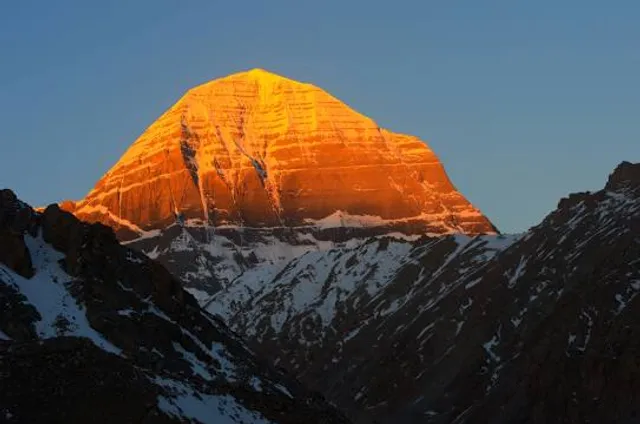
Read moreMount Kailash (also Kailasa; Kangrinboqê or Gang Rinpoche; Tibetan: གངས་རིན་པོ་ཆེ; simplified Chinese: 冈仁波齐峰; traditional Chinese: 岡仁波齊峰; Sanskrit: कैलास, IAST: Kailāsa), is a mountain in the Ngari Prefecture, Tibet Autonomous Region of China. It has an altitude of 6,714 m (22,028 ft).1] It lies in the Kailash Range (Gangdisê Mountains) of the Transhimalaya, in the western part of the Tibetan Plateau. Mount Kailash is less than 100km towards the north from the western trijunction of the borders of China, India, and Nepal.Mount Kailash is located close to Lake Manasarovar and Lake Rakshastal. The sources of four major Asian rivers lie close to this mountain and the two lakes. These rivers are the Indus, the Sutlej, the Brahmaputra, and the Karnali (a tributary of the Ganges). Mount Kailash is considered sacred in four religions: Hinduism, Buddhism, Jainism[3] and Bon Religious In Hinduism In Hinduism, it is traditionally recognized as the abode of Shiva, who resided there along with his consort goddess Parvati and their children, Ganesha and Kartikeya.[citation needed]
In the Uttara Kanda section of the epic Ramayana, it is said that Ravana attempted to uproot the Mount Kailash as retaliation to lord Shiva, who in turn, pressed his right big toe upon the mountain, trapping Ravana in between.[13] This version of lord Shiva is also referred to as Ravananugraha, or favour form to Ravana while seated in mount Kailash.[14]
According to the epic Mahabharata, it is said that the Pandava brothers, along with their wife Draupadi, trekked to the summit of mount Kailash on their path to liberation, as it is considered to be a gateway to Heaven, also known as Swarga Loka.[citation needed]
According to Charles Allen, one description in the Vishnu Purana of the mountain states that its four faces are made of crystal, ruby, gold, and lapis lazuli.[15] It is a pillar of the world and is located at the heart of six mountain ranges symbolizing a lotus.[15]
In Jainism
Rishabhadeva attained nirvana on Mount Kailash. According to Jain scriptures, Ashtapada is the site where the first Jain Tirthankara, Rishabhadeva attained moksha (liberation).[16] In Jain tradition, it is believed that after Rishabhdeva attained nirvana, his son emperor Bharata Chakravartin had constructed three stupas and twenty four shrines of the 24 tirthankaras over there with their idols studded with precious stones and named it Sinhnishdha.[17]
Nirvan Kand Bhasha also mentions of Ashtapada.[18
वीतराग वन्दौं सदा, भाव सहित सिर नाय |
कहूं काण्ड निर्वाण की, भाषा सुगम बनाये ||
(चौपाई)
अष्टापद आदीश्वर स्वामि, वासुपूज्य चम्पापुरि नामि |
नेमिनाथ स्वामी गिरनार, वन्दौं भाव भगति उर धार ||1||
चरम तीर्थकर चरम शरीर, पावापुरि स्वामि महावीर |
शिखर समेद जिनेसुर बीस, भावसहित वन्दौं निश दीस ||2||
In Jain tradition, the 24th and last Tirthankara, Vardhamana Mahavira, was taken to the summit of Meru by Indra shortly after his birth, after putting his mother In Buddhism Mount Kailash (Kailasa) is known as Mount Meru in Buddhist texts. It is central to its cosmology, and a major pilgrimage site for some Buddhist...
Read more