In reflecting upon the intricate tapestry of history, it becomes evident that the realms of faith and politics have long been inextricably linked. Throughout the ages, those wielding considerable financial clout and authority — be it through established religions such as Islam, Catholicism, Christianity, and Orthodox traditions or through more obscure cults and fringe sects — have consistently exerted a profound influence over societal structures and even military might. Following the liberation of China, particularly during the tumultuous period of the Cultural Revolution, Buddhism found itself ensnared in a web of denunciation, often branded as a mere cult. This led to the tragic desecration of numerous statues, a poignant symbol of the struggle between spiritual expression and political ideology. To some observers, the sway of Buddhism seemed to rival that of prominent political figures of the time, showcasing its potential to galvanize communities in ways that transcended mere ritual.
From my vantage point, what is often termed “faith” frequently serves as a sanctuary for those grappling with vulnerability or weighed down by the burdens of past transgressions. Temples act as bastions of solace — a refuge where individuals can seek comfort amidst the chaos of existence. The allure of these sacred spaces lies not only in their spiritual offerings but also in the psychological balm they provide to those who feel adrift in an unforgiving world. It is perhaps no surprise that many individuals allocate substantial resources to this so-called faith; after all, wealth is ephemeral, vanishing like mist at dawn once we cross the threshold into the afterlife. In their quest for redemption and hope for eternal reward, adherents invest in fulfilling religious obligations, aspiring to secure a place in paradise rather than being condemned to hell. Ultimately, the dynamics at play are shaped by an intricate interplay of timing, geographical context, and the individuals involved in this age-old dance.
Furthermore, the physical presence of temples — vast, awe-inspiring structures — serves to amplify their significance within society. These monumental edifices stand as testaments to centuries of devotion and cultural heritage, drawing both worshippers and politicians alike. Historically, influential figures would frequent revered sites such as Suzhou and West Lake, engaging with these sacred spaces in ways that have indelibly shaped the beliefs and practices of countless worshippers across China. Such interactions highlight the symbiotic relationship between political power and religious devotion — a relationship that continues to evolve while leaving an indelible mark on the collective consciousness of society. In this ongoing dialogue between faith and politics, one can discern not just a reflection of human aspiration but also a profound commentary on our shared quest for meaning and belonging in an...
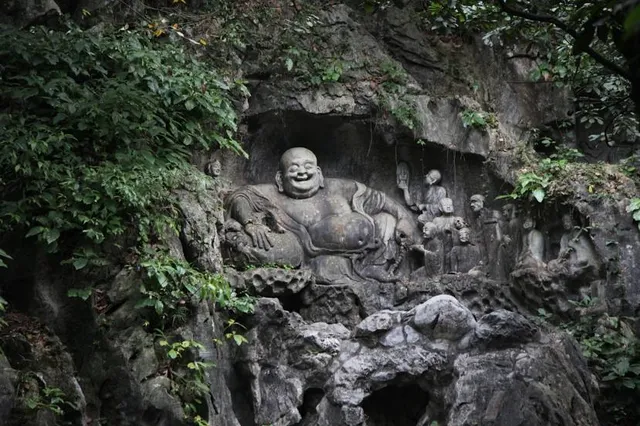
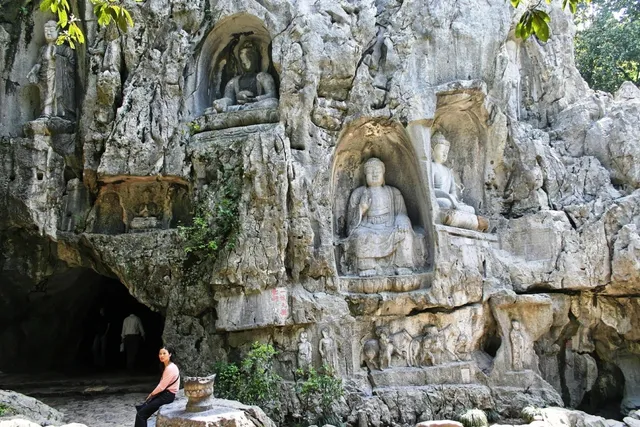
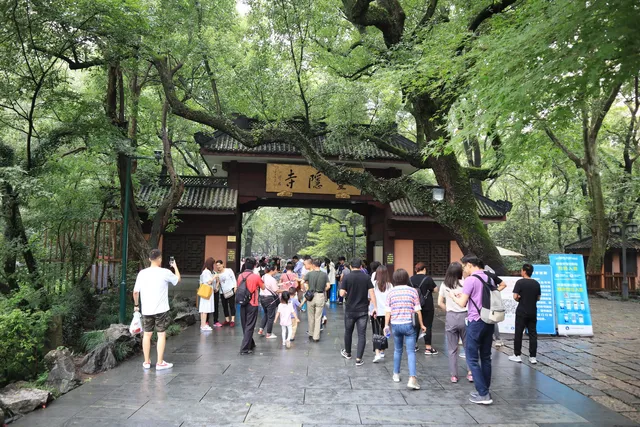
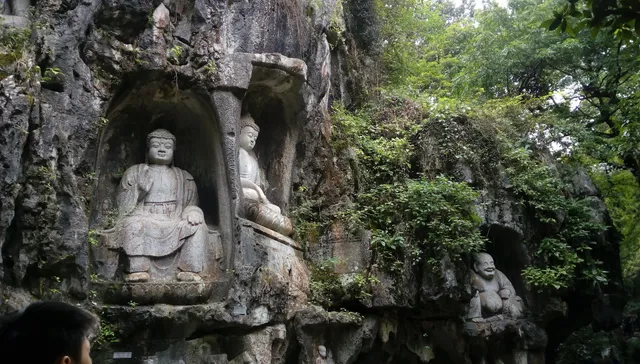
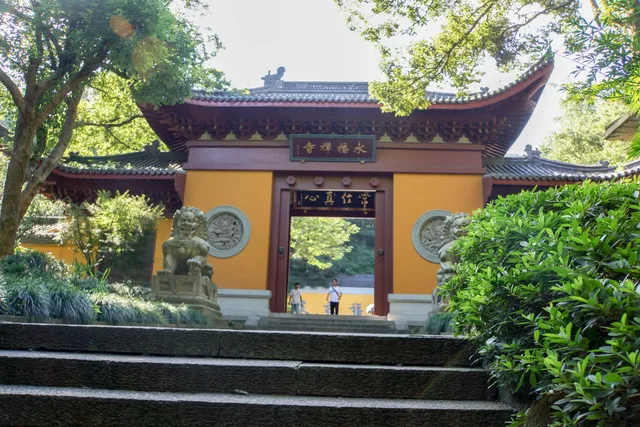
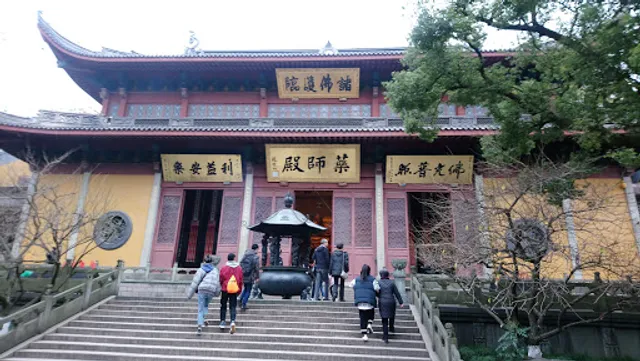
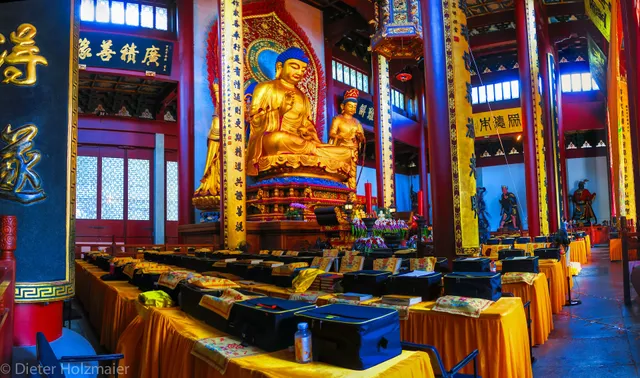
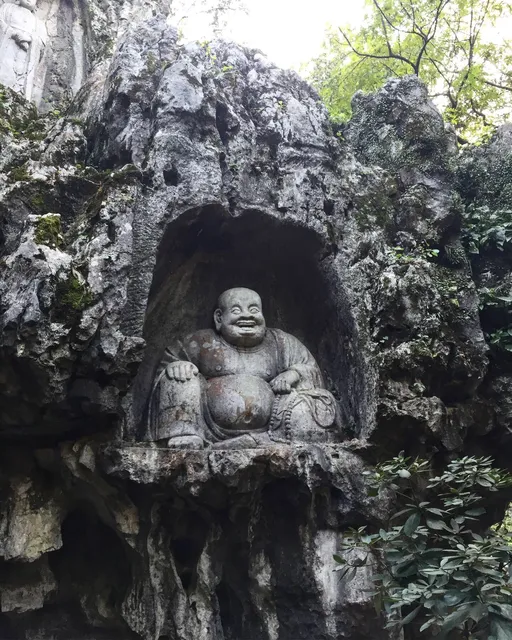
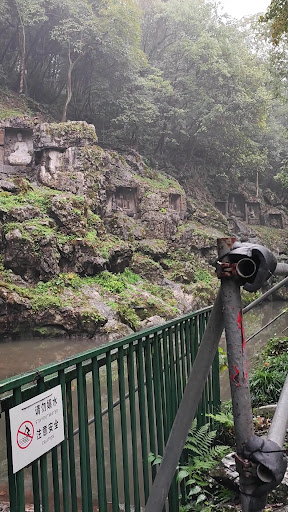
Read moreLingyin Temple simplified Chinese: 灵隐寺 traditional Chinese: 靈隱寺 is a Buddhist temple of the Chan sect located north-west of Hangzhou, Zhejiang Province, China. The temple's name is commonly literally translated as Temple of the Soul's Retreat. It is one of the largest and wealthiest Buddhist temples in China, and contains numerous pagodas and Buddhist grottoes. According to tradition, the monastery was founded in 328 AD during the Eastern Jin dynasty (265–420) by an Indian monk, named Huili in Chinese. From its inception, Lingyin was a famous monastery in the Jiangnanregion. At its peak under the WuyueKingdom (907–978), the temple boasted nine multi-story buildings, 18 pavilions, 72 halls, more than 1300 dormitory rooms, inhabited by more than 3000 monks. Many of the rich Buddhist carvings in the Feilai Feng grottos and surrounding mountains also date from this era.
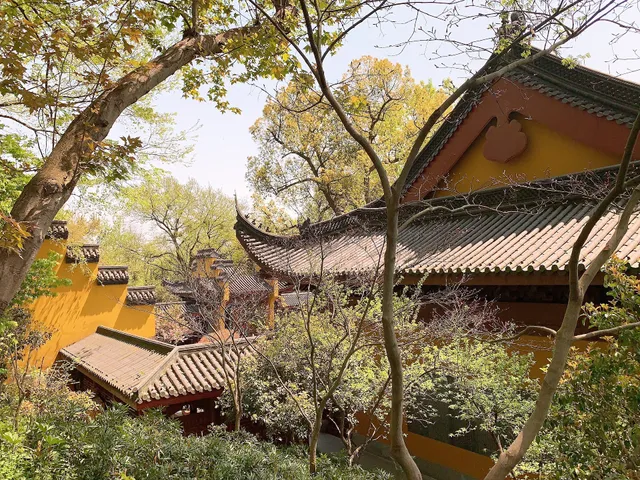
During the later Southern Song dynasty(1127–1279), the monastery was regarded as one of the ten most important temples of the Chan sect in the Jiangnan region. However, its prominence has not saved the temple from marauders. It has been rebuilt no less than sixteen times since then. The current buildings are modern restorations of late Qing(1644–1911) buildings.
During the Cultural Revolution, the temple and grounds suffered some damage at the hands of Red Guards. However, they escaped large scale destruction partly because of the protection of Premier Zhou Enlai.
Today the temple is thriving as a destination for both pilgrims and tourists. It is regarded as one of the wealthiest monasteries in China, and regular pilgrims have included former paramount...
Read moreThe majestic Lingyin Temple is nestled in the lush, green Wulin Mountains of Hangzhou, China. This historic Buddhist monastery, dating back millennia, entices tourists with its gorgeous architecture, tranquil grounds, and awe-inspiring Buddhist statues.
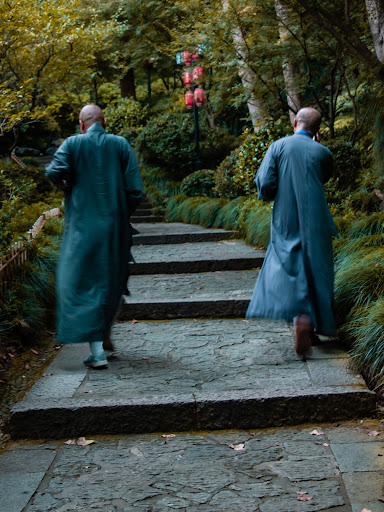
Imagine walking through a peaceful valley, where the pleasant sounds of running streams and singing birds create a quiet and spiritual atmosphere. The temple's timber and stone architecture, embellished with beautiful carvings and brilliant colors, transport you to a another planet.
Lingyin Temple is not just a site of devotion, but also a repository of art and history. The temple contains an extensive collection of superbly created Buddhist sculptures, magnificent paintings, and other creative works that represent the peak of Chinese artistry.
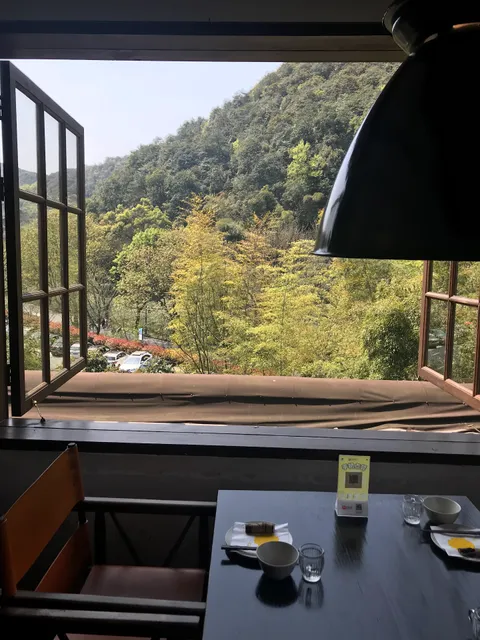
The temple's location in the Wulin Mountains provides a spectacular view. The lush, hilly scenery, tumbling waterfalls, crystal-clear streams, and finely planted gardens provide for a gorgeous backdrop that captivates tourists. Wulin Mountains: These gorgeous mountains, with their rich flora and wildlife, provide breathtaking panoramas. Hiking routes wind across the highlands, allowing outdoor enthusiasts to immerse themselves in nature. Serene grounds: The temple's grounds are a landscaping wonder, complete with ponds, bridges, and various vegetation. Waterfalls & Streams: The peaceful murmur of running water contributes to the temple's tranquil aura. Bamboo woods: The temple is surrounded by huge bamboo woods, which provide a tranquil and attractive environment for a...
Read more