Twenty-five years after its opening, Hong Kong International Airport remains Norman Foster's most audacious gamble — a bet that clarity of design could tame the chaos of mass air travel. The wager has largely paid off.
Built on an artificial island carved from two flattened mountains, the terminal extends Foster + Partners' concept pioneered at Stansted Airport to unprecedented scale. When completed in 1998, it was the largest single airport terminal and the largest building in the world, with an area of 516,000 square meters. The sheer ambition still startles: as Foster himself noted, "it was one of the most ambitious construction projects of modern times".
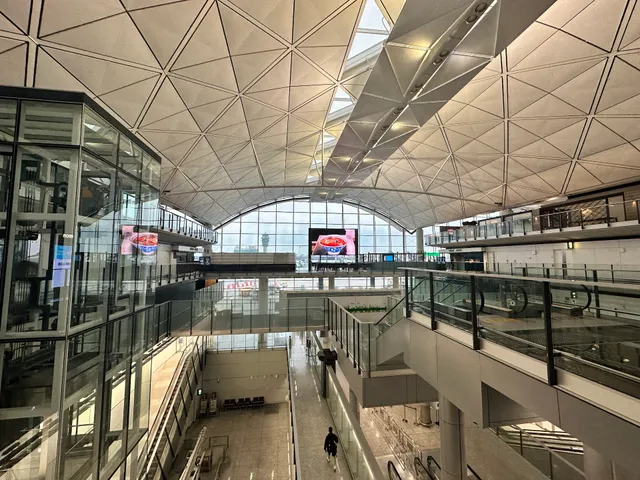
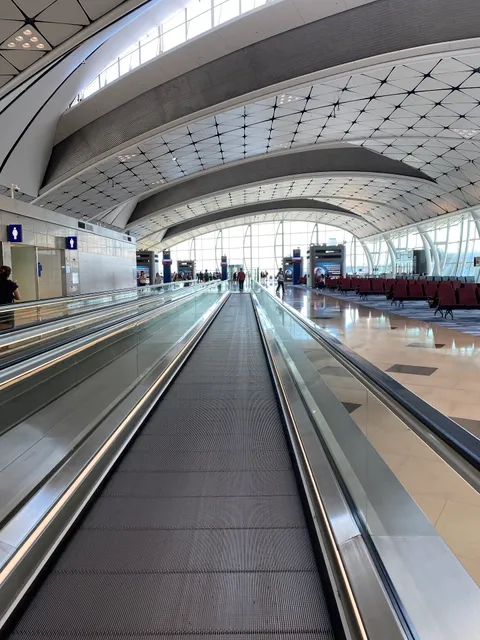
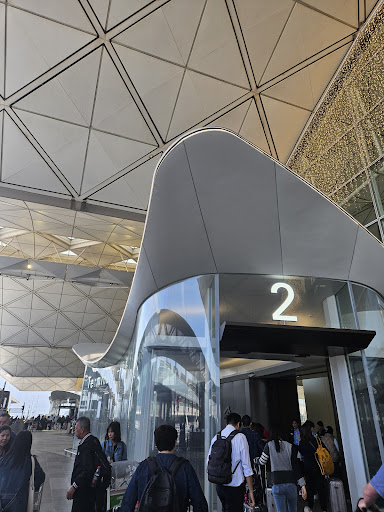
The architecture succeeds through radical simplification. The airport's vaulted roof provides a constant point of reference, whether you are arriving or departing. The direction of the vaults remains constant throughout the building, regardless of the divergent directions that the 'prongs' take, so that the roof itself becomes an aid to navigation. This is wayfinding as poetry — a 36-meter-thick metal frame that curves and soars like a frozen wave.
The terminal is characterized by a lightweight roof canopy, kept free of service installations; the use of natural lighting; and the integration beneath the main passenger concourse of all the technical equipment. Foster learned from Stansted's mistakes. While Stansted "has sadly been filled with retail spoiling the volume and feelings of spaciousness," Chek Lap Kok "still feels airy despite significant retail element" due to "knowledge gained from the Stansted experience".
The engineering tour de force extends beyond the building itself. The predominantly glass facades were designed to break during high-speed winds, relieving pressure and allowing the terminal to withstand an intense typhoon — architecture that literally bends without breaking. The recent Sky Bridge, stretching 200 meters over active runways with 28 meters of clearance, weighs 5,000 tonnes yet appears to float.
Yet the ultimate test of any airport is how it serves the traveling public. Travelers rate it 8.4/10 on average, indicating exceptional service, and Skytrax has certified it as a 5-Star Airport. The Airport Express train service has been called "faultless" and "probably the best run system" by frequent travelers.
But cracks show in the facade of efficiency. Recent passenger reviews reveal mounting frustrations: "The HKIA is definitely too small to handle the massive traffic going through it. Eating establishments needs 30 to 45 mins before u can get your food". Success, it seems, breeds its own problems.
Currently handling over 55 million passengers per year with an anticipated capacity of 80 million passengers by 2040, the space has accommodated growth through its modular design that is flexible for expansions. The question is whether Foster's original vision can stretch indefinitely.
What emerges is architecture of profound contradictions. HKIA represents both the apex of late-20th-century optimism about infrastructure and a cautionary tale about the limits of even brilliant design. The project celebrates "the excitement of travel" through "logic of movement built into the architecture, with clear lines of sight through the voluminous space, minimal level changes, a vaulted roof that provides directionality".
Foster's achievement lies not just in the building's scale but in its essential humanity. In an age when airports increasingly resemble shopping malls with runways, HKIA maintains its focus on the fundamental act of departure and arrival. The great roof curves down to embrace travelers, promising sky to the earthbound.
The architecture endures because it solved the right problem: how to move millions of people through space with dignity and grace. That it now strains under its own success only proves how well it succeeded in the...
Read moreTL;DR Version: Hong Kong International Airport is a triumph of understated design and efficiency. With efficient immigration, easy-to-use Wi-Fi, plentiful shopping, and excellent lounge options, it stands as one of the better global airports. While there’s room for improvement, it offers a significantly superior experience compared to many others.
Full Version: Hong Kong International Airport (HKIA) is an excellent example of what a modern airport can and should strive to be: a seamless blend of functionality and subtle sophistication. It doesn’t rely on ostentatious design or flashy features but instead creates an environment that feels efficient and distinctly refined. For frequent flyers, HKIA delivers an experience that’s both smooth and satisfying, ranking high among the world’s top airports.
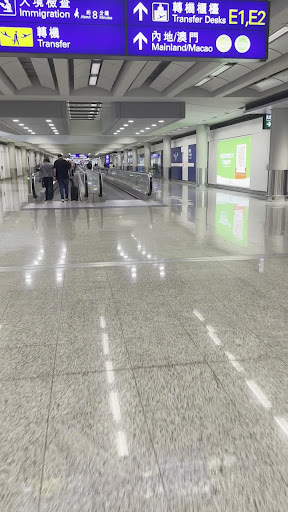
The design of the airport is one of its standout features. Clean, spacious, and intuitively laid out, HKIA feels like it was designed with the traveler in mind. It avoids the trap of being overly sterile or overwhelmingly ornate, instead striking a perfect balance that leaves a lasting impression without trying too hard. While not as exuberant as Singapore Changi or as futuristic as Incheon, its elegance lies in its restraint. The terminals feel modern but approachable, and navigating the airport is a breeze thanks to clear signage and thoughtful planning.
Immigration at HKIA deserves special mention for its efficiency. Even during peak hours, the queues move swiftly, thanks to both well-trained staff and streamlined processes. It’s a stark contrast to airports where immigration can feel like a drawn-out ordeal. This efficiency sets the tone for the rest of the airport experience and is a testament to the careful planning that has gone into its operations.
For those in need of connectivity, the Wi-Fi at HKIA is easy to connect to and works reliably throughout the terminals. This is a crucial feature for business travelers and digital nomads who need to stay connected during layovers, and HKIA delivers without the frustrating hurdles some airports impose.
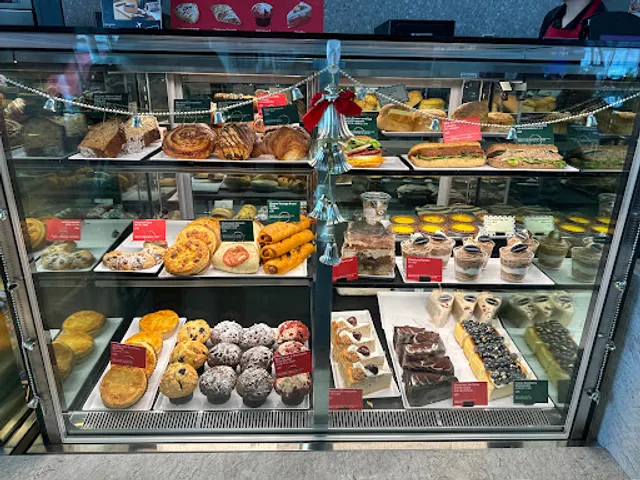
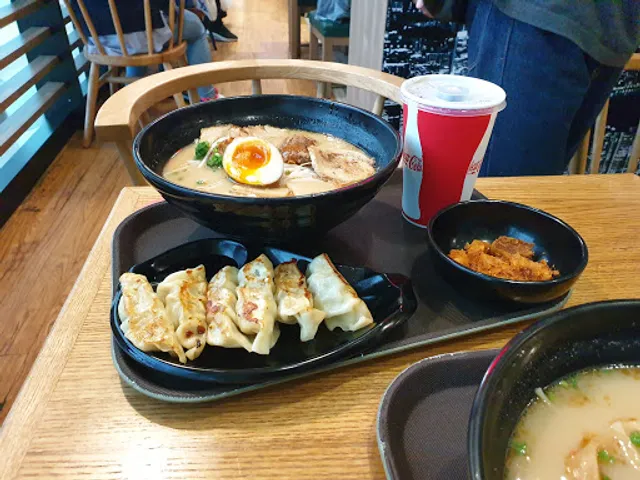
When it comes to shopping and dining, HKIA offers something for everyone. From luxury boutiques to everyday essentials, the range of stores caters to a diverse clientele. Whether you’re in the mood for high-end fashion, tech gadgets, or unique souvenirs, you’ll find plenty to explore. The dining options are equally impressive, with a mix of international cuisines and local delicacies. For those looking to experience Hong Kong’s culinary culture, the airport offers an excellent preview.
The lounges at HKIA are another highlight. Whether you’re flying business class or purchasing access, the lounge options are plentiful and well-regarded. They provide a much-needed oasis for weary travelers, offering comfortable seating, quality refreshments, and spaces designed for both relaxation and productivity.
That said, there is always room for improvement. Some areas of the airport, particularly those catering to economy travelers, could benefit from more seating and charging stations. Additionally, while the shopping and dining options are robust, they lean slightly towards the premium end, which may not appeal to all passengers.
Despite these minor shortcomings, HKIA far surpasses the experience offered by many other airports. It doesn’t fall into the traps of over-the-top gimmicks like Dubai or the dated inefficiencies of some American airports. Instead, it focuses on getting the fundamentals right and creating a travel experience that is smooth, pleasant, and memorable.
Hong Kong International Airport is a strong contender in the airport space. Its thoughtful design, efficient operations, and excellent amenities make it a pleasure to travel through. While not perfect, it remains a benchmark for how an airport can enhance, rather than detract from, the...
Read moreHong Kong International Airport (HKG) Review – A Premier Travel Hub
Hong Kong International Airport (HKG) is one of the world’s busiest and most efficient airports, known for its modern facilities, seamless connectivity, and excellent customer service. Whether you're just passing through or starting your journey, HKG provides a world-class experience that is hard to beat.
Design and Navigation
From the moment you step off the plane, the airport's sleek and spacious design is apparent. The terminals are airy, well-lit, and feature high ceilings with large windows, creating an open and welcoming atmosphere. The airport is easy to navigate, with clear signage in multiple languages that guides you to baggage claim, immigration, and gates. The layout is user-friendly, with Terminal 1 handling most international flights and Terminal 2 primarily for regional routes. The connection between the two terminals is seamless, making transfers straightforward and stress-free for connecting passengers.
Amenities and Services
One of HKG’s key strengths is its wide range of amenities. The airport offers numerous lounges, including exclusive spaces for business and first-class passengers, and pay-per-use lounges for others. These lounges feature comfortable seating, free Wi-Fi, hot meals, and shower facilities, ensuring a relaxing experience before or between flights.
The shopping options are exceptional, with a mix of luxury brands like Chanel, Gucci, and Louis Vuitton, alongside electronics, souvenirs, and duty-free stores. Whether you're looking to splurge or find something more affordable, there’s something for everyone. The dining options are equally impressive, ranging from fast food to fine dining, and offering a mix of local Cantonese cuisine and international fare. Whether you're in the mood for dim sum or a quick snack, there are plenty of choices to suit every taste.
Another standout feature is HKG's free Wi-Fi, which is fast and easy to access throughout the airport. Many international airports charge for Wi-Fi or limit usage, but HKG offers a reliable internet connection, making it convenient for travelers with long layovers or those needing to catch up on work.
Transportation and Connectivity
The airport's transportation options are among the best in the world. The Airport Express train is a quick, efficient way to reach central Hong Kong, taking just 24 minutes. The MTR system also connects the airport to other parts of the city, with easy access to neighborhoods, shopping districts, and business areas. Taxis and shuttle buses are readily available, and the airport’s SkyPier even offers ferry connections to nearby islands.
Cleanliness and Efficiency
What truly sets HKG apart is its level of cleanliness and efficiency. The airport is impeccably maintained, with clean restrooms, well-kept seating areas, and frequent cleaning staff visible throughout the terminals. The check-in process is also quick and streamlined, thanks to self-check-in kiosks and automated bag drop services. Despite handling a high volume of passengers, the airport manages to keep lines moving smoothly, ensuring minimal waiting times.
Conclusion
Hong Kong International Airport is a world-class travel hub that stands out for its exceptional facilities, easy navigation, and efficient services. Whether you're traveling for business or leisure, HKG offers a seamless, comfortable, and enjoyable experience from start to finish. With its top-notch amenities, excellent connectivity, and commitment to customer satisfaction, it sets a high standard for...
Read more