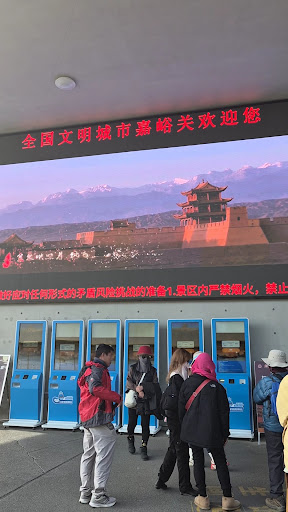
At the Pickup Point, Guide got our tickets from the Tourist Service Centre. The compound is big, with many advertisement and stalls with rows of wall on both sides art copper tooling pictures on “Journey to the West”, some historical classics & the famous Chinese Opium War Viceroy of Liangguang, Commissioner Lin Xezu.
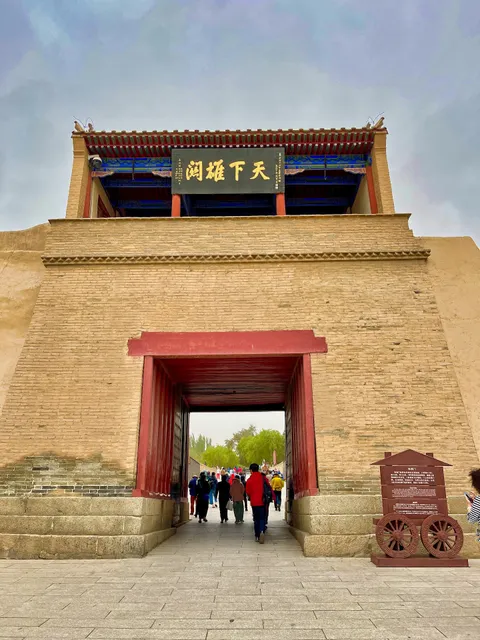
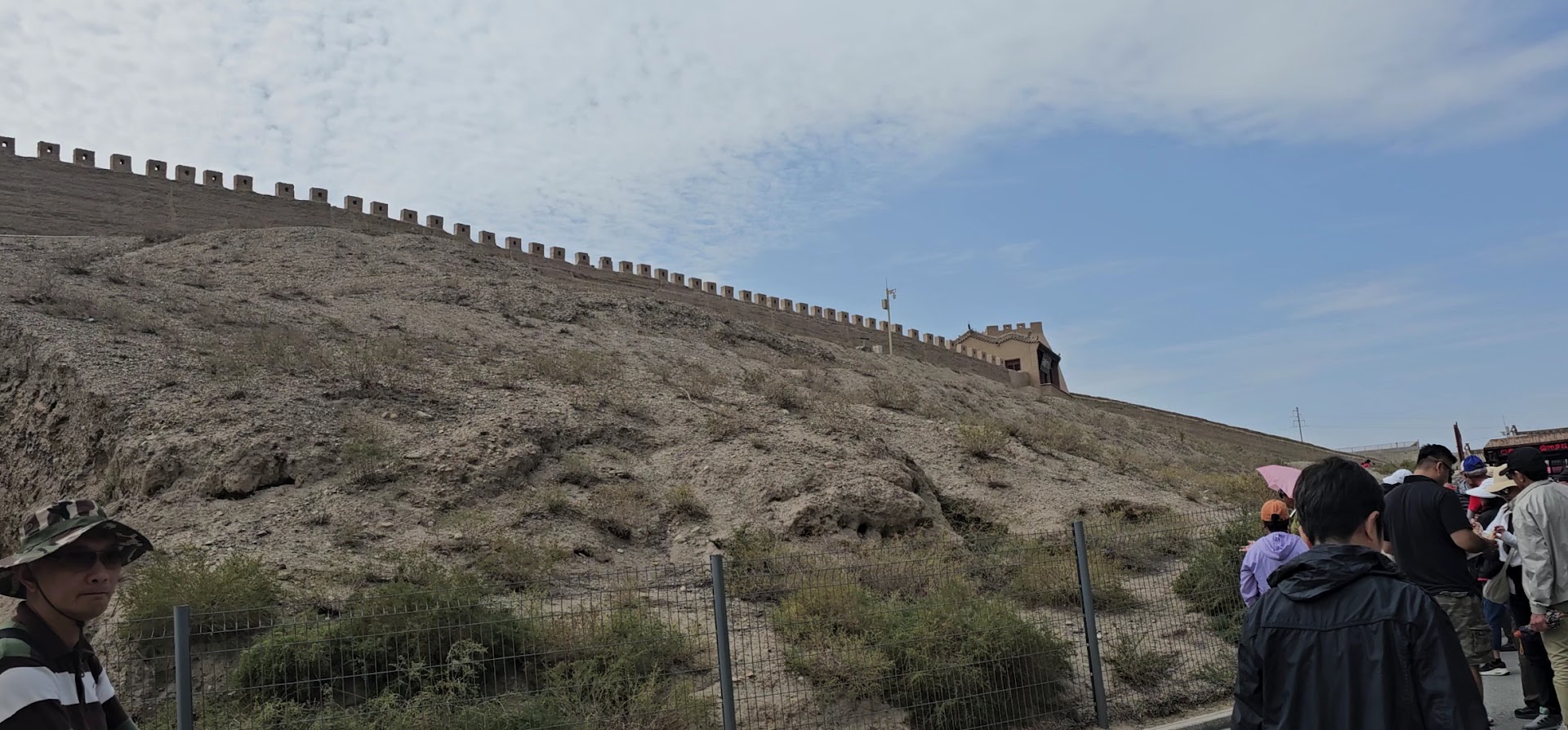
The bus took us to the entrance of Jiayuguan Pass, met General Fengshen statue (the constructor for Jiayuguan Pass) , walked through many food stalls, finally ticket checks into the grounds of Jiayuguan Fortress. We enter through the Gate of Enlightment , inside tourist Map Guide are displayed, all about the history on this Fortress.
There is a Great Wall Culture & Creative Museum for tourists to buy some souvenirs to bring home. For those who did not prefer to have a local guide, they could rent an Audio Guide from a stall nearby.
At the Guandi Temple entrance , a 15 mins live performance attracted many tourists. After they dispersed, a tour inside the Guandi Temple to see all the statues & paintings on walls.
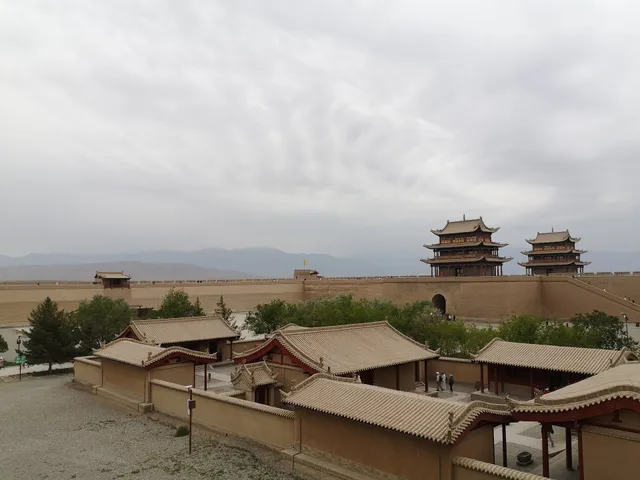
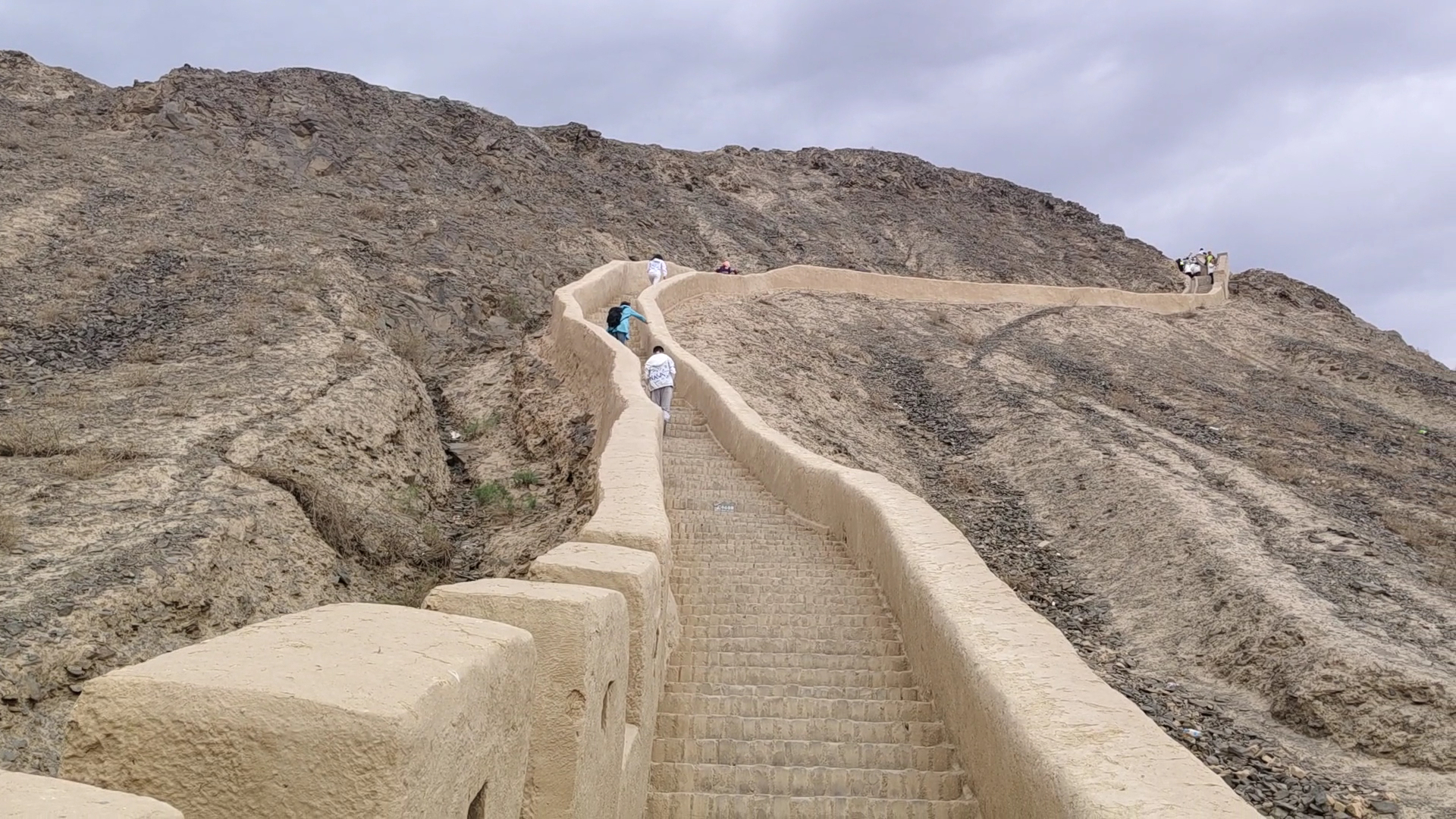
From the Gate, there are horse lanes with steps leading up to the top where we can wonder around. From here we had the opportunities to watch the live soldiers performances on their battle ground.
At the exit , we were greeted by a live performance from the local uighers, and some camels waiting for us to take a ride or photography session. At the same time , there are the exciting 4 wheel motor riding to take a look at Jiayuguan Pass from the Gobi Desert. Indeed a commercialised Jiayuguan Pass !!!
All in all ,we can see that several restorations has been done to protect the structure of this fort , towers and walls, but there are still some in its...
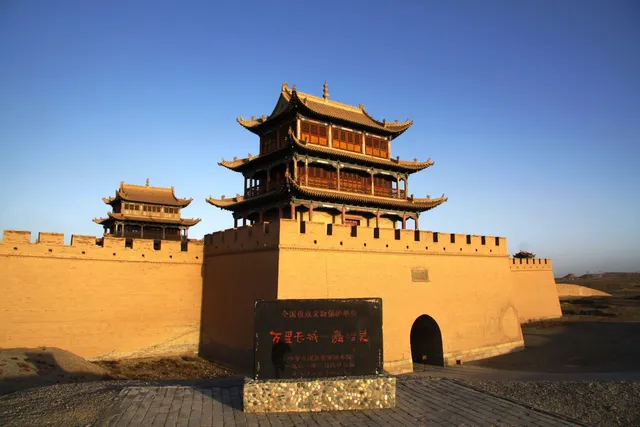
Read moreJiaYuGuan was built in Ming dynasty (1368~1644BC), started build in year 1372, earlier than another immigration checkpoint SanHaiGuan (1381). The reason of build at here was the snow-covered QiLian mountain and the rolling Hei mountain, which the distance between is just 30 chinese miles between, make this a strategic location for a custom border. Here is the most narrow flatland of HeXi corridor (HeXi corridor named after the mother river of China, Huang river. A narrow flatland west of the Huang river) aka. GanShu corridor. It's a battle field of ancient China (from Han Dynasty until Ming) with other foreigners. After Ming Dynasty General FengSheng regain HeXi corridor, he choose to establishes the checkpoint at here, took 168years it form a large scale city, good are imported from the west like grapes, carrot, cabbage, horses, sesame, garlic, glass, cotton, pearl, statue, diamond, iron...etc, and also western religion. And silk, silver, coral, tea leaf, sugar, china, bamboo craft and bronze vessel was exported to the west, establishing the silk route. The silk road was named by Ferdinand von Richthofen in 1877, a German traveler, Geographer and Scientist. JiaYuGuan defended with three-level of fortress and several defense lines. The inner city and the trench out the city strengthen the checkpoint to be...
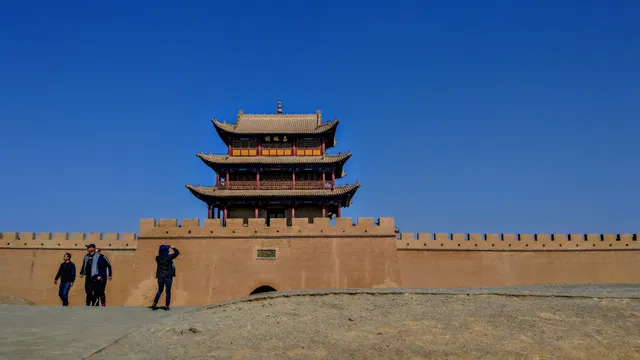
Read moreAfter lunch, time to take a walk at the great wall. It is the west end of the Ming dynasty great wall. The 嘉峪关 represents the end of the Great wall along the silk road. It is also the main passes of the Great wall during the Ming dynasty that foreign merchants and envoys from central Asia and west Asia mostly entered China through. A famous legend recounts the meticulous planning involved in the construction of the pass. According to legend, when Jiayuguan was being planned, the official in charge asked the designer to estimate the exact number of bricks required and the designer gave him a number (99,999). The official questioned his judgment, asking him if that would be enough, so the designer added one brick. After the project was completed, there was only one brick left over. The quick-witted architect claimed the brick was a magical guardian placed by a supernatural being to ensure the stability of the fortress, and that its removal would cause the entire structure to collapse. Unwilling to take the risk, the supervisor allowed the brick to remain in its place. The brick can still be seen on a ledge on the inner gate tower today. Not as majestic as the great wall in Beijing but one might not visit this part of the...
Read more