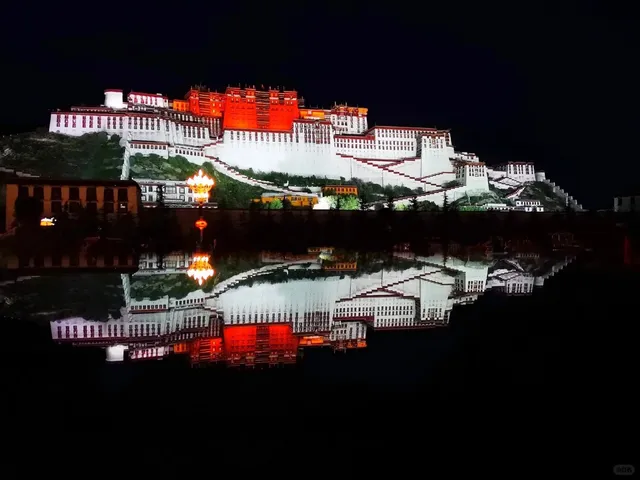
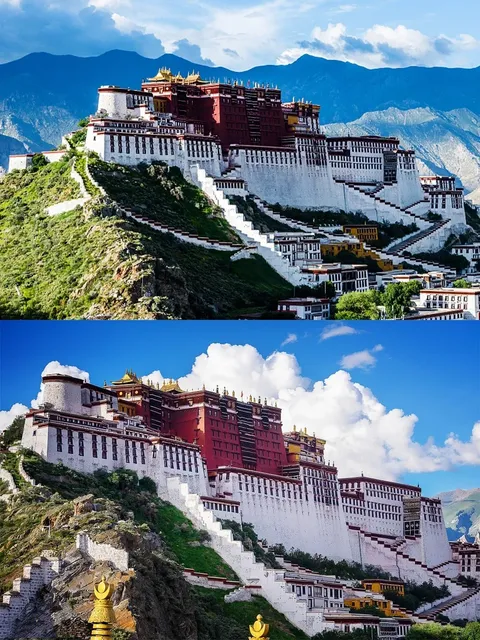
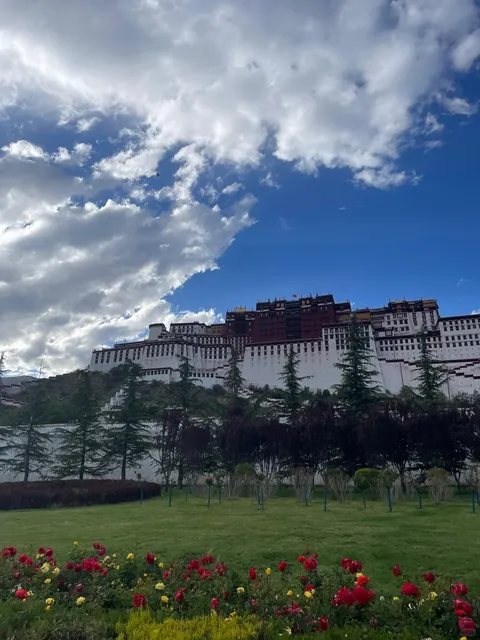
The Potala Palace in Lhasa, Tibet, is a truly iconic and breathtaking landmark that stands as a symbol of Tibetan culture, spirituality, and architectural brilliance. As a Google Local Guide, I highly recommend visiting this awe-inspiring site, which offers a profound and unforgettable experience.
The Potala Palace is not just an architectural marvel but a sacred site steeped in Tibetan Buddhism. Serving as the winter residence of the Dalai Lama until 1959, it holds immense historical and religious importance. The palace is filled with chapels, statues, and relics that tell the story of Tibet’s spiritual heritage. Walking through the corridors and chambers, you can feel the deep sense of reverence and tranquility that permeates the entire complex.
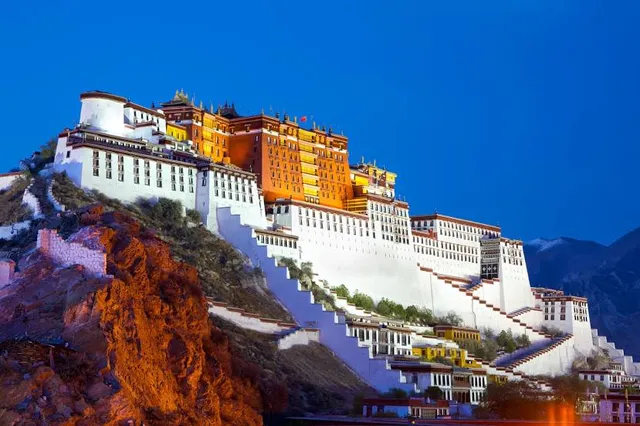
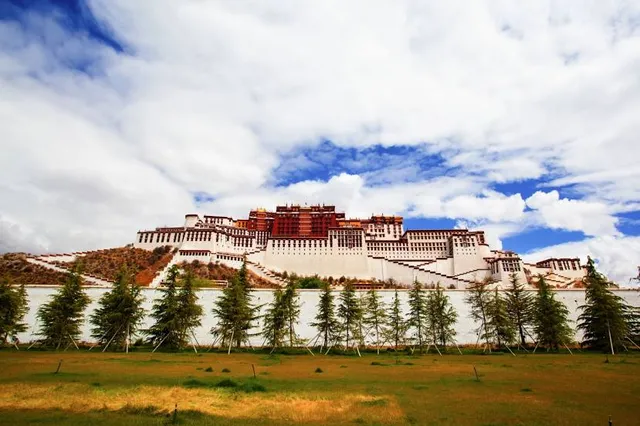
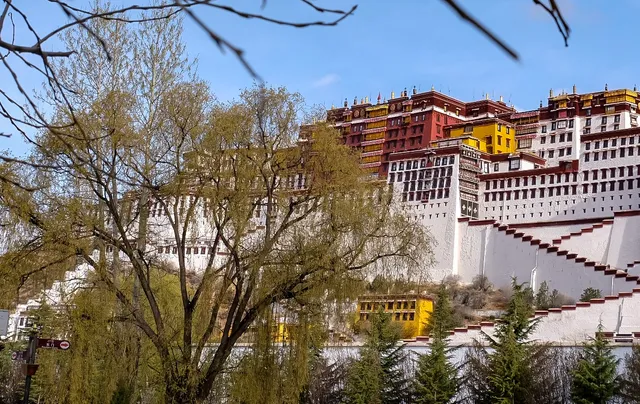
Perched atop Marpo Ri (Red Mountain) at an altitude of 3,700 meters, the Potala Palace is a stunning example of traditional Tibetan architecture. The palace complex is divided into the White Palace, which served as the administrative quarters, and the Red Palace, which is dedicated to religious study and prayer. The intricate woodwork, vibrant murals, and gilded roofs are a testament to the craftsmanship and devotion of those who built it. The sheer scale and grandeur of the palace are awe-inspiring, making it a must-see for anyone interested in history and architecture.
The Potala Palace offers some of the most spectacular views in Lhasa. From the top, you can see the entire city, the surrounding mountains, and the Lhasa River. The contrast between the bright blue sky, the whitewashed walls of the palace, and the lush green landscape below creates a picture-perfect scene that will stay with you long after your visit.
Exploring the Potala Palace is like stepping back in time. The palace houses countless treasures, including ancient manuscripts, religious artifacts, and priceless works of art. Each room and hall has its own unique story, offering a glimpse into the life and times of Tibet’s spiritual leaders. The sense of history is palpable, and it’s impossible not to be moved by the rich cultural legacy preserved within these walls.
Despite its remote location, the Potala Palace is surprisingly accessible, with well-organized tours available for visitors. It’s important to note that due to the high altitude, some visitors may experience altitude sickness, so it’s advisable to take it slow and allow time to acclimatize. The palace can get crowded, especially during peak tourist season, so booking tickets in advance is recommended. The staff and guides are knowledgeable and helpful, ensuring that your visit is both informative and enjoyable.
Visiting the Potala Palace is a once-in-a-lifetime experience that leaves a lasting impression. It’s a place where history, spirituality, and natural beauty converge to create a truly unique and inspiring destination. Whether you’re a history enthusiast, a spiritual seeker, or simply someone who appreciates incredible architecture and breathtaking views, the Potala Palace is a must-visit. It stands as a testament to the resilience, faith, and creativity of the Tibetan people, and its grandeur is something that every traveler should experience firsthand. Highly...
Read moreLhasa, the capital of the Tibet Autonomous Region, lies on the Lhasa River's north bank in a valley of the Himalayas. Rising atop Red Mountain at an altitude of 3,700m, the red-and-white Potala Palace once served as the winter home of the Dalai Lama. The palace’s rooms, numbering around 1,000, include the Dalai Lama’s living quarters, as well as murals, chapels and tombs. Lhasa ལྷ་ས་གྲོང་ཁྱེར། · 拉萨市 The city boundaries roughly correspond to the basin of the Lhasa River, a major tributary of the Yarlung Tsangpo River. It lies on the Lhasa terrane, the last unit of crust to accrete to the Eurasian plate before the continent of India collided with Asia about 50 million years ago and pushed up the Himalayas. The terrain is high, contains a complex pattern of faults and is tectonically active. The temperature is generally warm in summer and rises above freezing on sunny days in winter. Most of the rain falls in summer. The upland areas and northern grasslands are used for grazing yaks, sheep and goats, while the river valleys support agriculture with crops such as barley, wheat and vegetables. Wildlife is not abundant, but includes the rare snow leopard and black-necked crane. Mining has caused some environmental problems.
The 2000 census gave a total population of 474,490, of whom 387,124 were ethnic Tibetans. The Han Chinese population at the time was mainly concentrated in urban areas. The prefecture-level city is traversed by two major highways and by the Qinghai–Tibet railway, which terminates in the city of Lhasa. Two large dams on the Lhasa River deliver hydroelectric power, as do many smaller dams and the Yangbajain Geothermal Field. The population is well-served by primary schools and basic medical facilities, although more advanced facilities are lacking. Tibetan Buddhism and monastic life have been dominant aspects of the local culture since the 7th century. Most of the monasteries were destroyed during the Cultural Revolution, but since then many have been restored and serve as tourist attractions. Lhasa lies in south-central Tibet, to the north of the Himalayas. The prefecture-level city is 277 kilometres (172 mi) from east to west and 202 kilometres (126 mi) from north to south. It covers an area of 29,518 square kilometres (11,397 sq mi).[citation needed] It is bordered by Nagqu City to the north, Nyingchi City to the east, Shannan/Lhoka City to the south and Xigazê City to the west.[4] The prefecture-level city roughly corresponds to the basin of the Lhasa River, which is the center of Tibet politically, economically and culturally.[5] Chengguan District is also the center of Tibet in terms of transport, communications, education and religion, as well as being the most developed part of Tibet and a major tourist destination with sights such as the Potala Palace, Jokhang and...
Read moreEnclosed within massive walls, gates and turrets built of rammed earth and stone the White and Red Palaces and ancillary buildings of the Potala Palace rise from Red Mountain in the centre of Lhasa Valley at an altitude of 3,700 metres. As the winter palace of the Dalai Lama from the 7th century CE the complex symbolizes Tibetan Buddhism and its central role in the traditional administration of Tibet. The White Palace contains the main ceremonial hall with the throne of the Dalai Lama, and his private rooms and audience hall are on the uppermost level. The palace contains 698 murals, almost 10,000 painted scrolls, numerous sculptures, carpets, canopies, curtains, porcelain, jade, and fine objects of gold and silver, as well as a large collection of sutras and important historical documents. To the west and higher up the mountain the Red Palace contains the gilded burial stupas of past Dalai Lamas. Further west is the private monastery of the Dalai Lama, the Namgyel Dratshang.
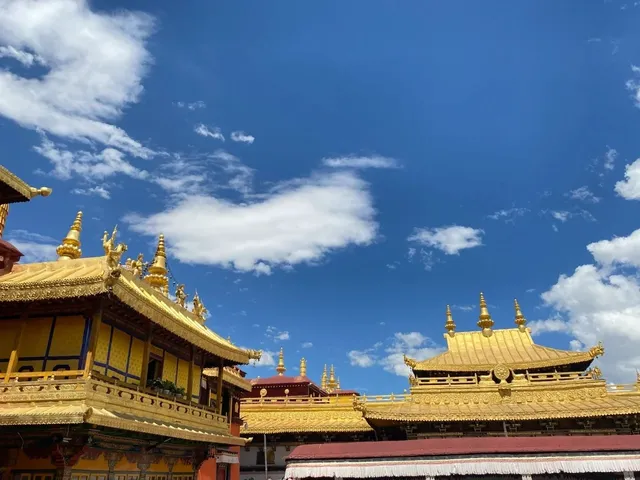
The Jokhang Temple Monastery was founded by the regime also in the 7th century, in order to promote the Buddhist religion. Covering 2.5ha in the centre of the old town of Lhasa, it comprises an entrance porch, courtyard and Buddhist hall surrounded by accommodation for monks and storehouses on all four sides. The buildings are constructed of wood and stone and are outstanding examples of the Tibetan Buddhist style, with influences from China, India, and Nepal. They house over 3,000 images of Buddha and other deities and historical figures along with many other treasures and manuscripts. Mural paintings depicting religious and historical scenes cover the walls.
Norbulingka, the Dalai Lama's former summer palace constructed in the 18th century, is located on the bank of the Lhasa River about 2km west of the Potala Palace in a lush green environment. It comprises a large garden with four palace complexes and a monastery as well as other halls, and pavilions all integrated into the garden layout to create an exceptional work of art covering 36ha. The property is closely linked with religious and political issues, having been a place for contemplation and for signing political agreements.
The Historic Ensemble of the Potala Palace, Jokhang Temple and Norbulingka embody the administrative, religious and symbolic functions of the Tibetan theocratic government through their location, layout and architecture. The beauty and originality of the architecture of these three sites, their rich ornamentation and harmonious integration in a striking landscape, contribute to their Outstanding...
Read more