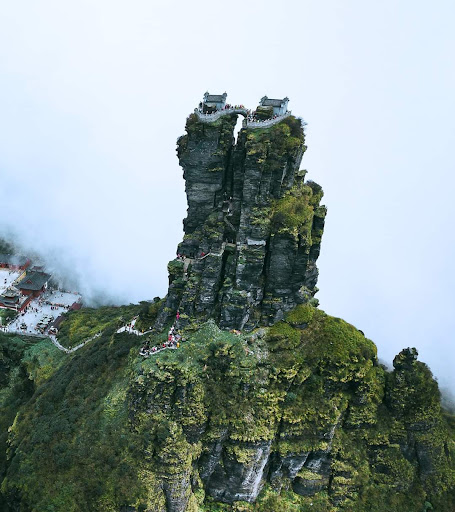
Mount Fanjing, or Fanjingshan, is part of the Wuling mountain range in southwestern China’s Guizhou province. Named as a Unesco's World Natural and Cultural Heritage Site in 2018, the mountain is home to a conservation area, a nature reserve, and a number of Buddhist temples—it has been considered a sacred site for centuries.
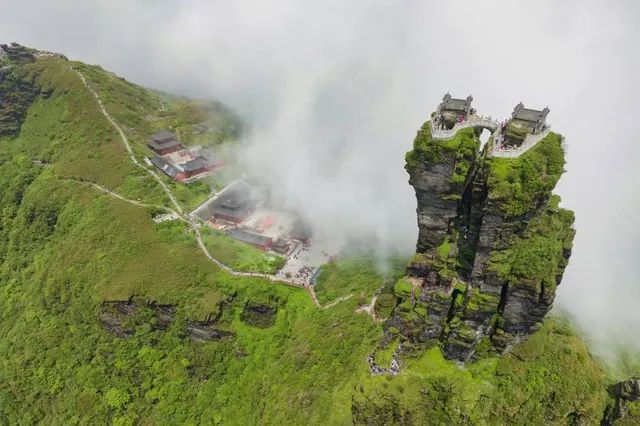
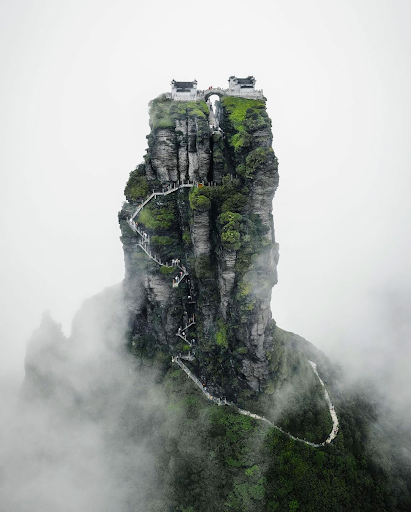
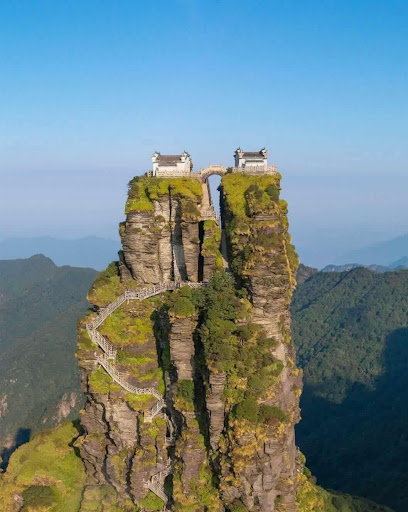
Fanjingshan Temple is actually the 2 next-door temples, namely Temple of the Buddha (释迦殿) & Maitreya Temple (弥勒殿), on the peak of the Red Clouds Golden Summit, which rises more than 330 feet (100.6 meters) above the surrounding mountaintop. One is for worshipping Sakiymuni representing the present and the other is for Maitreya representing the future.
The 2 temples were originally built about over 500 years ago in Ming Dynasty (1368-1644), and the present temples have been rebuilt in Qing Dynasty (1644-1912) according to its original look, and more new temples also were built along the mountain way to “Red Clouds Golden Summit”, including Cheng’en Temple, Baoguo Temple, Longquan Temple, etc.
There is only one hall for each temple, which is built with layers of stone pieces into 17.7 feet (5.4 meters) wide and 18.2 feet (5.55 meters) deep. There is a short stonebridge linking between the two temples above the deep Gold Sword Gorge.
Fanjingshan is an important landmark for Buddhists as they believe it's where the Maitreya Buddha found "enlightenment".
In 2019, National Geographic Traveler put Fanjingshan on its "Best Trips of the Year" list and described hiking up the mountain as "climbing through a sea of clouds".
To reach the temples, visitors must climb 8,888 narrow steps (with iron chains at one side, for holding) from the foot to the summit, which takes around less than 2 hours (needs much energy and not recommended for people with not-so-good physical condition or suffer acrophobia), though there is the option to ride a cable car part way up the side of the ridge.
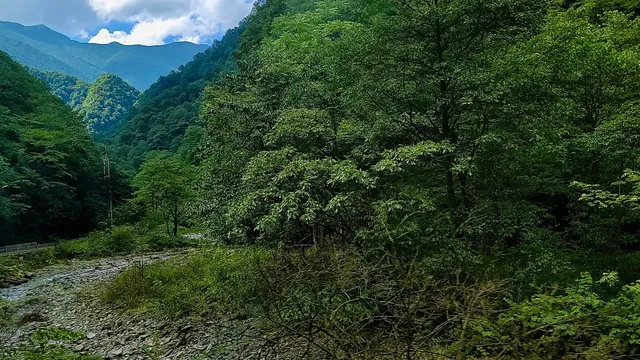
Because Fanjingshan remained relatively isolated for so many years, it has an astonishing amount of biodiversity. With altitudes ranging from 1,640 feet (500 meters) to 8,432 feet (2,570 meters) above sea level, it's home to over 2,000 endemic plant species (31 of which are endangered) and hundreds of endangered or/and threatened animals, including Grey snub-nosed monkey, Chinese giant salamander, Forest musk deer and Reeve’s pheasant... In fact, some species date to the Tertiary period—between 66 million and 2 million years ago.
To see Fanjingshan Temple, visitors need to get to Tongren City first and transfer to Fanjingshan by taxi or local bus.
Tongren Fenghuang Airport has flights to/from Beijing (2.5 hours), Shanghai (2.5 hours), Guiyang (1 hour), Guilin (1 hour), Kunming (2 hours), Hangzhou (2.5 hours), Guangzhou (1.5 hour), Shenzhen (1.5 hour), Xiamen (2 hours), etc. Besides, Tongren South Railway Station is linked by bullet trains with Guiyang (2 hours), Chengdu (5 hours), Chongqing (4 hours), Guangzhou (6 hours), Kaili (1 hour), Changsha (3.5 hours), etc.
From Tongren, visitors can take a local taxi to Fanjingshan for about 1.5 hour. Besides, some direct buses are available from both airport and railway station to Fanjingshan.
Entry to this site costs 110 yuan for adults ($17). The 3,400-metre cable car ride costs 90 yuan ($14) for a return journey (half an hour each way). Whatever season you visit, the advice is to pack some warm clothes and waterproofs.
Photos courtesy of Internet and...
Read more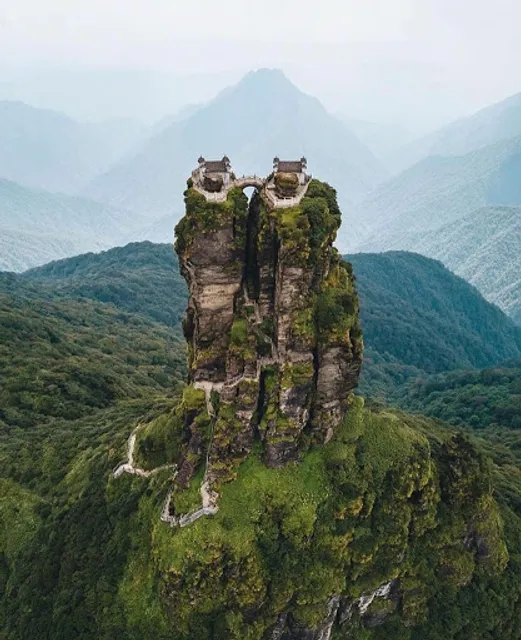
 Learn more insights from Wanderboat AI.