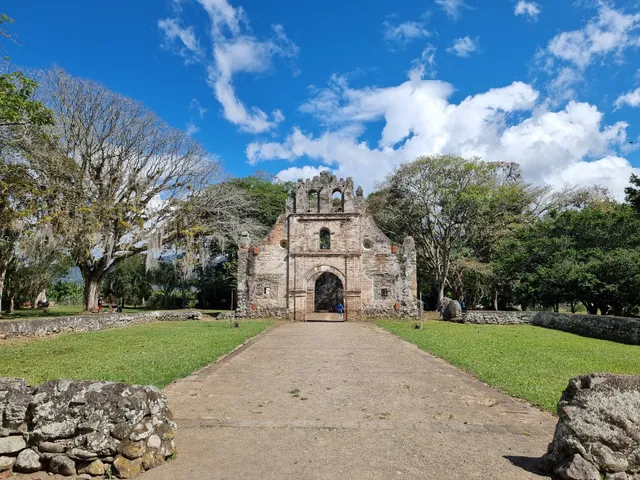
We decided to visit the Ruins of Ujarras on our recent trip to CR. This park was very well maintained, clean, and enjoyable to view the 1500's era Catholic Church ruins. The park had no entrance fee and did have bathrooms (but beware, there was no paper or soap in the restrooms).
What to do: The best things to do would be to bring a picnic lunch as they have several park benches and tables available. It is very kid friendly as there is a small playground nearby. For us, we were one of the very few visitors in the area, and the who park seemed very tranquil. We were observing that it had a unique feel of being a great place for a retreat (including the facilities at the mirador).
Driving: The road to the park is all paved, and there is a "Miarador" (lookout) on your way from Cartago (San Jose area) offering amazing views of the ruins at the base of the valley between the mountains. While the road is paved, it has many curves common to the Costa Rican mountains.
I wouldn't say it is a 'must-do' in Costa Rica as there are so many things to do, but if you have an afternoon to go and visit the drive, views, and...
Read moreBeautiful spot for a short stop.
A beautifully maintained garden and historical site. The building itself was very impressive and we'll maintained. You can walk into the church and touch the stones which is not often the case with histori sites.
In addition to the church there is a beautiful garden with a wide variety of plants. Walk behind the church to see an award winning tree (but don't climb it (even though that is all I wanted to do when I saw it))
There is a playground for kids and shady picnic spots. There is not cost to enter but you do have to show ID to get in. No coat for parking either. The bathrooms were clean.
I highly recommend this spot if you are...
Read moreEsta antigua construcción de "calicanto" (mampostería de cal y piedra) es todo lo que queda de la primera iglesia de calicanto construida en Costa Rica durante el siglo XVII, aproximadamente entre 1686 y 1693. Es de gran interés para el turismo. Este templo se convirtió desde sus orígenes en un importante centro de peregrinaciones. En tiempos prehispánicos fue lugar de cierta importancia, donde existía un asentamiento de los indígenas huetares. Su nombre es una castellanización del nombre del rey huetar Uxarrací. A principios de 1563 reinaba en Ujarrás un monarca llamado Tuxustí, que junto con otros reyes indígenas visitó el 1º de enero de ese año al Alcalde Mayor Juan Vázquez de Coronado en la ciudad de Garcimuñoz. Para mediados de 1564, sin embargo, el pueblo de Ujarrás, junto los de Atirro, Corrosí y Turrialba, se había rebelado contra la autoridad española. El español Agustín de Hinojosa efectuó una correría a Ujarrás, y el propio Vázquez de Coronado fue al lugar para tratar de pacificar a los indígenas. Sin embargo, no tardaron en producirse nuevos roces a fines de febrero de 1568 otro rey de Ujarrás, Turichiquí, encabezó una gran sublevación contra el Alcalde Mayor Pedro Venegas de los Ríos, en la que participaron los indígenas del Guarco, Turrialba, Ujarrás,...
Read more