The Castle
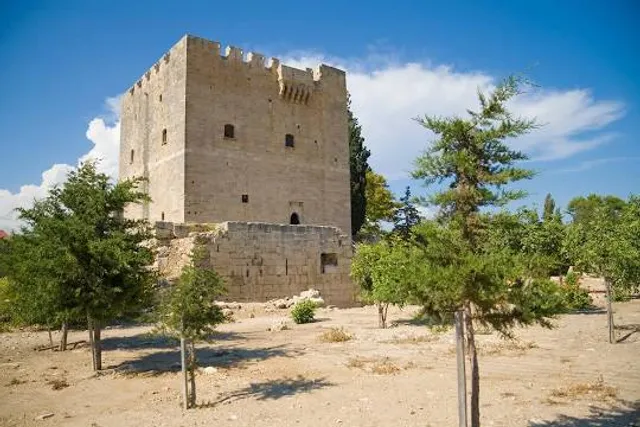
The original phase of the Castle is moor probably dated to the beginning of the 13th century when Kolossi was given to the Order of St. John of Jerusalem (Hospitallers) by the Lusignan King Hugh I. Remains of this original phase are still preserved in the east, south, southeast and west side of the Castle. In 1454, the Grand Commander of the Order, Louis de Magnac, built a new stronger castle that can be seen today.
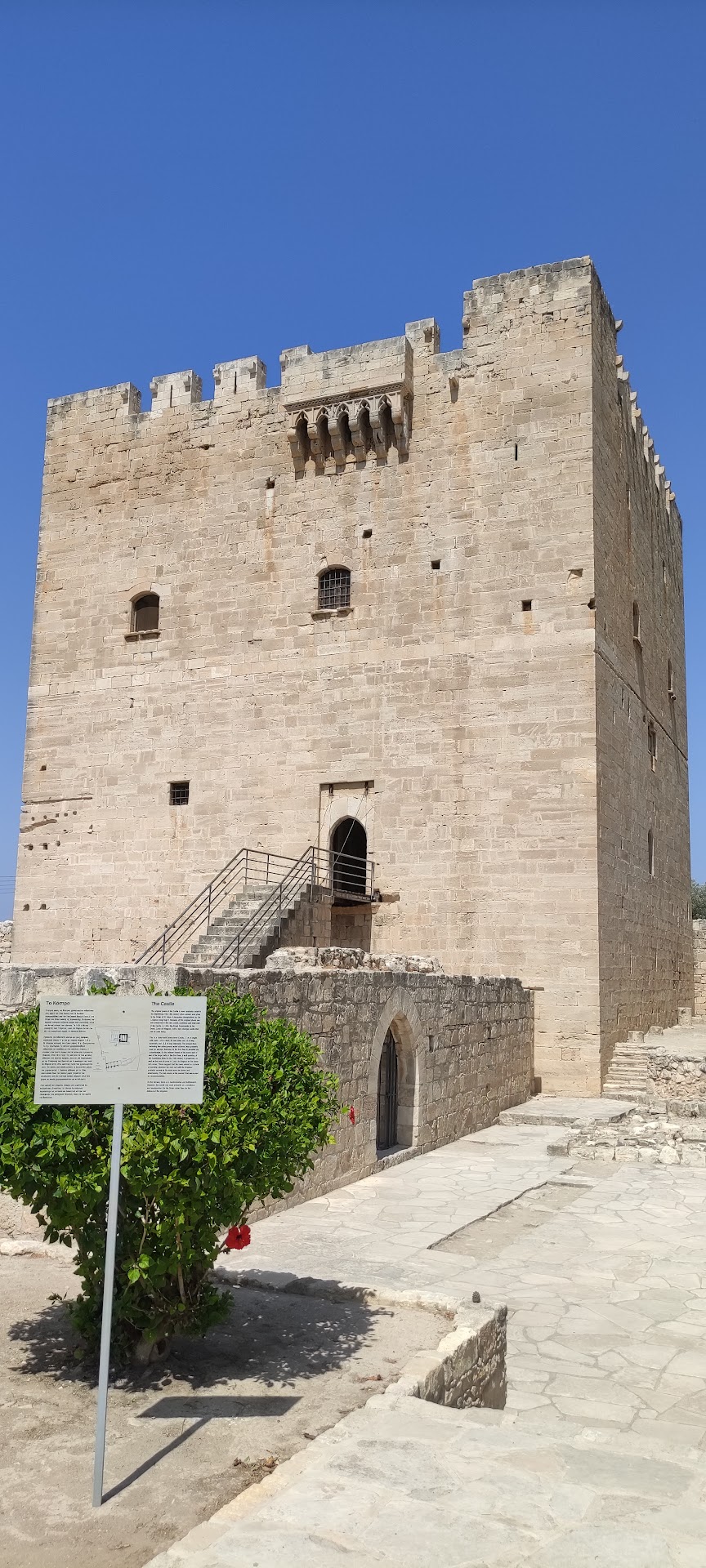
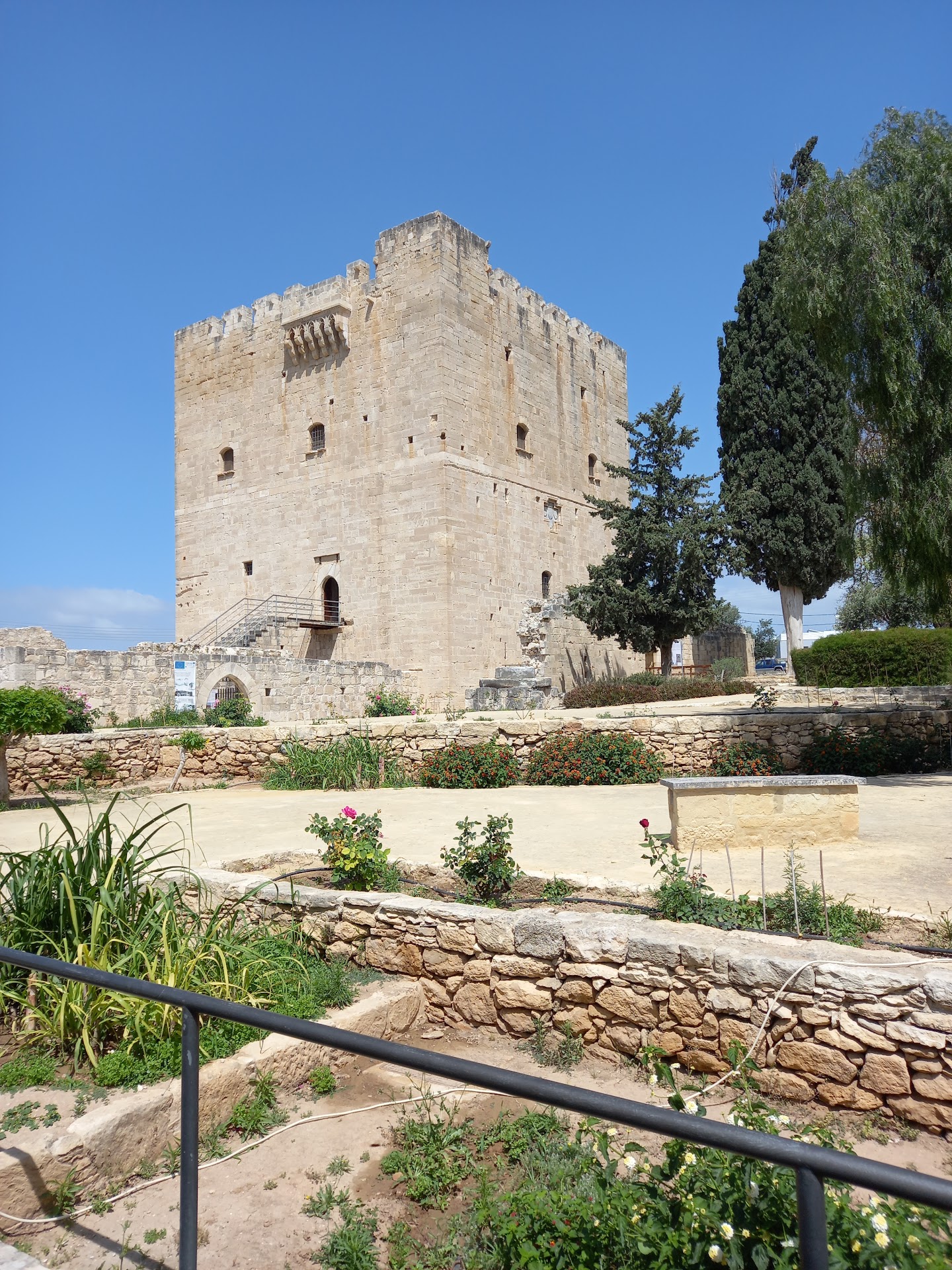
This is a stone-built three-storey Castle, 21 m in height with walls 1.25 m thick. Its four sides are 16 m long externally and 13.5 m long internally. The ground floor, including two underground water cisterns, was probably used for storage. Entrance to the first floor is possible via a drawbridge. On the interior fanade of the south wall of one of the large halls of the first floor, a wall-painting of the Crucifixion dated to the 15th century is preserved, as well as the coat-of-arms of Louis de Magnac on the lower left corner. These suggest that the room served as a place of worship, whereas the next hall with the fireplace probably served as the main area for dining and entertaining. The two rooms of the second floor were used for accommodation.
On the terrace, there is a machicolation and battlements. However, the Castle was used primarily as a residence and headquarters for the Order rather than for the defence of...
Read moreThis is structure built in the 1300s, over the top of a previous structure that had been damaged by earthquakes.
It is an imposing building standing higher than anything else in the area, as a demonstration of power and authority.
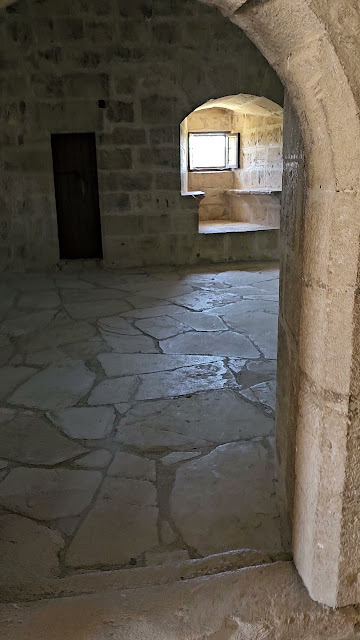
There are steps that lead up into the main area of the building; once inside, it feels cooler. You can see the thickness of the walls by the depth of the windows.
Once inside the main building, turn around; you'll see a fresco on the wall. Due to the age, it has deteriorated, and now has a plastic shield to provide some protection against human hands; but it still shows an indication of what it might have looked like.
There are steps down into the cellar, but be warned, many people catch their heads as the descend.
There is also a spiral staircase that leads up to the second floor, and the roof. It is worth making the effort to climb up, as you get a great view.
However, be aware that there is only the one staircase, and you will have people trying to ascend and descend at the same time. As the steps are narrow, it can get a little difficult to pass; and it needs a certain amount of patience, care and goodwill to do so safely.
Sadly this monument is unsuitable for those with limited mobility.
There is a small shop / cafe nearby with a wide range of touristy items, snacks and drinks at very...
Read moreKolossi Castle (Κάστρο Κολοσσίου) is a remarkable historical gem in Greece that offers visitors a truly beautiful and enriching experience This medieval fortress, with its impressive architecture and fascinating history, stands as a testament to the enduring legacy of the region. As soon as you arrive, you're greeted by the castle's striking appearance, set against a backdrop of lush greenery and blue skies, which makes for a stunning first impression.
The interior of the castle is equally captivating, with well-preserved walls and intriguing details that take you back in time. Exploring the different levels and rooms gives you a glimpse into its historical significance, particularly its connection to the Knights of the Order of St. John. The panoramic views from the top of the castle are breathtaking, offering a sweeping view of the surrounding landscape that is truly unforgettable.
The castle grounds are serene and inviting, perfect for a leisurely stroll or taking memorable photographs. It's an ideal destination for history enthusiasts, architecture lovers, and families alike. The experience is not only educational but also deeply inspiring, leaving you with a sense of wonder and admiration.
A visit to Kolossi Castle is highly recommended—it’s a place that combines beauty, history, and charm in...
Read more