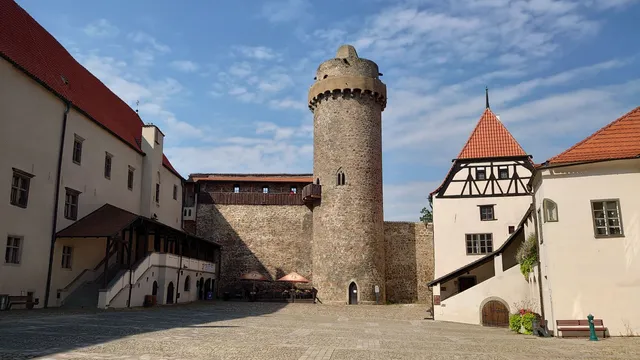
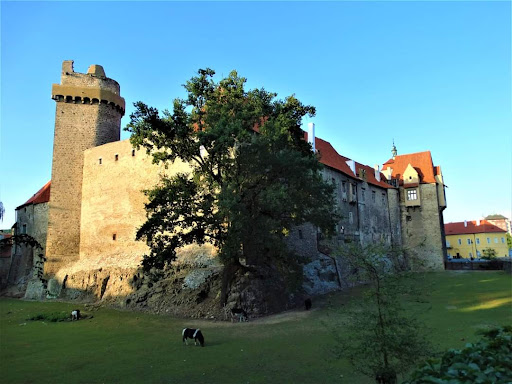
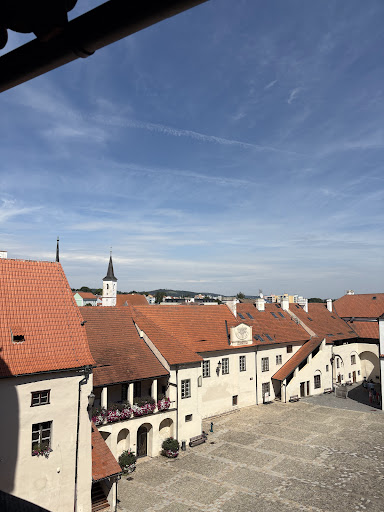
Hrad byl založen mezi léty 1220-1235 a v roce 1243 daroval Bavor I. spolu s manželkou Bolemilou východní polovinu hradu řádu maltézských rytířů, který zde zřídil komendu. V první fázi stavby (1220-1235) vzniklo hlavní opevnění, včetně hlubokého příkopu na jižní a západní straně, západní část kostela s věží, budova ambitu a palác s kapitulní síní. V letech 1260-1280 za Bavora II. vznikl nový palác s věží a byly zaklenuty ambity. Počátkem 14. století přestavěl zvíkovský purkrabí Bavor III. západní opevnění a původně hranolovou věž na dnešní Rumpál. Roku 1402 Johanité získali celý hrad, který byl od roku 1421 sídlem velkopřevorů. V hradních premisách najdete jak znaky gotické architektury (kostel sv. Prokopa, věž Rumpál), renesanční (věž Jelenka), tak klasicistní (průčelí východní části zámku, někdejší velkopřevorská rezidence). Dnes na hradě sídlí mimo jiné Muzeum středního Pootaví.
The castle was founded between 1220-1235 and in 1243 Bavarian I. together with his wife Bolemila donated the eastern half of the castle to the Knights of Malta, who set up their seat here. In the first phase of the construction (1220-1235), the main fortification objects were built, including a deep ditch on the south and west sides, the western part of the church with a tower, the cloister building and the palace with the capitular hall. In the years 1260-1280 during the reign of Bavor II. a new palace with a tower and vaulted cloisters were built. At the beginning of the 14th century, the Zvíkov burgrave Bavarian III. rebuilt the western fortifications and original prismatic tower to today's circular Rumpál tower. In 1402 the Johansites acquired the entire castle, which was the seat of the Grand Priors since 1421. In the castle premises you will find both the features of Gothic architecture (St. Prokop's Church, Rumpál Tower), Renaissance (Jelenka Tower), and Classicist (facade of the eastern part of the chateau, former Grand Priory Residence). Today the castle houses (among other things) the Museum of Central...
Read moreSelf-guided tour. Museum is well organized and easy to follow. Not only does it display relevant relics from the castle but also showcases items that have been relevant to the local town and culture over the years. Great view from the tower; note that the staircase leading up is very narrow so this part of the tour not recommended for...
Read moreJeden z najstarszych czeskich zamków wybudowanych nie przez króla. W początku XIII wieku zamek wybudował Bavor I. Był on najwyższym komornikiem królewskim. W 1243 roku Bavor I podarował część zamku zakonowi Joannitów. Tak zaczęła się ponad 700 letnia historia władania zamkiem przez Zakon Maltański. 2. Zakon obronił zamek przed husytami w 1420 roku wytrzymując 14 dniowe oblężenie samego Jan Żiżki. Od tego czasu Strakonicki zamek był główną siedzibą joannitów w Czechach. 3. Joannici nie obronili jednak zamku przed Szwedami w 1619 i 1641 roku w czasie wojny 30-letniej. 4. Po odzyskaniu niepodległości rząd czechosłowacki zmusił joannitów w 1925 roku do sprzedaży zamku. Ostatni wielki przeor Antoni Voracek starał się pełnić swoją rolę aż do 1948 roku kiedy został aresztowany. 5. Obecnie zamek jest po części własnością miasta, własnością województwa, własnością parafii i osoby prywatnej. Do tego o zwrot zamku wystąpił...
Read more