HTML SitemapExplore

Temple of Nefertari — Attraction in Abu Simbel City

Name
Temple of Nefertari
Description
Nearby attractions
Abu Simbel Temples
Abu Simbel, Aswan Governorate 1211501, Egypt
Nearby restaurants
Nearby hotels
تويا
Ramsis, Abu Simbel, Aswan Governorate 1211123, Egypt
Related posts
Keywords
Temple of Nefertari tourism.Temple of Nefertari hotels.Temple of Nefertari bed and breakfast. flights to Temple of Nefertari.Temple of Nefertari attractions.Temple of Nefertari restaurants.Temple of Nefertari travel.Temple of Nefertari travel guide.Temple of Nefertari travel blog.Temple of Nefertari pictures.Temple of Nefertari photos.Temple of Nefertari travel tips.Temple of Nefertari maps.Temple of Nefertari things to do.
Temple of Nefertari things to do, attractions, restaurants, events info and trip planning
Temple of Nefertari
EgyptAswanAbu Simbel CityTemple of Nefertari

Basic Info

Temple of Nefertari

8JQG+3M8, Abu Simbel, Aswan Governorate 1211501, Egypt
4.8(350)
Open 24 hours
Save
spot

Ratings & Description

Info

Cultural
Scenic
Family friendly
Accessibility
attractions: Abu Simbel Temples, restaurants:
logoLearn more insights from Wanderboat AI.

Plan your stay

hotel
Pet-friendly Hotels in Abu Simbel City
Find a cozy hotel nearby and make it a full experience.
hotel
Affordable Hotels in Abu Simbel City
Find a cozy hotel nearby and make it a full experience.
hotel
The Coolest Hotels You Haven't Heard Of (Yet)
Find a cozy hotel nearby and make it a full experience.
hotel
Trending Stays Worth the Hype in Abu Simbel City
Find a cozy hotel nearby and make it a full experience.

Reviews

Nearby attractions of Temple of Nefertari

Abu Simbel Temples

Abu Simbel Temples

Abu Simbel Temples

4.8

(7.6K)

Open 24 hours
Click for details
Get the Appoverlay
Get the AppOne tap to find yournext favorite spots!
Wanderboat LogoWanderboat

Your everyday Al companion for getaway ideas

CompanyAbout Us
InformationAI Trip PlannerSitemap
SocialXInstagramTiktokLinkedin
LegalTerms of ServicePrivacy Policy

Get the app

© 2025 Wanderboat. All rights reserved.

Posts

Your browser does not support the video tag.
amandamoniquebrownamandamoniquebrown
Save THESE sites to your Egypt list instead 👇 Yes - the Pyramids are a must see, but, they’re my least favorite ancient site in Egypt. For more impressive & authentic history, visit these: 🤍 Pyramid of Djoser - aka Step Pyramid 🖤 Saqqara - historical site next to Step Pyramid 👑 Temple of Hatshepsut - built for Queen Hatshepsut, one of only a few women pharaohs ❤️ Luxor Temple - the missing obelisk from the entrance is the one in Paris 🤍 Philae Temple - stunning temple on an island in the Nile 🖤 Abu Simbel - was moved in stone sections to be saved from flooding from a dam! Nothing compares ❤️ Karnak Temple - my fave!! 2nd largest religious site in world (1st is Angkor Wat) 👑 Temple of Nefertari - at Abu Simbel, dedicated to Rameses II’s favorite wife 🤍 Medinet Habu Temple - some of the best preserved colors I saw outdoors! 🪲 Valley of the Kings - 3,000+ year old tombs of pharaohs with paintings that look like they were completed yesterday Is Egypt on your list? #egypt #abusimbel #ancientegypt #egypttourism #egypttravel #egypttrip #egyptianhistory #luxortemple #karnaktemple #greatpyramids
Your browser does not support the video tag.
amandamoniquebrownamandamoniquebrown
Save THESE sites to your Egypt list 👇 I know you want to visit without the stress of planning it all! So comment EGYPT and I’ll send you the details to join me next April 🙌 Of course the Pyramids are a must see! But, they’re my least favorite ancient site in Egypt, which mostly says a lot about HOW MUCH Egypt has to offer: 🪲 Valley of the Kings - 3,000+ year old tombs of pharaohs with paintings that look like they were completed yesterday 🌴 Philae Temple - stunning temple on an island in the Nile 🏛️ Karnak Temple - my fave!! 2nd largest religious site in world (1st is Angkor Wat) 💧 Abu Simbel - was moved in stone sections to be saved from flooding from a dam! Nothing compares 👑 Temple of Nefertari - at Abu Simbel, dedicated to Rameses II’s favorite wife ❤️ Luxor Temple - the missing obelisk from the entrance is the one in Paris 👑 Temple of Hatshepsut - built for Queen Hatshepsut, one of only a few women pharaohs 🎨 Medinet Habu Temple - some of the best preserved colors I saw outdoors! 🤍 Pyramid of Djoser - aka Step Pyramid 🖤 Saqqara - historical site next to Step Pyramid Comment EGYPT for details on joining me next April! #egypt #abusimbel #ancientegypt #egypttourism #egypttravel #egypttrip #visitegypt #grouptravel #egypt🇪🇬
Five star CaliforniaFive star California
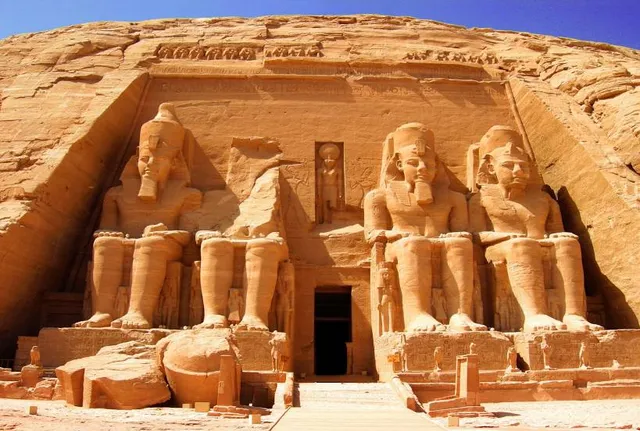
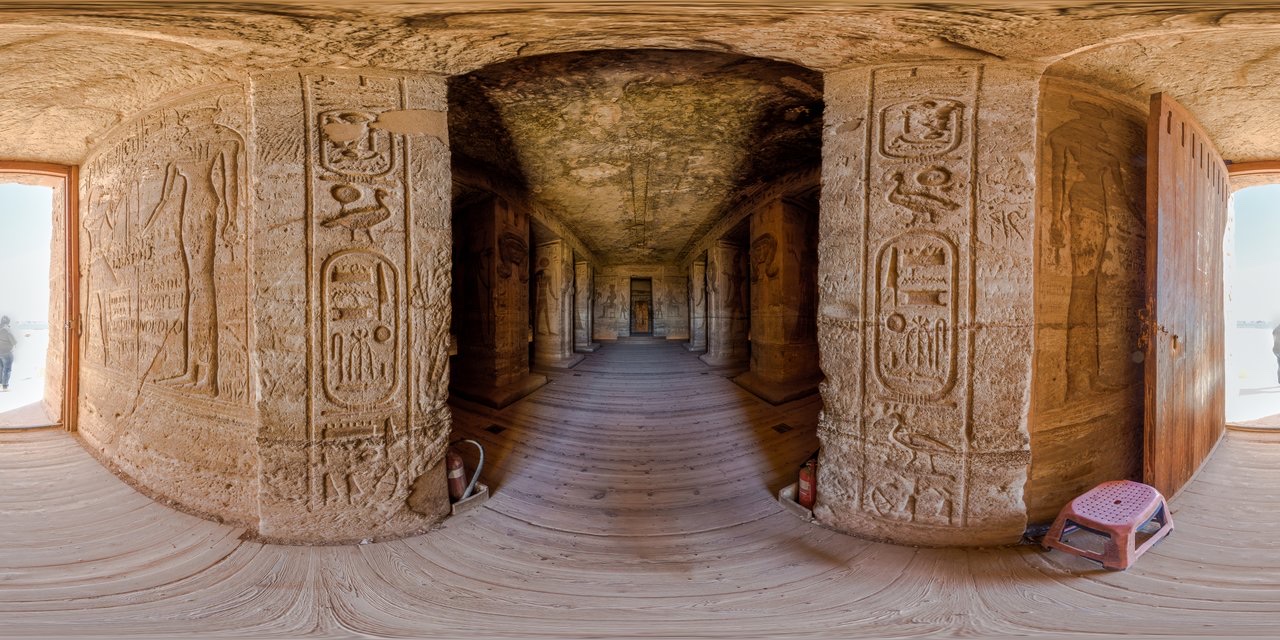
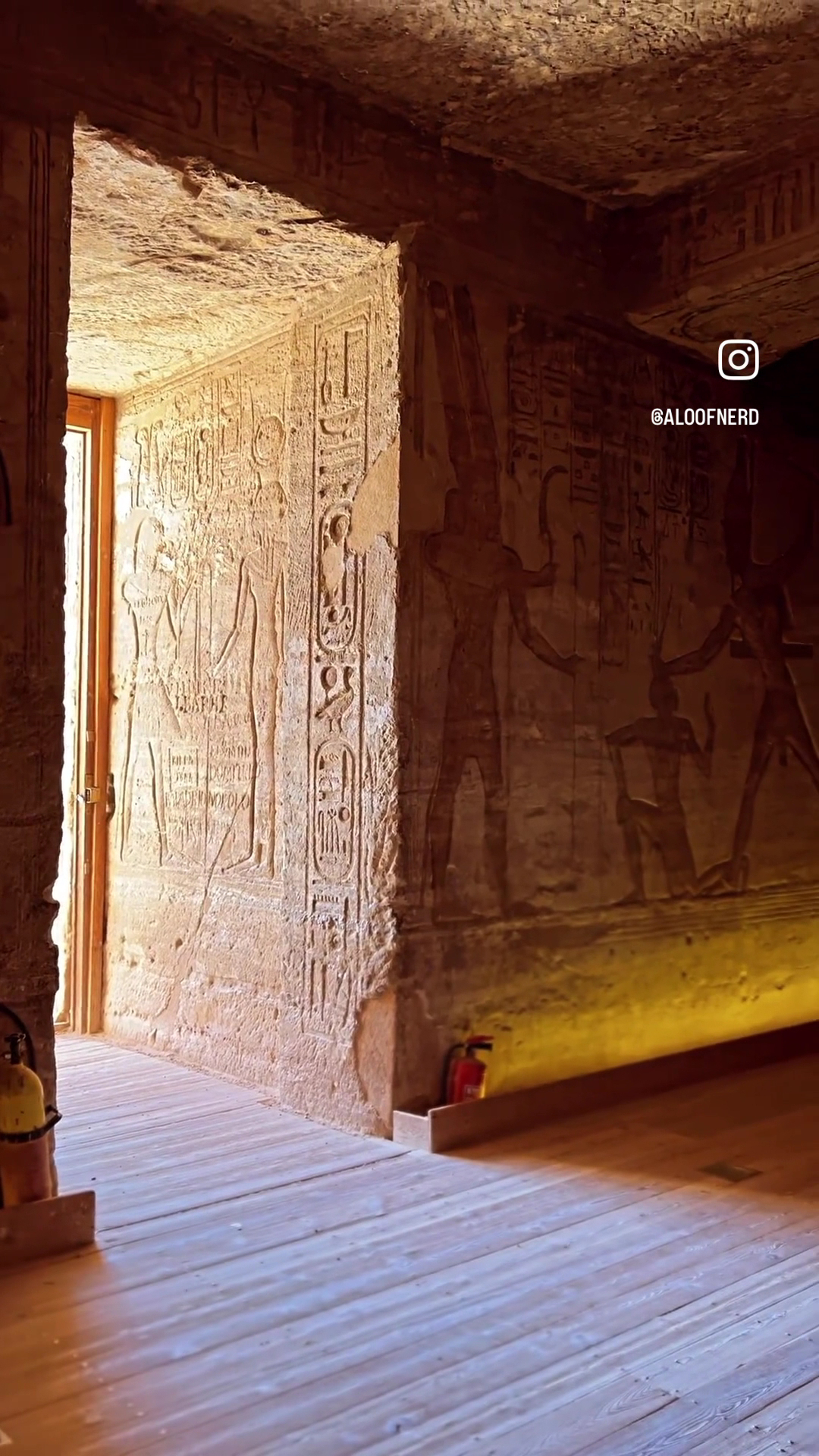
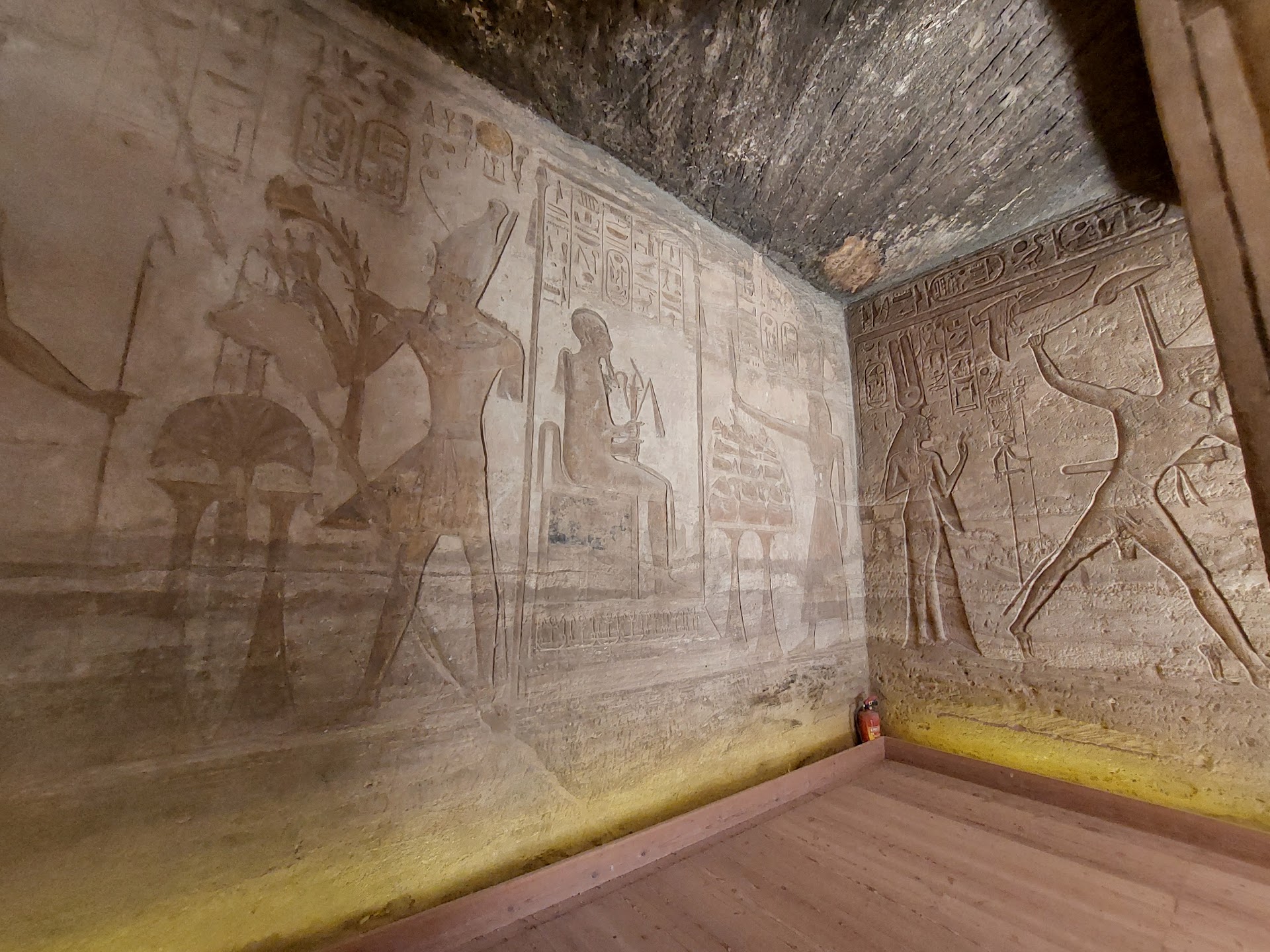
Nefertari, also known as Nefertari Meritmut, was an Egyptian queen and the first of the Great Royal Wives (or principal wives) of Ramesses the Great. Nefertari means ‘beautiful companion’ and Meritmut means ‘Beloved of [the goddess] Mut’. She is one of the best known Egyptian queens, next to Cleopatra, Nefertiti, and Hatshepsut. She was highly educated and able to both read and write hieroglyphs, a very rare skill at the time. She used these skills in her diplomatic work, corresponding with other prominent royals of the time. Her lavishly decorated tomb, QV66, is one of the largest and most spectacular in the Valley of the Queens. Ramesses also constructed a temple for her at Abu Simbel next to his colossal monument there. Nefertari held many different titles, including: Great of Praises (wrt-hzwt), Sweet of Love (bnrt-mrwt), Lady of Grace (nbt-im3t), Great King’s Wife (hmt-niswt-wrt), his beloved (hmt-niswt-wrt meryt.f), Lady of The Two Lands (nbt-t3wy), Lady of all Lands (hnwt-t3w-nbw), Wife of the Strong Bull (hmt-k3-nxt), god’s Wife (hmt-ntr), Mistress of Upper and Lower Egypt (hnwt-Shm’w-mhw). Ramesses II also named her ‘The one for whom the sun shines’. Nefertari, or Beautiful Companion, was the first and most beloved of the wives of Ramses 11. Indeed, her form is slim and graceful, and she is extremely fair. Since her magnificent tomb in the Valley of the Queens at Luxor is closed to the general public, we are fortunate that we can see her depicted in her temple at Abu Simbel. It lies to the north of the great temple of Ramses II and is dedicated to Nefertari and to the goddess Hathor. The terrace (1) leads to the sloping facade that provides the frame for six recesses, three on each side of the central doorway. Within each there are standing figures: four of the king and two of the queen. They appear to be walking forward with spirited strides. Ramses wears an elaborate crown of plumes and horns. On Nefertari’s head are plumes and the sun disc. At their sides are small figures of their children – the princesses beside Nefertari and the princes beside Ramses. The legend of the love of Ramses for his wife is enumerated along with his titles: ‘Ramses, strong in Maat (Truth), beloved of Amon, made this divine abode for his royal wife, Nefertari, whom he loves’. Throughout the temple, on pillar and wall, and even in the sanctuary, the names of the royal couple are linked in their shared dedication to the goddess Hathor. The buttressed sloping projections between the figures on the facade bear hieroglyphic votive inscriptions. At the centre of the broadest, central section is the doorway leading to the Hypostyle Hall (2), a traverse chamber (3) and the sanctuary (4). The thickness of the doorway shows Ramses before Hathor, to the south, and Nefertari before Isis, to the north; Isis makes a gesture as though to crown her. The Hypostyle Hall (2) has six pillars decorated on the front with sistra-the musical instrument associated with the goddess Hathor and with the heads of Hathor. Behind are representations of Ramses, Nefertari and various deities. The reliefs on the entrance walls (a) and (b) have fine representations of Ramses, accompanied by Nefertari, smiting a Libyan in the presence of Ra-Harakhte, and a Nubian in the presence of Amon-Ra respectively. The side walls have similar offering scenes. At (c) Ramses offers food to Ptah and also stands in front of the ram-headed Harshef. Nefertari makes offerings to Hathor. And Ramses offers wine to Ra-Harakhte. At (d) Ramses stands before Hathor. Ramses is blessed by Horus and Set of Nubt. Nefertari stands before Anukis. And Ramses presents an image of Maat to Amon. On the rear walls are Nefertari and Hathor (to the right) and Nefertari and Mut (to the left). Mut was the wife of Amon-Ra and, like Hathor, a mother figure. The traverse chamber (3) is adjoined by two unfinished chambers, to the right and left. Over the doorways, however, are reliefs of Hathor the sacred cow in a marsh, which are worth noting. In one case, Hathor is being worshipped by
See more posts
See more posts
hotel
Find your stay

Pet-friendly Hotels in Abu Simbel City

Find a cozy hotel nearby and make it a full experience.

Save THESE sites to your Egypt list instead 👇 Yes - the Pyramids are a must see, but, they’re my least favorite ancient site in Egypt. For more impressive & authentic history, visit these: 🤍 Pyramid of Djoser - aka Step Pyramid 🖤 Saqqara - historical site next to Step Pyramid 👑 Temple of Hatshepsut - built for Queen Hatshepsut, one of only a few women pharaohs ❤️ Luxor Temple - the missing obelisk from the entrance is the one in Paris 🤍 Philae Temple - stunning temple on an island in the Nile 🖤 Abu Simbel - was moved in stone sections to be saved from flooding from a dam! Nothing compares ❤️ Karnak Temple - my fave!! 2nd largest religious site in world (1st is Angkor Wat) 👑 Temple of Nefertari - at Abu Simbel, dedicated to Rameses II’s favorite wife 🤍 Medinet Habu Temple - some of the best preserved colors I saw outdoors! 🪲 Valley of the Kings - 3,000+ year old tombs of pharaohs with paintings that look like they were completed yesterday Is Egypt on your list? #egypt #abusimbel #ancientegypt #egypttourism #egypttravel #egypttrip #egyptianhistory #luxortemple #karnaktemple #greatpyramids
amandamoniquebrown

amandamoniquebrown

hotel
Find your stay

Affordable Hotels in Abu Simbel City

Find a cozy hotel nearby and make it a full experience.

Get the Appoverlay
Get the AppOne tap to find yournext favorite spots!
Save THESE sites to your Egypt list 👇 I know you want to visit without the stress of planning it all! So comment EGYPT and I’ll send you the details to join me next April 🙌 Of course the Pyramids are a must see! But, they’re my least favorite ancient site in Egypt, which mostly says a lot about HOW MUCH Egypt has to offer: 🪲 Valley of the Kings - 3,000+ year old tombs of pharaohs with paintings that look like they were completed yesterday 🌴 Philae Temple - stunning temple on an island in the Nile 🏛️ Karnak Temple - my fave!! 2nd largest religious site in world (1st is Angkor Wat) 💧 Abu Simbel - was moved in stone sections to be saved from flooding from a dam! Nothing compares 👑 Temple of Nefertari - at Abu Simbel, dedicated to Rameses II’s favorite wife ❤️ Luxor Temple - the missing obelisk from the entrance is the one in Paris 👑 Temple of Hatshepsut - built for Queen Hatshepsut, one of only a few women pharaohs 🎨 Medinet Habu Temple - some of the best preserved colors I saw outdoors! 🤍 Pyramid of Djoser - aka Step Pyramid 🖤 Saqqara - historical site next to Step Pyramid Comment EGYPT for details on joining me next April! #egypt #abusimbel #ancientegypt #egypttourism #egypttravel #egypttrip #visitegypt #grouptravel #egypt🇪🇬
amandamoniquebrown

amandamoniquebrown

hotel
Find your stay

The Coolest Hotels You Haven't Heard Of (Yet)

Find a cozy hotel nearby and make it a full experience.

hotel
Find your stay

Trending Stays Worth the Hype in Abu Simbel City

Find a cozy hotel nearby and make it a full experience.

Nefertari, also known as Nefertari Meritmut, was an Egyptian queen and the first of the Great Royal Wives (or principal wives) of Ramesses the Great. Nefertari means ‘beautiful companion’ and Meritmut means ‘Beloved of [the goddess] Mut’. She is one of the best known Egyptian queens, next to Cleopatra, Nefertiti, and Hatshepsut. She was highly educated and able to both read and write hieroglyphs, a very rare skill at the time. She used these skills in her diplomatic work, corresponding with other prominent royals of the time. Her lavishly decorated tomb, QV66, is one of the largest and most spectacular in the Valley of the Queens. Ramesses also constructed a temple for her at Abu Simbel next to his colossal monument there. Nefertari held many different titles, including: Great of Praises (wrt-hzwt), Sweet of Love (bnrt-mrwt), Lady of Grace (nbt-im3t), Great King’s Wife (hmt-niswt-wrt), his beloved (hmt-niswt-wrt meryt.f), Lady of The Two Lands (nbt-t3wy), Lady of all Lands (hnwt-t3w-nbw), Wife of the Strong Bull (hmt-k3-nxt), god’s Wife (hmt-ntr), Mistress of Upper and Lower Egypt (hnwt-Shm’w-mhw). Ramesses II also named her ‘The one for whom the sun shines’. Nefertari, or Beautiful Companion, was the first and most beloved of the wives of Ramses 11. Indeed, her form is slim and graceful, and she is extremely fair. Since her magnificent tomb in the Valley of the Queens at Luxor is closed to the general public, we are fortunate that we can see her depicted in her temple at Abu Simbel. It lies to the north of the great temple of Ramses II and is dedicated to Nefertari and to the goddess Hathor. The terrace (1) leads to the sloping facade that provides the frame for six recesses, three on each side of the central doorway. Within each there are standing figures: four of the king and two of the queen. They appear to be walking forward with spirited strides. Ramses wears an elaborate crown of plumes and horns. On Nefertari’s head are plumes and the sun disc. At their sides are small figures of their children – the princesses beside Nefertari and the princes beside Ramses. The legend of the love of Ramses for his wife is enumerated along with his titles: ‘Ramses, strong in Maat (Truth), beloved of Amon, made this divine abode for his royal wife, Nefertari, whom he loves’. Throughout the temple, on pillar and wall, and even in the sanctuary, the names of the royal couple are linked in their shared dedication to the goddess Hathor. The buttressed sloping projections between the figures on the facade bear hieroglyphic votive inscriptions. At the centre of the broadest, central section is the doorway leading to the Hypostyle Hall (2), a traverse chamber (3) and the sanctuary (4). The thickness of the doorway shows Ramses before Hathor, to the south, and Nefertari before Isis, to the north; Isis makes a gesture as though to crown her. The Hypostyle Hall (2) has six pillars decorated on the front with sistra-the musical instrument associated with the goddess Hathor and with the heads of Hathor. Behind are representations of Ramses, Nefertari and various deities. The reliefs on the entrance walls (a) and (b) have fine representations of Ramses, accompanied by Nefertari, smiting a Libyan in the presence of Ra-Harakhte, and a Nubian in the presence of Amon-Ra respectively. The side walls have similar offering scenes. At (c) Ramses offers food to Ptah and also stands in front of the ram-headed Harshef. Nefertari makes offerings to Hathor. And Ramses offers wine to Ra-Harakhte. At (d) Ramses stands before Hathor. Ramses is blessed by Horus and Set of Nubt. Nefertari stands before Anukis. And Ramses presents an image of Maat to Amon. On the rear walls are Nefertari and Hathor (to the right) and Nefertari and Mut (to the left). Mut was the wife of Amon-Ra and, like Hathor, a mother figure. The traverse chamber (3) is adjoined by two unfinished chambers, to the right and left. Over the doorways, however, are reliefs of Hathor the sacred cow in a marsh, which are worth noting. In one case, Hathor is being worshipped by
Five star California

Five star California

See more posts
See more posts

Reviews of Temple of Nefertari

4.8
(350)
avatar
5.0
3y

Nefertari, also known as Nefertari Meritmut, was an Egyptian queen and the first of the Great Royal Wives (or principal wives) of Ramesses the Great. Nefertari means ‘beautiful companion’ and Meritmut means ‘Beloved of [the goddess] Mut’. She is one of the best known Egyptian queens, next to Cleopatra, Nefertiti, and Hatshepsut. She was highly educated and able to both read and write hieroglyphs, a very rare skill at the time. She used these skills in her diplomatic work, corresponding with other prominent royals of the time. Her lavishly decorated tomb, QV66, is one of the largest and most spectacular in the Valley of the Queens. Ramesses also constructed a temple for her at Abu Simbel next to his colossal monument there. Nefertari held many different titles, including: Great of Praises (wrt-hzwt), Sweet of Love (bnrt-mrwt), Lady of Grace (nbt-im3t), Great King’s Wife (hmt-niswt-wrt), his beloved (hmt-niswt-wrt meryt.f), Lady of The Two Lands (nbt-t3wy), Lady of all Lands (hnwt-t3w-nbw), Wife of the Strong Bull (hmt-k3-nxt), god’s Wife (hmt-ntr), Mistress of Upper and Lower Egypt (hnwt-Shm’w-mhw). Ramesses II also named her ‘The one for whom the sun shines’.

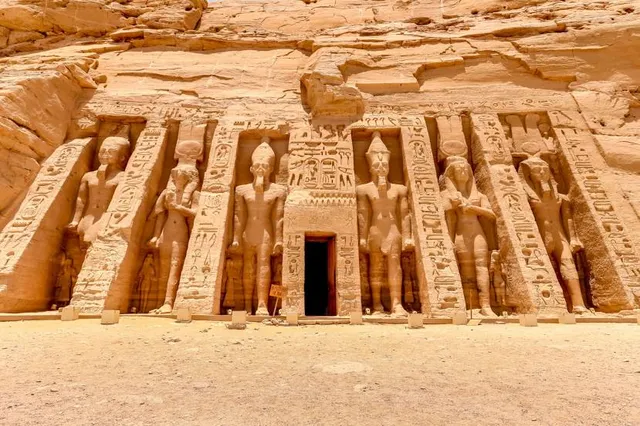
Nefertari, or Beautiful Companion, was the first and most beloved of the wives of Ramses 11. Indeed, her form is slim and graceful, and she is extremely fair. Since her magnificent tomb in the Valley of the Queens at Luxor is closed to the general public, we are fortunate that we can see her depicted in her temple at Abu Simbel. It lies to the north of the great temple of Ramses II and is dedicated to Nefertari and to the goddess Hathor. The terrace (1) leads to the sloping facade that provides the frame for six recesses, three on each side of the central doorway. Within each there are standing figures: four of the king and two of the queen. They appear to be walking forward with spirited strides. Ramses wears an elaborate crown of plumes and horns. On Nefertari’s head are plumes and the sun disc. At their sides are small figures of their children – the princesses beside Nefertari and the princes beside Ramses.

The legend of the love of Ramses for his wife is enumerated along with his titles: ‘Ramses, strong in Maat (Truth), beloved of Amon, made this divine abode for his royal wife, Nefertari, whom he loves’.

Throughout the temple, on pillar and wall, and even in the sanctuary, the names of the royal couple are linked in their shared dedication to the goddess Hathor.

The buttressed sloping projections between the figures on the facade bear hieroglyphic votive inscriptions. At the centre of the broadest, central section is the doorway leading to the Hypostyle Hall (2), a traverse chamber (3) and the sanctuary (4). The thickness of the doorway shows Ramses before Hathor, to the south, and Nefertari before Isis, to the north; Isis makes a gesture as though to crown her.

The Hypostyle Hall (2) has six pillars decorated on the front with sistra-the musical instrument associated with the goddess Hathor and with the heads of Hathor. Behind are representations of Ramses, Nefertari and various deities. The reliefs on the entrance walls (a) and (b) have fine representations of Ramses, accompanied by Nefertari, smiting a Libyan in the presence of Ra-Harakhte, and a Nubian in the presence of Amon-Ra respectively. The side walls have similar offering scenes. At (c) Ramses offers food to Ptah and also stands in front of the ram-headed Harshef. Nefertari makes offerings to Hathor. And Ramses offers wine to Ra-Harakhte. At (d) Ramses stands before Hathor. Ramses is blessed by Horus and Set of Nubt. Nefertari stands before Anukis. And Ramses presents an image of Maat to Amon. On the rear walls are Nefertari and Hathor (to the right) and Nefertari and Mut (to the left). Mut was the wife of Amon-Ra and, like Hathor, a mother figure. The traverse chamber (3) is adjoined by two unfinished chambers, to the right and left. Over the doorways, however, are reliefs of Hathor the sacred cow in a marsh, which are worth noting. In one case, Hathor is being...

   Read more

avatar
5.0
2y

The Temple of Hathor at Abu Simbel was built by Ramesses II (to honor both Hathor as the goddess of love/music and his wife Nefertari as a deified queen. The facade, resembling a pylon, has six standing colossal statues (30+ ft high). The statues feature Ramses and Nefertari, with some of their many children by their side. Nefertari is depicted as the goddess Hathor, and is, unusually, portrayed as the same height as her husband (instead of knee-height, as most consorts were depicted). . . Step inside and witness the breathtaking six pillars of the hypostyle hall in Egypt, each crowned with bovine-shaped Hathor capitals. The walls are adorned with colorful scenes of the queen honoring her husband, alongside the gods and Ramses II. The vestibule and adjoining chambers are just as impressive, featuring vivid depictions of the goddess and her sacred barque. The art in this temple is soft and graceful, making it a must-see destination for any art lover visiting Egypt. Don't miss out on experiencing the rich history and beauty of Egypt's temples!

And don't miss out on the fact that the entire site was cut out of the mountain and relocated in the 1960s to save it from being washed away by the Aswan Dam. The signature foundation stone to the creation of the UNESCO World Heritage Convention. Historic site, in...

   Read more
avatar
3.0
41w

The Temple of Nefertari is absolutely breathtaking. Even knowing it was relocated, the temple still holds an incredible atmosphere, and the carvings and colors are truly mesmerizing. However, just like Abu Simbel, the overall experience was disappointing due to the surrounding environment.

Scams are everywhere - toilets cost 50 EGP for me, while the next tourist paid just a coin. Guides constantly approach you, insisting on their services, even if you already have one. Our guide, who was supposed to be included in the tour, provided only five minutes of information and still asked for extra money.

The site was overcrowded, making it impossible to enjoy the temple in peace. Taking a photo without someone pushing in was a challenge, and there was no real respect among tourists. After a four-hour drive from Aswan (one way), we were given just one hour to explore, with no signs or information inside to help understand the history.

The Temple of Nefertari is a must-see, but sadly, the chaotic experience and commercialism take away from its magic. Be prepared for the frustration that comes with visiting such a...

   Read more
Page 1 of 7
Previous
Next