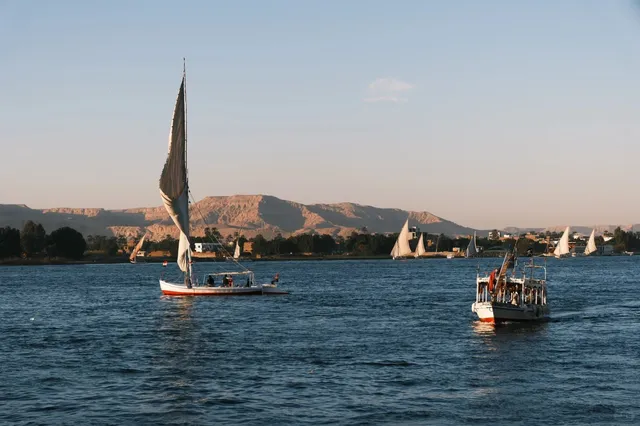
The Mortuary Temple of Hatshepsut, also known as the Djeser-Djeseru, is an ancient Egyptian funerary temple located on the west bank of the Nile River in Luxor, Egypt. It is one of the most impressive and well-preserved temples in Egypt and holds great historical and architectural significance.
Key features and information about the Mortuary Temple of Hatshepsut:
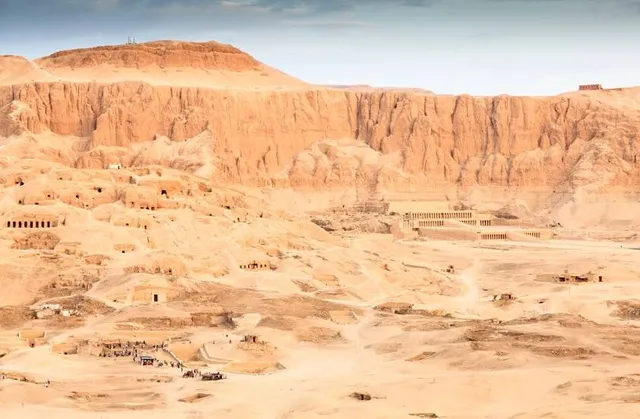
Location: The temple is situated at Deir el-Bahri, near the Valley of the Kings, on the west bank of the Nile River in Luxor, ancient Thebes.
Historical Significance: The Mortuary Temple of Hatshepsut was built during the 18th Dynasty of ancient Egypt, around 1479-1458 BCE. It was constructed as a funerary temple for Queen Hatshepsut, one of the few female pharaohs in ancient Egyptian history.
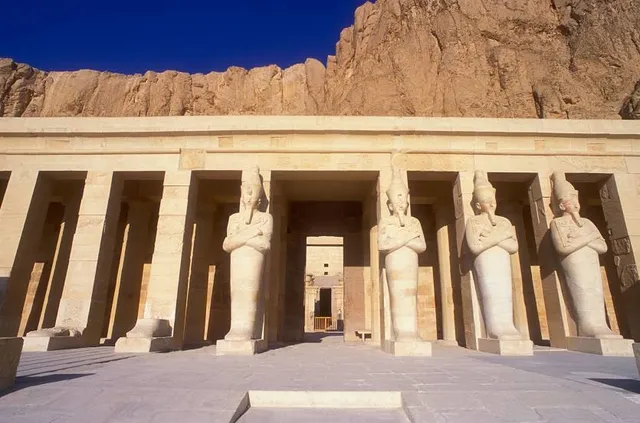
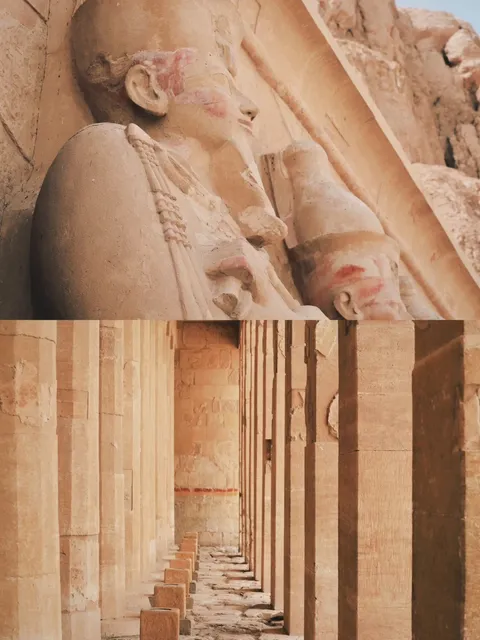
Architecture: The temple is an impressive example of New Kingdom Egyptian architecture. It was designed in a unique and innovative style, with a series of terraces and colonnaded structures built against the cliffs of Deir el-Bahri.
Design and Purpose: The temple was designed as a place of worship and memorial for Queen Hatshepsut and the gods. It featured a sanctuary dedicated to the god Amun and the queen's divine father, the sun god Ra.
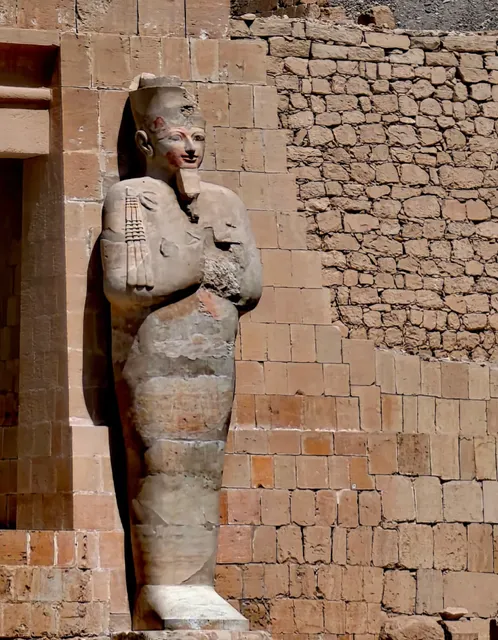
Three Terraces: The temple is organized into three terraces, each connected by a long central ramp. The colonnades and statues on each terrace provided a stunning sight for visitors and pilgrims.
Obelisks and Statues: The temple once housed two large obelisks at its entrance, one of which is still standing. The other obelisk was transported to the Hippodrome in Istanbul, Turkey, during the rule of the Roman Emperor Theodosius.
Decline and Rediscovery: After the death of Hatshepsut, her successor, Thutmose III, attempted to erase her memory from history, causing the temple to decline in importance. In the modern era, the temple was rediscovered and underwent extensive restoration.
Open to Visitors: The Mortuary Temple of Hatshepsut is open to visitors and is a popular tourist attraction in Luxor. Tourists can explore the temple's well-preserved structures, learn about its history through information boards, and enjoy panoramic views of the surrounding landscape.
The Mortuary Temple of Hatshepsut stands as a testament to the power and achievements of Queen Hatshepsut and the remarkable architectural and artistic prowess of ancient Egypt. It is a must-visit destination for travelers seeking to delve into the rich history and culture of the...
Read moreThe Mortuary Temple of Hatshepsut: A Timeless Tribute to Egypt’s Queen
The Mortuary Temple of Hatshepsut, also known as the Djeser-Djeseru (meaning “Holy of Holies”), stands as a testament to ancient Egyptian grandeur. Located in Upper Egypt, opposite the city of Luxor, this temple is a masterpiece of architectural ingenuity and historical significance.
A Regal Legacy:
Built during the reign of Pharaoh Hatshepsut of the Eighteenth Dynasty (around 15th century BCE), this temple served as her final resting place.
Its three massive terraces rise dramatically above the desert floor and into the cliffs of Deir el-Bahari.
Design and Influence:
The temple’s design was heavily influenced by the adjacent Temple of Mentuhotep II from the Eleventh Dynasty, built six centuries earlier.
Its unique arrangement of chambers and sanctuaries sets it apart. The main axis, normally reserved for the mortuary complex, instead houses the sanctuary of the barque of Amun-Re.
Terraced Beauty:
The temple’s terraces unfold like a story. The porticoes on the middle terrace showcase remarkable reliefs:
Expedition to the Land of Punt: Depicting Hatshepsut’s trade mission to exotic lands.
Divine Birth of Hatshepsut: Reinforcing her right to the throne as a member of the royal family and godly progeny.
Below, the lowest terrace leads to the causeway and the accompanying valley temple.
Symbolic Axes:
The temple’s twin functions are revealed through its axes:
East-West Axis: Served to receive the barque of Amun-Re during festivals.
North-South Axis: Represented the pharaoh’s life cycle from coronation to rebirth.
State of Preservation:
Over time, the temple suffered. Two decades after Hatshepsut’s death, under Thutmose III, references to her rule were erased or obliterated.
Despite this, the temple remains a captivating testament to her legacy.
Valley Temple and Beyond:
Connected by a causeway, the valley temple lies 1 km east of the main complex.
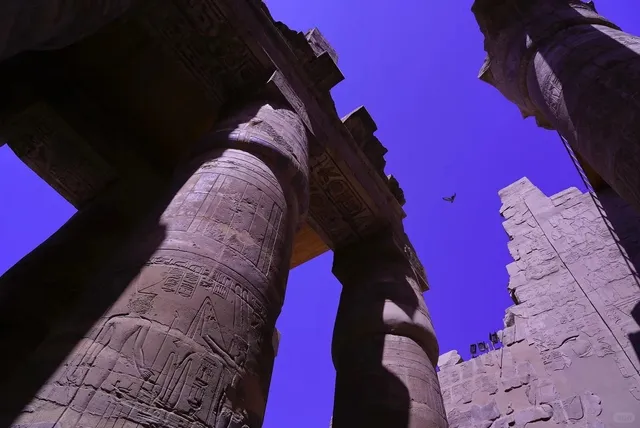
Across the Nile, the temple aligns with the monumental Eighth Pylon at the Temple of Karnak.
In summary, the Mortuary Temple of Hatshepsut invites us to step back in time—to witness the grandeur of a female pharaoh who defied convention and left an indelible mark on Egypt’s...
Read moreThe Mortuary Temple of Hatshepsut, located in the Valley of the Kings near Luxor, Egypt, is one of the most impressive and architecturally significant temples in ancient Egypt. Built by the female pharaoh Hatshepsut of the 18th Dynasty (c. 1479–1458 BC), this temple was dedicated to the sun god Amun-Ra and to the deified Hatshepsut herself, as well as her father, Thutmose I.
The temple is renowned for its unique and grand design, characterized by a series of terraces and colonnades that rise up the cliffs of Deir el-Bahari. The structure is divided into three main levels, each adorned with rows of columns and monumental statues. The design was created by the architect Senenmut and is considered a masterpiece of New Kingdom architecture. The temple is also notable for its integration with the surrounding landscape, as it is built into the natural rock cliffs, blending seamlessly with the surrounding mountains.
The walls of the temple are covered with beautifully preserved reliefs depicting scenes from Hatshepsut’s reign, including her divine birth, her famous trading expedition to Punt, and religious rituals. The reliefs also show her interacting with the gods, asserting her legitimacy as pharaoh, and making offerings. One of the most famous scenes is the depiction of the Punt expedition, where Hatshepsut's ships are shown arriving with exotic goods.
Today, the Mortuary Temple of Hatshepsut is a major archaeological site and tourist attraction, offering insight into the power and influence of one of Egypt's most successful and unique pharaohs. Despite damage caused by later rulers, the temple remains a stunning example of ancient Egyptian architectural achievement and a testament to...
Read more