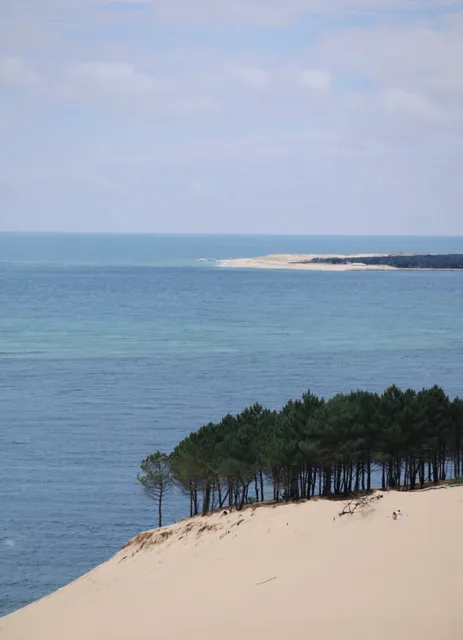
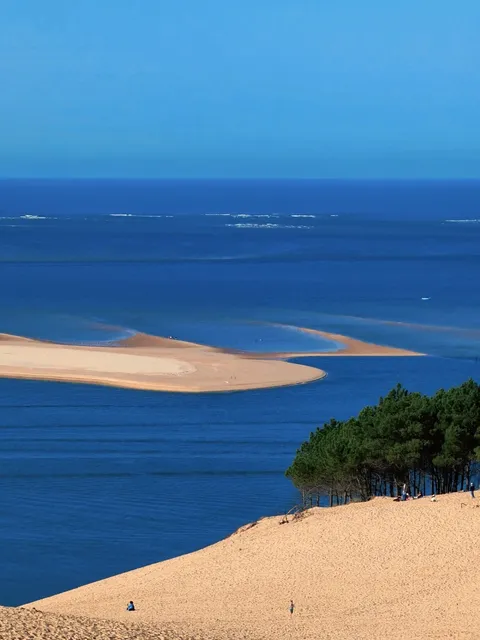
Im Rahmen meines Aufenthalts an der französischen Atlantikküste besuchte ich die Dune du Pilat. Ein geologisches Naturphänomen von europaweiter Bedeutung. Die Düne befindet sich im Département Gironde, etwa 60 Kilometer südwestlich von Bordeaux, nahe der Bucht von Arcachon. Mit einer Höhe von aktuell rund 105 Metern, einer Länge von über 2,7 Kilometern und einer Breite von etwa 500 Metern ist sie die höchste Wanderdüne Europas.
Bereits bei der Anfahrt war ihre gewaltige Präsenz aus der Ferne zu erkennen. Die Düne liegt eingebettet zwischen dem Atlantik und dem Forêt des Landes, einem weitläufigen Pinienwaldgebiet. Ihre Lage am Übergang zwischen Land und Meer macht sie nicht nur landschaftlich einzigartig, sondern auch geomorphologisch hochinteressant.
Die Dune du Pilat ist eine sogenannte Wanderdüne, was bedeutet, dass sie sich durch die Einwirkung von Wind und Wellen kontinuierlich verändert. Jährlich bewegt sie sich durchschnittlich vier bis fünf Meter landeinwärts. Ursache hierfür sind hauptsächlich die vorherrschenden Westwinde, die den Sand vom Strand über die Düne hinwegtragen und ihn auf ihrer windabgewandten Seite ablagern. Historisch gesehen entstand die Düne vor mehreren Jahrtausenden aus Sand, der aus dem Kontinentalschelf ausgewaschen und über das
Bassin d’Arcachon an Land transportiert wurde.
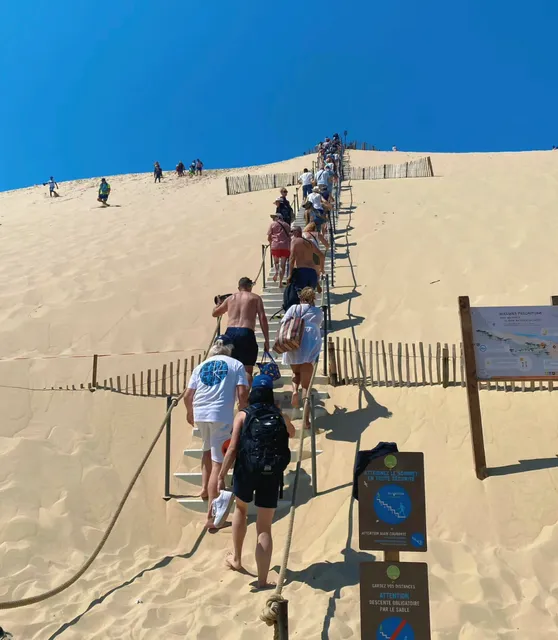
Der Aufstieg auf die Düne ist anstrengend, aber lohnenswert.
In der Hauptsaison steht Besuchern eine Treppe zur Verfügung, die den Zugang erleichtert und gleichzeitig die empfindliche Sandstruktur schützt. Wer den direkten Weg über den Sand nimmt, bekommt einen sehr direkten Eindruck vom Volumen und der Beschaffenheit der Düne. Der Sand ist fein, weich und erstaunlich warm und es braucht einiges an Ausdauer, um sich Schritt für Schritt nach oben zu arbeiten.
Der Blick vom Dünenkamm war schlichtweg beeindruckend. Richtung Westen öffnet sich der Blick über den Atlantik und das Banc d’Arguin, ein geschütztes Sandbankgebiet, das bei Ebbe teilweise freiliegt und als Brutstätte für zahlreiche Seevögel dient. Richtung Osten breitet sich der Landes-Wald aus. Ein künstlich angelegter Küstenwald, der ursprünglich zur Stabilisierung der sandigen Böden gepflanzt wurde.
Trotz ihrer Beliebtheit , jährlich besuchen mehr als zwei Millionen Menschen die Düne , hat man auf ihrem Kamm stets die Möglichkeit, einen Moment der Ruhe zu finden.
Die Größe der Fläche erlaubt es, sich zu verteilen, und viele Besucher verweilen dort, um die Aussicht zu genießen, zu fotografieren oder sich einfach im Sand niederzulassen.
Die Dune du Pilat ist nicht nur ein beliebtes Ausflugsziel, sondern auch ein bedeutendes Forschungsobjekt. Geologen, Klimaforscher und Ökologen untersuchen seit Jahrzehnten die Dynamik dieser Düne und die ökologischen Wechselwirkungen mit dem angrenzenden Ökosystem.
Der Besuch der Dune du Pilat war für mich ein tiefgehendes Naturerlebnis, das nicht nur durch seine landschaftliche Schönheit, sondern auch durch seinen wissenschaftlichen und historischen Hintergrund beeindruckte. Es ist ein Ort, an dem man die Kraft der Natur unmittelbar erleben und zugleich viel über die Wechselwirkung von Mensch, Wind, Wasser und Sand lernen kann. Ein Besuch, der sowohl emotional als auch intellektuell und zudem sportlich bereichert.
Stand: 02.06.2025
„Der Aufstieg auf die Dune du Pilat fühlt sich an, als würde man versuchen, eine überdimensionale Sanduhr von innen nach oben zu klettern. Jeder Schritt ein zäher Dialog mit der Schwerkraft, der immer mit dem Satz endet: Du kommst hier nicht hoch, ohne zu schwitzen und wenn es ganz hart kommt auch zu sterben.
Und während einem der Schweiß in die Augen läuft und die Wade diskret zuckt, und die Smartwatch einen Puls von 156 vermeldet fragt man sich unweigerlich, ob man gerade Urlaub macht oder sich freiwillig für ein geologisches Bootcamp angemeldet hat. Aber kaum steht man oben - keuchend und halb paniert mit Sand in Schuhen, Taschen und wahrscheinlich auch in der Seele - weiß man: Die Tränen in den Augen war jede...
Read more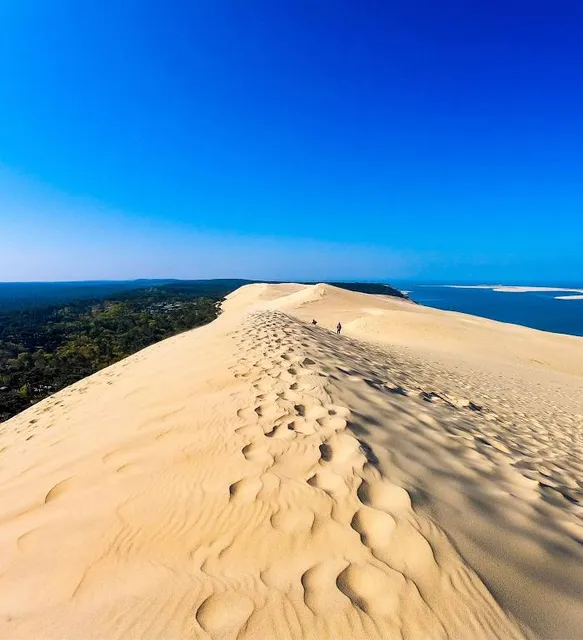
 Learn more insights from Wanderboat AI.