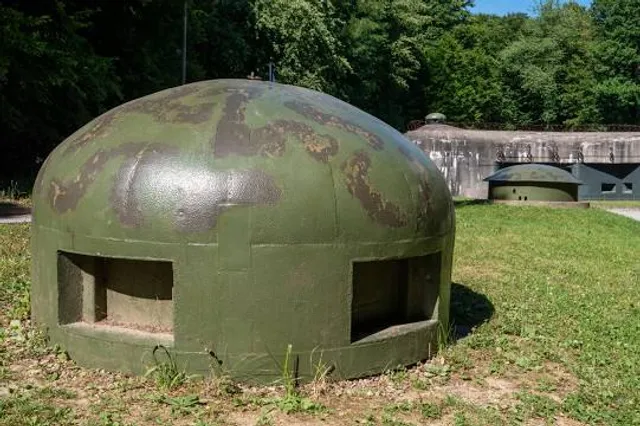
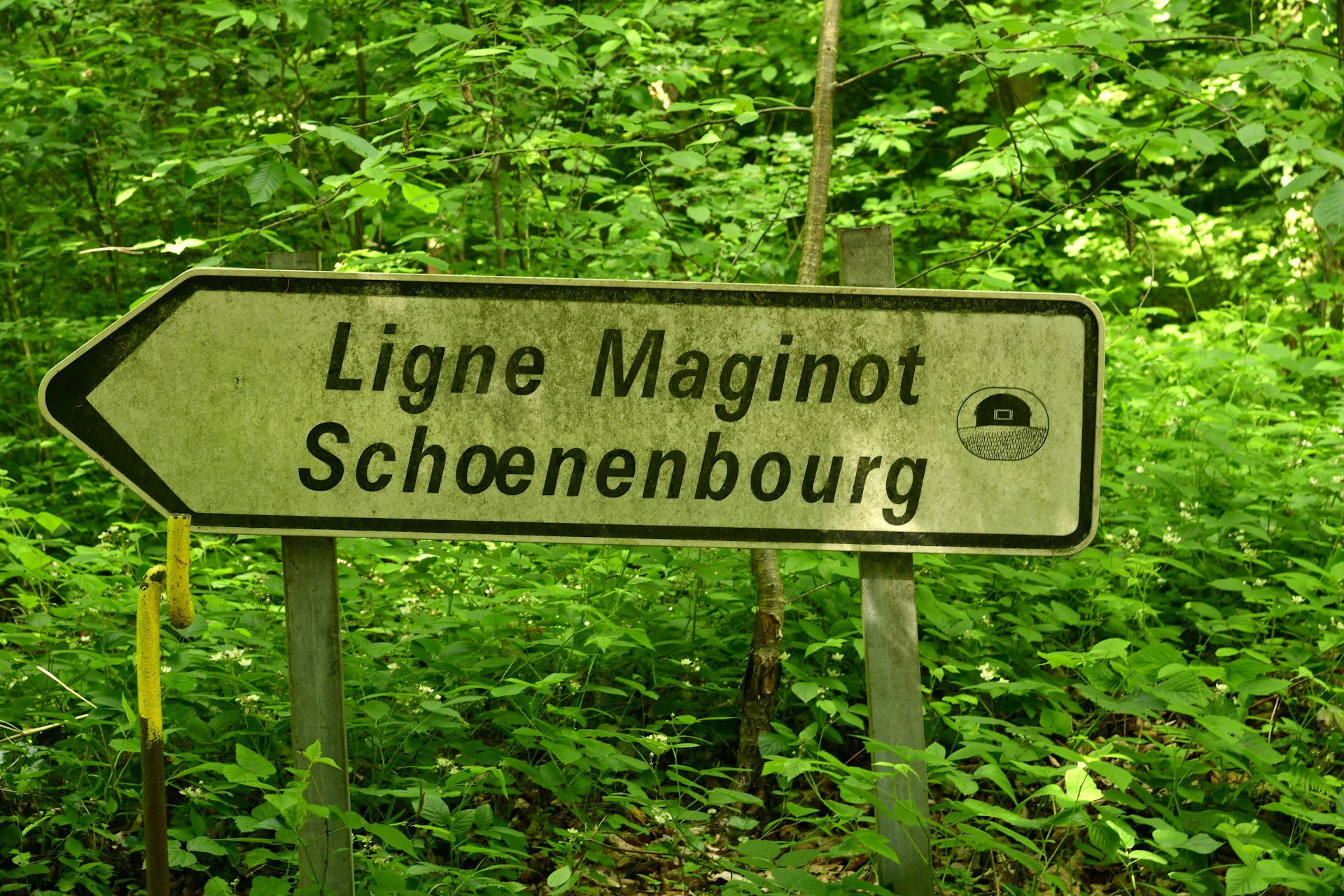
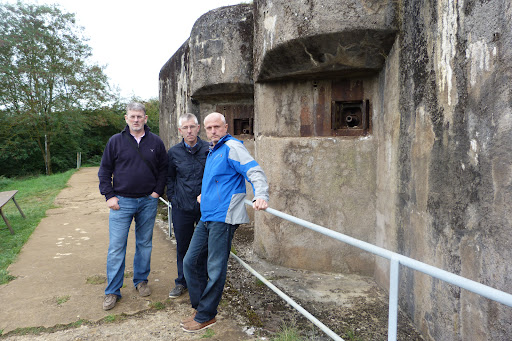
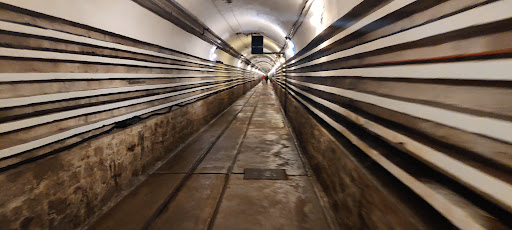
The Schoenenbourg Fortress, one of many sections of the Maginot Line, impresses everyone! Its size, grandeur, engineering, and organization. I use the term "fortress" wisely, as it is a huge, fortified defensive structure capable of functioning independently. We are not experts or military enthusiasts, and our visit to Schoenenbourg was intended to confirm and expand our knowledge of the Maginot Line. We fully answered these questions thanks to the fact that we were able to move freely around the fortress at our own pace. The tour trails are well-described, clearly marked to which bastion they lead. Along the way, there are numerous information boards, descriptions, historical posters, rooms, and equipment necessary for life and defense. Life-support equipment, military equipment, and transportation were important elements of the fortress. The infrastructure is incredibly impressive. I cannot help but express my respect and admiration for the people who conceived, designed, built, and served there. It's not important to us whether the building fulfilled its purpose, what matters is that it's a brilliant design. Seeing the rooms where soldiers served, the rooms where they rested and slept, and the everyday equipment, we realized how difficult service was in these conditions. After a four-hour walk, the lack of sunlight and blue sky was already taking its toll, sparking our imaginations of how difficult such service was. And if we add to this the sounds echoing across the concrete, bullets striking concrete, explosions, gunfire, ricochets, the smell of gunpowder and poison gases... it becomes an...
Read moreUNESCO World Heritage Site Visited Sept 2011
Stunning and well worth a visit. The Maginot defence is a line of concrete fortifications (inc underground), obstacles and weapon installations built by France in the 1930s to deter invasion by Germany. Consequently, the Germans invaded through Netherlands and Belgium in 1940, passing it to the north. The use therefore of the Line failed as it was supposed to be fully extended further towards the west to avoid such an occurrence, was finally scaled back in response to demands from Belgium.
Constructed on the French side of its borders with Italy, Switzerland, Germany, Luxembourg and Belgium, the line did not extend to the English Channel.
The Maginot Line was invulnerable to aerial bombings and tank fire; it featured underground railways as a backup. It also had state-of-the-art living conditions for garrisoned troops, supplying air conditioning and eating areas.
However, the French line was weak near the Ardennes - a rough terrain, seen as an unlikely invasion route of German forces; if it were traversed, it would be done at a slow rate that would allow the French time to bring up reserves and counterattacks. However the German invasion exploited this weak point - a rapid advance through the forest and across the River Meuse encircled much of the Allied forces, resulting in a sizeable force having to be evacuated at Dunkirk and leaving the troops to the south unable to mount an effective resistance to the German...
Read moreFort Schoenenbourg is a great WW2 site to experience the Maginot fortifications, both underground and on the ground. I arrived on a sunday, where the site is closed 3 hours (11-14). This was quite disappointing, so instead I went through the forest to experience the top of the fortifications, and afterwards went back to see how the fort worked underground. Despite the lower temperature, during the summer it did not feel freezing, just bring socks and shoes, not sandals. No guided tours was available, but the well kept fort provide a large number of static displays of both interior and historical items, and some multimedia to show details about the fort history. Most signs and background information is available in both french, german and english. The self-guided tour takes about 3 hours, if all parts are explored is a resonable pace. During my walk, the power went out, so everything went black, except the emergency lights. Don't know if this happens regularly, but I suggest bringing additional power for your phone or a standard flashlight with...
Read more