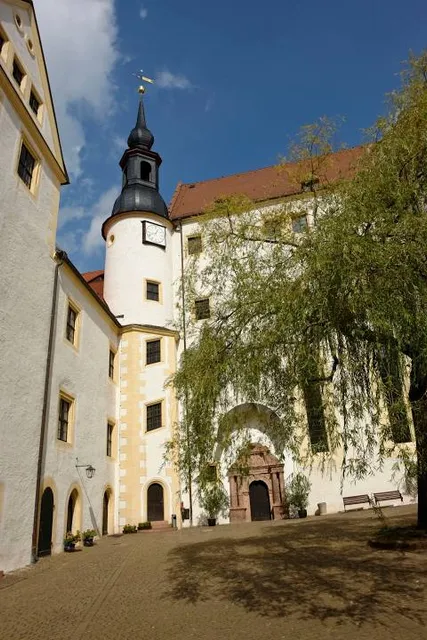
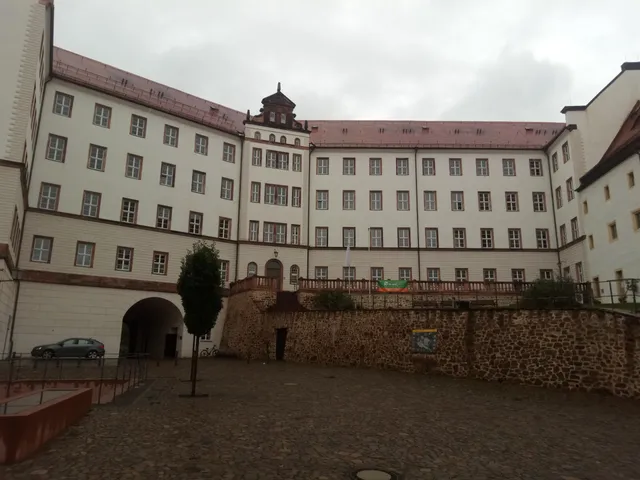
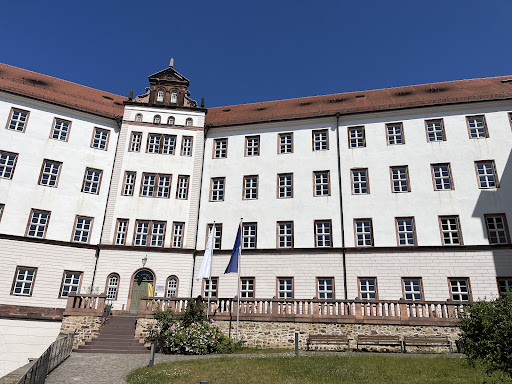
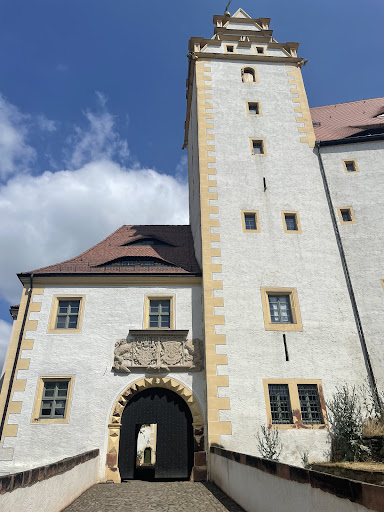
I’ve waited almost 30 years to visit Colditz Castle and this trip was a dream come true. Visited the castle on a Friday in mid June on a gloriously sunny day. It is recommended to allow a good couple of hours for your visit but I definitely made the most of it, stretching it to almost four and half hours ! The entrance fee for adults is only €10 and did not prebook tickets. The tour includes a histopad which gives you a virtual display of how various rooms looked at different points in history and is an excellent addition. Otherwise the tour is self guided allowing you to spend more or less time in certain areas as you wish. Guided tours are available on certain dates and think you’d be best prebooking these. My visit was not busy and at no time did I feel rushed or pressured to move on by a queue of people behind. The tour focuses on three distinct periods in the castles history (WW2, Renaissance, Hospital) and whilst I went for the war era I still found the rest interesting. The Kommandantur is now a youth hostel (DJH) and we stayed a night here too. Whilst accommodation is basic, it is comfortable and functional. If it wasn’t for its history I wouldn’t have stayed here but simply couldn’t miss out on the opportunity !
My trip to Colditz was combined with a visit to Stalag Luft III just over the border in Poland. I also found time to fit in the Stasi museum in Dresden which is also worth a trip. Overall it was an amazing few days - genuine bucket list stuff !
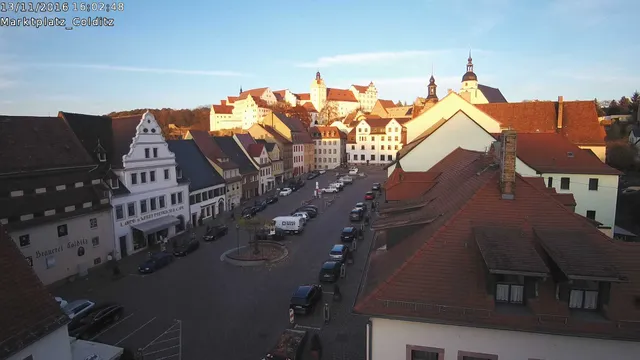
Colditz town itself offers limited amenities in terms of restaurants, cafes, nightlife, etc but there are a few places to enjoy a beer or two !
I would recommend a walk through town and over the bridge to the old railway station. Whilst the station itself is now derelict it is an opportunity to walk in the footsteps of heroes and complete the immersive experience.
As you can guess, I would recommend a visit to Colditz Castle without...
Read moreI really enjoyed my visit to Colditz Castle as it's a place I always wanted to visit.
I travelled there by train and then bus from Leipzig.
I first visited the museum and entry price was very reasonable. You can see the outside and courtyard of the castle for free but the museum costs 4 euros.
There are lots of handmade tools on display and fake German uniforms made by the prisoners of war.
You can also see photographs taken by the Germans of how failed escapes were planned and how they were carried out. These were kept to train future prision guards and German officers. . But they are now very funny to look at.
My favourite was the photo of the POW dressed as the German Castle Plumber.. stood beside the actual German plumber.. both with very similar outfits and poses.
Some of the escape attempts were wild.. including the building and planning of a glider.. a mock up of which you can also see at the Castle. It was never used as the war came to an end.. but it has been proven that it would work.
I also took a tour with the very friendly Alex...
In fact I was very surprised to walk into reception to be greeted by two English men speaking to each other in English.. after having travelled through Germany and the countryside of Saxony and only hearing / speaking German the whole way.
Alex is a fantastic tour guide and knows his stuff. I was able to ask questions and had time to look at things and take photographs.
I highly recommend a visit to Colditz Castle (the tour costs a little extra but it...
Read moreAfter all the WW2 POW - obsessed folklore, the place proved a bit of a disappointment. Perhaps because it did not seem half as foreboding as I feel I had been led to imagine. And because curiously, there seems surprisingly little focus on WW2 and the POW's that I had expected. Not surprisingly, I suppose as the the castle's history is much more extensive than purely the WW2 POW era that has become somewhat of an obsession (in the UK at least). Shocking, and WW2 POW obsession image shattering, for example, was the fact that the castle was used "pre WW2 POW" as the 'final destination' of those unfortunates caught by the Nazi euthanasia programme, a fact that has somewhat conveniently been airbrushed out of the place's WW2 POW centred history. Indeed it seems that for most of its time it was actually used as a the State of Saxony's holding centre for people who had been designated "incurable" / "disruptive idiots", more than a residence for its Kings. Then post WW2 it was used as the place where landowners and other "bourgeois elements" were rounded up by the Communist regime prior to deportation to concentration camps on the island of Rugen just off Germany's Baltic coast. the The town below the castle has a pleasant market Square where a beer and snack (but not much else) can be had. Would I visit again ? No. It's a long way off the beaten track and has relatively little of interest to offer - unless one is WW2 POW...
Read more