I saw this marked as an attraction on GMaps and saw the type of attraction that it was so I RAN to the place to hike. Maybe it was rookie luck or just the excitement of being in a legit former Roman ruin, or the fact that I was there alone, or just the fact that I relate Roman ruins to long lines, tons of people taking selfies, etc that my brain couldn't understand what I was seeing.
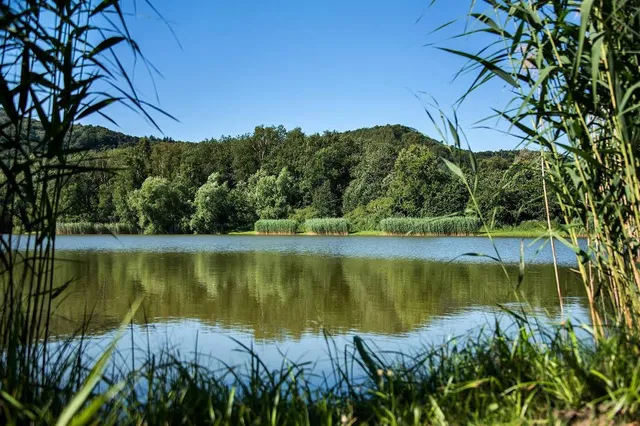
I read that the place dated back up 54 BC (I'll correct if I'm wrong) and that it was a meeting place for offerings to Pagan dieties. Across, there is the pond that is fed by the stream that was once considered miraculous.
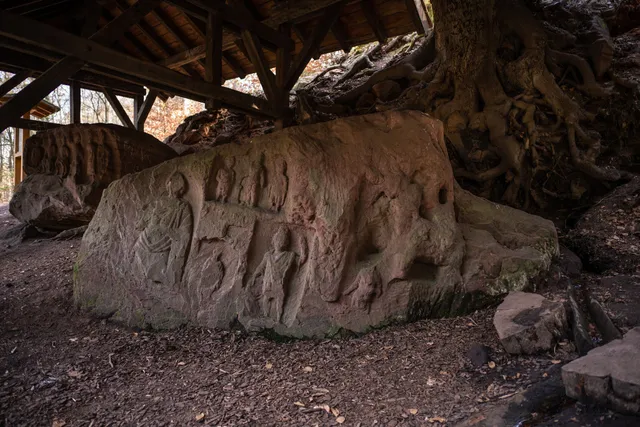
You need to go up a hill where you see a gazebo type of thing and there are the rocks that were used for ceremonies.
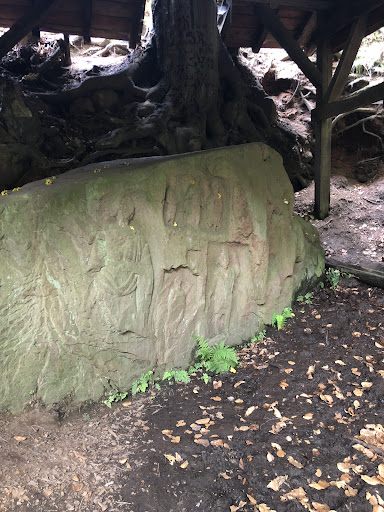
I was baffled by the awesome condition of the rocks, even more shocked that they were INTACT: No graffiti, no vandalism, nothing that people with ample access to something so rare would normally try to ruin.
On top of the big rock there is a whole scripture and I just couldn't believe that it hasn't been messed with.
Anyway, if u are there alone, in silence, you can almost sense something there. I turned to look at the pond and wondered what all was inside of it. I head a heavy plunge come out of nowhere, a thick but small animal, I reckon, and the skin on the back of my neck felt static.
Anyway, it is a very surprising experience and to have it so accessible is the...
Read moreErkennbar ist die Stelle an dem kleinen Schutzhüttchen, dass zwei bearbeitete Felsblöcke schützt, und die Quelle, der wir sie verdanken. Und deshalb nicht zu verfehlen. Die Quelle trägt den Namen "Gutenborn": Hier fließt borhaltiges Wasser, das deshalb entzündungshemmende Wirkung hat. Aus diesem Grunde wurde es als Heilwasser angesehen und genutzt, besonders bei Augenkrankheiten.
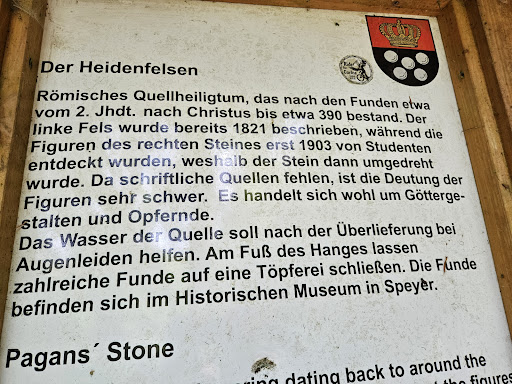
In der Mitte des 3. Jahrhunderts ist bei der Quelle ein römisches Quellheiligtum entstanden. Es wurde bis ins 4. Jahrhundert hinein betrieben.
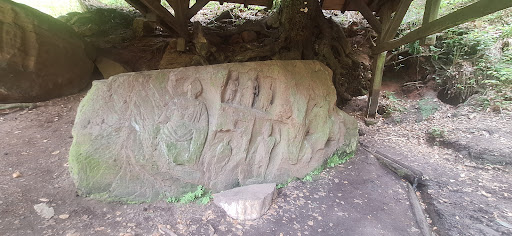
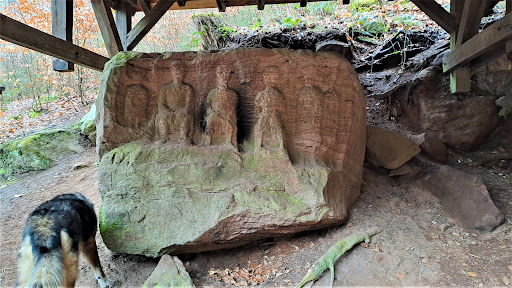
Von Funden aus dieser Zeit wurde seit 1821 berichtet, ab 1903 fanden hier dann Ausgrabungen statt. 1907 wurden dabei Überreste eines römischen Tempels entdeckt, von denen allerdings heute nichts mehr zu sehen ist. Dafür liegen, geschützt vom Dach besagter Hütte, heute noch zwei große Sandsteinblöcke neben der Quelle, die figürliche Darstellungen tragen. Es handelt sich um Figuren im Hochrelief aus der gallorömischen Zeit.
Der linke Fels wurde bereits 1821 beschrieben, während die Figuren des rechten Steines erst 1903 von Studenten entdeckt wurden. Schriftliche Quellen zum Heiligtum fehlen, weshalb eine sichere Deutung der Figuren nicht einfach ist.
Der linke, etwa zwei Meter große Stein zeigt mythische Figuren, vermutlich thronende Matronen, die wurden meist zu dritt dargestellt. Zwischen der mittleren und der rechten befindet sich ein Kapitell mit Buchstaben. Links der Gruppe ist eine kleine stehende Figur zu sehen, ein Kind vielleicht, rechts sind noch zwei weitere stehende Figuren, die vermutlich Opfergaben halten. Von der Inschrift ist kaum noch etwas zu entziffern, da steht [---]VO[---] / [---]MA[---].
Auf dem rechten, etwa drei Meter langen Stein ist links eine große Frauenfigur in Tunika und Mantel zu sehen, rechts oben ein opfernder Mann an einem Altar zwischen zwei weiteren stehenden Figuren. Unten sind drei Nischen mit Einzelfiguren, die größte hält Schild und Speer, und ist vermutlich als Mars zu identifizieren.
Aber es gibt noch mehr: Am Fuß des Hanges lassen zahlreiche Funde (vor allem viele Keramikscherben) auf eine Töpferei schließen. Diese Funde sind heute im Historischen Museum in Speyer ausgestellt. Da hat vermutlich jemand gedacht, man könnte doch jenen Besuchern, die das borhaltige Wasser mit nach Hause nehmen wollten, Amphoren zum Transport verkaufen. Jaja, so anders waren die Menschen damals gar nicht.
Alles in allem gehören die Heidenfelsen zu den am besten erhaltenen Quellheiligtümern in Mitteleuropa, die sich noch an ihrer ursprünglichen...
Read moreVentured to Heidenfelsen. The "hike" was not that bad and easily something my parents (people who are in their 70's) could do. There is a picnic bench by the lake and benches and chairs by the stones. It was about a 900m walk from where we parked.
These stones date back to the 2nd-4th century. No known scribes were found to with them; however, they were likely used by Romans. In 1907, they were discovered during excavating remains of a temple. The left stone depicts three seated source deities to whom sacrifices are served. On the right is a stone sacrificial figure at the altar. The water of the spring was known to have healing powers to cure eye diseases. Interesting find! Who...
Read more